
Where can water polo be bet on online in Great Britain, and what does it really cost?
 Available in US
Data current as of 27 October 2026, checked against the Gambling Commission’s public register of remote operating licences.

Water polo is a thin market at most bookmakers. A match appears on the fixture list for a few days around a World Aquatics event, then disappears, and the bettor who arrived late finds the outright markets closed and the in-play screen bare. That is the shape the sport carves into a sportsbook: short bursts of supply, a handful of pre-match prices, and a quiet period in between. The sports around it — football, horse racing, tennis — keep the lights on; water polo borrows them when it passes through.
That thinness is the reason this page exists. It does not list the licensed brands in Great Britain — the Commission’s register does that, and it is the only place a count should be read from — but it does name ten operators with active remote licences, look at how each one prices what little water polo they do list, and weigh what their welcome offers and price boosts really cost once the wagering rules and the minimum prices are taken into account. The picture that comes out is uneven, and the unevenness is the point.
What an “online water polo betting” offer actually contains at a UK-licensed bookmaker
A bonus marketed as “bet on water polo” at a Great Britain bookmaker is, in nearly every case, the same welcome offer as for football or tennis — a token sum in free bets, a deposit match with a wagering multiplier, or a price boost on a named fixture. The water polo branding is rarely more than a thumbnail on the promotion page. The substance sits in the small print.

Three shapes cover most of what the market calls a water polo betting promotion. Each looks generous in the headline and reads differently once the rules are read.
The first is a matched free bet. Coral’s sports welcome is the cleanest published example: deposit and place a sports bet of £20 or more at minimum odds of 2.0 (1/1), and £40 in free bets is issued within seven days, expiring seven days after issue, for new GB customers who opt in. The “£40” is the headline figure; the actual value depends on whether the qualifying bet wins or loses, and on how the free bets are staked. Two £20 free bets at odds of 2.5 return £50 if both win — £30 of profit, before the fact that the free bet stake is not paid back.
The second is a structured free-bet pack. BetMGM splits its welcome into four £10 free bets — two football accumulators of four or more selections and two sports multiples of two or more — for new UK customers who deposit £10 or more and place a sports bet within seven days, with minimum odds and opt-in required. The splits are a clue: the operator is steering the stake bettoward markets with a higher margin, where the free bet is worth less on average.
The third is a price boost or enhanced odds. NetBet runs Daily Boosts and Profit Boosts; bet365 lists Super Boosts and Winnings Boosts on Bet Builders and selected singles. A boost on a heavy favourite looks like value until the new odds are compared to the price the same operator was quoting an hour earlier — the boost is often a return to the line the rest of the market was already showing.
The wagering cap matters here. From 19 January 2026, no licensed operator can attach a wagering requirement higher than ten times the bonus to a GB promotion. A £10 bonus at fifty times would have meant £500 of qualifying bets; under the cap, no more than £100 turns over. Free bets with no wagering condition are a separate question the regulator has not closed, and a stake bettor should still check the terms. Mixed-product promotions — “bet on football to get free spins” — are banned outright under the same rule.
A bet booster on a water polo match is offered less often than the welcome bonus on the same site. That is the second feature worth flagging: the headline offers in this market are general-sports offers, not water-polo-specific ones, and a search for a “water polo betting bonus” will most often return a generic sports promotion with a thumbnail of a swimmer. The bonus applies to water polo if the terms allow it; the term to read is the list of eligible markets and the minimum odds, not the picture next to the offer.
How water polo betting odds are built, and what the margin leaves on the table
The odds on a water polo match follow the same logic as odds on any two-sided sporting event: the bookmaker prices each outcome, builds in a margin, and pays out less than a “true” market would on every bet combined. The bettor who cares about margin understands that.
A worked two-way market makes the picture simple. Take a fixture priced at 1.90 / 1.90 in decimal (9/10 fractional) — even money, a coin-flip by the bookmaker’s reckoning. The implied probability is 1 ÷ 1.90 for each side, which is approximately 52.63%. Add the two together and you get about 105.3% (the overround). The bookmaker’s margin — the slice of every pound staked the operator keeps on average across all bets on this market — is 5.0%. A “payout share” of around 95.0% is what the bettor gets back, in aggregate, on this market. The narrower that slice, the better the odds; the wider, the worse.
That margin is not the same on every market. A 1X2 match winner on a balanced water polo fixture typically sits in the 4 to 7% band at most major operators — the number varies by event, by bookmaker, and by how close to the start of the match the bet is placed. Totals markets (over/under on total goals) tend to run a touch wider; handicaps sit between the two. Combination bets — accumulators that link two or more water polo matches — pay no extra margin per leg, but the margin compounds: an accumulator of two 5% markets becomes roughly a 10% market overall, and the bettor is paying for the privilege of a single slip. A Bet Builder on a single match is priced by the operator’s own model, and the spread there tends to be wider than the headline match odds.
The same arithmetic answers the practical question: is this price good? Two prices at 1.85 and 1.90 on the same outcome differ by 2.7 percentage points of return — small in absolute terms, but over a season of bets on a thin market like water polo, it adds up. The margin is the only objective measure of cost, and the page that lists odds without it sells the bettor half the picture.
Which water polo fixtures and tournaments the sportsbook actually lists
Water polo at a UK sportsbook is a tournament-shaped market. Between tournaments, the sport is often absent from the fixture list; around the World Aquatics Championships, the Olympics and a handful of continental championships, the market wakes up for a few weeks at a time.
The shape of the calendar is fixed by the governing body. World Aquatics is the highest governing body of water polo; a men’s water polo World Championship has been held every two to four years since 1973 within the World Aquatics Championships, with women’s competition added in 1986. Men’s water polo was among the first team sports at the 1900 Olympic Games; women’s water polo became an Olympic sport at the 2000 Sydney Games. A World Aquatics event is the main event on the water polo betting calendar — the one fixture around which the outright, group-stage and individual-match markets cluster.
A match itself is short by football standards: four quarters, seven players in the water (six field players and one goalkeeper) with up to six substitutes, played in a pool deep enough that players cannot touch the bottom. The pace is stop-start — a goal every couple of minutes in a tight match — which is one reason in-play markets on water polo are thin: the operator has fewer opportunities to reprice than in football, and the bettor has fewer live angles to work.
What this means at the sportsbook: between major tournaments, water polo may not appear as a heading on the site at all. Around a World Aquatics Championship, a small cluster of fixtures appears — group-stage match winners, sometimes a total goals line, occasionally an outright on the tournament winner, rarely a handicap market. Live betting on water polo exists at the larger operators but is rarely rich; the in-play screen on a water polo match usually shows the match winner and the next goal, not the range of markets a football match attracts. Bet Builders on water polo are uncommon; most operators either do not offer them on this sport or limit them to a handful of selections.
A bettor who wants a deep market on water polo will not find one in Great Britain. The honest framing is that the sport is on the menu, the menu is short, and the operator’s own Wettprogramm — its fixture list — is the place to check before staking anything.
The ten operators this page reviews, and what each one actually offers a water polo bettor
The list below is the featured set this page weighs against itself. It is not the whole market, and no single brand is “the only” licensed one — the Commission’s register lists many more operators than any article can review. Each entry below is a GB-licensed operator with a remote general betting standard (real events) licence; each is named with the licence category that lets it take a water polo bet in the first place.
bet365
The largest UK-licensed sportsbook by app downloads, and the official global betting partner of the UEFA Champions League. The betting app offers Bet Builder+ (combining markets from one event into a single bet, available pre-match and in-play), Super Boosts, Winnings Boosts on Bet Builders and selected singles, and daily Bet Boosts. In-play betting runs across the app, with live streaming of events worldwide, plus Bet Track, Match Live and a Live Golf Tracker for following bets in play. Water polo is listed at major tournaments; the in-play market on a water polo match tends to be the deepest in this set. Welcome offer terms are stated on the app at sign-up and should be read there — the headline rarely tells the whole story.
Verdict: the operator to check first for a water polo fixture, on the strength of in-play depth and a Bet Builder that is the most mature on this list.
Coral
Sports welcome offer: deposit and place a sports bet of £20 or more at minimum odds of 2.0 (1/1), with £40 in free bets issued within seven days and expiring seven days after issue, for new GB customers who opt in. The bet credit expires quickly; a bettor with a thin water polo calendar has to plan around the seven-day window. The licence category on the register covers remote general betting standard (real events) and remote betting intermediary, so the same corporate group runs the betting exchange arm alongside the sportsbook.
Verdict: a strong welcome in headline terms; the seven-day expiry is the cost the marketing does not mention.
Betfair Sportsbook
In-play betting, Bet Builder, free live streaming of events such as UK and Irish horse racing and football within the app, and a 90 Minute Payout market that pays out winning bets if the team backed goes two goals ahead. The 90 Minute Payout applies to football — not water polo — but the in-play coverage and Bet Builder extend across the listed sports. Water polo appears around major tournaments; the exchange arm, where present, offers back and lay prices on the same fixtures.
Verdict: a Bet Builder and an in-play product that travel well to water polo when the fixture list lights up, though the headline 90 Minute Payout is football-only.
BetVictor
Best Odds Guaranteed on UK and Irish horse racing, enhanced live race streaming and a BetFinder feature for finding racing bets, alongside Smart Stats for form. The BOG offering is a horse-racing product and does not extend to water polo, but the Smart Stats panel and the BetFinder logic do carry across to other sports. Water polo listings are present around World Aquatics events; the depth at smaller tournaments is comparable to the rest of the featured set.
Verdict: a BOG that is horsing-shaped and a stats layer that is genuinely useful for water polo when the data is there to feed it.
William Hill
Best Odds Guaranteed on UK and Irish horse racing from 8 AM on the day of the race, on both single and multiple bets; the offer does not apply to ante-post, tote or pari-mutuel bets. Again a horse-racing product, not a water polo one. The wider sportsbook is established, with a long-standing GB-licensed operation; water polo is on the menu at major tournaments and absent between them, as at the rest of the major set.
Verdict: a solid mainstream sportsbook whose headline BOG is horsing-shaped and does not transfer to water polo.
QuinnBet
Best Odds Guaranteed applies to Irish and UK horse racing bets from 10:00am daily on singles, multiples and system bets, with a maximum benefit of £150 per customer per race. A racing product, not a water polo one; the multiple-bet coverage is a small plus over a BOG that runs on singles only at some rivals. Water polo is listed at major tournaments; the rest of the sportsbook is a standard UK-licensed affair.
Verdict: a racing-shaped BOG with a clear cap, useful to a horse-racing bettor and silent on water polo.
Spreadex
The only operator in the featured set that combines fixed-odds betting with financial spread betting under the same app, regulated by the Gambling Commission for fixed odds and by the FCA for spread betting. Spread-bet losses can exceed the original deposit — a line that is not a marketing figure but a regulatory disclosure. The app combines fixed-odds and spread betting in one wallet, with one-click, auto and partial cash out, Bet Builder across fixed odds or spreads, and live streaming of UK and Irish horse racing, greyhounds, tennis, NFL and selected football. Water polo is on the menu at major tournaments; the spread-bet product does not extend to water polo at most events, so the headline “spread betting” tag does not move the dial on this sport.
Verdict: an unusual hybrid product worth understanding on its own terms, with a fixed-odds sportsbook that is comparable to the rest of the set on water polo.
Fitzwilliam Sports
A Dublin-based bookmaker with capped membership and a “High Stakes Welcome” subject to compliance criteria — meaning a higher-stakes welcome is available to customers who meet the operator’s criteria, not a fixed headline bonus for everyone. Instant deposits, fast withdrawals, timeouts and deposit limits, with links to GambleAware, GamStop and Gamblers Anonymous on the site. Water polo is on the menu at major tournaments; the capped bookmaker model means fewer customers and, in theory, sharper prices, though the evidence on water polo specifically is thin.
Verdict: a sharper-shape bookmaker with a welcome that requires meeting its criteria first — a different shape from a flat sportsbook offer.
Kalooki Sportsbook
Operated by Kalooki Sports Book Ltd (company number 12938274), licensed by the Gambling Commission under account number 57730, and a GAMSTOP member. A newer name in the GB-licensed set, with a sportsbook that lists water polo at major tournaments. The licence and corporate details sit on the site’s own homepage and can be cross-checked against the Commission’s public register; the welcome offer terms are stated on the site at sign-up.
Verdict: a newer GB-licensed name worth checking on the Commission’s register before staking, with a water polo listing that follows the major-tournament rhythm of the rest of the set.
BetMGM
Sports welcome offer for new UK customers who deposit £10 or more and place a sports bet within seven days is four £10 free bets — two football accumulators of four or more selections and two sports multiples of two or more — valid for seven days, with minimum odds and opt-in required. The split into accas and multis steers stake toward higher-margin markets; the seven-day window is tight on a sport like this. Water polo is listed at major tournaments; the in-play and Bet Builder product is present though not as deep as bet365’s.
Verdict: a four-part welcome with an acca tilt — the £40 figure is real but its value depends on where the four bets are placed.
Mapping licence, holder and operator-side terms at a glance
The table below lines each reviewed brand against its Gambling Commission account, the licence holder named on the register, and what the operator’s own terms state on the key subjects this page covers. The “key subject” column is the operator’s own statement on welcome, wagering or price-boost terms where one was published and verifiable; a dash means the page reviewed the source and the source did not state a clear position on that point — not that no policy exists, but that the public-facing terms do not say so in a way that can be quoted.
| Brand | Gambling Commission account and licence holder | Operator-side terms on the page’s key subjects |
|---|---|---|
| Fitzwilliam Sports | 48760; SBKI Limited | Capped membership; “High Stakes Welcome” subject to compliance criteria; instant deposits, fast withdrawals, timeouts and deposit limits |
| Spreadex | 8835; Spreadex Limited | Fixed odds and spread betting in one app; one-click, auto and partial cash out; Bet Builder across fixed odds or spreads; live streaming on horse racing, greyhounds, tennis, NFL and selected football; spread losses can exceed deposit |
| Coral | 54743; LC International Limited | Sports welcome: £20 qualifying bet at min odds 2.0, £40 in free bets within 7 days, expires 7 days after issue; new GB customers, opt-in |
| Betfair | 39439; PPB Counterparty Services Limited | In-play betting, Bet Builder, free live streaming on UK and Irish racing and football; 90 Minute Payout market (football) |
| BetVictor | 39576; BV Gaming Limited | Best Odds Guaranteed on UK and Irish racing; BetFinder and Smart Stats; enhanced live race streaming |
| QuinnBet | 61011; QuinnBet (Gibraltar) Limited | BOG on Irish and UK horse racing from 10:00am daily on singles, multiples and system bets; max benefit £150 per customer per race |
| Geoff Banks | 54095; GB Sports Advisors Limited | Live in-play prices and ante-post prices on future events; app published by GB Sports Advisors Ltd |
| NetBet | 39170; Netbet Enterprises Limited | Daily Boosts, Profit Boosts and free bet offers; Bet Builder with instant dynamic odds; sports stats for major leagues |
| Kalooki Sportsbook | 57730; Kalooki Sportsbook Limited | Identity verified before first deposit (UKGC rule since 7 May 2019); GAMSTOP member |
| BetMGM | 39198; LeoVegas Gaming PLC | Sports welcome: deposit £10 and place a sports bet within 7 days for four £10 free bets (two 4+ foot accas, two 2+ sport multis), min odds, opt-in, valid 7 days |
The licence categories are uniform across this set: every operator on the list holds a remote general betting standard (real events) licence, and Coral additionally holds a remote betting intermediary licence to run its exchange. The difference between brands is at the operator-side terms level — what each one promises on top of the bare licence — and that is where this page’s comparison sits.
The shape of an “online water polo betting” page in Great Britain
A search for “online water polo betting” in Great Britain returns, in practice, four things: a list of licensed bookmakers that list water polo on their sportsbook, a comparison page ranking them on welcome offers and odds, a guide to the sport’s main tournaments, and a piece on what types of bets are available. This page is the comparison-shaped version of those four.
The bettor who lands here is, by the query alone, looking for a place to bet rather than a fixture to back. The skill the page has to offer is filtering: between the licensed set and the rest, between the operators who list water polo at the next World Aquatics event and those who do not, between the welcome offers that are real value and the ones whose headline figure shrinks once the wagering rules and the minimum prices are read. The filter this page applies is the cost angle named in the plan — what the offer costs the bettor, in turnover, in time, in lost free-bet stake, in missed better odds on the next site over.
What the page is not is a tip sheet. Nobody can know the outcome of a water polo match in advance, and a page that names a winner sells the bettor a certainty that does not exist. What the page offers instead is a way to read the market — what an offer really costs, how the margin is built into the price, which operator’s terms read honestly and which read around the rules.
The licence angle: how a Great Britain water polo bookmaker is actually licensed
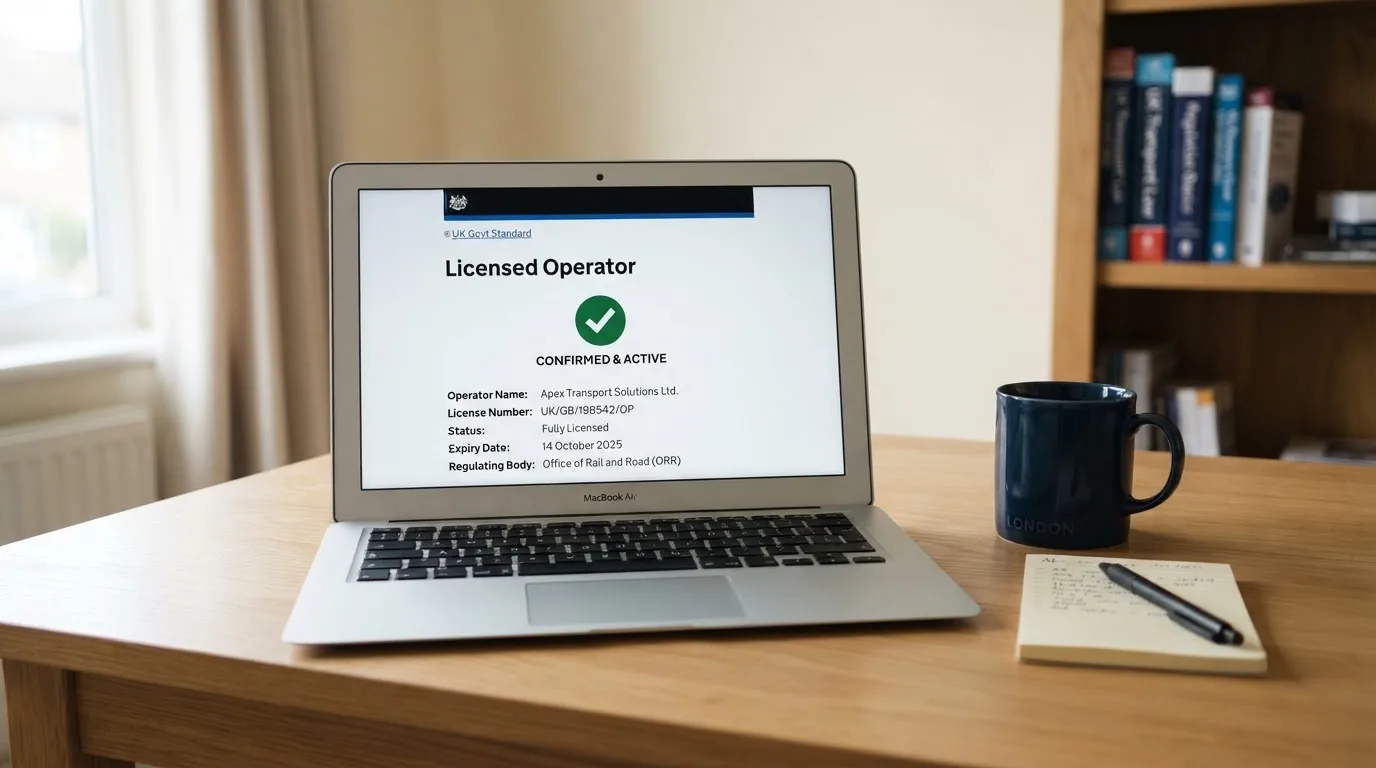
A bookmaker taking bets from customers in Great Britain needs a Gambling Commission licence, wherever the operator is based. That is the whole test — the Commission’s public register is the source a reader checks against, and the account number printed on the operator’s own terms page is the cross-reference. A Curaçao, Maltese or Gibraltar licence is not a substitute, because the 2014 Act attached the duty at the point of consumption: a remote operator whose facilities are used in Great Britain needs a Commission licence, even if every server sits overseas.
The register is searchable by business name, trading name, domain or account number. Each licence carries categories — remote general betting standard (real events), remote general betting standard (virtual events), remote general betting limited, remote pool betting and remote betting intermediary — and each category covers a different shape of betting activity. Water polo, as a real sporting event, falls under remote general betting standard (real events); the betting exchanges run under a separate intermediary licence. The featured set on this page is uniform on that point: every reviewed brand holds remote general betting standard (real events), and Coral additionally holds the intermediary category.
The licensed brands use both .com and .co.uk domains; the domain by itself is not proof of a licence. The proof is the account number on the register. A reader who wants to verify a brand can take the account number from the operator’s own homepage, type it into the Commission’s register, and see whether the licence is in force and which categories it covers. That reverse look-up is also the way to read the difference between Ladbrokes and Coral, or between Paddy Power and Betfair — brands that look like competitors in the press but share a licence holder on the register, and are therefore not independent operators for the purposes of this page.
Financial spread betting is regulated by the Financial Conduct Authority, not the Commission. Spreadex holds a Gambling Commission licence for its fixed-odds book and an FCA authorisation for its spread-bet product; the two lines sit on different registers, and the disclosure on the homepage (“spread betting losses can exceed the deposit”) is a regulatory requirement, not a marketing figure.
The rules every GB-licensed water polo bookmaker is bound by
The licensed set runs under the Gambling Act 2005 and the Licence Conditions and Codes of Practice that the Commission issues under it. A water polo bettor at any of the brands above sits inside that frame, and the frame is what makes the difference between a GB-licensed site and the alternatives that advertise in the same search results.
Identity before the first deposit. Name, address and date of birth are verified before a customer can deposit or gamble at a GB-licensed site — a rule in force since 7 May 2019, including for free bets and bonuses. There is no anonymous play at a licensed operator. The check runs through a third-party identity provider, usually KYC-tied, and a failed check means their stake is returned. The cross-check against public records runs alongside: a financial vulnerability check (LCCP condition 3.4.4, in force since 30 August 2024) applies when a customer’s deposits minus withdrawals exceed £150 in a rolling 30 days, a threshold that has applied since 28 February 2025.
GAMSTOP. The national multi-operator online self-exclusion scheme is a mandatory licence condition for online operators since 31 March 2020. Periods run six months, one year, five years, or five years with auto-renewal; after the minimum period the exclusion stays in place for a further seven years unless the customer asks GAMSTOP to remove it. The cover is online only — betting shops use a separate service — and every GB-licensed online operator is a member.
Bonuses. From 19 January 2026, no licensed operator can attach a wagering requirement higher than ten times the bonus to a GB promotion. A £10 bonus at fifty times would have meant £500 of qualifying bets; under the cap, no more than £100 turns over. Mixed-product promotions — an offer that requires gambling on two or more product types such as betting, casino, bingo and lottery — are banned outright. The bonus cap is one of the clearest differences between a GB-licensed site and an unlicensed one; a £10 bonus at one hundred times wagering is something only an unlicensed operator can still publish.
Payments. Credit cards are banned for gambling in Great Britain, since 14 April 2020 — a rule that includes credit-card-funded payments through an e-wallet. Debit cards and bank-based payments are not covered by the ban. Cryptocurrency deposits at licensed operators are not established by any British rule, and each operator’s terms state its own position on coins. The British rule that applies is the credit-card ban; the rest is each brand’s own policy.
Tax. The player pays no tax on betting winnings in Great Britain. General Betting Duty is the operator’s tax on gross profits, currently 15%, and from 1 April 2027 a new remote betting rate of 25% applies within it. Whether operators pass the duty on through odds is not established; the player is not charged duty in any case, and the page should not write otherwise.
The frame is what the bettor buys by betting with a licensed operator. A licensed site is checked, capped on bonuses, joined to GAMSTOP, and required to verify the customer before the first stake. An unlicensed site is none of those. The bettor who picks an unlicensed site gives up the GAMSTOP coverage, the Commission’s complaints route, the approved dispute-resolution body, and any British redress if funds are withheld, and gains nothing that the licensed set does not offer.
Responsible gambling at a water polo sportsbook: the tools that have to be there
A GB-licensed bookmaker has a set of safer-gambling tools it must make available, and a set it must join. The list below is what a bettor should expect at every reviewed brand on this page, because every reviewed brand holds a remote general betting standard (real events) licence.
Deposit limits. A licensed operator must offer a gross deposit limit on a fixed time frame; the first changes under RTS 12 have applied since 31 October 2025, and a second phase was postponed to 30 September 2026. There is no state-set deposit or loss ceiling for betting; the limit is the customer’s choice within the operator’s product, and the operator’s product has to offer one.
Timeouts and self-exclusion. A short break (24 hours to a few weeks) is a product feature; GAMSTOP is the multi-operator exclusion at the national level. A bettor who wants to stop across every site they use registers at GAMSTOP, not at each individual operator.
Vulnerability checks. A financial vulnerability check runs once deposits-minus-withdrawals exceed £150 in a rolling 30 days (since 28 February 2025). The check is a public-record check (for example, bankruptcy or county court judgments), not an income check and not a credit reference check. Financial risk assessments — the affordability checks of the press — are announced in a staged plan, with no start date; the page should write “announced, staged, no start date”, not “in force”.
Help. GamCare (National Gambling Helpline), GambleAware, NHS gambling clinics, Gamblers Anonymous. A licensed operator links to these bodies in its safer-gambling pages; Fitzwilliam Sports’ homepage, for example, links to GambleAware, GamStop and Gamblers Anonymous. The link is a licence condition, not a courtesy.
What this means for a bettor who is deciding where to place a water polo bet: every brand on this list offers the safer-gambling tools named above, and the difference between them is not on the existence of the tools but on how easy each one is to set. A bettor who knows they want a deposit limit should pick the operator whose product makes the limit easy to set; a bettor who wants GAMSTOP coverage already has it at any of them.
Reading the numbers: the margin and what it tells a bettor
The arithmetic on the margin, applied to a single worked market, makes the picture concrete. Take a two-way water polo match priced at 1.90 / 1.90 in decimal — even money on both sides. The implied probability on each side is 1 ÷ 1.90, which is approximately 52.63%. Adding both sides gives roughly 105.26%, and the 5.26 percentage points above 100% is the bookmaker’s margin. The bettor’s payout share on this market is therefore approximately 94.74% — every £100 staked across the market returns about £94.74 in aggregate, and the rest is the operator’s take.
That 5.26% is a typical figure for a balanced 1X2 match-winner market at a major operator around a World Aquatics event; the figure rises on totals and on combination bets, and falls on handicaps where the bookmaker is willing to take a thinner edge to balance the book. The thinner the margin, the better the odds for the bettor; the wider, the worse. The margin is the only objective measure of cost on a market where the “best odds” headline is whatever the operator’s number chose to put on the page.
The same arithmetic explains why a price boost is not always what it appears. Take a water polo match winner originally priced at 1.80 and boosted to 2.00 — the kind of figure Super Boosts and Daily Boosts publish. The original 1.80 implied probability is 55.56%, the boosted 2.00 is 50%, and the headline gain is the difference between the two. But the original price was already a margin-loaded price; the boost is a return toward the line, not a gift, and a comparison with the same fixture on the rest of the market usually closes the gap entirely.
The point this page makes with the arithmetic is narrow: the margin is the cost of the bet, the price boost is the operator’s headline, and the two are not the same number. A bettor who prices the margin first and the boost second has read the market correctly; a bettor who reads the boost first and the margin second has read the marketing page.
A short glossary of the British betting terms this page uses
A punter is a bettor. The stake is the money risked on a single bet; the return is what comes back from a winning bet (stake plus profit); the profit is what is left after the stake is taken out. A single is one bet on one outcome; a double is two; a treble is three; an accumulator (“acca”) is four or more, with the odds of each leg multiplied together. An each-way bet is two bets of equal stake — one on the win, one on the place — and the stake doubles. A Bet Builder is a single bet on multiple selections from one event. A Trixie is four bets; a Patent is seven; a Yankee is eleven; a Lucky 15 is fifteen; a Super Yankee is twenty-six; a Heinz is fifty-seven; a Goliath is two hundred and forty-seven. The total stake is the unit stake multiplied by the number of bets — a £1 Lucky 15 costs £15.
Odds come in fractional form (5/1, 11/4, evens) and decimal form (6.00, 3.75, 2.00). The conversion is a/b → a ÷ b + 1 — so 5/1 becomes 6.00, 11/4 becomes 3.75, and evens (1/1) becomes 2.00. SP is the starting price, the price at the start of the race. Cash out is settling a bet before the event has finished. Enhanced odds and price boosts are the same shape: a bigger price than the headline for a limited stake or a limited window. Best Odds Guaranteed (BOG) is a horsing-shaped offer that pays out at the higher of SP and the price taken — not a water-polo product. Ante-post is a bet placed before the final declarations are known. Rule 4 is a deduction applied when a runner withdraws. A betting exchange is a venue where customers back and lay against each other; the operator takes a commission on net winnings. Spread betting is a different product altogether, regulated by the FCA when it is a financial product.
British spellings: licence (noun), license (verb), organisation (not organization), whilst (not while). Currency is £ before the number, no space — £10, £5,000. A “fiver” is £5, a “tenner” is £10. Dates run “9 April 2025”, not “April 9, 2025”. Percentages are closed up: 25%.
Frequently asked questions about online water polo betting in Great Britain
How can it be checked that a bookmaker holds a Gambling Commission licence?
Every licensed brand is on the Commission’s public register, searchable by business name, trading name, domain or account number. The account number printed on the operator’s own terms page is the cross-reference: type it into the register, confirm the licence categories cover real-event betting, and the verification is complete. The register is the only place a count should be read from, and a count without an access date is not a count.
How is the return on a bet worked out from the stake and the odds?
Return = stake × odds; net profit = stake × (odds − 1). A £10 single at decimal odds 2.50 returns £25, of which £15 is profit; the £10 stake is paid back on a win. A combination bet multiplies the odds of the legs into one price — three legs at 2.00, 2.00 and 2.00 becomes 8.00, and a £5 stake returns £40. The arithmetic is mechanical; the variable is whether the bet wins.
What is the bookmaker’s margin and how can it be seen in the odds?
The margin is the slice of every pound staked the bookmaker keeps on average across a market. Add the implied probabilities of every outcome — 1 ÷ odds — and the surplus above 100% is the margin. A two-way market priced at 1.90 / 1.90 gives a margin of about 5.0% and a payout share of about 95.0%. The narrower the margin, the better the odds; the wider, the worse. The margin is the only objective measure of cost.
How do fractional odds such as 5/1 convert to decimal odds such as 6.00?
Fractional a/b becomes decimal a ÷ b + 1. So 5/1 is 5 ÷ 1 + 1 = 6.00; 11/4 is 11 ÷ 4 + 1 = 3.75; evens (1/1) is 1 ÷ 1 + 1 = 2.00. The first number is the profit per unit stake; the +1 is the stake returned with a win. The conversion is exact and the same in either direction.
Which tools for controlling play does a licensed bookmaker have to offer?
A GB-licensed operator must offer deposit limits on a fixed time frame, timeouts (a short break of 24 hours to a few weeks), product-level self-exclusion, and links to GamCare, GambleAware and Gamblers Anonymous. It must be a member of GAMSTOP for online self-exclusion. A financial vulnerability check applies once deposits-minus-withdrawals exceed £150 in a rolling 30 days. The set is uniform across the licensed brands; the difference is how easy each product makes the tools to set.
Are betting winnings taxed in Great Britain, and who pays General Betting Duty?
The player pays no tax on betting winnings in Great Britain. General Betting Duty is the operator’s tax on gross profits, currently 15%, rising to 25% on remote bets from 1 April 2027 (with UK horse racing, SSBTs in licensed premises, pool betting and in-person betting staying at 15%). The duty is the operator’s; the player is not charged. A professional gambler should ask HMRC or an adviser.
US & other team sports – Bookies Trust
Content created by the «Bookies Trust» team
