
Ten licensed bookmakers for high stakes betting — and the rules that decide who really takes the bet
 Available in US
Last updated: 27 October 2026 · Verified against the Gambling Commission’s public register.
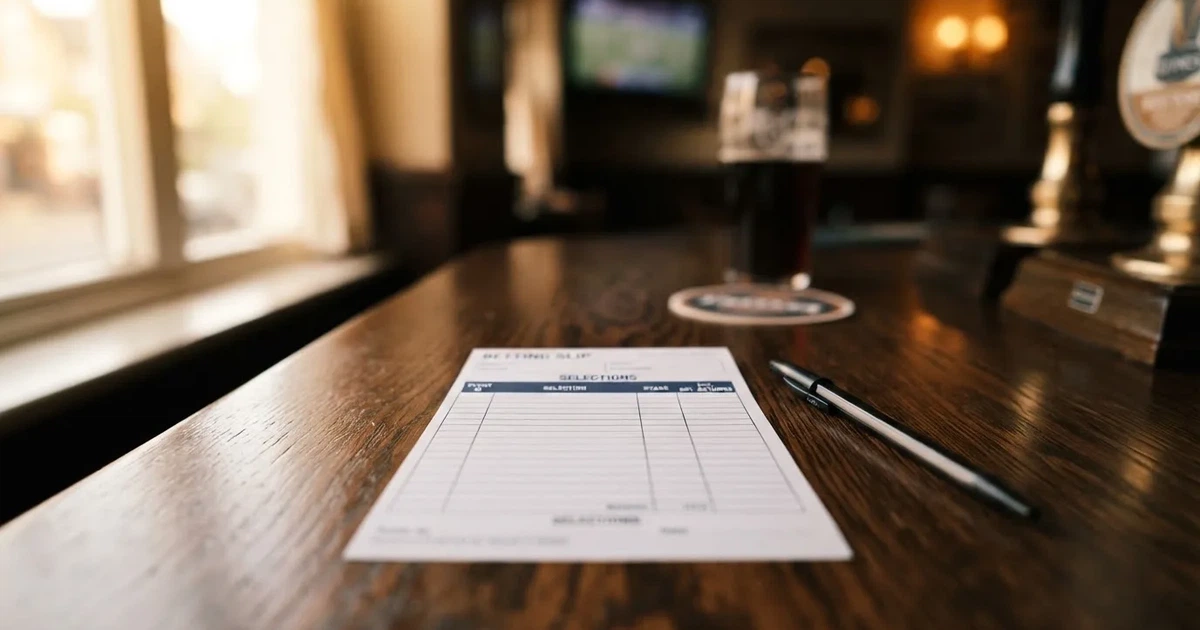
A high stakes bettor does not face a shortage of sites willing to take a piece of the action. The shortage is the other way round. The hard part is finding a bookmaker licensed under the Gambling Act 2005 that will, on its own terms, accept the stake the bettor wants to lay down, settle it at a price that does not eat the edge before the event starts, and pay out in pounds without inventing a reason to hold the funds when the bet wins. This page is a close look at ten operators on the Commission’s register whose terms speak to that reader, and at the rules that decide whether any of them is.
The shortlist at a glance
Ten brands sit on this comparison. Each holds a Gambling Commission remote licence for general betting on real events, and each is named in the order the register returns them when the listed domains are searched. The “What their own terms say” column is taken from each operator’s published terms or app-store listing, not paraphrased away from what those documents actually state.

| Brand | Gambling Commission remote licence and holder | What the operator’s own terms state on the key’s subject |
|---|---|---|
| Betfred | Account 39544 — Petfre (Gibraltar) Limited | Sports app lists Bet Builder, Sub Switch, Racing Post data, Extra Places, plus live casino and bingo alongside the sportsbook |
| Midnite | Account 101839 — Midnite Limited | UK site shows in-play events, an acca builder, popular accas and price boosts that each carry maximum-stake limits |
| Sky Bet | Account 67370 — SBG Sports Limited | Welcome offer credits £30 in free bets as three £10 tokens after a £5 deposit and a first single or each-way bet of at least 5p at 1/1 or greater |
| Kwiff | Account 44448 — Eaton Gate Gaming Limited | Supercharge feature can instantly boost the odds on a bet, for example from 2/1 to 20/1, on singles or multis on any sport |
| Ladbrokes | Account 54743 — LC International Limited | Odds boosts on horse and greyhound bets, Best Odds Guaranteed on UK and Irish racing, in-play betting and Acca Boosts |
| William Hill | Account 39225 — WHG (International) Limited | Best Odds Guaranteed on UK and Irish racing from 8am on race day; Football Acca Boost runs until 30 May 2027 |
| BetGoodwin | Account 2927 — Goodwin Racing Limited | Welcome package breaks £15 of free bets into three £5 tokens — sports, acca and Sub-Cover — after a £10 qualifying bet |
| BetVictor | Account 39576 — BV Gaming Limited | Best Odds Guaranteed on UK and Irish racing, enhanced live race streaming, BetFinder racing tool and Smart Stats |
| QuinnBet | Account 61011 — QuinnBet (Gibraltar) Limited | Free bets valid 7 days from credit, usable at 1/2 or greater, capped at 50/1; straights allowed but Trixies, Patents and Yankees excluded |
| Swifty Sports | Account 58957 — Swifty Global (UK) Ltd | Best Odds Guaranteed, Cash Out on horse racing and football, daily price boosts, live streaming and in-play betting |
The licence numbers are the first thing to verify before anything else on this page is read as advice. The Commission’s public register is searchable by account number, business name, trading name or domain; every entry below names an account number a reader can paste into that register and check the licence class, the holder, the trading names registered against it and the status of the licence.
What “high stakes” means at a licensed bookmaker
The phrase has no statutory definition. The Gambling Act 2005 does not cap stakes, and no Commission rule sets a number above which a bet becomes “high stakes” for licensing purposes. What the Act does, through the Licence Conditions and Codes of Practice, is give the operator the duty to set its own maximum stake, to apply its own customer-protection checks, and to refuse or restrict business where its own money-laundering and safer-gambling duties kick in. “High stakes” in this article means a stake that approaches or exceeds the operator’s advertised maximum, that triggers a source-of-funds request, or that runs into a payment-method ceiling — three separate ceilings that may all bind on the same bet.

The first ceiling is the operator’s per-bet maximum. Bookmakers set this themselves, by event and market, and the figure published on the betting slip is the maximum for a small account. High-stakes customers negotiate up: a telephone betting desk, a VIP manager, or a request through the app’s stake field when the maximum is set above the slip’s display. The second ceiling is the payment method. The 2020 ban on credit cards for gambling closes one route; debit cards, bank transfers and e-wallets have their own daily and per-transaction limits set by the card issuer, the bank or the wallet, not by the bookmaker. The third ceiling is the operator’s risk appetite: a price may be withdrawn, a market suspended, or a stake capped at a lower figure than the slip advertised if the operator judges the liability uncomfortable. None of this is hidden in the small print. The small print is where it is written down.
How the law treats a stake, a price and a payout
A stake is the figure the bettor risks. A price is the fraction by which a winning stake is multiplied, in fractional form (5/1, 11/4, evens, 4/6) or in decimal form (6.00, 3.75, 2.00, 1.67). The return on a winning bet is the stake plus winnings; on a losing bet the return is zero. At evens, a £10 stake returns £20 — £10 of stake returned plus £10 of profit. At 5/1, the same £10 returns £60 — £10 stake plus £50 profit. Decimal odds show the same return as a single figure: 6.00 means every £1 staked returns £6 if the bet wins, of which £5 is profit. The arithmetic is the same in both formats; the format is the only thing that differs.
The price a bookmaker quotes is not the true probability of the outcome. It carries the bookmaker’s margin — the cut the operator keeps from every pound bet on the market, before any individual bet is decided. A two-way market priced at 1.90 / 1.90 has a margin built in. The payout share of that market, the proportion of total stakes returned to bettors across all outcomes, works out to 1 ÷ (1/1.90 + 1/1.90), or roughly 95.0%. The margin is the remaining 5.0%. On a market priced 1.85 / 1.85 the payout share is 92.5% and the margin 7.5%. On a market priced 1.67 / 1.67 the payout share is 83.5% and the margin 16.5%. A margin of 5% to 8% is the typical band for mainstream football markets at the major firms; lower-margin outfits such as betting exchanges sit closer to 2% on liquid events, and the prices the same firms quote on smaller leagues, novelty markets or in-play can carry 10% or more without the bettor noticing from the slip.
A combination bet multiplies the prices of its legs into one. Four legs at 2.00, 2.00, 2.00 and 2.00 read as a 16.00 accumulator on the slip; a £10 stake returns £160 if all four win, of which £150 is profit. The margin of an accumulator is the combined margin of every leg, which is why long accumulators look attractive on paper and carry a built-in disadvantage that compounds with each leg added.
Best Odds Guaranteed and what it actually does
Best Odds Guaranteed is the most common concession British bookmakers offer on horse and greyhound racing. If the starting price — the price the market settles at when the race begins — is bigger than the price taken when the bet was placed, the bet is settled at the bigger price. William Hill applies it to UK and Irish racing from 8am on race day, on both single and multiple bets, and excludes ante-post, tote and pari-mutuel bets. Ladbrokes and Coral run the same concession on UK and Irish racing; Coral extends it to every UK greyhound race. Best Odds Guaranteed does not apply to the place part of an each-way bet on a non-BOG market, does not apply to ante-post bets placed before the final declarations, and is a bookmaker concession — not a rule of racing. The bookmaker can withdraw it, restrict customers, or cap the payout at its discretion, and the operator’s small print says so. On football the equivalent concession is the Odds Booster or the enhanced price, and the same caveats apply.
The bet types a high stakes account will actually use
Singles and multiples are the bread and butter. A single is one selection; a double, treble and four-fold are multiples whose prices multiply. An accumulator is a multiple of three or more selections, often called an “acca” on this side of the Atlantic. An each-way bet is two bets of equal stake — one on the win, one on the place — so the total stake doubles. Place terms vary by race type, number of runners and the operator’s house rules; the place pay-out is a fraction of the win price (commonly a quarter or a fifth), and the place part does not benefit from Best Odds Guaranteed on every operator.
A bet builder is a same-game accumulator: a single betting slip on one event with several selections from that event tied together. Coral’s Bet Builder covers match result, goalscorers, total goals and corners across more than 100 football leagues and competitions, with cash out on selected markets. bet365’s Bet Builder+ combines markets from one event pre-match and in-play, with a separate Winnings Boost available on Bet Builders and selected singles. A bet builder carries the combined margin of its legs and the compounding rule that tells on accumulators in general — useful for a reader who wants one event to do the work, costly if the underlying markets are already wide.
Cash out settles a bet before the event is over, at a price the operator quotes at that moment. The quoted cash-out price reflects the current state of play, the operator’s margin, and a “cash-out charge” built into the figure that is rarely itemised on the slip. William Hill’s terms say Cash Out is not available on each-way bets, is not always available on accumulators, and is not guaranteed. On football, in-play cash out at the top firms runs reliably on the match-result market; on lesser markets the cash-out button can vanish without notice.
Spread betting is a different product from fixed-odds betting. Spreadex is regulated by the Financial Conduct Authority for spread betting and by the Gambling Commission for fixed-odds betting, and warns that spread betting losses can exceed the deposit. Spread betting is a leveraged product on a market index — the number of goals, the number of corners, the run of a player’s score — where the loss is the difference between the spread and the outcome multiplied by the stake. A losing spread bet can cost several times the original deposit. The treatment of spread betting for tax (a separate duty at lower headline rates), for consumer protection (FCA, not the Commission) and for credit-card use (the credit-card ban covers gambling but spread bets on financial markets are a financial product) is not the same as for fixed-odds betting. A reader looking at Spreadex should know which book applies first.
The licence check, in three steps
The public register is the whole test of who holds a Gambling Commission licence. It is a free search, run by the Commission itself, and it lists every operating licence and personal licence in force, suspended or revoked. The fastest way to verify a brand is to search by the brand name; the second fastest is to search by the company’s registered name; the third is to paste the account number straight into the search.
A search returns the licence class, the licence holder’s registered name, the trading names registered against the licence, the status, the date the licence was issued and the date it expires, and any conditions attached. A licence in force is a green “Active” status. A suspended licence is shown in amber; a revoked licence is removed from the public view of the search and surfaces only through the historical register. A licence whose holder has changed name but is the same legal entity carries the new name against the same account number.
A second check is the GAMSTOP membership. Every GB-licensed online operator is in GAMSTOP by licence condition, and GAMSTOP’s own website lists participating operators. A brand on the Commission’s register but not in GAMSTOP is a contradiction that resolves only one way. A third check is the payment-method test. The credit-card ban has been in place since 14 April 2020 and applies to all gambling products, including a credit-card-funded e-wallet top-up. A site that accepts credit cards for gambling is not licensed in Great Britain, whatever its claims, and the Commission has published enforcement notices against such sites.
How a bet is actually settled
When the event closes, the operator’s trading room settles the market at the result. The bet is settled at the price taken when the bet was placed, modified by Best Odds Guaranteed where it applies, modified by any Rule 4 deduction where a runner is withdrawn, and modified by each-way settlement where the bet type is each-way. Rule 4 is a deduction from the price when a horse is declared a non-runner after the bet was placed, and the size of the deduction depends on the withdrawn horse’s price at withdrawal.
Settlement times vary by market. Football settles within minutes of the result. Horse racing settles once the result is confirmed by the judge and any stewards’ enquiry is closed. In-play bets settle as the market closes; a goal in the 89th minute settles the market within seconds at most firms. The settlement appears as a credit to the betting balance; the funds are then withdrawable subject to the operator’s withdrawal terms, which can include a pending period, a verification check on first withdrawal and a payment-method match requirement.
What the small print costs
Three terms recur across the ten operators on this list and recur because they cost the bettor real money. The first is the minimum odds on a qualifying bet. Sky Bet’s welcome offer requires a first bet at 1/1 or greater; a qualifying bet at 4/5 does not qualify. The second is the wagering requirement on a bonus, capped at 10x since 19 January 2026 — a £10 bonus at 50x needed £500 of bets before the cap and needs no more than £100 after it. The third is the expiry on a free bet. Midnite’s free bets are valid for 7 days from credit; QuinnBet’s are valid for 7 days from credit; Sky Bet’s free bet tokens are valid for 30 days. A free bet that expires before it is used is a free bet that pays nothing.
A fourth term is the payment-method exclusion. Operators routinely exclude deposits by Skrill, Neteller or PayPal from eligibility for a welcome offer, on the basis that bonus abuse historically travelled through e-wallets. The exclusion is in the offer terms and is enforced regardless of whether the reader knows it. The fifth term is the maximum stake on a price-boosted or enhanced-odds market. Boosted odds on a market often carry a lower maximum stake than the same market at the unboosted price, because the operator has taken a one-sided view of liability. The maximum is shown on the slip when the boost is taken.
The operators, one by one
Each block below closes with a verdict — what the brand is for, who it suits, and where its terms cost the reader.
Betfred — the high-street name with the racing-heavy app
Betfred runs on a Gambling Commission remote licence under account 39544, held by Petfre (Gibraltar) Limited. Its sports app carries Bet Builder, Sub Switch — the feature that lets a bettor substitute one selection in an accumulator for another — Racing Post data, Extra Places on selected meetings, plus live casino and bingo alongside the sportsbook. The Betfred shop estate is the largest of any UK operator, and the app’s product follows the shop’s racing tilt: Best Odds Guaranteed, Extra Places, the racing form on the home screen and the betting slip defaulting to horse racing for a returning customer.
The terms that bite are the welcome offer’s wagering requirement and the in-play maximum. The welcome package credits free bets whose stake is not returned with a win — a £30 free bet at 3/1 returns £90, of which £60 is profit and £0 is the stake back. Extra Places is a concession rather than a permanent rule, and the Extra Places meetings change by week. A reader who bets football rather than racing will find the in-play product thinner than the firm’s racing one, with fewer markets per event and a higher margin.
Verdict: the right fit for a punter whose calendar is dominated by horse and greyhound racing and who wants a Bet Builder and Sub Switch on the football slips as well.
Midnite — the newer site with the in-play tilt
Midnite holds account 101839 and the site lists in-play events, an acca builder, popular accas and price boosts with maximum-stake limits alongside the betting markets. The welcome offer is a £5-or-more pre-match bet at evens (2.0) or greater, credited as £25 in free bets and 50 free spins valid for 7 days. The 7-day expiry is short — a reader who places the qualifying bet on a Saturday has until the following Saturday to use the free bets, with one event to bet on and the rest lost.
The terms that bite are the maximum-stake cap on the price boosts and the 14-day window on the qualifying bet. A 14-day window is wide enough to be useful; a 7-day window on the free bet is tight. The in-play product is the firm’s centre of gravity — the front page is in-play events, the home screen on the app shows live events before it shows pre-match. A reader who bets in-play will find Midnite’s price-boost cadence and stake caps worth comparing to the bigger firms on the same fixtures.
Verdict: the right fit for a punter whose betting is weighted towards in-play football and who wants the boost cadence that comes with a younger site chasing market share.
Sky Bet — the broadcast-backed brand with the smallest qualifying bet
Sky Bet operates under account 67370, held by SBG Sports Limited, the same group that runs Sky Casino and Sky Bingo. The welcome offer credits £30 in free bets as three £10 tokens after a £5 deposit and a first single or each-way bet of at least 5p at 1/1 or greater. The 5p qualifying stake is the smallest in the comparison; a £5 deposit is also at the low end. The free bet tokens are valid for 30 days.
The terms that bite are the minimum odds on the free bet tokens — the 1/1 threshold applies to the qualifying bet only, but Sky Bet’s free bet tokens carry their own minimum-odds condition. A £10 free bet on a market at 1/5 (1.20 decimal) does not return a profit-eligible win. Sky Bet’s product depth on football is strong, with Super Boost and the Request-a-Bet feature for enhanced prices; the in-play product carries the same depth as the bigger high-street names.
Verdict: the right fit for a punter who wants a small qualifying outlay, a 30-day window on the free bet tokens and the Sky broadcast feed woven into the betting product.
Kwiff — the supercharged-odds brand
Kwiff runs under account 44448, held by Eaton Gate Gaming Limited. The Supercharge feature can instantly boost the odds on a bet, for example from 2/1 to 20/1, on singles or multi bets on any sport. The boost is awarded at the operator’s discretion and is not predictable — the same bet placed at 2/1 by two different customers at the same moment can carry a 20/1 boost for one and a 3/1 boost for the other. The welcome offer mirrors Kwiff’s house style, with a free bet structure that values the Supercharge over the headline credit.
The terms that bite are the unpredictability of the Supercharge and the maximum stake on a boosted market. A boosted price that exceeds the operator’s liability ceiling carries a stake cap, and the cap is shown on the slip only when the boost is taken. A punter whose strategy relies on knowing the price in advance — a matched bettor, a punt on a heavily-liquid market — will find the Supercharge awkward. A punter who treats Kwiff as a separate account for the boosted prices specifically will find it complements a flat-price book rather than replaces one.
Verdict: the right fit for a punter who treats the boosted price as a bonus layer on top of a primary account and who is happy to lose the predictability of a fixed price.
Ladbrokes — the high-street name with the racing-heavy product and the Betfair link
Ladbrokes operates under account 54743, held by LC International Limited. The same group also runs Coral and the Betfair Sportsbook under different account numbers; the three are not independent operators. Ladbrokes offers odds boosts on horse and greyhound bets, Best Odds Guaranteed on UK and Irish racing, in-play betting and Acca Boosts. The high-street shop estate is large, and the app’s product mirrors the shop’s mix.
The terms that bite are the maximum stake on the boosted-odds markets and the each-way place terms. Ladbrokes’ place terms on handicaps are tighter than the standard quarter-of-the-win, and a punter who bets each-way on the firm’s handicaps needs to check the place fraction on the slip. The in-play product is mature; the football in-play margin sits in the typical 5%–8% band for the major firms.
Verdict: the right fit for a punter whose betting is weighted towards UK and Irish racing, who wants Acca Boosts on the football slips, and who values the link to a betting exchange through the same group.
William Hill — the high-street name with the Football Acca Boost
William Hill operates under account 39225, held by WHG (International) Limited. Best Odds Guaranteed applies to UK and Irish racing from 8am on race day, on both single and multiple bets, with ante-post, tote and pari-mutuel bets excluded. The Football Acca Boost covers accas of two or more legs with each selection at 1/5 (1.20 decimal) or bigger, with a boost from 3% on a double up to 200% on twenty or more legs and a maximum boost of £10,000 per online bet, running until 30 May 2027. The Cash Out feature excludes each-way bets and is not always available on accumulators.
The terms that bite are the each-way exclusion on Cash Out and the ante-post exclusion on Best Odds Guaranteed. A punter who bets each-way on the racing and tries to cash out before the off finds the button grey. The Acca Boost is one of the more generous in the market on long accumulators, with a 200% boost at twenty selections and the £10,000 ceiling high enough to be irrelevant to most.
Verdict: the right fit for a punter whose football betting runs through accumulators of two or more legs and who wants Best Odds Guaranteed on the racing on the same account.
BetGoodwin — the racing-led independent
BetGoodwin operates under account 2927, held by Goodwin Racing Limited. The welcome package breaks £15 of free bets into three £5 tokens — sports, acca and Sub-Cover — after a £10 qualifying bet. Sub-Cover is the firm’s accumulator substitute feature. The product is racing-led in the Goodwin family: Best Odds Guaranteed on UK and Irish racing, Extra Places on selected meetings and a betting slip that defaults to the racing card.
The terms that bite are the small free-bet unit size and the wagering structure. A £5 free bet whose stake is not returned pays £10 at evens (2.0) — £5 profit on a £0 stake return. Three £5 tokens break the welcome package into smaller pieces than the equivalent £15 credit at a bigger firm. The Sub-Cover feature, like Sub Switch at Betfred, is a substitute-one-leg consolation on a losing accumulator.
Verdict: the right fit for a punter whose betting is weighted towards UK and Irish racing, who values a small-stake welcome package split across three tokens and who wants the Sub-Cover accumulator cover.
BetVictor — the racing product with the BetFinder tool
BetVictor operates under account 39576, held by BV Gaming Limited. Best Odds Guaranteed on UK and Irish racing sits alongside enhanced live race streaming and a BetFinder feature for finding racing bets, plus Smart Stats. The firm also runs the Heart Bingo and BetVictor Casino brands under the same licence; the sportsbook is one of three products on the licence.
The terms that bite are the Smart Stats coverage and the racing market depth. Smart Stats is a form tool rather than a betting tip; its value is in giving the punter a numerical read on a horse’s chance rather than a prediction. The live race streaming carries an each-way betting requirement on the bigger meetings; a punter who wants to watch a race without betting on it finds the stream restricted.
Verdict: the right fit for a punter whose racing betting is informed by form rather than tipster columns and who wants a BetFinder tool that surfaces bets by criteria.
QuinnBet — the free-bet terms that bite
QuinnBet operates under account 61011, held by QuinnBet (Gibraltar) Limited. Free bets are valid for 7 days from credit, usable on any market at 1/2 (1.50 decimal) or greater, capped at 50/1 (51.00 decimal), and straights are allowed but Trixies, Patents and Yankees are not. The 7-day expiry is on the short side; the 50/1 maximum odds on a free bet is a real ceiling, since a £25 free bet at 100/1 returns £2,500 of profit but the same free bet at QuinnBet settles at the cap.
The terms that bite are the 7-day expiry and the Trixie/Patent/Yankee exclusion. A punter who wants to use a free bet on a system bet finds the firm’s free bet terms narrower than the market norm. The minimum-odds floor of 1/2 is at the looser end — most firms set a 1/2 minimum as well, and a few go to 4/5. The maximum-odds cap of 50/1 is a feature rather than a bug for a punter who uses free bets as bankroll insurance.
Verdict: the right fit for a punter who uses free bets on singles and short accumulators rather than system bets, and who values the 50/1 odds cap over a longer expiry.
Swifty Sports — the all-in-one product
Swifty Sports operates under account 58957, held by Swifty Global (UK) Ltd. The product carries Best Odds Guaranteed, Cash Out on markets including horse racing and football, daily price boosts, live streaming and in-play betting; the Bet Builder is listed as coming soon. The welcome package is a free-bet bundle of three tokens, with a structure that breaks the credit into pieces the punter can use across racing, football and in-play.
The terms that bite are the Bet Builder’s coming-soon status and the price-boost cadence. A punter who wants a same-game multi finds the Swifty Sports product thinner than the bigger firms. The price-boost cadence is daily rather than hourly; a punter who trades boosts as a habit will find fewer boosts per fixture.
Verdict: the right fit for a punter who wants Best Odds Guaranteed, Cash Out and live streaming on one account, and who can wait on the Bet Builder.
The responsible gambling frame
Every GB-licensed operator on this list is in GAMSTOP by licence condition. GAMSTOP is the national multi-operator online self-exclusion scheme, mandatory for online operators since 31 March 2020. Self-exclusion periods are six months, one year, five years, or five years with auto-renewal; after the minimum period the exclusion stays in place for a further seven years unless the customer asks GAMSTOP to remove it. GAMSTOP covers online sites and apps; the high-street betting shops use a separate self-exclusion service.
The Commission’s financial vulnerability check has been in force since 30 August 2024 on licensed remote betting, and applies when a customer’s deposits minus withdrawals exceed £150 in a rolling 30 days since 28 February 2025. The check is a public-record check — bankruptcy, county court judgments — not an income check and not a credit reference check. The Commission’s “financial risk assessment” framework has been announced in a staged plan, with the Commission’s article of 7 July 2026 setting out the staging and no start date. The check is announced, staged, and not in force on a fixed date.
Operators must offer a gross deposit limit on a fixed time frame; the first changes applied since 31 October 2025, a second phase was postponed to 30 September 2026, and whether the second phase is live on the day this page is read is not established from the Commission’s register. There is no state-set deposit or loss ceiling for betting — limits are the customer’s choice, set through the operator’s safer-gambling tools. A punter who wants to set a hard ceiling can set one; the tool exists on every GB-licensed site.
Help is available outside the operator. GamCare runs the National Gambling Helpline. GambleAware funds treatment and research. The NHS runs gambling clinics in several regions. Gamblers Anonymous runs peer-support meetings across the country. The Commission’s own safer-gambling pages list the routes a punter can take if a betting habit is becoming a problem.
What the page does not do
This page does not predict winners. It does not name a horse that will win a race, a football accumulator that will land on Saturday, or a tennis player who will hold serve at a critical moment. No source on the Commission’s register, no operator’s terms, no bookmaker’s margin and no page on this site can give a reader a winner — the prediction of a sporting outcome is unknowable in advance, and a page that claimed otherwise would be selling the reader a false promise.
This page does not provide a bonus code, a promo code or a voucher. Welcome offers, free bet credits and odds boosts are described by their terms, not by a code the reader can copy. Promo codes are governed by the Commission’s marketing rules and the CAP Code, and codes tied to a single affiliate channel are excluded from the rules the page applies.
This page does not list every licensed operator. The register has more brands than this page names; the shortlist is ten operators whose terms are most relevant to a high stakes reader. A reader who is not represented by one of the ten may find a more relevant operator by searching the register by feature (in-play only, exchange only, racing only, casino-only, lottery-only).
The calculation, in plain prose
The margin built into the prices the bettor sees explains the bookmaker’s edge, and this arithmetic is the same no matter which book the bet is on. A two-way market priced at 1.90 / 1.90 — the example the page carries, not a price quoted on a real event — has a payout share of 1 divided by (1/1.90 plus 1/1.90), which works out to 95.0%. The margin is the remaining 5.0%. The same market priced at 1.85 / 1.90 has a payout share of 1 ÷ (1/1.85 + 1/1.90), roughly 93.8%, and a margin of 6.2%. The same market priced at 1.67 / 1.67 has a payout share of 83.5% and a margin of 16.5%.
The margin is the share of every pound bet on a market that the bookmaker keeps across all outcomes. It is not a charge per bet; it is the cut built into the prices. On the 1.90 / 1.90 example, the punter loses 5% on average per pound bet on the market, before any individual bet is decided. On a 1.67 / 1.67 market the punter loses 16.5% per pound on average. The band 5% to 8% is the typical band for mainstream football markets at the major firms, with lower-margin outfits such as betting exchanges sitting closer to 2% on liquid events, and higher-margin markets such as smaller leagues, in-play or novelty markets carrying 10% or more.
The same arithmetic on a combination bet compounds. An accumulator of four legs each at 1.90 carries a margin of roughly 5% per leg, but the combined margin is the compounded effect, not the sum. A punter who builds a 16.00 accumulator from four legs at 2.00 each has accepted a margin that compounds over the four legs, and the expected loss per pound on the accumulator is the combined margin of the four markets expressed at the multiplied price.
The closing verdict
Ten licensed bookmakers for high stakes betting in Great Britain, each with the licence number a reader can verify on the Commission’s register, each with a product tilted towards a particular kind of punter, each with terms that bite in a particular place. The licence check is the first filter and the Commission’s register is the only test; the price check is the second and the margin built into the slip is the only test that matters; the small-print check is the third and the welcome offer’s qualifying threshold, the free bet’s expiry and the maximum stake on a boosted market are the three lines that decide whether the offer pays. Beyond that, the page’s job is done. The bet is the punter’s.
Frequently asked questions
How can it be checked that a bookmaker holds a Gambling Commission licence?
The Commission’s public register is the only authoritative source. Search by the brand name, the licence holder’s registered name, the trading name or the account number — each returns the licence class, the holder, the registered trading names, the status, the dates and any conditions. A licence in force shows as active. Cross-check GAMSTOP membership: every GB-licensed online operator is a member by licence condition. Cross-check the credit-card ban: any site accepting credit cards for gambling is not licensed in Great Britain.
How is the return on a bet worked out from the stake and the odds?
Multiply the stake by the decimal odds to get the return on a winning bet. The profit is the stake multiplied by (odds − 1); at evens (2.00), a £10 stake returns £20 with £10 profit. On a combination bet the leg prices multiply into one — four legs at 2.00 each give a 16.00 accumulator, where a £10 stake returns £160 with £150 profit. A losing bet returns nothing.
What is the bookmaker’s margin and how can it be seen in the odds?
The margin is the share of every pound bet on a market that the bookmaker keeps across all outcomes. A two-way market at 1.90 / 1.90 returns about 95.0% to bettors on average and carries a 5.0% margin. The lower the margin, the more the bookmaker is paying out; mainstream football markets sit between 5% and 8% margin, exchanges sit near 2% on liquid events, smaller leagues and in-play markets can exceed 10% margin.
Which tools for controlling play does a licensed bookmaker have to offer?
Every GB-licensed online operator must be in GAMSTOP, must offer deposit limits on a fixed time frame, must run a financial vulnerability check on customers whose net deposits exceed £150 over 30 days, and must offer time-out and self-exclusion options inside the account. Outside the operator, GamCare runs the National Gambling Helpline, GambleAware funds treatment and research, the NHS runs gambling clinics, and Gamblers Anonymous runs peer-support meetings.
Are betting winnings taxed in Great Britain, and who pays General Betting Duty?
The player pays no tax on betting winnings in Great Britain — general information, not tax advice. General Betting Duty is the operator’s tax on gross profits from betting, currently 15% on the remote rate, with a new 25% remote rate applying from 1 April 2027 for general remote betting while remote bets on UK horse racing, pool betting and in-person betting remain at 15%. Spread betting has separate rates (3% financial, 10% other). The duty is paid by the operator, not the punter.
Betting sites & exchanges – Bookies Trust
Content created by the «Bookies Trust» team
