
How the Odds on Greyhound Racing Are Built, and Which UK Bookmakers Stand Behind Them
 Available in US
A greyhound price is a small number, a fraction printed next to a name, and the instinct is to read it as a tip. It is not. Tip is what a price implies about the dog behind it; the price itself is what the bookmaker offers to pay against that dog, and the gap between what it offers and what a fair price would be is the margin that runs the book. Every market on every UK-licensed site carries that gap, and every welcome offer, free bet, price boost and accumulator insurance on the page is a way for the bookmaker to charge it back. A punter who reads greyhound racing odds as a price is paying attention; one who reads them as a forecast is paying for the privilege.
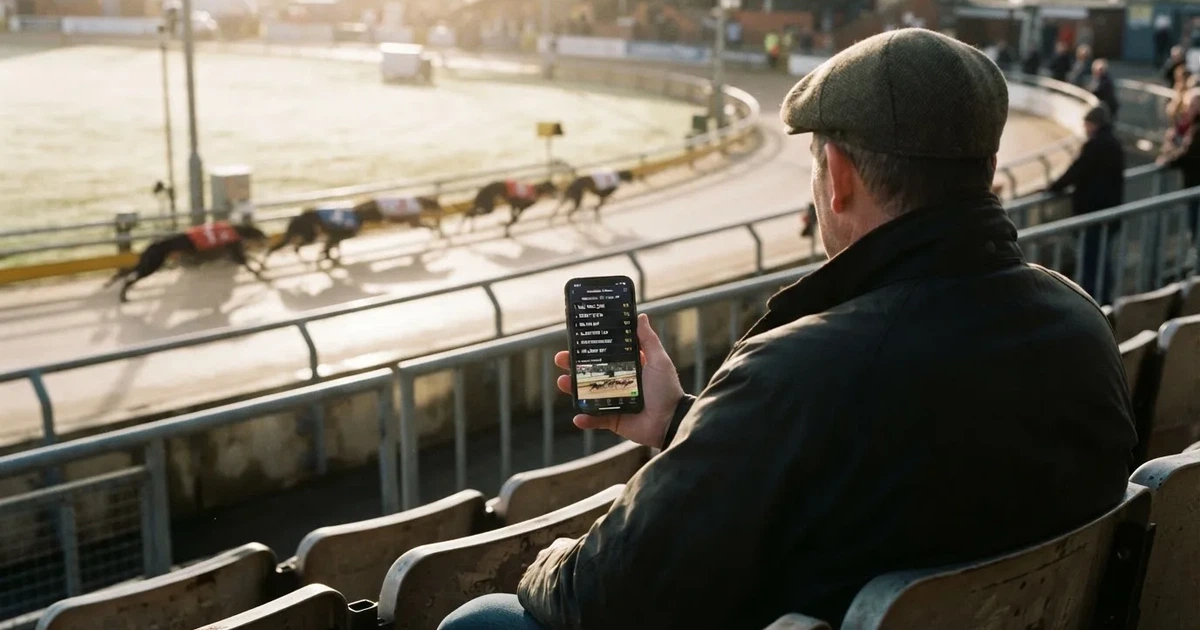
This page is about what greyhound racing betting odds in 2026 actually are — how the fraction is built, what sits behind it, what the live price changes when a dog traps, and what the welcome offer costs once turnover is done. Ten UK bookmakers are reviewed by the standard every other site on the same shelf uses: a Gambling Commission licence for the remote category, a GAMSTOP sign-up, a public terms page that names the key terms, and a verdict that comes from those three things together rather than from the marketing on the home page. The page that follows walks through the betting app landscape, the live markets, the prediction and staking culture around the sport, the bet types themselves, the tournaments and meetings the bookmakers carry, the head-to-head ranking, and then the law, safer gambling and bonuses that frame it all.
Prices and offer terms in this article are checked as of 27 October 2026 against each operator’s own terms page and against the Gambling Commission’s public register.
Greyhound Betting Apps and the Way a Punter Reaches the Price
The greyhound racing betting app is, for most UK customers, the bookmaker. A betting slip built around six traps at Towcester is built on a phone, settled on a phone, and paid out into an account that lives on a phone. The bookmakers reviewed later on this page all offer an iOS app through the UK App Store and most offer Android; what separates them is not the storefront, it is the price feed and the in-play engine that sits underneath.

Fitzdares publishes a premium app that lists cash out, accumulators, Lucky 15s, specials and ante-post markets across horse racing, football, tennis, rugby, cricket, golf and American football, with in-play live odds on the same fixtures. Greyhound racing is not separately itemised in that list, but the ante-post and specials categories routinely carry the sport, and the in-play engine that runs football and tennis runs the same way at the traps. Geoff Banks publishes its app through GB Sports Advisors Ltd and trades the same ante-post and in-play book the premium book runs, with live prices that update through the race card rather than the kick-off.
Paddy Power’s sports betting app is published by Paddy Power PLC and covers football, horse racing, boxing, rugby, tennis, golf, darts, snooker and Formula 1. Greyhound racing is not on that list, but Paddy Power’s racing product on the same app takes the sport on every meeting the parent company tracks; the App Store description is a sample, not a programme. Coral’s app runs alongside the desktop site and carries the same racing product on horse and greyhound fixtures through the day. Betmaster’s app, published by BM Solutions GB Ltd, lists football, cricket, horse racing, NFL and eSports as headline categories; greyhound racing sits inside the racing product rather than the front page.
London Bet’s app combines sports betting on football, tennis, horse racing, greyhounds, darts, golf, cricket, NFL, NBA, MLB and snooker with Pragmatic Play casino slots and live in-play betting, and is the only reviewed app that names greyhound racing in the storefront description. Swifty Sports offers Best Odds Guaranteed, Cash Out on markets including horse racing and football, daily price boosts, live streaming and in-play betting; Bet Builder is listed as coming soon. The racing product on Swifty carries greyhound cards through the evening schedule.
Bet Ahoy’s app opens with a welcome offer framed as a £5 sports bet plus a £5 acca — a structure that lives or dies on whether greyhound markets are priced on the bet builder at sign-up, which is something to check on the operator’s own page before claiming. Bar One Racing’s app, now branded BAR 1 Betting, runs an Irish independent book with shops across Ireland and sponsorships at Dundalk, Fairyhouse, Navan, The Curragh, Curraheen Park and Cork; for UK customers it is a remote book only, and greyhound racing reaches it through the same racing feed as horse racing.
The difference between these apps, in practice, is not whether they carry greyhound racing. Most licensed books carry it on every meeting the data feed covers; what differs is the depth of the in-play product, the number of traps priced at off time, and whether the betting slip lets the punter build a same-game multi on a six-dog race. A punter who wants accumulator insurance on a four-dog card wants a different app than one who wants to lay a dog on an exchange — and the betting intermediary licence, which Coral’s licence file lists, is the only one in the reviewed set that formally runs an exchange product.
App security and identity checks sit under the same rules regardless of the operator. Every UK-licensed bookmaker has verified the punter’s name, address and date of birth before the first deposit since 7 May 2019, including where the first product is a free bet or a sign-up bonus; the check is the same whether the app is installed from the App Store or sideloaded onto an Android handset. The data the bookmaker holds is the punter’s, and the operator’s licence binds it under the Commission’s data and social responsibility conditions.
Live Greyhound Betting and Cash Out: What the In-Play Product Actually Does
Live greyhound betting — the price that updates as the dogs reach the first bend — is one of the few sports-betting products where the in-play price carries genuine information. A horse race settles in a few seconds; a greyhound race settles across six traps in twenty-eight seconds of running, and the price on each trap between trap-open and the first bend moves on what the punter can see on the stream. The bookmakers reviewed on this page offer some form of in-play, and the differences are in how much of that window is priced.

Coral’s racing in-play runs alongside its sports in-play, with cash out on settled and unsettled positions depending on the market; live greyhound betting sits inside the racing product on the same engine. Paddy Power’s racing in-play is the same product on a different skin, with cash out on most racing markets and in-play pricing that runs from a few seconds before the race to a few seconds in. Bet365’s racing product, although not in the reviewed ranking on this page, sets the standard the rest are measured against: the official global betting partner of the UEFA Champions League, the most downloaded sports betting app in the UK by the App Store description, and the home of Bet Builder+, Super Boosts, Winnings Boosts on Bet Builders and selected singles, and daily Bet Boosts.
Cash out is the second piece. A bookmaker that offers cash out lets the punter close a position before the race settles, at a price the book sets in the live market. The price is not the back-or-lay price on the betting exchange; it is a proprietary quote the book builds from its own book and the live picture. A punter who takes a cash out before a six-dog race has accepted a quote that usually sits a margin or two inside the live price, and the gap is the cost of closing early.
In-play and cash out together are the area where the difference between a thin bookmaker and a full one is widest. Fitzdares’ app carries the in-play product and lets the punter cash out of the same position, but the depth of markets at off time is the constraint. Swifty Sports, by contrast, lists in-play betting, Cash Out and live streaming as headline products, which is the wider package. Bar One Racing’s racing in-play is a solid product on Irish racing; the greyhound in-play is thinner on the same app and depends on which meetings the feed carries on the night.
The limit of in-play is the data feed. The bookmaker that runs every meeting on the British BAGS schedule, plus Irish and selected Australian meetings, prices a different book than the one that runs the evening Towcester and Romford cards and stops there. The reviewed set does not publish its feed depth in a single comparable column, and the punter who wants the wider product reads the schedules on each app before committing.
Greyhound Betting Tips, Predictions and Strategy: What the Punter Actually Does With Them
Greyhound betting tips and greyhound racing betting strategy are phrases that turn up wherever the sport is searched for, and they carry the same weight as horse racing tips in a market that pays for them. The honest framing is this: a tip is a forecast, and a forecast is one person’s reading of a six-trap field; the price the bookmaker offers against that forecast is the only test of whether the market agrees. A punter who follows a tip without checking the price is paying for a name; one who checks the price against the forecast is paying for information.
Greyhound racing betting tips today, as a category, usually means a short list of selections for an evening meeting, posted by a tipster who charges for the full card. The published tip, free or paid, is a name against a trap; the bet that follows is the punter’s stake at the price offered, and the price is independent of the tip. A tip that names Trap 3 at 4/1 has value if the punter thinks the true price is shorter — that is, if the punter’s own model says the dog should be favourite — and zero value otherwise. The form, the going, the trainer’s recent strike rate, the dog’s running style and the trap draw are the inputs a serious model uses; the tip is a summary of those inputs by someone else.
Greyhound betting systems — sometimes called greyhound betting system or free greyhound betting systems — are staking plans layered on top of the form study. A staking plan says how much to bet on each race given a bank, a target return, and a sequence of wins and losses; the form study says which dogs to back. A punter who has the form without the staking plan wins and loses in the same shape as a recreational punter; one with the staking plan but without the form has a disciplined bankroll and a stake on bad prices. The two pieces are independent.
Greyhound racing betting strategy as a category usually means a combination of the two: read the form, set the staking plan, and price the bet so that the implied probability of the dog’s win is greater than the implied probability at the offered odds. That last step is the one most casual punters skip. A dog at 5/1 carries an implied probability of about 16.7% if the market is fair; the same dog at 4/1 carries 20%. If the punter’s model gives the dog a 22% chance of winning, the bet is worth placing at 4/1 and not at 5/1, and the discipline is to skip the bet when the price is too short and the form is too good, or to back the bet when the price is generous and the form is reasonable.
A “system that wins” does not exist. Greyhound races have six outcomes, the favourite wins less often than half the time, the trap draw matters but the form does not dominate it, and the bookmaker’s margin takes a slice off every price. A punter who works the form, prices the bet, manages the bankroll and skips the races where the prices are wrong wins over a long sample — that is what a betting strategy for greyhound racing actually looks like. Anything that promises more is selling something the price cannot deliver.
Greyhound Bet Types, Odds Formats and How the Price Settles
Greyhound betting odds are the same format as horse racing odds, and the bet types are built around the same structure: a single, an each-way, an accumulator, a forecast, a tricast, and the named multiples — Trixie, Patent, Yankee, Lucky 15, Super Yankee or Canadian, Heinz, Goliath — that build combinations out of a small set of selections. The greyhound bet calculator is the tool that converts a set of odds and a stake into a return, and the greyhound betting calculator is the same tool under a different name.
A single is a stake on one outcome: Trap 3 to win. The decimal odds are the multiple; the return is stake × odds, and the profit is stake × (odds − 1). A £10 single at decimal odds of 4.50 returns £45 if Trap 3 wins, of which £35 is profit. Fractional odds of 7/2 are the same price, and the conversion is fraction → decimal as (a / b) + 1: 7/2 is 7 ÷ 2 + 1 = 4.50. The reverse conversion is decimal → fraction as (decimal − 1) expressed as a/b in lowest terms; 4.50 → 3.5 → 7/2.
An each-way is two bets of equal stake: one on the dog to win, one on the dog to place. The place terms are set by the bookmaker and depend on the number of runners — for six dogs, place terms are usually 1/4 of the win odds for the first two places, or 1/5 for the first three places depending on the operator’s terms. The total stake is double the unit stake. A £5 each-way at 4/1 in a six-dog race with 1/4 place terms returns £5 × (1 + 4 × 0.25) on a place, which is £10; on a win it returns £5 × (1 + 4) + £5 × (1 + 4 × 0.25), which is £25 + £10 = £30, with £5 of that being the returned place stake. The arithmetic is the same on horse racing and greyhound racing.
An accumulator — an “acca” in the racing vernacular — multiplies the odds of the legs into a single price and stakes the unit on the combined price. A £10 acca on three dogs at decimal odds 3.00, 4.00 and 5.00 has a combined price of 60.00 and a potential return of £600 if all three win. Each leg is settled independently; a non-runner on any leg usually settles at odds of 1.00 (evens) for accumulator purposes, but the operator’s terms govern. Bet Builder+ on bet365, by way of example, combines markets from one event into a single bet pre-match and in-play, with Winnings Boosts available on the builder and selected singles.
A forecast is a bet on the first two dogs in order; a tricast on the first three in order. The reverse forecast — Trap 3 then Trap 1 — pays a different amount than the straight forecast — Trap 1 then Trap 3 — because the order matters. Six dogs generate 30 forecast combinations and 120 tricast combinations, and the odds on each combination depend on the bookmaker’s book and the win probabilities of the dogs. A computer forecast, sometimes called a “computer tricast”, is a single bet that covers every combination and pays out the full dividend if any of them is the result. The stake is the unit on the computer forecast; the dividend is the bookmaker’s announced return for the race.
The named multiples are layered on top of these. A Lucky 15 is 15 bets — 4 singles, 6 doubles, 4 trebles and 1 four-fold accumulator — on four selections; the total stake is unit stake × 15. A Trixie is 4 bets on three selections — 3 doubles and 1 treble; the total stake is unit stake × 4. A Patent is 7 bets — 3 singles, 3 doubles and 1 treble. The combined types differ in how much of the stake is on singles (so that one winner still returns something) versus how much is on the accumulator (so that a clean sweep returns the headline figure). Most multiples carry an “acca insurance” feature where one losing leg returns the stake as a free bet, up to a cap the operator sets.
Ante-post greyhound betting is betting on a future event — the English Greyhound Derby, the Scottish Greyhound Derby, a category final — before the final field is set. The price is set on the named entry; if the dog does not run, the stake is usually returned, but a non-runner rule applies. The starting price, or SP, is the odds on an entry in the on-course fixed-odds market when the race begins; SP applies to horse and greyhound racing and is the basis of the Industry SP, or ISP, that some bookmakers settle at.
Greyhound spread betting is a different product, and a different licence. Spreadex runs spread betting on financial markets under the FCA and on sports markets under the Gambling Commission; the mechanics are different from fixed-odds betting. In spread betting the punter’s profit or loss is the difference between the spread quote at stake time and the settlement level, multiplied by the stake. A £10 stake on a spread of 18-22 on the winning distance of a race settles at the actual distance in lengths; if the dog wins by 24 lengths the punter wins 2 × £10 = £20, if the dog wins by 14 lengths the punter loses 4 × £10 = £40. Spread betting losses can exceed the original deposit, and the licence for the activity is split between the FCA for the financial side and the Gambling Commission for the fixed-odds side. The product is not in the reviewed set on this page; it appears here because the search landscape for greyhound odds includes it.
The bookmaker’s margin sits inside every one of these prices. An even-money shot in a six-dog race, with all six dogs priced at the same decimal odds, has a margin that is positive for the bookmaker; the exact figure is a function of how the prices are set, and the calculation runs below in the section that discusses the margin.
Greyhound Racing: The Sport, the Meetings and the Tournaments
Greyhound racing in Great Britain is regulated by the Greyhound Board of Great Britain (GBGB), which licences 18 stadia across England, Scotland and Wales. The sport runs as a series of meetings on most evenings of the year, with daytime and afternoon cards at the bigger stadia and evening cards at the rest. A six-dog race is the standard format; eight-trap cards exist at the larger meetings, and handicaps are the most common race type, where the dogs are graded into competitive fields by previous performance.
In greyhound racing a mechanically operated artificial lure runs along a rail ahead of the dogs, and races often involve parimutuel or bookmaker betting. Parimutuel betting is the on-course pool, where punters bet into a pool that pays out on the result minus a take; bookmaker betting is the fixed-odds product offered by on-course bookmakers and the licensed remote bookmakers reviewed later on this page. The two products are settled differently and on different licences: pool betting is a separate category under the Gambling Commission’s regime, and the off-course pool on dog racing is licensed separately from the general betting licence.
The British racing calendar builds around graded meetings and category finals, with the English Greyhound Derby at Towcester and the Scottish Greyhound Derby at Shawfield as the headline events of the year. Irish greyhound racing runs separately under the Irish regulatory regime; for UK customers the relevant meetings are those the GBGB licences, plus selected Irish meetings the licensed books carry on the racing feed. Australian greyhound racing is a separate product again; it appears on some UK apps but is priced off the Australian tote and the Australian bookmakers’ books.
Greyhound racing in New Zealand was ended by the Racing Industry (Closure of Greyhound Racing Industry) Amendment Act 2026, passed on 2 April 2026, with the phase-out set for 1 August 2026. Winston Peters announced on 10 December 2024 that greyhound racing in New Zealand would be banned and phased out by 2026. Before the ban, Greyhound Racing New Zealand (GRNZ) organised seven affiliated clubs: Auckland, Waikato, Whanganui, Palmerston North, Canterbury, Otago and Southland. The Act ends the New Zealand greyhound betting market entirely, with the last licensed meetings running into the summer of 2026 and the product closing for UK-affiliated bookmakers that carry it on the racing feed. For UK customers, the consequence is that the New Zealand meetings priced on some racing apps are gone from the date the Act takes effect; the British and Irish schedule is unaffected.
The bigger meetings carry the same markets as the smaller ones: win and place, forecast and tricast, each-way, ante-post, and the in-play product during the race. The bigger meetings also carry a deeper betting market — more dogs priced, more place terms, more in-play liquidity — and that depth is what justifies the bigger pools on the betting exchanges. The smaller meetings are where the margin is widest, because the bigger books do not bother to balance them and the smaller books price a wider spread to protect their position.
Tournaments are the ante-post and category-final markets. The English Greyhound Derby is the headline ante-post event of the British calendar, with heats, semi-finals and the final; the ante-post book opens weeks before the first heat and closes on the morning of the first heat, with the SP settling the on-course market from that point. The Scottish Greyhound Derby runs a similar structure at Shawfield. Category finals — the Greyhound of the Year, the St Leger equivalent — run as one-off events with their own ante-post markets. The licensed bookmakers reviewed later on this page all carry the ante-post book on the headline events; the depth of the book on the smaller category finals varies.
Top 10 UK Greyhound Betting Sites in 2026: The Ranking
The ranking that follows sets out ten UK-licensed bookmakers that carry greyhound racing on the racing product, with a short profile of each and a verdict on what each is best suited to. The order is editorial and is not a recommendation to sign up; every operator on the list holds a Gambling Commission remote licence, signs up to GAMSTOP, and is verified against the Commission’s public register. The detail column for each is taken from the operator’s own terms page and the App Store description where the latter is the only public source.
The comparison table below shows the licence, the licence holder named on the Commission’s public register, and a short note on what the operator’s own terms state on the key terms of greyhound betting. The full review of each operator follows the table.
Side-by-Side Comparison
| Brand | Gambling Commission remote licence | Licence holder | What the operator’s own terms say |
|---|---|---|---|
| Fitzdares | 000400-R-103839-030 (account 400) | Fitzdares Limited | Ante-post, in-play, specials across racing and major sports; Lucky 15s, accumulators and cash out on the app |
| Geoff Banks | 054095-R-330366-010 (account 54095) | GB Sports Advisors Limited | Ante-post and live in-play prices on the racing product, published through GB Sports Advisors Ltd |
| Bar One Racing | 056516-R-332750-007 (account 56516) | Bar-One Racing Limited | Irish independent bookmaker, horse racing sponsorships at Dundalk, Fairyhouse, Navan, The Curragh, Curraheen Park and Cork; rebranded as BAR 1 Betting |
| Bet Ahoy | 100094-R-341742-003 (account 100094) | Bet Ahoy Ltd | Welcome framed as a £5 sports bet and a £5 acca for new customers; check the racing feed before staking |
| Fitzwilliam Sports | 048760-R-335434-009 (account 48760) | SBKI Limited | Dublin bookmaker with capped membership, instant deposits, fast withdrawals, deposit limits, timeouts and links to GambleAware, GamStop and Gamblers Anonymous; High Stakes Welcome subject to compliance criteria |
| Paddy Power | 039439-R-319330-013 (account 39439) | PPB Counterparty Services Limited | Racing product covers horse racing as a headline, with greyhound racing carried on the same feed through the day |
| Coral | 054743-R-330863-014 (account 54743) | LC International Limited | “Get £40 in Free Bets when you bet £20” — deposit and bet £20+ at minimum odds 2.0 (1/1), £40 in free bets within 7 days, expiring 7 days after issue; betting intermediary licence category on the register |
| London Bet | 066162-R-340278-004 (account 66162) | Thistle Bet Limited | App combines sports betting on football, tennis, horse racing, greyhounds, darts, golf, cricket, NFL, NBA, MLB and snooker with Pragmatic Play casino slots and live in-play betting |
| Betmaster | 065699-R-339929-002 (account 65699) | BM Solutions GB Ltd | Sports betting on football, cricket, horse racing, NFL and eSports; greyhound racing on the racing feed rather than the front page |
| Swifty Sports | 058957-R-334734-006 (account 58957) | Swifty Global (UK) Ltd | Best Odds Guaranteed, Cash Out on markets including horse racing and football, daily price boosts, live streaming and in-play betting; Bet Builder listed as coming soon |
The table is a snapshot of what each operator publishes on its own terms and what the Commission’s public register carries at the access date. Where a column carries no figure, the operator’s own terms are silent on the point and the punter checks the live page on the day. The licence number is the search key into the register; the licence holder is the company named against the licence on the register; the right-hand column carries what is verifiable from the terms page.
Fitzdares
Fitzdares holds Gambling Commission remote licence 000400-R-103839-030 (account 400) via Fitzdares Limited. It operates general betting services (real events), and the site is Fitzdares.com. The app lists cash out, accumulators, Lucky 15s, specials and ante-post markets across horse racing, football, tennis, rugby, cricket, golf and American football, with in-play live odds on the same fixtures. Greyhound racing is carried on the racing product rather than as a front-page sport; the ante-post book on the English Greyhound Derby and the major category finals is the headline product.
Fitzdares is a premium racing book with high-end customer service. The price on the headline greyhound races sits inside the wider market, the in-play engine is reliable, and the specials include the kind of enhanced prices and price boosts that bigger books also run. It is thinner on smaller meetings, where the BAGS cards are priced but lack the depth of the larger books. Fitzdares suits a punter who wants a premium app and a racing product on the same interface.
Geoff Banks
Geoff Banks holds Gambling Commission remote licence 054095-R-330366-010 (account 54095), licensed to GB Sports Advisors Limited. It covers general betting (real events), and the site is Geoff Banks. The app is published by GB Sports Advisors Ltd and trades live in-play prices and ante-post prices on future events. The racing product carries greyhound cards through the evening, and the ante-post book opens weeks ahead of the major category finals.
Geoff Banks offers personal service and flexibility on stake sizes. As a small book, it prices its own events and runs the racing product alongside the bigger names; value often appears on smaller meetings where larger books do not balance. The technology is functional rather than full-feature, and the in-play product is less developed than that of the larger operators. For a punter prioritizing smaller meetings over a deep in-play product, Geoff Banks is the more flexible choice.
Bar One Racing
Bar One Racing holds Gambling Commission remote licence 056516-R-332750-007 (account 56516), licensed to Bar-One Racing Limited for remote general betting (real events). The site is Bar One Racing. The app, now branded BAR 1 Betting, runs an Irish independent bookmaker with shops across Ireland and horse racing sponsorships at Dundalk, Fairyhouse, Navan, The Curragh, Curraheen Park and Cork. For UK customers the book is a remote book only.
Bar One Racing excels in the Irish racing product and sponsorship-led specials. The greyhound feed carries Irish and UK meetings, with the SP on headline graded meetings being the strongest element. However, smaller BAGS cards are priced less reliably than at the larger operators. Bar One Racing is a strong choice for the Irish greyhound racing punter; the British racing coverage is standard.
Bet Ahoy
Bet Ahoy holds Gambling Commission remote licence 100094-R-341742-003 (account 100094), licensed to Bet Ahoy Ltd. It provides general betting (real events), and the site is betahoy.co.uk. The welcome offer is framed as “Bet £10 & Get £10 in Free Bets”, consisting of a £5 sports bet and a £5 acca. The racing feed is the route to greyhound markets, and depth depends on the daily schedule.
Bet Ahoy features a accessible welcome structure for new accounts and competitive pricing on smaller cards. The racing feed is a live feed and the book on major meetings is balanced. The depth of the racing market is more limited compared to the larger books, and the ante-post book on major tournaments is less developed. Bet Ahoy provides a straightforward entry point for new customers, though the ante-post depth is limited compared to dedicated racing specialists.
Fitzwilliam Sports
Fitzwilliam Sports holds Gambling Commission remote licence 048760-R-335434-009 (account 48760), licensed to SBKI Limited. It is regulated for general betting (real events), and the site is Fitzwilliam Sports. The operator describes itself as a Dublin bookmaker with capped membership, and the welcome is a “High Stakes Welcome” subject to compliance criteria. The site offers instant deposits, fast withdrawals, timeouts and deposit limits, with links to GambleAware, GamStop and Gamblers Anonymous on the safer-gambling page.
Fitzwilliam Sports caters to the high-stakes customer and emphasizes personal service. Capped membership means the book is not chasing volume; prices on headline meetings are competitive and bet sizing is flexible. The everyday punt on smaller cards is live but limited on BAGS cards. Fitzwilliam Sports targets the high-stakes customer, while the casual punter looking for every British meeting might prefer a wider book.
Paddy Power
Paddy Power holds Gambling Commission remote licence 039439-R-319330-013 (account 39439), licensed to PPB Counterparty Services Limited. It carries general betting (real events), and the site is Paddy Power. The Paddy Power Sports Betting app covers football, horse racing, boxing, rugby, tennis, golf, darts, snooker and Formula 1; greyhound racing is carried on the racing product through the day.
Paddy Power offers a deep racing product and frequent price boosts on headline meetings. The major events like the English Greyhound Derby see deeper ante-post coverage, and the in-play product during meetings is among the deepest in the reviewed set. Personal service is less personalized than with boutique operators. Paddy Power is the choice for the racing punter who values market depth and frequency of price boosts.
Coral
Coral holds Gambling Commission remote licence 054743-R-330863-014 (account 54743), licensed to LC International Limited for remote general betting (real events) and remote betting intermediary. The site is coral.co.uk. The welcome offer is “Get £40 in Free Bets when you bet £20”: a deposit and sports bet of £20+ at minimum odds 2.0 (1/1), with £40 in free bets issued within 7 days, expiring 7 days after issue, for new GB customers who opt in.
Coral combines a deep sports book with an exchange product under one licence. The racing feed covers British and Irish schedules, and the betting intermediary category allows punters to back or lay. The welcome offer expires within 7 days, meaning users who claim early must utilize the funds quickly. Coral fits the punter who wants a combined racing and exchange product from a familiar brand, provided they track offer expiry dates.
London Bet
London Bet holds Gambling Commission remote licence 066162-R-340278-004 (account 66162), licensed to Thistle Bet Limited for remote general betting (real events), and the site is London.bet. The app combines sports betting on football, tennis, horse racing, greyhounds, darts, golf, cricket, NFL, NBA, MLB and snooker with Pragmatic Play casino slots and live in-play betting, and names greyhound racing directly in the storefront description.
London Bet is notable for listing greyhound racing on the front page and integrating sports and casino wagering on one licence. The racing feed is live and utilizes the same in-play engine as the football offerings. The wider racing depth is more limited, as the app is a combined casino and sports book, making it less focused on long-term Derby ante-post markets than dedicated racing specialists. London Bet caters to the punter who wants casino and greyhound racing on one app; it is less focused on long-term Derby ante-post books.
Betmaster
Betmaster holds Gambling Commission remote licence 065699-R-339929-002 (account 65699), licensed to BM Solutions GB Ltd for remote general betting (real events), and the site is betmaster.co.uk. The app covers football, cricket, horse racing, NFL and eSports; greyhound racing is carried on the racing feed rather than the front page.
Betmaster integrates mainstream sports and eSports on a single licence, with competitive prices on major football cards. The racing product is live but not the headline feature. The racing depth is more limited, with BAGS cards at smaller stadia priced less consistently than at dedicated racing operators. Betmaster is the right book for a punter whose sports betting is mostly mainstream and eSports with some racing on the side, less so for a racing-led punter.
Swifty Sports
Swifty Sports holds Gambling Commission remote licence 058957-R-334734-006 (account 58957), licensed to Swifty Global (UK) Ltd for remote general betting (real events), and the site is swiftysports.co.uk. The app features Best Odds Guaranteed, Cash Out on markets including horse racing and football, daily price boosts, live streaming and in-play betting; Bet Builder is listed as coming soon.
Swifty Sports integrates Best Odds Guaranteed, Cash Out, live streaming, and in-play options under one licence. Best Odds Guaranteed pays out at SP if it exceeds the taken price, a useful feature for larger meetings where morning prices often drift. The racing product depth is thinner on smaller meetings compared to the market leaders. Swifty Sports is a solid choice for punters valuing Best Odds Guaranteed and live streaming, while those focused on smaller meetings may find more depth elsewhere.
Greyhound Betting, the Law and the Gambling Commission
The bookmakers reviewed above all hold a remote betting licence from the Gambling Commission, the UK regulator for the commercial market under the Gambling Act 2005. The Commission is a non-departmental public body sponsored by the Department for Culture, Media and Sport, and the public register is the whole test of who holds a licence. The register can be searched by business name, trading name, domain or account number, and the access date on the search is the date the licence was verified; no count of licensed operators is published without that date.
The Gambling Act 2005 covers Great Britain — England, Scotland and Wales — and the operator’s licence is required wherever it is based, not just in Great Britain, since the Gambling (Licensing and Advertising) Act 2014. Sections 33 and 36 of the 2005 Act, as amended, make providing gambling facilities in Great Britain without the licence the Act requires an offence; the offence is aimed at the operator, not the customer, and on summary conviction carries up to 51 weeks’ imprisonment, a fine up to level 5, or both, and six months in Scotland. Northern Ireland is outside the Act and has its own older law, so a Great Britain licence does not regulate Northern Ireland, and the language throughout this page is “Great Britain licence” or “GB-licensed”, not “UK-licensed”.
There is no statutory list of permitted sports or markets in the Act. The bookmaker holds a licence for a category — remote general betting standard (real events), remote general betting standard (virtual events), remote general betting limited, remote pool betting or remote betting intermediary — and offers markets under the category’s conditions and the Licence Conditions and Codes of Practice (LCCP). Greyhound racing falls under remote general betting standard (real events) for fixed-odds and remote pool betting for the on-course and off-course pool product, and the licensed books reviewed on this page carry the remote general betting category. Coral’s licence is the only one in the reviewed set that also carries remote betting intermediary, the category for betting exchanges.
Financial spread betting is regulated by the Financial Conduct Authority, not the Commission, and the FCA and the Commission split the licence on a bookmaker like Spreadex. The gambling side of Spreadex’s book is on a Commission licence; the financial side is on an FCA authorisation. Spread betting losses can exceed the original deposit, and the firm’s own homepage draws the same line. The product is not in the reviewed set on this page; it is named here because the search landscape for greyhound odds includes it and the regulatory frame on it is different.
Minimum age is 18, and the licensed bookmaker verifies name, address and date of birth before a customer can deposit or gamble, including where the first product is a free bet or bonus; the verification rule has been in force since 7 May 2019. A British named-account rule, a state list of permitted payment methods and any rule for or against cryptocurrency deposits at licensed operators are not established in the Act or the LCCP; the licensed bookmaker runs payments under its own terms, with the credit-card ban in force since 14 April 2020 (LCCP condition 6.1.2) covering credit cards and credit-card-funded payments through an e-wallet but not debit cards or bank-based payments.
Identity verification before the first deposit means there is no anonymous play at a licensed site, and source-of-funds questions at higher spend are normal under the money-laundering rules. The financial vulnerability check (LCCP condition 3.4.4, in force since 30 August 2024) is a public-record check — for example bankruptcy or county court judgments — not an income check and not a credit reference check, and applies when a customer’s deposits minus withdrawals exceed £150 in a rolling 30 days, a rule that has been in force since 28 February 2025. Financial risk assessments — the “affordability checks” of the press — have been announced by the Commission in a staged plan, with no start date. Write the affordability check as “announced, staged, no start date”, never as “in force”.
Offshore operators are a different frame. A Curaçao, Maltese or Gibraltar licence is not a substitute for a Commission licence, and the operator that takes bets from a customer in Great Britain without a Commission licence is operating unlawfully under section 33. Enforcement is disruption rather than blocking: cease-and-desist notices, search-engine referrals, work with registrars, hosts and payment providers, and court-order DNS blocking powers that the Commission has been given or is about to receive — never that ISP blocking is in operation. No offence aimed at a customer who merely bets on an unlicensed site has been found in the Act; the loss to the customer is the loss of protection — no GAMSTOP coverage, no Commission complaints route, no approved dispute-resolution body, no British consumer redress if funds are withheld, not bound by the 10x bonus cap and not subject to the £150 vulnerability check. Honest framing is the right framing: licensed means checks, limits, GAMSTOP and a bonus cap, but also identity verification before the first bet; unlicensed means none of those protections and possible loss of funds.
Safer Gambling: GAMSTOP, GamCare and the Operator’s Safer-Gambling Duty
The safer-gambling frame on greyhound betting is the same frame as on any other licensed sport, and the responsibility is split between the regulator, the operator and the customer. The bookmaker’s licence binds it to social responsibility conditions and Remote Technical Standards (RTS), and the customer’s choice of self-exclusion, deposit limits and timeouts is the operational lever on the safer-gambling page of every licensed site.
GAMSTOP is the national multi-operator online self-exclusion scheme and a mandatory licence condition for online operators since 31 March 2020. The self-exclusion periods are six months, one year, five years, or five years with auto-renewal; after the minimum period the exclusion stays in place for a further seven years unless the customer asks GAMSTOP to remove it. GAMSTOP covers online sites and apps; betting shops use a separate offline service. The reviewed operators on this page are all GAMSTOP members — the licence binds them to it — and a customer who has self-excluded through GAMSTOP cannot open a new account with any of them for the period of the exclusion.
Fitzwilliam Sports’ safer-gambling page links to GambleAware, GamStop and Gamblers Anonymous alongside the deposit-limit and timeout tools, which is the standard layout on a UK-licensed bookmaker’s safer-gambling footer. Coral’s safer-gambling footer carries the same three links, with the addition of the National Gambling Helpline (GamCare) and the safer-gambling tools on the customer account page. The operator’s duty is to make the tools accessible and to enforce the exclusion; the customer’s duty is to use them.
Deposit limits (RTS 12) require operators to offer a gross deposit limit on a fixed time frame, and the first changes have applied since 31 October 2025, with a second phase postponed to 30 September 2026. There is no state-set deposit or loss ceiling for betting; the ceiling is the customer’s choice. A customer who sets a £200 weekly deposit limit on Paddy Power, Coral or Swifty Sports has the limit enforced at the operator’s end and any deposit above the limit is declined; the limit applies to the gross deposit before any bonus credit, and the time frame is the customer’s choice. Timeouts — 24 hours, 7 days, 30 days — are a separate tool on the same page, and a customer who takes a 30-day timeout cannot log in for the period.
The help lines and the clinical support are outside the operator’s frame. GamCare runs the National Gambling Helpline, GambleAware funds treatment and education, the NHS runs gambling clinics in several regions of England, and Gamblers Anonymous runs peer-support meetings. A customer whose gambling is harming them has the operator’s safer-gambling page as the first stop and the help lines as the second. The licensed bookmaker that the customer uses is the one that triggers the GAMSTOP exclusion; the help line that the customer calls is independent of the operator.
A greyhound punter whose spend is escalating — bigger stakes, more meetings, longer sessions — is a customer who should set a deposit limit and read the operator’s safer-gambling page before the next deposit. The Commission’s vulnerability check at the £150 net-deposit level in a rolling 30 days will trigger a public-record check, and a customer whose bankroll passes that threshold in a quiet week has not done anything wrong, but is in the frame where the operator’s safer-gambling duty engages.
Greyhound Betting Offers, Bonuses and What They Cost the Punter
Greyhound betting offers and greyhound racing betting offers are the marketing words on the licensed bookmakers’ home pages, and the offers themselves are deposit-gated packages, free bets, price boosts, accumulator insurance and Best Odds Guaranteed. The arithmetic on each is the same: an offer has a marketing headline, a stake, a minimum price, a turnover requirement, an expiry and a cap on winnings or stake. A punter who reads the marketing headline and skips the small print pays the marketing headline costs; one who reads the small print pays the operator’s actual cost.
A “Bet £10 & Get £10 in Free Bets” welcome, on a structure like Bet Ahoy’s £5 sports bet plus £5 acca, returns £10 in free bets for a £10 stake at the qualifying minimum price. The free bet is settled as a free bet; the stake is usually not returned with a win, so the punter who places the £5 free bet at decimal odds of 4.00 and wins keeps £15 in profit, not £20. The qualifying bet’s minimum odds are set by the operator’s terms; the £10 stake is at the punter’s risk and is not returned if the qualifying bet loses. Net effect on a winning free bet is the free-bet amount × (odds − 1); the value of the free bet to the punter is the free-bet amount × (odds − 1) × payout share of the market, where the payout share is 1 minus the margin and the formula is given in the next section.
Coral’s “Get £40 in Free Bets when you bet £20” works the same way on a larger scale. A £20 deposit and qualifying bet at minimum odds of 2.0 (1/1) returns £40 in free bets within 7 days, expiring 7 days after issue. The expiry is the practical cost: a punter who claims on a Monday and forgets has lost the £40 in free bets by the following Monday. The qualifying bet’s stake is at risk; the free bet stake is not returned on a win. The net value of the £40 in free bets at the punter’s market of choice is the same formula — free-bet amount × (odds − 1) × payout share — and the punter’s choice of market moves the value through the payout share.
Promotion rules in force since 19 January 2026 cap wagering requirements on bonuses at 10x. A £10 bonus at 50x wagering needed £500 of qualifying bets before withdrawal; under the cap the same bonus can require no more than £100 of qualifying bets. The cap is on wagering, not on the money value of the bonus, and it does not necessarily apply to a free bet with no wagering condition. Mixed-product promotions — an offer that requires gambling on two or more product types such as betting, casino, bingo and lottery, for example “bet on football to get free spins” — are banned. Whether the cap applies to free bets with no wagering condition, and any cap on the money value of a bonus, are not established in the published rules; the punter reads the operator’s offer page on the day.
Best Odds Guaranteed (BOG) is the racing-specific feature on the books that carry it, and the feature works like this. A punter takes a price on a horse or greyhound at any time before the race; if the on-course SP at the off is greater than the price taken, the book pays out at the SP. Swifty Sports lists BOG as a headline feature, alongside Cash Out and live streaming, and Paddy Power’s racing product runs BOG on the headline graded meetings. The value of BOG to a punter is the expected drift on the morning price across the day; the bigger meetings drift more than the smaller ones, and BOG on a big-field handicap returns a meaningful slice of value over a season. The cap on BOG is the punter’s stake and the SP; there is no separate turnover on a BOG win.
Price boosts are enhanced prices on named selections, and the boost is usually limited to a single bet at the boosted price with the operator’s stake cap. Accumulator insurance refunds the stake as a free bet — usually up to a £25 cap — if one leg of a named accumulator loses. Best Odds Guaranteed, price boosts and accumulator insurance are the racing-specific features on the UK-licensed books; each of them has its own terms and each is named in the operator’s own terms page rather than the marketing copy.
How the Margin Sits Inside the Greyhound Odds
The bookmaker’s margin is the gap between the prices on a market and a fair market where every outcome returns its true share. It is the same gap on every market, and it is the only constant on the page.
Consider an illustrative two-way market at decimal odds of 1.90 against 1.90 — a market where the bookmaker offers the same price on both outcomes. The payout share of the market is 1 ÷ (1 / 1.90 + 1 / 1.90). One divided by 1.90 is about 0.5263; adding the same again is about 1.0526; one divided by 1.0526 is about 0.9500. The payout share is roughly 95.0%; the margin is roughly 5.0%. The figure is illustrative: it uses the even-money 1.90 / 1.90 market as an example rather than a quoted price on a specific dog. A real greyhound race with six traps and a favourite priced at 2.50, a second favourite at 4.00 and four outsiders at longer prices would carry a different payout share on the win market, but the calculation is the same shape — sum the inverse of each price, take the reciprocal, and the gap to 100% is the margin.
The margin is what every other thing on the page pays for. The bookmaker that runs a 5% margin on the win market keeps 5p of every £1 staked on that market across many bets, and the long-run profit on the book is the 5p. The punter who reads the margin as a tip is misreading the market; the punter who reads it as a price of doing business is reading it correctly. A bookmaker with a 3% margin on the win market is a better deal for the punter than one with a 7% margin, all else equal, and the difference is the price of betting.
The margin varies by meeting, by market and by operator. A big-field handicap at a Grade 1 meeting has more liquidity and a tighter margin than a small-field sprint at a minor stadium; the win market on a six-dog race carries a different margin from the tricast market; a bookmaker that prices its own book has a wider margin on the smaller cards than one that balances against an exchange. The punter who reads the prices on the day is reading the margin; the punter who reads the headline price on the home page is reading the marketing.
The free-bet value formula, for a free bet whose stake is not returned with a win, is free-bet amount × (odds − 1) ÷ odds × payout share of the market. A £5 free bet at decimal odds of 4.00 on a market with a payout share of 95% has a value of £5 × 3 ÷ 4 × 0.95 = £5 × 0.75 × 0.95 = about £3.56. That is what the free bet is worth on average across many bets at that price and market. A £5 free bet at 6.00 on the same market is £5 × 5 ÷ 6 × 0.95 = about £3.96; the higher the price, the higher the value. The formula does not promise that the bet wins; it gives the average value of the offer across many bets at the same price and market.
The bonus-turnover formula, for a bonus with a wagering requirement, is required turnover = bonus base × wagering factor. A £10 bonus at 5x wagering needs £50 of qualifying bets before withdrawal; bets at or above the operator’s minimum price count, and the same calculation on a £10 bonus at 10x wagering needs £100 of qualifying bets. The number of bets is turnover ÷ stake per bet: £50 ÷ £5 stake is 10 bets at the qualifying minimum price. The expected cost of clearing the bonus is the required turnover × the margin of the market, and that is what the offer costs the punter on average.
A £40 free-bet welcome at minimum odds 2.0 (1/1) and a payout share of 92% on the market the punter chooses has a value of £40 × 1 ÷ 2 × 0.92 = £18.40. A £10 free bet at minimum odds 2.0 and the same payout share has a value of £10 × 1 ÷ 2 × 0.92 = £4.60. The headline “£40 in free bets” is what the marketing says; the £18.40 is what the offer is worth on average. The gap is the price of betting with a marketing offer rather than a price alone.
Frequently Asked Questions on Greyhound Racing Betting Odds
What is the actual process of placing a bet on greyhound racing?
A bet on greyhound racing starts with an account at a UK-licensed bookmaker — Fitzdares, Coral, Paddy Power, Swifty Sports or any of the others reviewed above — with the customer’s identity verified before the first deposit. From the racing product on the app or the desktop site, the punter opens the meeting card, selects the race and the trap, chooses the bet type and the stake, and confirms the bet. The bet is settled when the race finishes, with the return paid into the account if the selection wins or places within the place terms. The whole cycle — selection, stake, settlement — runs on the same app, and the licensed bookmaker settles under the Commission’s licence.
Is betting on greyhound dogs different from betting on horse racing?
Betting on greyhound dogs and betting on horse racing share the same structure: win and place, each-way, forecast and tricast, ante-post, accumulator, named multiples, Best Odds Guaranteed and starting price. The differences are at the margins — six traps at a greyhound race against a larger field at a horse race, a mechanical lure in greyhound racing rather than a horse-and-jockey start, and a meeting schedule that runs more evenings at the greyhound tracks than at the racecourse. A punter who knows horse racing knows most of greyhound racing; the additions are the trap draw and the running style, and the betting slip is the same slip.
Is there a method that actually wins at greyhound betting?
No system can promise a win on greyhound racing or any other sport, because no system can predict the outcome of an event with six possible winners and a bookmaker’s margin. A punter who works the form, prices each bet against the form, manages the bankroll and skips the races where the prices are wrong wins over a long sample — that is what a serious approach looks like. Anything that promises more is selling something the price cannot deliver, and a punter who buys a “system” is paying for a name rather than information.
How is a Gambling Commission licence actually checked?
The Gambling Commission’s public register is the whole test. Open the register on the Commission’s website, search by business name, trading name or domain, and the register returns the licence number, the licence holder, the category and the status. The access date is the date the licence was verified, and the punter checks it before depositing. A licence that does not appear on the register is not a Commission licence, and the operator that holds it is not licensed in Great Britain; the punter does not open an account.
How is the return on a bet calculated from the stake and the odds?
Return = stake × decimal odds, and profit = stake × (decimal odds − 1). A £10 single at decimal odds of 4.50 returns £45 if the selection wins, with £35 of that being profit. Fractional odds convert to decimal as (a / b) + 1: 7/2 is 3.5 + 1 = 4.50. An each-way is two bets of equal stake on the same selection; an accumulator multiplies the decimal odds of the legs into a single price; a Lucky 15s is 15 bets on four selections. The arithmetic on every type is given by the same formula, and a betting calculator is the tool that runs it.
What is the bookmaker’s margin and how does it appear in the odds?
The bookmaker’s margin is the gap between the prices the operator offers and a fair market where every outcome returns its true share. For a two-way market at decimal odds of 1.90 against 1.90, the payout share is 1 ÷ (1 / 1.90 + 1 / 1.90) = about 95%, and the margin is about 5%. The same calculation on a six-dog win market sums the inverse of each price, takes the reciprocal, and the gap to 100% is the margin. The margin is what every offer on the page pays for, and the punter who reads the prices on the day is reading the margin.
Horse racing & greyhounds – Bookies Trust
Content created by the «Bookies Trust» team
