
Horse racing betting in Great Britain: odds, each-way bets and licensed bookmakers compared
 Available in US
Horse racing is the one sport most British punters return to, year after year. Flat racing at Newmarket, jump racing at Cheltenham, all-weather meetings at Kempton in the depths of winter — the calendar runs from January to December and the betting takes place on it at almost any hour. What this page sets out is not who will win the 3.10 at Ascot, because nobody can know that and a reader who acts on a predicted one loses real money on a guess. It is how betting on the sport actually works in Great Britain today: which bookmakers hold a Gambling Commission licence, what their odds really mean, what a free bet costs the punter who claims it, and where the protections sit for the customer who wants them.
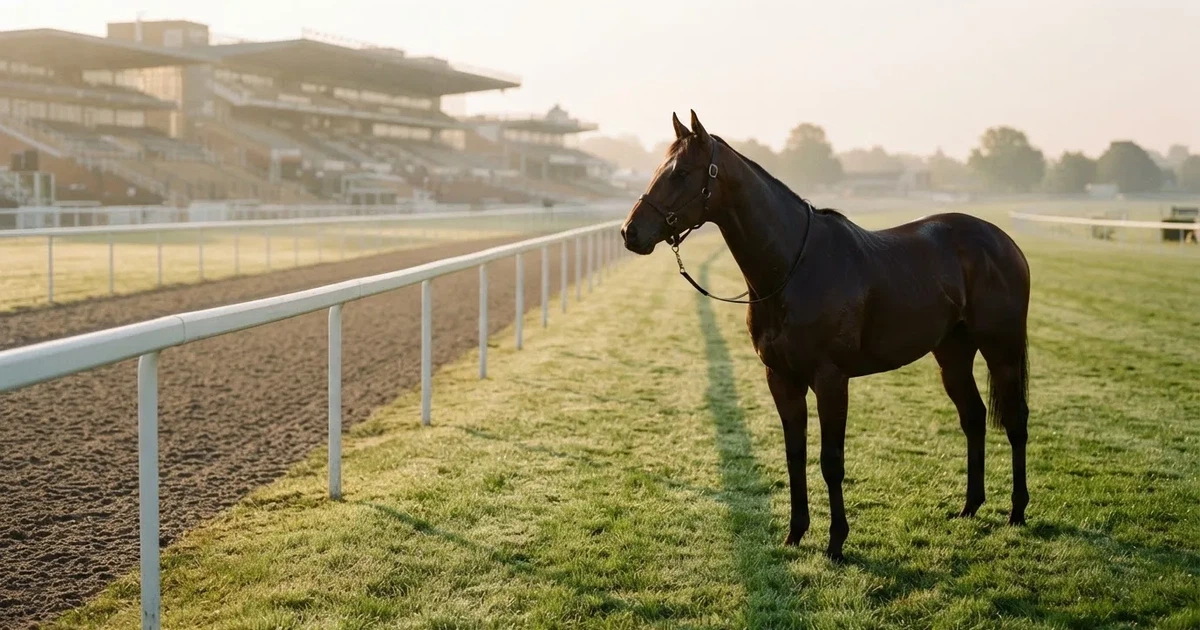
Data current as of 27 October 2026. Operator licence details verified against the Gambling Commission’s public register.
Safer gambling comes before the first bet
A few hard facts about British horse racing. Every GB-licensed bookmaker takes part in GAMSTOP, the national online self-exclusion scheme that became a mandatory licence condition for online operators on 31 March 2020. Self-exclusion periods run six months, one year, five years, or five years with auto-renewal, and once the minimum period ends the exclusion continues for another seven years unless the customer asks GAMSTOP to remove it. It covers online sites and apps; betting shops use a separate service. The minimum age is 18, and since 7 May 2019 name, address and date of birth have been verified before a customer can deposit or gamble — including with a free bet or bonus.
These conditions shape every interaction that follows. They are also the reason a licensed operator is not interchangeable with one that has no Commission licence. A licensed site carries GAMSTOP, carries the ASA advertising rules, and binds itself to the LCCP social responsibility code. An unlicensed site — sometimes marketed as “non-Gamstop” or “not on Gamstop” — binds itself to none of those. A customer who bets on it has no Commission complaints route, no approved dispute-resolution service, no British consumer redress if funds are withheld, and no coverage by the 10x bonus cap or the £150 financial vulnerability check introduced in 2025. Section 33 of the Gambling Act 2005 makes providing gambling facilities in Great Britain without the required licence an offence aimed at the operator. No offence aimed at the customer who simply bets on such a site was identified, so the honest framing is the loss of protection, not illegality.
GAMSTOP itself is a tool, not a cure. The National Gambling Helpline (GamCare), the NHS gambling clinics, GambleAware and Gamblers Anonymous exist alongside it for the customers who want help before, during or after self-exclusion. Several of the brands reviewed below — Fitzwilliam Sports, for instance — link directly to GamCare, GAMSTOP and Gamblers Anonymous from their home pages, because the licence conditions make that a requirement, not a choice.
Cryptocurrency and anonymity at British horse racing bookmakers
The marketing of “crypto horse racing betting” and “horse racing betting not on Gamstop” points at the same gap: a customer who wants pseudonymous play, or who has self-excluded and now wants to bet again. Both are answered the same way at a licensed British bookmaker.

Identity verification before the first deposit means no anonymous play at a GB-licensed site. A customer who deposits in cryptocurrency at a licensed operator is still verified before the first bet: name, address and date of birth, with a debit card or bank account on file. The same rules apply whether the deposit comes from a bank, a debit card, an e-wallet, or a coin. The Commission’s 2025 financial vulnerability check applies once deposits minus withdrawals exceed £150 in any rolling 30-day period; it is a public-record check (bankruptcy, county court judgments), not an income check, and not a credit reference check. Source-of-funds questions at higher spend follow from the money-laundering rules.
The honest answer to a “crypto horse racing” search is therefore that the deposit method is not the lever — the licence is. A licensed operator will not run the verification any less carefully because the customer paid in Bitcoin. An unlicensed one will, but it offers no GAMSTOP coverage, no ASA marketing oversight and no British complaint route. Some of the same offshore books that market crypto deposits also market themselves as “not on Gamstop”. The two propositions arrive together because the same licence is missing in both cases.
A British named-account rule, a state list of permitted payment methods, or any rule for or against cryptocurrency deposits at licensed operators was not established from the Commission’s published materials. What is established is that no GB-licensed bookmaker in this review runs on the assumption that crypto deposits bypass the verification step. The deposit method changes how the funds arrive; it does not change what the operator has to check before a bet is accepted.
What a horse racing bonus really costs the customer
A “free bet” is the most common offer on British horse racing: a £20 free bet for a £10 first wager, a £25 free bet on a £5 qualifying bet, a 50% back-as-free-bet welcome offer, an enhanced price on a named runner. The marketing calls them free. The arithmetic tells a different story.
A free bet whose stake is not paid back with a win has a real value below its face value. The standard calculation multiplies the free-bet amount by (odds − 1) divided by the odds, then by the payout share of the market the free bet is placed on. Take a £20 free bet at decimal odds of 5.00 on a single winner market with a payout share of 90% (a 10% margin). The expected value is £20 × (5.00 − 1) ÷ 5.00 × 0.90 = £20 × 0.80 × 0.90 = £14.40. The face value is £20. The expected value is £14.40. The other £5.60 is the gap the bookmaker keeps, on average, from every £20 free bet. A free bet on a market with a 95% payout share closes some of that gap. A free bet on a market with a 7% margin gives back more of the face amount. Neither closes it fully, because the stake is not returned.
A welcome offer that asks for a turnover carries a cost on top of the free-bet value. The bonus terms the operator publishes are usually stated as “wager this much before withdrawing”. From 19 January 2026 a Commission rule caps the wagering requirement on bonuses at 10x — a £10 bonus at 50x required turnover needs £500 of qualifying bets; under the cap no more than £100. The cost of clearing that turnover at an average market margin of 5% is turnover × margin = £100 × 0.05 = £5 of expected loss on top of the free-bet gap above. A £10 bonus that returns £10 in cash after £100 of bets has cost the customer roughly £5 in expected margin plus any loss of qualifying-bet value, before any consideration of time spent or bets that lose outright.
The minimum price on a qualifying bet is the second term most readers miss. Betboro’s sports welcome offer, for instance, requires a first bet of £5 to £25 with at least three selections each at 3/5 (1.60) or higher. A qualifying bet below that minimum price does not count towards the wagering requirement. A punter who places the qualifying bet at odds shorter than 1.60 — a heavy favourite, say, at 1.40 — wastes the wagering credit entirely. The deadline is the third term. A free bet that expires in seven days, or a bonus that must be turned over within fourteen, sets a clock a careful punter reads before claiming. The cap on free-bet winnings is the fourth, and it bites hardest when the free bet is placed at long odds: a £20 free bet capped at £200 of winnings on a 50/1 shot looks generous on the slip and pays less than the same bet placed in cash.
The market practice of enhanced odds (“price boost”, “best odds guaranteed”) sits beside the free bet and works differently. William Hill’s Best Odds Guaranteed, for example, pays the starting price if it is higher than the price taken, on UK and Irish horse racing from 8 AM on the day of the race, on both single and multiple bets; it does not apply to ante-post, tote or pari-mutuel bets. That is a price guarantee rather than a free bet: the customer pays the stake, takes the price at the moment of betting, and gets the better of the two prices if the horse wins. It is closer to fair value, and it is why Best Odds Guaranteed has been a feature of British horse racing for so long — it costs the bookmaker because it actually pays out at the higher price when the market drifts.
The conclusion on horse racing offers is the same conclusion that runs across the rest of this page: a “free” offer is rarely free, and the cost shows up in the wagering requirement, the minimum odds, the deadline or the cap. A punter who reads the four terms before claiming knows what the offer really costs. A punter who does not, finds out at withdrawal.
Mobile and app betting on horse racing
British punters place the majority of horse racing bets on a phone. The Apple App Store listings for the brands in this review describe their apps in terms that matter for a racing customer: what markets the app covers, whether it offers cash out and accumulators, whether it live-streams meetings, and whether it includes a bet builder. Three examples set the pattern.
bet365’s app, described as the most downloaded sports betting app in the UK, offers Bet Builder+ (combining markets from one event into a single bet, available pre-match and in-play), Super Boosts, Winnings Boosts on Bet Builders and selected singles, and daily Bet Boosts. The Paddy Power Sports Betting app covers football, horse racing, boxing, rugby, tennis, golf, darts, snooker and F1. The Fitzdares app offers cash out, accumulators, Lucky 15s, specials and antepost markets on horse racing, football, tennis, rugby, cricket, golf and American football, with in-play live odds.
What a punter checks on a horse racing app before downloading it is more specific than the App Store blurb. The first is the meeting coverage: an app that lists every British and Irish meeting from 8 AM will look very different at 13:30 on a Saturday to one that omits all-weather or Irish racing. The second is the in-play product: a horse race settles in two to four minutes, and an app that takes an in-play bet on the lead horse but settles the market only at the finish is a different product from one that lets the customer cash out mid-race. The third is the bet builder: horse racing has few bet builder markets relative to football, but the major apps now offer head-to-head matchups between named runners, and the price depth varies widely between books. The fourth is the streaming rights: live streaming of UK and Irish racing sits behind Best Odds Guaranteed or a minimum bet at most books, and an app without the streaming tie-in is a thinner product for the racing punter than for the football punter.
Fitzwilliam Sports, one of the books reviewed below, makes a virtue of the basics: instant deposits, fast withdrawals, timeouts and deposit limits, and links to GamCare, GAMSTOP and Gamblers Anonymous. The app is not the marketing. The customer-protection plumbing is.
Live betting and cash out on horse racing
A horse race is the shortest major sporting event a bookmaker takes bets on. The two- to four-minute run from flag fall to finish is also the fastest in-play market on the British book. Live horse racing betting, in-running betting, in-play odds — the marketing terms all describe the same product: a price that updates while the race is underway, and a customer who can back or lay at the new price.
In-play betting on horse racing in Great Britain is offered by GB bookmakers under the LCCP condition that controls how it is operated. There is no statutory prohibition; there is no statutory freedom either. The controls sit in the operator’s licence conditions and its customer-protection duties. A punter who reads “unrestricted in-play” as a legal conclusion is reading more into the page than the licence supports.
Cash out is a different product layered on top of in-play. The bookmaker offers to settle the bet early at a price it sets in real time, and the customer accepts or rejects. The cash-out price is the bookmaker’s offer, not the market’s mid-price, and it sits well below the back-or-lay equivalent at most books. A bet that would have returned £100 at the finish returns £78 in cash out at the furlong pole, because the bookmaker keeps a margin on the early settlement as on the original price. A cash-out product that updates continuously during the race is also more expensive to operate than one that updates at fixed intervals, and the books that run it all charge a premium for it. The Fitzdares app includes cash out on horse racing; Midnite’s site shows in-play events alongside price boosts; Matchbook, as a betting exchange, sets cash out at whatever the customer can lay the selection at, with the exchange’s commission on top.
The practical conclusion for a racing punter is that in-play and cash out are sharper products for football and tennis than for horse racing, because a horse race settles too quickly for the price moves to be exploited. A bet placed at the start and held to the finish pays the same as a bet placed at the start and cashed out at the furlong pole, before commission — less, after commission. The product exists because customers want it, not because it pays better than holding the bet.
Live streaming is the in-play companion that does add value. An app that streams the race while taking in-play bets lets the customer see the market move; an app that takes in-play bets without streaming forces the customer to watch the race elsewhere. The streaming rights for British and Irish racing are bundled with the betting rights at most major books, and a minimum stake or a Best Odds Guaranteed tie-in is the usual gate.
Predictions, form and what tips actually deliver
“Today’s horse racing betting”, “horse racing betting tips” and “today’s horse racing betting odds” all describe the same search: a customer looking for a name to back on the next race. The honest answer is that no page can supply a name that wins. A tipster service charges for selections and is right roughly as often as the market expects, because the market already prices in everything a tipster has access to — form figures, going reports, trainer and jockey statistics, sectional times.
What form and statistics do is sharpen the punter’s own reading of the race. Going reports (good to soft, soft, heavy) favour horses that have won on similar ground. Sectional times identify horses that run their fastest section late, which matters at a tight-turn track like Chester and matters less at a galloping track like Newbury. Trainer-jockey combinations win at a strike rate that varies by combination, and the market knows this — it is already in the odds. A “system” that beats the market at scale does not exist in the public record. A system that loses less than the market, over a sample of a few hundred bets, sometimes does, and the difference is small enough that it could be chance.
The arithmetic that matters is the long-run edge. A punter who backs every favourite at the 1/2 mark (decimal 1.50) loses roughly 12 per cent of stake on a market with an 8 per cent margin, after allowing for winners who lose at shorter prices. A punter who backs every 10/1 shot at a 12 per cent margin loses roughly 87 per cent of stake over a season. The market’s margin is the water in the pool; the punter either swims faster than it or is carried the other direction. There is no third outcome.
What a tipster actually delivers is information the punter would otherwise spend time gathering. A paid tipster who lists the day’s selections with form lines, going reports and a one-line note is selling time, not picks. The picks are the same picks the market has already discounted. Whether the subscription pays for itself is a question the punter answers by checking the tipster’s recorded results against the starting price, not by the count of winners in any one week.
Bet types and odds on horse racing
Horse racing has more bet types than any other sport on the British book. The reason is simple: a horse race has more runners than a football match has goals, and each runner is a separate selection. The bet types range from the universal (single, each-way) through the multiples (double, treble, accumulator) to the full-cover bets (Trixie at four bets, Patent at seven, Yankee at eleven, Lucky 15 at fifteen, Super Yankee or Canadian at twenty-six, Heinz at fifty-seven, Goliath at two hundred and forty-seven), with the total stake equal to the unit stake multiplied by the number of bets.
A single is one selection on one race. The return is stake × decimal odds. A £10 single at decimal odds of 5.00 returns £50; profit is £40.
An each-way bet is two bets of equal stake: a win bet and a place bet. The stake is doubled: a £5 each-way bet costs £10. The place bet pays a fraction of the win odds if the horse finishes in a place position. UK each-way place terms, from the standard book, are: handicaps with more than 15 runners pay 1/4 odds for 4 places; 12 to 15 runners pay 1/4 for 3 places; other races with more than 7 runners pay 1/5 for 3 places; 5 to 7 runners pay 1/4 for 2 places; fewer than 5 runners win only. The worked example: a £10 each-way bet on a 10/1 horse at 1/4 place terms (3 places) costs £20, returns £110 for the win part and £35 for the place part, £145 in total if it wins, £35 if it places.
A multiple combines the odds of the legs into one price. A double at 5.00 and 3.00 has combined odds of 15.00; a £10 double returns £150. An accumulator, or “acca”, combines four or more legs; the odds multiply, and so does the variance. An accumulator at five legs of 3.00 each has combined odds of 243.00; a £10 stake returns £2,430, and the probability of all five winning is roughly 1 in 250 on a market with a 7 per cent margin. The expected value of that £10 bet is £10 × 0.93⁵ × 243.00 ÷ (something close to 1), which is below £10 — the punter pays for the long odds with a longer losing run.
A Lucky 15 is fifteen bets on four selections: four singles, six doubles, four trebles and one four-fold accumulator. The unit stake is multiplied by fifteen. A £1 Lucky 15 costs £15. Bookmakers often offer a bonus on Lucky 15 wins — typically a treble-the-odds bonus on one winner and double-the-odds on all winners — which is a marketing term meaning the payout is multiplied on those combinations. The bonus is added on top of the standard return; it does not change the odds.
A bet builder on horse racing is a smaller product than the football equivalent because there are fewer markets per race. A bet builder on the 3.10 at Ascot combines a win selection with a place selection, a distance head-to-head, or a market on the same race from a different angle. The combined odds are calculated by the bookmaker from the underlying prices, with a margin layered on top.
A betting exchange is a different kind of bookmaker. Matchbook, the exchange reviewed below, lets customers back and lay against each other rather than against the book. The exchange’s commission is its only margin, and it tends to be lower than the traditional bookmaker’s. The trade-off is that the exchange does not credit accounts, does not offer Best Odds Guaranteed in the same way, and does not run promotions of the same shape as a fixed-odds book.
Spread betting is a third model. Spreadex, the spread firm reviewed below, lets customers bet on the spread of a number — the winning distance, the number of lengths between first and second, the total prize money — and wins or loses the stake times the gap between the spread and the outcome. Spread betting losses can exceed the deposit, and the firm is regulated by the FCA for spread betting and by the Gambling Commission for fixed-odds betting. The product is closer to a financial trade than to a fixed-odds bet.
The odds themselves are quoted in fractional form by convention (5/1, 11/4, evens) and in decimal form (6.00, 3.75, 2.00) on most modern sites. The conversion is a/b → a ÷ b + 1. Evens is 1/1, decimal 2.00; odds-on is shorter than evens — 4/6 is decimal 1.67, and a winning £10 bet returns £16.67 with profit £6.67. Starting price, or SP, is the industry-wide price set at the off; Best Odds Guaranteed pays the higher of the price taken and the SP.
Horse racing: the sport and the calendar
British horse racing runs on two parallel tracks. Flat racing is run directly between two points around a straight or oval track; jump racing, also called steeplechasing or hurdling, is called National Hunt racing in Great Britain and Ireland. Flat races range from 440 yards (400 m) to more than four miles (6.4 km), with five to twelve furlongs (1.0 to 2.4 km) the most common distances. Jump races are longer still, and the major staying events run over three miles or more with obstacles.
Handicap races assign each horse a different weight to carry based on its ability, while conditions races give horses the same weight with allowances for younger and female horses. A handicap is the form punter’s race: weights are public, form lines are comparable, and the market is sharp. A conditions race, particularly a Classic, has fewer comparable form lines because the runners have not met, and the odds are longer as a result.
The British flat-racing calendar runs January to December with all-weather meetings through the winter. The headline meetings — the 2000 Guineas and 1000 Guineas at Newmarket in early May, the Derby and the Oaks at Epsom in early June, Royal Ascot in mid-June, the Goodwood festival in late July, the St Leger at Doncaster in September — pull the largest betting handle of the year. The British Triple Crown, open to three-year-old colts and fillies, consists of the 2000 Guineas, the Derby and the St Leger. No horse has won all three since Nijinsky in 1970.
Jump racing runs through the winter from October to April, with the Cheltenham Festival in March as the centrepiece and the Grand National at Aintree in April as the most-bet race of the year. Punchestown in late April closes the Irish season.
Irish racing runs to its own calendar, with the Irish Derby, the Irish Champion Stakes and the Galway Festival as the headline meetings. The major Irish races are pooled with British betting through the tote and at most major books.
Betting markets on a horse race are simpler than on a football match. Win (the horse finishes first) and each-way (the horse finishes in a place position) are the two core markets. Forecast (the first two in order) and tricast (the first three in order) are offered at most major meetings. Match bets (which of two named horses finishes ahead of the other) and betting without the favourite (which horse finishes first excluding the favourite) are standard markets. Some books offer head-to-head matchups between runners in different races.
How a two-way market margin looks in practice
The bookmaker’s margin is the share of every pound bet that the book keeps on a market, in the long run, before considering the operator’s other costs. The arithmetic is direct: the payout share of a market is the reciprocal of the sum of the reciprocals of the odds across all outcomes; the margin is one minus the payout share.
For an illustrative two-way market at decimal odds of 1.90 and 1.90 — the example the calculation uses, not a quoted price — the payout share is 1 ÷ (1 ÷ 1.90 + 1 ÷ 1.90) = 1 ÷ (0.526 + 0.526) = 1 ÷ 1.053 = 0.950. The margin is 1 − 0.950 = 0.050, or 5 per cent. A £100 stake split equally across the two outcomes returns £95 in the long run across many bets, and the book keeps the other £5. The same market at 1.80 and 1.80 has a payout share of 1 ÷ (0.556 + 0.556) = 0.900, a margin of 10 per cent; the book keeps twice as much per pound bet.
A three-way market, like a football 1X2 (home, draw, away), has three outcomes and a higher margin at the same price depth. Decimal odds of 2.00, 3.50 and 4.00 give a payout share of 1 ÷ (0.500 + 0.286 + 0.250) = 1 ÷ 1.036 = 0.965, a margin of 3.5 per cent — at the lower end because the draw at 3.50 sits where the market expects. A horse race with twelve runners at average odds of 12.00 across the field has a margin of roughly 1 ÷ (12 × 0.083) = 1 ÷ 1.000 minus that 1, which means the margin is whatever the bookmaker has layered on top of 1.0; the more competitive the book, the closer the margin to 5 or 6 per cent. A book at 15 per cent margin on a twelve-runner race is taking three times the cut of a book at 5 per cent.
The practical conclusion is that a margin is the only number on the page a punter should treat as the book’s fee. A price on a single horse is the market’s view; the margin across the field is the book’s cut. A book at 5 per cent on a horse race is half as expensive as a book at 10 per cent on the same race. The punter cannot see the margin directly because the prices are quoted, not the margin, but a quick check of the overround — the sum of the reciprocals of all runners’ decimal odds minus one — gives the answer in seconds.
The ten reviewed bookmakers
What follows is a review of the ten operators covered in this comparison. Each is a holder of a Gambling Commission remote licence for Great Britain, verified against the Commission’s public register. None is “the only” licensed bookmaker; the register lists many more. Each entry closes on a verdict specific to that brand, not a repeated line about who the bookmaker suits.
Tote
The Tote is the pool-betting brand run by TDCO Limited under Gambling Commission account 54779. The Tote’s product is the pool: bets are pooled with other customers, the takeout is deducted, and the pool is paid out to winners on a pari-mutuel basis rather than at fixed odds. The pool product is what distinguishes the brand from a fixed-odds book, and the dividend is the analogue of a fixed price.
The Tote’s horse racing offering includes win and place pools at every British and Irish meeting, plus the Jackpot, the Placepot and the Scoop6 — multi-leg pool products that pay out across meetings rather than within a single race. The takeout on Tote pools is published on each race card.
For the punter who wants the pool product — and who understands that a pool dividend can beat a fixed-odds price on a winning outsider — Tote is the only place to get it at scale in Britain. Choosing this operator makes sense for racing pool betting, but requires a fixed-odds book for other markets.
Star Sports
Star Racing Limited runs Star Sports under Gambling Commission account 9177. Star Sports runs a fixed-odds sportsbook with a particular focus on horse racing and a trader-led account service. The brand’s distinctive product is direct trader access: the Star Sports Apple App Store listing shows a customer can call 08000 521 321 to open an account, place bets or ask queries, and can also reach support at [email protected].
For a punter who wants to talk to a trader before placing a bet — for a substantial wager on a horse race, or for a market the customer is uncertain about — Star Sports is one of the few books that still offers it. The single track that runs from a phone call to a settled bet is closer to the traditional betting-shop experience than to a modern app-only book.
The trade-off is that trader-led service is not free, and Star Sports’ pricing and promotion depth is narrower than the major fixed-odds books. For the small-stake customer who places a bet through the app, the trader service is not a meaningful draw.
Fitzdares
Fitzdares Limited runs Fitzdares under Gambling Commission account 400. The Fitzdares app offers cash out, accumulators, Lucky 15s, specials and antepost markets on horse racing, football, tennis, rugby, cricket, golf and American football, with in-play live odds. The product is a premium sportsbook with racing at its centre.
The antepost offering on horse racing is wider than most books, particularly for the major festivals. The acca insurance and Lucky 15 bonus products are present but on Fitzdares’ own terms. The app’s product mix is closer to a traditional bookmaker than a modern app-only operator.
For the punter who wants a premium racing product with a sharper antepost book than the high-street names, Fitzdares is the closer fit. Those seeking deep football markets, a casino or a high-value welcome offer will likely find the focus here is elsewhere.
London Bet
Thistle Bet Limited runs London Bet under Gambling Commission account 66162. The London Bet app combines sports betting — football, tennis, horse racing, greyhounds, darts, golf, cricket, NFL, NBA, MLB and snooker — with Pragmatic Play casino slots and live in-play betting. The product is a hybrid sportsbook and casino, with a British high-street focus.
The greyhound product alongside horse racing is the brand’s distinguishing line. For the punter who bets on both codes, the unified wallet and the unified product are a real convenience. The sports welcome offer is the standard fixed-odds book welcome offer rather than a racing-specific promotion.
For the punter who wants a sportsbook with greyhound and horse racing under one login, London Bet is a clean fit. The casino product is not the main draw for the racing customer.
Betboro
Webmedia Development N.V. runs Betboro under Gambling Commission account 44181. Betboro’s sports welcome offer is a 100 per cent matched free bet of up to £25 on the first qualifying wager, requiring a debit card deposit of at least £10 and a first bet of £5 to £25 with at least three selections each at 3/5 (1.60) or higher.
The three-selection minimum at 3/5 (1.60) or higher is the standard minimum odds rule for a welcome offer, but the £5 to £25 stake band is narrower than most books. The debit-card deposit requirement is a feature of the post-2020 credit-card ban at GB-licensed books; the operator has chosen to make it a condition of the welcome offer rather than just a condition of the account.
For the punter who already has a debit card on file and wants to place a £5 qualifying treble at 1.60 or higher, the welcome offer is straightforward. For the punter who wants to deposit by bank transfer, e-wallet or any method other than debit card, the welcome offer is unavailable — the offer is a debit-card promo, and the headline 100 per cent matched figure is contingent on the qualifying conditions being met. The 100 per cent headline is the marketing figure; the £25 cap and the qualifying terms are the real shape.
Kalooki Sportsbook
Kalooki Sports Book Ltd (company number 12938274) runs Kalooki Sportsbook under Gambling Commission account 57730, and is a GAMSTOP member. The brand’s product is a fixed-odds sportsbook focused on racing and football, with a smaller market depth than the major books.
The brand is newer to the GB market than most of the books reviewed here, and the welcome offer depth is correspondingly lighter. The verification and GAMSTOP coverage are the standard GB-licensed book terms, and the customer-protection plumbing is in place.
For the punter who wants a smaller, racing-focused book with a cleaner product than the major operators, Kalooki is a fit. Depth in bet builder markets, streaming integration and major-book welcome bonuses remain areas where larger operators typically lead.
Paddy Power
PPB Counterparty Services Limited runs Paddy Power under Gambling Commission account 39439. The Paddy Power Sports Betting app covers football, horse racing, boxing, rugby, tennis, golf, darts, snooker and F1. Paddy Power is one of the larger fixed-odds books in Great Britain, and the brand runs a full product across racing, football and the major sports.
The brand’s distinguishing line on horse racing is the price depth at the major meetings and the Money-Back-Special offers — refunds on selected markets if a named condition is met. The welcome offer depth is among the largest at GB-licensed books, and the acca insurance product runs across football and racing.
For the punter who wants a major fixed-odds book with full racing product, Paddy Power is a fit. High in-play margins, the deepest antepost books and aggressive welcome offers are standard at this scale, placing the operator in direct competition with other major UK bookmakers.
BoyleSports
Boylesports Enterprise runs BoyleSports under Gambling Commission account 39469. BoyleSports’ sports welcome offer for UK players is £20 in free bets when a £10 bet is placed, with a parallel €30 in free bets for a €10 bet for Irish players. BoyleSports is an Irish book with a significant UK presence, and the dual welcome offer — pounds for GB customers, euros for Irish customers — is the brand’s distinguishing line.
The racing product runs across UK and Irish racing, with a particular depth in Irish racing markets. The BoyleSports app is the standard fixed-odds book app.
For the punter who bets both sides of the Irish Sea and wants a single book with full UK and Irish racing, BoyleSports is a clean fit. For the punter who bets only on British racing, the Irish welcome offer is not the draw.
Octobet
Octopus Game Limited runs Octobet under Gambling Commission account 62545. Octobet’s sportsbook welcome offer is 50 per cent back as a free bet up to £50, plus a £10 casino bonus for new customers. The brand’s product is a fixed-odds sportsbook with a casino bundle in the welcome offer.
The 50 per cent back-as-free-bet structure is different from the standard matched free bet: the customer gets half the stake back as a free bet rather than a matched bonus. The £50 cap is twice the size of Betboro’s £25 cap, and the £10 casino bonus is a small addition. The combined offer is one of the larger welcome packages at a GB-licensed book, contingent on the qualifying terms.
For the punter who wants a larger welcome package and is comfortable with a 50 per cent back-as-free-bet structure, Octobet is a fit. Alternative welcome structures, such as matched free bets or no-casino bonuses, are not central to the current offer.
Matchbook
Triplebet Limited runs Matchbook under Gambling Commission account 39504. Matchbook is a betting exchange where customers bet against other users, with Bet Builder, multiples, in-play betting and live streaming of horse racing and greyhounds. The Matchbook licence includes both remote general betting standard (real events) and remote betting intermediary.
The exchange product is the brand’s defining line: Matchbook takes no position on the race, sets no margin on the price, and earns its revenue from the commission on net winnings. The commission rate is published on the exchange, and the price depth on major horse races is competitive with the major fixed-odds books.
For the punter who wants an exchange product with Bet Builder and multiples layered on top, Matchbook is the clean fit. For the punter who wants a Best Odds Guaranteed product or a fixed welcome offer, Matchbook is the wrong shape — those products belong to the fixed-odds books.
The comparison at a glance
The table below sets out the licence details for each operator reviewed above, alongside a summary of what each operator’s terms say on the subject of the horse racing product. The licence number is verified against the Gambling Commission’s public register; the operator’s own terms are quoted from each brand’s published material.
| Brand | Licence holder | Commission account | Horse racing product note |
|---|---|---|---|
| Tote | TDCO Limited | 54779 | Pool betting on every UK and Irish meeting, including Jackpot and Placepot |
| Star Sports | Star Racing Limited | 9177 | Fixed-odds racing with trader-led account service by phone |
| Fitzdares | Fitzdares Limited | 400 | Racing-centred premium book with antepost specials and Lucky 15s |
| London Bet | Thistle Bet Limited | 66162 | Horse racing and greyhounds under one wallet, plus casino |
| Betboro | Webmedia Development N.V. | 44181 | Welcome offer: 100% matched up to £25, debit card deposit, qualifying bet at 1.60+ |
| Kalooki Sportsbook | Kalooki Sportsbook Limited | 57730 | Racing-focused fixed-odds book with standard GAMSTOP coverage |
| Paddy Power | PPB Counterparty Services Limited | 39439 | Major-book racing product with Money-Back-Specials on selected markets |
| BoyleSports | Boylesports Enterprise | 39469 | Dual welcome offer (£20 for UK, €30 for Ireland), strong on Irish racing |
| Octobet | Octopus Game Limited | 62545 | Welcome offer: 50% back as free bet up to £50 plus £10 casino bonus |
| Matchbook | Triplebet Limited | 39504 | Betting exchange with Bet Builder, multiples and live streaming |
The table is the headline; the prose around it does the work. Every brand above is a holder of a Gambling Commission remote licence and a GAMSTOP member; every one offers a horse racing product; the products vary sharply in shape, depth and welcome offer. The punter who picks a book by the licence number alone is missing the variation that sits inside the licence.
Where horse racing betting sits in British law
The Gambling Commission licenses the whole commercial market in Great Britain under the Gambling Act 2005. Great Britain covers England, Scotland and Wales; Northern Ireland is outside the Act and has its own older law, so a “GB-licensed” bookmaker is licensed for Great Britain but not for Northern Ireland. Since the Gambling (Licensing and Advertising) Act 2014 an operator whose remote facilities are used in Great Britain needs a Commission licence wherever it is based; sections 33 and 36 of the 2005 Act, as amended, set the requirement. A Curaçao, Maltese or Gibraltar licence is not a substitute.
There is no statutory list of permitted sports or markets at GB-licensed books. An operator holds a licence for a category — remote general betting standard (real events), remote general betting standard (virtual events), remote general betting limited, remote pool betting, or remote betting intermediary — and offers markets under its own rules and the Licence Conditions and Codes of Practice. Horse racing falls under remote general betting standard (real events) at fixed-odds books and under remote pool betting at the Tote. Matchbook’s licence also includes remote betting intermediary because it operates an exchange.
Betting exchanges run under a betting intermediary licence; rates and rules specific to exchanges are stated from each exchange’s terms. Financial spread betting is regulated by the Financial Conduct Authority, not the Commission; Spreadex, the spread firm reviewed separately, holds an FCA licence for spread betting and a Commission licence for fixed-odds betting. The minimum age is 18, and identity verification before the first deposit is mandatory at every GB-licensed remote book.
Betting duty is paid by the operator, not by the punter. General Betting Duty is the operator’s tax on gross profits, currently 15 per cent. From 1 April 2027 a new remote betting rate of 25 per cent applies within it, while remote bets on UK horse racing, bets on self-service betting terminals in licensed premises, pool betting and in-person betting stay at 15 per cent. Spread betting has its own rates (3 per cent financial, 10 per cent other). The player pays no tax on betting winnings in Great Britain; this is general information, not tax advice, and a professional gambler should ask HMRC or an adviser. Until 1 April 2027 the remote rate stays at 15 per cent; whether operators pass duty on through odds is not established from the Commission’s published materials.
Bonuses and marketing are controlled by the LCCP social responsibility code and the CAP Code (non-broadcast advertising) or BCAP Code (broadcast advertising), enforced by the ASA. Since 19 January 2026 wagering requirements on bonuses are capped at 10x, and mixed-product promotions — an offer that requires gambling on two or more product types — are banned. CAP Code section 16 sets the rules on who may appear in an advertisement; that rule concerns who may appear, not who may bet. The “whistle-to-whistle” ban on betting advertisements five minutes before to five minutes after a live sporting event before the 9pm watershed is an industry code rather than law, with horse and greyhound racing excluded.
Offshore books are not licensed by the Commission and offer none of the protections above. Section 33 of the Gambling Act 2005 makes providing gambling facilities in Great Britain without the required licence an offence aimed at the operator; no offence aimed at the customer was identified. Enforcement is disruption, not blocking: cease-and-desist notices, search-engine referrals, work with registrars, hosts and payment providers; the Commission has been given, or is about to receive, court-order DNS blocking powers. A punter who bets on an unlicensed site has no GAMSTOP coverage, no Commission complaints route, no approved dispute-resolution body, no British consumer redress if funds are withheld, and no coverage by the 10x bonus cap or the £150 financial vulnerability check.
Where to check the licence yourself
The Commission’s public register can be searched by business name, trading name, domain or account number. Every operator reviewed above carries the licence number against its entry on the register. The register is the whole test of whether a brand holds a licence; a brand that claims to be licensed but cannot be found on the register is not licensed. The licensed brand’s status, even though the register lists far more brands than any article features, is the licence-holder category with its own entry, not a claim of “the only licensed brand” — there is no such thing.
For a punter who wants to check before depositing: open the Commission’s register, search the trading name (the brand on the betting slip), and confirm the licence number and the categories. The categories on the register — remote general betting standard (real events), remote betting intermediary, and so on — show which products the licence covers. A brand licensed for casino only is not licensed to take a sports bet; a brand licensed for sports only is not licensed to take a casino bet. Betting and casino are separate permits with separate rules.
The register is updated when licences change. A licence that was current at the time of this comparison is current as of the register’s most recent publication, and a punter who wants the latest status checks the register directly rather than relying on a third-party article.
Reading the British betting vocabulary
A few native terms shape how the rest of this page reads. Decimal odds are the modern standard; fractional odds are the British convention. The conversion is a/b → a ÷ b + 1: 5/1 is 6.00, 11/4 is 3.75, evens (1/1) is 2.00, odds-on is shorter than evens (4/6 is 1.67). Starting price, or SP, is the industry-wide price set at the off; Best Odds Guaranteed, or BOG, pays the higher of the price taken and the SP. A price boost is an enhanced price on a named selection, often with a maximum stake.
A punter is the British term for a customer; a bookie is the colloquial term for a bookmaker. The stake is the amount risked; the return is stake plus winnings; the profit is return minus stake. A single is one selection on one event; a double is two selections; a treble is three; an accumulator, or acca, is four or more. An each-way bet is two bets of equal stake on the same horse, a win bet and a place bet, with the stake doubled. A non-runner is a horse withdrawn before the off; Rule 4 is the deduction the book applies to winning bets when a non-runner withdraws. Ante-post is a bet placed before the final declarations, at longer odds and with no refund on a non-runner.
A betting exchange lets customers back and lay against each other rather than against the book; Matchbook is the exchange reviewed above. Spread betting lets the customer bet on a spread (the winning distance, the number of lengths), with the stake multiplied by the gap between the spread and the outcome; Spreadex is the spread firm.
British spelling is licence (noun), license (verb), organisation, whilst. Currency is written £ before the number with no space (£10, £5,000); “fiver” and “tenner” are colloquial. Dates are written 9 April 2025. Percentages are closed up (25 per cent).
The arithmetic of a winning bet
The return on a winning single is stake × decimal odds. A £10 single at decimal odds of 6.00 returns £60; profit is £50. The formula is direct and applies to every fixed-odds bet on every sport.
The profit on a winning each-way bet is calculated in two parts. The win part returns stake × decimal odds at the win price; the place part returns stake × (decimal odds × place fraction) at the place price. A £10 each-way bet at 10/1 (decimal 11.00) at 1/4 place terms (3 places) costs £20 and returns £110 for the win part and £35 for the place part; £145 total if it wins, £35 if it places.
A combination bet multiplies the odds of the legs. A double at decimal odds of 3.00 and 4.00 has combined odds of 12.00; a £10 double returns £120; profit is £110. An accumulator at four legs of 3.00 each has combined odds of 81.00; a £10 accumulator returns £810; profit is £800. The variance multiplies with the legs: the longer the odds, the more winners needed, and the more margin paid.
The margin on a market is the share of every pound bet that the book keeps in the long run. The arithmetic is 1 minus the payout share, where the payout share is the reciprocal of the sum of the reciprocals of the decimal odds across all outcomes. The earlier section set out the worked example at 1.90 and 1.90: payout share 0.950, margin 0.050, the book keeps five per cent of every pound bet on that market in the long run.
Help when the betting gets too much
The customer-protection plumbing at GB-licensed books is real and reachable. GamCare runs the National Gambling Helpline. GambleAware funds treatment and research. The NHS runs gambling clinics in several regions. Gamblers Anonymous runs peer-led meetings.
GAMSTOP itself is the multi-operator online self-exclusion scheme; registration is free and takes a few minutes, and the exclusion covers every GB-licensed online bookmaker once it is active. The exclusion periods run six months, one year, five years, or five years with auto-renewal, and after the minimum period the exclusion stays in place for a further seven years unless the customer asks GAMSTOP to remove it. Betting shops use a separate self-exclusion service.
Deposit limits, timeouts and reality checks are operator-level features that the LCCP requires at GB-licensed books. A punter who wants to set a daily, weekly or monthly deposit limit can do so through the account settings at any of the brands reviewed above. A punter who wants a short break can set a timeout from 24 hours to six weeks; a punter who wants a longer break can register with GAMSTOP for the periods above.
Frequently asked questions on horse racing betting
How do you bet on horse racing?
Pick a licensed bookmaker, register an account, deposit by debit card or bank transfer, and place a bet on a race. A win bet pays out if the horse finishes first; an each-way bet pays out if the horse finishes in a place position (the number of places depends on the race and the operator’s terms). The stake is the amount risked; the return is the stake plus the winnings at the decimal odds shown.
How do you work out a horse racing bet?
Multiply the stake by the decimal odds to get the return; subtract the stake to get the profit. A £10 single at decimal odds of 5.00 returns £50 with profit £40. An each-way bet is two bets of equal stake — the stake is doubled — with the place part paying a fraction of the win odds (typically 1/4 or 1/5) if the horse places.
How do betting odds work on horse racing?
Decimal odds show the total return per unit stake: 6.00 means a £1 stake returns £6, profit £5. Fractional odds (5/1, 11/4, evens) show the profit per unit stake: 5/1 means a £1 stake returns £6 in profit plus the £1 stake. Best Odds Guaranteed pays the higher of the price taken at the time of betting and the starting price set at the off.
How can a bookmaker’s Gambling Commission licence be checked?
Open the Commission’s public register, search by the trading name, business name, domain or account number, and confirm the licence. The categories on the register show which products the licence covers (remote general betting standard (real events), remote pool betting, remote betting intermediary). A brand that cannot be found on the register is not licensed by the Commission.
How is the return on a bet worked out from the stake and the odds?
Return = stake × decimal odds. Profit = stake × (decimal odds − 1). For a combination bet the odds of the legs multiply into one price; a double at 3.00 and 4.00 has combined odds of 12.00. The calculation is direct and applies to every fixed-odds bet on every sport at a licensed bookmaker.
What is the bookmaker’s margin and how can it be seen in the odds?
The margin is the share of every pound bet that the book keeps in the long run, calculated as 1 minus the payout share of the market. The payout share is the reciprocal of the sum of the reciprocals of the decimal odds across all outcomes. A market at 1.90 and 1.90 has a payout share of 0.950 and a margin of 0.050 — the book keeps five per cent of every pound bet on that market in the long run.
Horse racing & greyhounds – Bookies Trust
Content created by the «Bookies Trust» team
