
Best Bet Prediction Sites UK: How Tips Work, What Value Means, and Who to Bet With
 Available in US
Data is current as of 27 October 2026 and has been checked against the Gambling Commission’s public register.
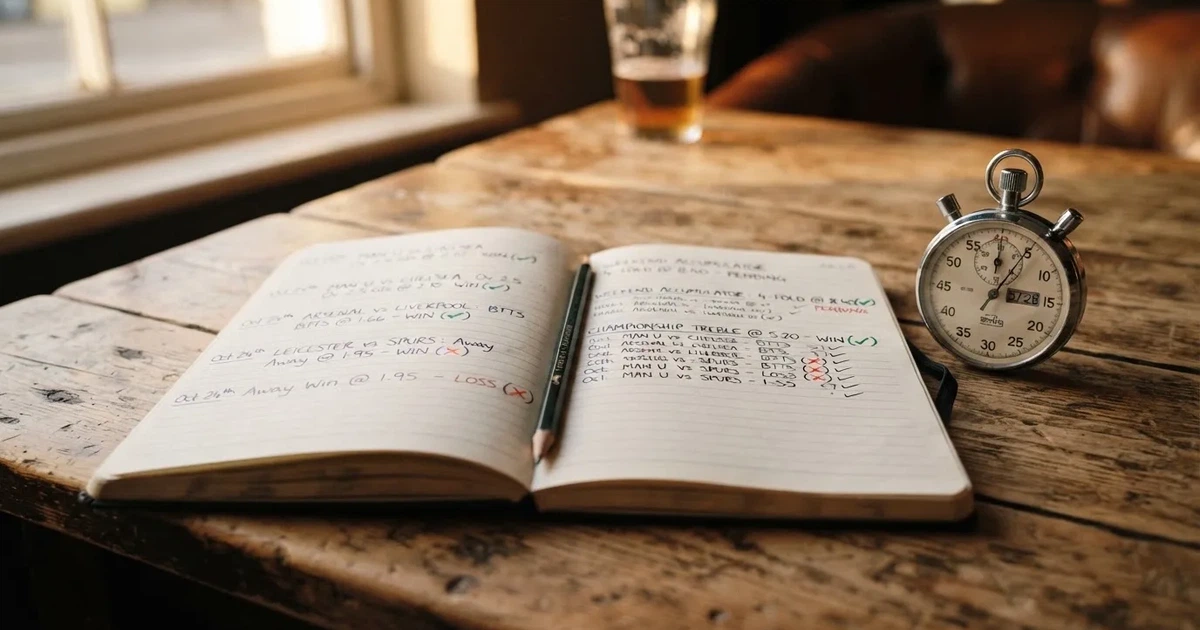
Anyone searching for the best bet prediction for today wants a tip they can act on in the next hour. The honest reply is that no tip is certain, the price on the screen already contains the bookmaker’s cut, and a “free prediction” still pays for itself through that cut. This guide walks through how a prediction is built, why the marketing word *value* hides a margin, and which of the UK Gambling Commission’s licensed bookmakers give a bettor the cleanest set of tools to act on a tip. Ten operators are reviewed. None of them is the only licensed one, and a place on a list is not a licence.
What a “prediction for today” actually is
A prediction is a statement about the probability of an outcome before the event is played. In practice, four inputs go into it, and every tipster on the open market uses some subset of them.
Form and head-to-head matter, and they are the easiest to look up: results from the last six to ten matches, results between these two sides, and any pattern under home and away. Statistics extend form: expected goals (xG) for football, runs and strike rates for cricket, points per game for rugby, distance and going for racing. Line-ups and team news adjust the model: a rested striker shifts the expected goals, an absent paceman shifts the win probability. The market’s own odds are the fourth input, and the most underrated one. A bookmaker’s price is the output of every other bookmaker’s model plus the margin; it is rarely the true probability, but it is the closest single number a punter can compare their own estimate against.
The four together produce a probability. The bet comes from comparing that probability to the bookmaker’s implied probability, and the bet is worth placing when the first number beats the second by enough to absorb the margin. That gap is what the industry calls *value*.
How a price hides the margin
A bookmaker does not sell fair coins. A two-way market priced at 1.90 / 1.90 in decimal odds looks symmetrical, but the implied probability of each outcome is 1 ÷ 1.90 = 52.63%. Two of those add up to 105.26%, and the 5.26 percentage points above 100% is the overround, also called the margin. It is the slice of every pound bet on this market the bookmaker keeps on average.

The arithmetic for any two-way market is straightforward. The payout share is 1 divided by the sum of the reciprocal odds: with 1.90 / 1.90, that is 1 ÷ (0.525 + 0.525) = 0.9524. The margin is 1 minus the payout share, so 4.76%. State the same market at 1.85 / 1.95 and the picture changes: 1 ÷ (0.5405 + 0.5128) = 0.9496, a margin of 5.04%. State it at 2.00 / 1.80, and 1 ÷ (0.5000 + 0.5556) = 0.9452, a margin of 5.48%. The margin is the price of admission. It is paid on every bet, and the cheapest seat is the one with the lowest margin.
The reader should sit with this. A tip that lands at odds of 2.00 has paid roughly 5% of the stake to the bookmaker before the bet is even placed. A tip that lands at odds of 10.00 has paid a smaller percentage but a larger absolute wedge when it does not land. The margin is constant across outcomes; the variance is not.
Why no tip is ever certain
A tip that names a winner still names a probability. The favourite in a Premier League match might sit at odds of 1.50, an implied probability of 66.7%, and win eight times out of twelve. The tip was right eight times, wrong four times, and the four losses still cost the full stake. A tipster with a hit rate of 30% can be profitable if their average winning price is high enough, and a tipster with a hit rate of 70% can lose money if their average winning price is too low. The price does the work, not the prediction.
A tip is a hypothesis. The bet is a test. The margin is the cost of every test, paid whether the result goes your way or not.
The legal floor under every prediction you place
A prediction is worthless without a place to place it. In Great Britain, that place must hold a Gambling Commission remote licence. The Commission is the non-departmental public body sponsored by the Department for Culture, Media and Sport, and it regulates the commercial market under the Gambling Act 2005. Since the Gambling (Licensing and Advertising) Act 2014, an operator whose remote facilities are used in Great Britain needs a Commission licence wherever the operator itself is based. A Curaçao, Maltese or Gibraltar licence is not a substitute for one.
Northern Ireland sits outside the 2005 Act and has its own older law. A “GB licence” regulates Great Britain, not the United Kingdom. The Commission’s public register is the whole test of who holds a licence, searchable by business name, trading name, domain or account number. A place in any comparison is not a licence, and no single brand is “the only” licensed one. Several brands can run under one licensee — Ladbrokes and Coral, Paddy Power and Betfair — so two apparently different names may answer to a single account.
Identity, age and the moment of the first bet
The minimum age is 18. Name, address and date of birth are verified before a customer can deposit or gamble, and that has been the rule since 7 May 2019. The verification covers free bets and bonus credits too: there is no anonymous play at a licensed site. A credit card has been banned for gambling in Great Britain since 14 April 2020, including credit-card-funded payments through an e-wallet. Debit cards and bank-based payments are not covered by that ban.
Bonuses, in the language the rules now speak
Wagering requirements on bonuses are capped at 10x since 19 January 2026: a £10 bonus at 50x needed £500 of qualifying bets; under the cap no more than £100. Mixed-product promotions — an offer that requires gambling on two or more product types such as betting, casino, bingo and lottery, for example “bet on football to get free spins” — are banned. Free bets with no wagering condition are not addressed by the cap, and there is no statutory ceiling on the money value of a bonus. No promo code is printed here. The page describes what an offer is worth, not how to claim it.
Responsible gambling sits beside every section of this guide
Every prediction, every price and every bonus sits on top of a customer who can lose more than they planned. The Gambling Commission’s safer-gambling machinery is part of the licence, and the reader who ignores it is the reader the licence was written for.
GAMSTOP is the national multi-operator online self-exclusion scheme and a mandatory licence condition for online operators since 31 March 2020. Exclusion periods are six months, one year, five years, or five years with auto-renewal; after the minimum period the exclusion stays in place for a further seven years unless the customer asks GAMSTOP to remove it. It covers online sites and apps. Betting shops use a separate service. A financial vulnerability check has applied to licensed remote betting since 28 February 2025 when a customer’s deposits minus withdrawals exceed £150 in a rolling 30 days; it is a public-record check, not an income check and not a credit reference check. Deposit limits are the customer’s choice: there is no state-set ceiling for betting. Operators must offer one, and whether the second phase of tighter defaults is live is not established — it has been postponed to 30 September 2026.
Help sits outside the licence. GamCare runs the National Gambling Helpline. GambleAware funds treatment and education. NHS gambling clinics are open in several regions. Gamblers Anonymous runs meetings. The first call any reader who feels their betting is no longer recreational should make is to one of those.
The mobile shelf: how a prediction app actually behaves
A prediction on a phone is not the same animal as a prediction on a desktop. The screen is smaller, the session is shorter, the bet is placed in the seconds before kick-off, and the app’s job is to get from news to slip without making the reader think.
Three things decide whether an app is fit for this purpose. First, the in-play module: live odds updated inside the second, with cash out on at least the major sports. Second, the bet builder: a same-game multi on football, tennis or basketball, built leg by leg with an instant dynamic price. Third, the account layer: deposit, withdrawal, identity check and limit-setting without leaving the app. The reviewed apps in the ranking below are scored against these three, and against a fourth the regulator has now made non-negotiable — safer-gambling tools that are reachable from the same screen as the bet.
A prediction app that locks safer-gambling tools behind a settings menu three layers deep is one that has not read its own licence. A prediction app that buries the deposit limit under “account verification” is not being honest about what verification is. The reader should expect to find the deposit limit, the time-out and the self-exclusion option on the main account screen, not in a help-centre article.
Building a prediction: the practical order
A workable prediction method has six steps, in order.
Step one: pin the event and the market
Pick the match, the race, or the tournament. Pick the market: 1X2, both teams to score, over/under goals, each-way on racing, moneyline on basketball. The market shapes the inputs that matter; expected goals help a 1X2 read but do nothing for an over/under on total games in a tennis match.
Step two: collect form, statistics and line-ups
Form from the last six to ten matches. Head-to-head with at least a five-game window. Statistics appropriate to the sport: xG, shots on target, possession in the opponent’s half for football; serve percentages and break-point conversion for tennis; distance and going for racing. Line-ups once announced, with substitutes flagged.
Step three: convert the inputs to a probability
A model can be a spreadsheet, a piece of paper, or a habit of mind. The discipline is the same: each input shifts the probability by a stated amount, and the final probability is the sum of those shifts from a baseline. The baseline matters; without one, every shift is arbitrary.
Step four: compare to the bookmaker’s implied probability
The bookmaker’s implied probability is 1 ÷ decimal odds, then minus the slice of the margin that belongs to that outcome. With a 1X2 at 2.10 / 3.40 / 3.50, the favourite’s implied probability is 1 ÷ 2.10 = 47.6%; backing out an even share of the margin leaves roughly 45%. The model’s 45.5% beats the bookmaker’s 45% by half a point. The bet is worth a small stake.
Step five: size the stake from a bankroll rule
The bankroll is the amount set aside for betting, separate from rent and food. The stake on any single bet is a fixed percentage of the bankroll — 1% to 2% is the conventional band — and the percentage does not change after a win or a loss. The discipline is the rule. A tip with a thin edge, sized at 2% of a £500 bankroll, is £10. The bet is the size that survives a ten-bet losing streak, and every tipster on the planet has one.
Step six: write it down
A spreadsheet with the date, the match, the market, the odds, the stake, the result and the running profit is the single sharpest tool a bettor owns. It surfaces leaks the model hides: a market the bettor reads badly, a sport they over-bet, a time of day they make poor decisions. The book’s reader is the bettor’s own book. Writing it down is what makes the next tip worth more than this one.
The free-bet trap, in plain prose
A free bet whose stake is not paid back with a win has a value that is smaller than its face. A £10 free bet at odds of 4.00 is worth, on average, £10 × (4.00 − 1) ÷ 4.00 × payout share of that market. At a market margin of 5%, the payout share is 95%, and the expected value of the free bet is £10 × 0.75 × 0.95 = £7.13. The free bet is not £10. It is £7.13, on average, and the rest of the headline is the bookmaker’s margin doing what it always does.
A free bet at odds of 10.00 is worth £10 × (10.00 − 1) ÷ 10.00 × 0.95 = £8.55. The higher the odds, the closer the free bet gets to its face value, because the stake’s non-return matters less. A free bet at odds of 1.50 is worth £10 × (1.50 − 1) ÷ 1.50 × 0.95 = £3.17, and at that price the offer is not what the headline says.
The accumulator, same idea
A four-leg accumulator at odds of 2.00 each multiplies into a price of 16.00. Each leg carries its own margin, and the four margins multiply into the final price. A four-leg accumulator of four 1.95 / 1.95 markets has a margin closer to 18% than to the 5% of any one leg. The bet is fun, but the bettor has paid for the privilege in advance.
Ten UK-licensed bookmakers, ranked for the prediction shopper
A ranking is not a recommendation. Every brand below holds a Gambling Commission remote licence as of the access date; the licence is a floor, not a ceiling. The order reflects how well each operator’s product suits a bettor who arrives with a prediction and wants the cleanest path from tip to settled slip. The angle is the same on every brand: what does the licence say, what does the operator say about the subject of this page, and where is the trade-off.
| Brand | Gambling Commission remote licence number and licence holder | What the operator’s own terms state on the subject |
|---|---|---|
| VBet | Account 44662 (SCGO Limited) | App offers Bet Builder, pre-match and in-play, live streaming and a live calendar with results and stats |
| DragonBet | Account 64908 (DragonBet Ltd) | Cash out in-play and pre-match, plus live streaming of racing |
| Star Sports | Account 9177 (Star Racing Limited) | UK independent bookmaker with virtual sports, casino and live casino alongside the sportsbook |
| Sky Bet | Account 67370 (SBG Sports Limited) | Welcome offer: £30 in free bets (three £10 tokens) after a £5+ deposit and a 5p+ first single or each-way bet at minimum odds of 1/1 |
| NetBet | Account 39170 (Netbet Enterprises Limited) | Daily Boosts, Profit Boosts and free bet offers, a Bet Builder with instant dynamic odds, and major-league sports stats |
| Paddy Power | Account 39439 (PPB Counterparty Services Limited) | Bet Builder+, Popular Bet Builders, Super Sub (a bet rolls over to the replacement if a selected player is substituted), expanded Win More markets, and player and acca stats |
| Fitzwilliam Sports | Account 48760 (SBKI Limited) | Phone and live chat with the office open 09:00 to 21:00, Monday to Sunday, with messenger replies generally within 90 seconds |
| BetTom | Account 64959 (Bet Tom Limited) | Sports welcome offer: 50% back as a free bet up to £50, with a matching 50% back up to £50 as free slot funds for casino |
| Spreadex | Account 8835 (Spreadex Limited) | Spread betting regulated by the FCA; fixed-odds betting regulated by the Gambling Commission; spread betting losses can exceed deposits |
| QuinnBet | Account 61011 (QuinnBet (Gibraltar) Limited) | Free bets valid for 7 days from credit, minimum odds 1/2 (1.5), maximum odds 50/1; straight accumulators allowed but Trixies, Patents and Yankees are not |
VBet
VBet’s licence sits with SCGO Limited under Commission account 44662. The app combines a Bet Builder, pre-match and in-play betting, live streaming and a live calendar of results and stats — the standard toolset for someone who has built their own prediction and wants to place it across the match, not just at kick-off. The trade-off is breadth: a brand with a smaller UK footprint can carry a tighter price on the markets the reader cares about. For a punter who wants in-play and a same-game multi in the same place, VBet is fit for purpose.
DragonBet
DragonBet is the smaller of the two racing-led brands in this set, and its product reflects that. Cash out is on, in-play and pre-match, and live streaming covers racing. A football-only punter will find the menu thin. A reader who follows the racing calendar as their primary sport will find a bookmaker whose product is built around theirs. Commission account 64908 (DragonBet Ltd) is the licence on the register.
Star Sports
Star Racing Limited runs Star Sports under Commission account 9177, and the company describes itself as the UK’s leading independent bookmaker. The app carries a sportsbook, virtual sports, casino and live casino, which is the breadth a reader who wants one account across products will look for. The independent tag is a real signal in a market dominated by a handful of licensees; the smaller scale can mean a sharper price on a smaller sport. The trade-off is the inverse of the betting shops: an independent bookmaker runs its own risk team, and accounts can be limited when the punter wins.
Sky Bet
SBG Sports Limited is the licence holder, Commission account 67370. The welcome offer is £30 in free bets, three £10 tokens, after a deposit of £5 or more and a first single or each-way bet of 5p or more at odds of 1/1 or greater. The 5p qualifying bet is the kind of small-qualifier structure that turns the offer into a near-cash conversion for the careful reader, and the £30 face value is reasonable against the £5 trigger. Free bets are stake-not-returned, and the value of each £10 token depends on the odds the reader uses it at; a token placed at 4.00 is worth roughly £7.13 on average, a token placed at 1.50 is worth roughly £3.17. Sky Bet suits the reader who wants a clean welcome structure and a full-feature sportsbook behind it.
NetBet
Commission account 39170, held by Netbet Enterprises Limited. Daily Boosts, Profit Boosts and free bet offers sit alongside a Bet Builder with instant dynamic odds, and the app carries major-league sports stats. The product is built for the punter who places accumulators and same-game multis, and the boost-heavy front page rewards that behaviour at the cost of price on the underlying legs. NetBet suits the reader whose stake is built around a multi.
Paddy Power
PPB Counterparty Services Limited holds the licence, Commission account 39439, and Paddy Power shares a parent with Betfair under the Flutter umbrella. The product is built around Bet Builder+, expanded Win More markets, player and acca stats, and Super Sub — a bet rolls over to the replacement if a selected player is substituted. Super Sub is the kind of feature that converts an in-play losing position into something the punter can salvage; it is also the kind of feature that prices into the underlying margin. Paddy Power suits the reader whose acca is the bet.
Fitzwilliam Sports
Commission account 48760 is held by SBKI Limited, and the brand is the smallest operator in this set by customer base. The differentiator is human: phone and live chat, office open 09:00 to 21:00, messenger replies within 90 seconds. A reader who wants to speak to a person rather than navigate a chatbot gets what they pay for here, and a smaller bookmaker can be sharper on the sports its office follows closely. The trade-off is the menu: a smaller bookmaker carries fewer markets and fewer in-play events than the brands with deeper feeds.
BetTom
Bet Tom Limited is the licence holder, Commission account 64959. The sports welcome offer is 50% back as a free bet up to £50, with a matching 50% back up to £50 as free slot funds for the casino. The split-product structure is worth reading carefully: the casino free slot funds are governed by casino wagering rules, and the £50 free-bet cap on the sports side is a smaller face than several competitors. The reader who bets on both sports and casino gets both halves; the reader who bets only on sports gets half the headline.
Spreadex
Spreadex Limited is the licence holder, Commission account 8835, and Spreadex is the only brand in this set that is dual-regulated: the Financial Conduct Authority regulates financial spread betting, the Gambling Commission regulates fixed-odds betting. The new customer offer is £60 in free bets for a £10 fixed-odds bet, with the qualifying bet to be placed within 28 days of opening the account; the free bets are usable across fixed odds and spread betting. Spread betting losses can exceed deposits, and a reader who has never used a spread bet before should not start with a free-bet token. The product suits the punter who already knows the difference between a spread bet and a fixed-odds bet. For a beginner, Spreadex is the wrong room.
QuinnBet
QuinnBet (Gibraltar) Limited is the licence holder, Commission account 61011. Free bets are valid for 7 days from credit, usable on any market at odds of 1/2 (1.5) or greater, with maximum odds of 50/1; straight accumulators are allowed but Trixies, Patents and Yankees are not. The 7-day expiry is shorter than several competitors and the system-bet exclusion will frustrate the punter whose go-to is a Patent. QuinnBet suits the reader who places singles and straight accumulators and acts quickly.
How to read the licences and the offers together
A reader with a prediction in hand and an hour to place it needs three things from a bookmaker: a price close to the rest of the market, a slip that settles the bet without drama, and a way to take money out without a phone call. The licences above are the floor of all three. The brands are the path.
The shape of the choice is between price and product. A bookmaker with a thinner in-play product but a tighter margin on the major football leagues beats a bookmaker with a thicker product but a fatter margin for the punter whose bet is a 1X2. A bookmaker with cash out, bet builder and live streaming but a 7% margin on the same league loses to a bookmaker with cash out alone and a 4% margin for the punter whose bet is in-play. The reader should know which feature they are paying for.
The price is the tip
The deepest irony of “best bet prediction for today” sits in this sentence. The best bet is the one with the cheapest price for the probability the punter believes, and the cheapest price is the bookmaker whose margin is lowest on the market being played. A prediction that lands at odds of 2.10 at one bookmaker and 2.00 at another pays £110 at the first and £100 at the second on a £10 stake. The 10p difference is the bookmaker’s margin on this market, and the reader who shopped for the price kept £10. The reader who took the first price they saw paid £10 for the same bet.
The honest prediction shopper reads the price before reading the tip.
Where the offer sits in the picture
Welcome offers are a separate layer. A £30 free bet at a bookmaker with a 5% margin is worth £30 minus the slice of margin that lives in the free bet’s implied probability. A £60 welcome at a bookmaker with a 6% margin is worth £60 minus a fatter slice. The wagering requirement, the minimum odds, the expiry and the cap on free-bet winnings are the four terms that decide what the headline number is worth. The reader should read those four before deciding whether to open the account.
The banking layer
Debit card and bank transfer are the standard payment methods at UK-licensed operators. E-wallets are accepted by most brands, though some restrict bonuses when deposits are made through Skrill or Neteller. Credit cards are banned. Cryptocurrency deposits are not addressed in the licence regime, and the Commission has not set a rule for or against; the licensed operators that accept crypto are a small minority, and the terms of each operator’s own banking page are the source. Withdrawals should go back to the same method used to deposit, and the time the withdrawal takes varies from instant (bank transfer through Faster Payments) to several working days (debit card). A reader who needs the money today should check the operator’s stated withdrawal time before placing the bet.
Where the licensed set leaves the reader
A reader who has read this far has three decisions in front of them, in order. First: pick the event, the market and the probability, by the method in the section above. Second: pick the bookmaker, by the licence, the margin and the product. Third: pick the stake, by the bankroll rule.
The first decision is the prediction. The second is the venue. The third is the price of admission.
What an unlicensed brand costs the reader
A bookmaker licensed in Curaçao, Malta or Gibraltar and serving customers in Great Britain without a Gambling Commission licence is breaking section 33 of the Gambling Act 2005. The offence is aimed at the operator, not at the customer. The customer loses the protections the licence carries: no GAMSTOP coverage, no Commission complaints route, no approved dispute-resolution body, no British consumer redress if funds are withheld. The 10x bonus cap and the £150 financial vulnerability check are not in force. The customer also has no guarantee that the operator will pay out at all. The Commission works through cease-and-desist notices, search-engine referrals, payment-provider work and, soon, court-order DNS blocking powers. ISP blocking is not in operation.
A licence is not a quality mark. It is the floor of what a reader in Great Britain can recover if the bet goes wrong.
Calculating the cost of a bet, by hand
The shape of the margin changes by market. A 1X2 on a football match at 2.10 / 3.40 / 3.50 carries a margin close to 5%. A both-teams-to-score market at 1.83 / 1.83 carries a margin of 8.5%. An Asian handicap at 1.95 / 1.95 carries a margin of 2.5%. The reader who shops for the bet is shopping for the margin on the specific market, not a generic “best odds” promise.
A two-way market priced symmetrically at 1.90 / 1.90 is the cleanest case to think about. The implied probability of each outcome is 1 ÷ 1.90 = 52.63%. The payout share, the fraction of every pound that returns to bettors on average, is 1 ÷ (0.5263 + 0.5263) = 1 ÷ 1.0526 = 0.9524, or 95.24%. The margin is 1 − 0.9524 = 4.76%. That is the book’s take from this market on every bet placed.
The same market at 1.85 / 1.95 carries a margin of 1 ÷ (0.5405 + 0.5128) − 1 inverting, giving a payout share of 0.9496 and a margin of 5.04%. The wider the spread between the two prices, the higher the margin, and a price boost that widens the spread without telling the reader has cost the reader more than the boost has paid.
What the margin means in money
A £100 bet at a market margin of 5% loses £5 on average before the bet is graded. A £100 bet at a market margin of 8% loses £8. A reader who places 200 bets a year at £100 each, all at the same margin, has paid 200 × £5 = £1,000 to the bookmaker on a £20,000 turnover at the 5% margin, and £1,600 at the 8% margin. The £600 difference is what the choice of bookmaker costs the reader over a year, on the same bets, at the same odds.
The free-bet value sits on top of this. A reader who claims a £30 welcome offer at a 5% margin and stakes the free bets at odds of 4.00 has turned the £30 face into £30 × 0.75 × 0.95 = £21.38 of expected value. The same offer at an 8% margin is £30 × 0.75 × 0.92 = £20.70. The margin eats the welcome offer the way it eats every other bet, and the reader who believes the headline number has not finished the calculation.
The bettor’s day, in the order it happens
A prediction arrives in the morning — a tip from a service, a model output, a hunch. The bettor checks the line-ups, checks the price on two or three licensed bookmakers, and picks the cheapest. The stake is the bankroll percentage. The bet is placed. The bettor closes the app, opens the spreadsheet, writes the bet down, and goes to work.
The match starts. The bettor does not watch. Watching changes the stake of the next bet, because every bettor over-reacts to what they have just seen, and the over-reaction shows up in the spreadsheet at the end of the month. The bet settles. The bookmaker pays out. The bankroll moves up or down by the size of the stake. The bettor writes it down. The next tip arrives tomorrow.
The discipline is the same on a winning day as on a losing day. The tip is a hypothesis. The bookmaker’s price is the cost of the test. The bankroll percentage is the size of the test. The spreadsheet is the audit. The rest is entertainment.
The signals that a tip is worth more than the marketing
A tip is worth reading when the source shows its working. A tip that names the expected goals, the head-to-head and the line-up adjustment is doing the job. A tip that names the result is selling a guess.
Three signals separate one from the other. First, the source publishes the closing line: the price at kick-off, when the bookmaker’s own model has had the last word. A tipster whose tips beat the closing line by enough to cover the margin is a tipster with an edge; one whose tips trail the closing line is a tipster with marketing. Second, the source publishes a verifiable record: a public spreadsheet, an audited third-party page, a long-form thread with the bets in date order. Third, the source publishes the losing record as well as the winning one. A tipster with a 70% hit rate but no losing slips published is a tipster with a story. A tipster with a 55% hit rate and a full losing record is a tipster with a method.
Why a betting exchange changes the picture
A betting exchange matches punters against each other. Back and lay are the two sides, and the exchange takes a commission on net winnings. The margin on an exchange is the commission, typically 2% to 5%, and is lower than the margin at a traditional bookmaker on liquid markets. The price on the exchange is set by punters, and a sharp market is one where the exchange price and the bookmaker price sit close to each other. A punter who can lay a bet as well as back it can trade out of a position in-play, locking in profit or loss before the final whistle.
An exchange is not a substitute for a bookmaker. The markets are narrower, the in-play product is thinner, and the welcome offers are smaller. But for the reader who has a prediction and wants the cheapest place to act on it, the exchange is part of the picture. Betfair is the largest UK-licensed exchange.
Frequently Asked Questions
How do you bet on prediction markets?
A prediction market is a market where the prices are the predictions. Buy a share in an outcome at a price, and the payout tracks the result. In Great Britain, prediction markets with a financial-instrument structure fall outside the Gambling Commission’s remit and inside the FCA’s. Prediction markets structured as betting run under a Gambling Commission licence. The mechanic is the same: pick the outcome, pick the stake, place the bet. The price is the predicted probability.
What does “12” mean in betting prediction?
“12” in betting prediction is a two-way market on a football match that removes the draw. The bet wins if the home side wins (the “1”) or the away side wins (the “2”). It loses if the match is drawn. The price is the sum of the home and away win probabilities as the bookmaker sees them, minus the draw’s share of the margin, and the margin on a 12 market is wider than the margin on a 1X2 because the draw’s probability has been added to one side or the other. A bettor who is happy to lose if the match is drawn gets a cheaper price on the side they want.
How do you win a bet prediction?
No method wins every bet. A bettor wins over time by combining a probability estimate that beats the bookmaker’s implied probability, a stake sized as a fixed percentage of the bankroll, and a margin the bettor has shopped for. The bettor who picks more winners than losers and pays a margin that exceeds their edge loses money. The bettor who picks fewer winners but pays a smaller margin and sizes the stake correctly can win.
What is a value bet and why is no tip ever certain?
A value bet is a bet whose price implies a probability lower than the bettor’s own estimate. A tip is a statement of probability; the bet is the test. The tip is certain if and only if the event has one outcome, which no sporting event does. The tip is more or less likely, never certain, and the price the tip is taken at decides whether the bet is worth the stake.
What is the bookmaker’s margin and how does it show in the odds?
The margin is the slice of every pound bet on a market the bookmaker keeps on average. It shows in the odds as the gap between the sum of implied probabilities and 100%. A two-way market at 1.90 / 1.90 has an implied probability of 105.26%; the 5.26 percentage points above 100% is the margin. A 1X2 at 2.10 / 3.40 / 3.50 sums to 102.4%; the 2.4 percentage points is the margin on that specific 1X2. The margin is the cost of admission to every market.
How is the return on a bet worked out from the stake and the odds?
Return is stake × decimal odds. Net profit is stake × (decimal odds − 1). A £10 bet at odds of 3.50 returns £35, a net profit of £25. A four-leg accumulator at odds of 2.00, 2.50, 3.00 and 4.00 multiplies into 60.00; a £5 stake returns £300, a net profit of £295. The stake is not paid back on a free bet, so a £10 free bet at 3.50 returns £35 in winnings, a net profit of £25, and the £10 stake is the cost of the ticket.
Tips & predictions – Bookies Trust
Content created by the «Bookies Trust» team
