
Super Heinz bet explained: 120 bets on seven picks
 Available in US
The Super Heinz looks tidy on a betting slip — seven picks, one stake, the slip does the rest. The number under the hood is 120 separate bets, every one of them a multiple, and the bookmaker’s margin is sitting inside every one of those prices. The punters who do well out of it are the ones who treat the structure as a tool rather than as a tip, who price the whole ticket before they send it and who read the small print on free bets and bonuses before they claim them. The page below works through what a Super Heinz is, what it actually costs in pounds and pence, and which licensed British bookmakers offer it on their full-cover menu. Current as of 27 October 2026 against the Gambling Commission’s public register and each operator’s own published terms.
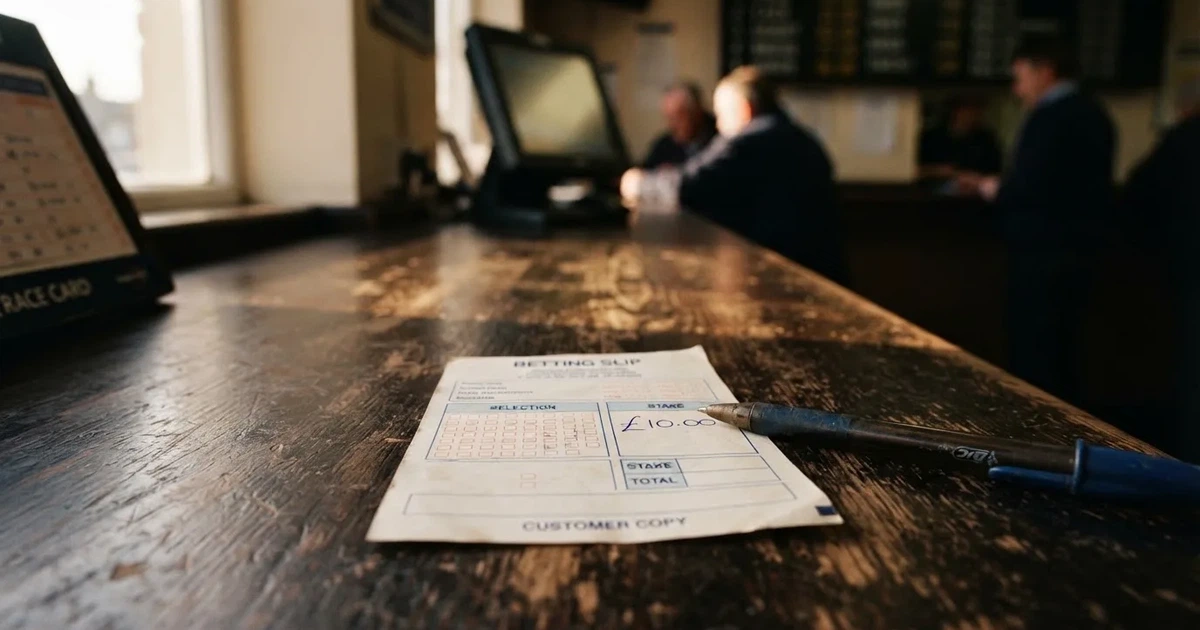
Super Heinz free bets: what a free-bet token really adds to a 120-line ticket
A free bet on a Super Heinz is a peculiar thing. The stake is, by the usual rule, not returned with a winning line — what comes back is the winnings only — and that rule cuts harder against a full-cover bet than against almost any other line on the slip. A free £10 single on a 5/1 shot, if it wins, hands back £50; the same £10 if it wins as part of a double returns the winnings on the second leg only. A Super Heinz contains no singles at all, so a free-bet token fed into one is, in effect, 120 wagers where none of the stake is ever given back.
A free-bet token on a Heinz — 57 bets, six picks — looks, on the slip, like a near-twin: same construction, fewer lines. The arithmetic behind it is the same arithmetic, only smaller. The pattern is the one used on the free-bet calculators that licensed bookmakers publish, and the lesson is the same whether the calculator sits behind a 57-line Heinz, a 120-line Super Heinz or a flagged version of either. The flag — a “Super Heinz Flag” or a “Heinz Flag” — marks a single selection that must win for the ticket to pay anything at all, and the dead lines under a flag fall away at settlement the way a voided leg falls away under the ordinary rules: the bet drops to the next multiple down.
The arithmetic of a free bet on this ticket has three moving parts. First, the token’s value is multiplied by every winning line it lands on, not by the stake itself, so a winning double of 3/1 with a £10 free bet returns £30, not £40. Second, every line carries the bookmaker’s margin, so the expected value of each winning line is already below the headline price. Third, almost every bonus credited as a free bet comes with a window during which it claims, a minimum price at which each qualifying leg runs, and a cap on what the token can return if the worst-odds leg lands. QuinnBet, for example, credits free bets valid for 7 days from issue, usable on any market at 1/2 or greater, with a maximum odds ceiling of 50/1, and bars the multi-line wagers — Trixies, Patents and Yankees — that would otherwise be the natural home for a free token. A Super Heinz is, by the same logic, the wrong place to park a free bet at all: the token expires before the ticket settles, the minimum-odds rule eliminates the long-odds lines that would otherwise pay the most, and the maximum-odds cap clips the upside of any leg that would otherwise stretch the ticket.
The bonus side compounds it. The Commission’s promotion rules cap wagering on bonuses at 10× the bonus amount and forbid mixed-product offers, so a £10 bonus can require no more than £100 of qualifying bets to clear. A Super Heinz at 20p a line costs £24 in total stake, so it clears most small bonuses in one ticket if the legs run above the minimum price. The catch is that “qualifying” is the operator’s word — minimum odds of 1/2 exclude the short-priced legs that would otherwise be the safest way through the wagering, and maximum-odds rules of 50/1 exclude the long shots that would otherwise pay most. The token is welcome on the ticket; the token is rarely as valuable as the marketing makes it sound.
The British punter who wants to use a free-bet token on a full-cover ticket is, on the published terms, better off running the token on a smaller structure — a Trixie, a Patent, a Lucky 15 — and using cash on a Super Heinz. The arithmetic is the same arithmetic scaled up; the marketing is glossier; the loss in expected value, on a per-token basis, is smaller. The other option is to ignore the bonus entirely and price the ticket as a cash wager. The arithmetic below is the price either way.
Selection windows, minimum prices and what “valid for 7 days” means in practice
The 7-day window is a British standard, not a British rule — QuinnBet, BetMGM and Ladbrokes all use the same shelf life on free bets credited after a qualifying bet. Seven days is short for a 120-line ticket that settles only when the last leg has run, and the practical effect is that a free-bet token placed on a Super Heinz at the start of a Saturday is, by the start of the following Saturday, either settled or expired. The punter who wants the token to land on a long-priced acca line is, on most British books, picking from fixtures that have to run inside that window. The token’s value is the value of those fixtures at the prices the bookmaker is offering on the day, and the bookmaker’s margin sits inside those prices the same way it sits inside every other price on the slip.
Heinz system betting: tips, forecasts and the bankroll behind the bet
A Super Heinz is, in punter’s English, a system bet — a structure of bets drawn from a fixed set of selections, sized in unit stakes, settled as a basket. The word “system” is the British bookmaker’s word; in some shops the same structure is called a “full-cover” bet, and the slip carries the bets without the punter naming each one. Either way, the practical question is the same: how does a punter pick seven legs that are more likely than the bookmaker’s price suggests, and how does the punter size the ticket so that one or two losers do not end it?
The honest answer is the one that costs money to learn. A system bet is a long-run statistical instrument, not a tip. The bookmaker’s margin on a 7-folds market — the one that pays the headline multiple — is among the highest margins on the slip, because long multiples are where the bookmaker’s edge compounds fastest; a Lucky 15 or a Super Heinz on the same seven selections has the punter running against that compounded margin across every line. The tipster industry exists because the long-multiple market is where tipsters sell certainty, and the long-multiple market is also where certainty is least common. A 1000/1 seven-fold that lands is not a vindication of a system; it is a long-tail event that paid a fortune because it was overwhelmingly unlikely to happen.
The bankroll question sits behind the tipster question, and the bankroll question is the one that decides whether the punter keeps playing after a bad week. A Super Heinz at £2 a line costs £240 to place. The same structure at 50p a line costs £60. The punter who treats the Super Heinz as a regular weekly bet on Premier League fixtures is, on the first reckoning, paying £240 a week for the privilege of running 120 multiples against the bookmaker’s compounded margin. The punter who treats it as an occasional flutter on a carefully chosen set of fixtures is, on the second reckoning, paying the same stake only on the weeks the fixtures deserve it. The arithmetic is identical; the bankroll discipline is different.
Picking the seven legs without buying the bookmaker’s margin three times over
The simplest version of the rule: the seven picks should be priced independently, and the price on each leg should be one the punter would back even if the Super Heinz did not exist. A Super Heinz built on a banker plus six short-priced favourites is a Super Heinz that pays out rarely and pays out small when it does, because most of the legs win and the long-multiple lines that pay the ticket’s prize have not landed. A Super Heinz built on seven long-priced outsiders is a Super Heinz that pays out hugely when it does and never otherwise, because most of the legs lose and the short-multiple lines that would otherwise cushion the loss have not landed either.
The shape that works, on the published odds and on the published margins, is the shape that picks a mix. Three or four selections at prices the punter is confident about, the rest at prices the bookmaker is overpaying on — and the punter who can name which prices the bookmaker is overpaying on has, by definition, done the price-comparison work that the system bet does not do for them. Kwiff’s Supercharge, which can lift the price of a bet from 2/1 to 20/1 on a single bet, is a marketing example of what the rest of the market looks like: the price the punter sees is not always the price the punter gets, and the Super Heinz is a structure on which the difference is multiplied across 120 lines.
The bookmaker’s price-compare pages — Oddschecker, the betting apps’ built-in comparison — exist for the same reason the tipster industry exists: every punter who can name the best price on a leg saves the margin between that price and the second-best price, and over a 120-line ticket the saving is, on a conservative reckoning, several per cent of the total stake. The punter who can read a margin as well as a price has, by the same reckoning, read the question the Super Heinz actually asks.
Why a £240 ticket costs more than £240 when the bankroll runs out
The bankroll question turns ugly when the bankroll runs out before the ticket does. A Super Heinz placed on a Saturday morning with a £240 stake is a ticket that may not settle until Monday evening, and the punter who has funded it from a weekly budget has, by Monday morning, spent a week’s money on a ticket that has not yet paid out. The punter who has funded it from a betting float — a ring-fenced bank balance kept for betting, sized as a multiple of the average weekly stake — has spent a slice of the float and can replace it when the float turns over.
The British bookmaker does not enforce a stake limit on system bets the way the bookmaker enforces a deposit limit under the Commission’s Remote Technical Standards. The bookmaker enforces a stake limit on the individual bet, which on most systems is the unit stake times the number of lines, and the punter is, in practice, the only person setting the size of the ticket. The punter who sets the ticket at a size the float can carry through a bad week is the punter who can take a bad week without chasing. The punter who sets the ticket at a size the float cannot carry is the punter who, after a bad week, is betting to recover.
How many bets in a Super Heinz: the structure that turns seven picks into 120 lines
A Super Heinz, in the British bookmaker’s own definition, is a full-cover bet on seven selections: 21 doubles, 35 trebles, 35 four-folds, 21 five-folds, 7 six-folds and 1 seven-fold, for 120 lines in total. There are no single bets — the structure is multiples all the way down — and every one of the 120 lines is settled independently at its own price. A Super Heinz is, in that sense, the same structure as a Goliath (8 picks, 247 lines) with one fewer selection; the same structure as a Heinz (6 picks, 57 lines) with one more.
The numbers fall out of the combination formula. From seven selections, the number of ways of drawing two is 21 (7×6÷2); three is 35 (7×6×5÷(3×2×1)); four is 35; five is 21; six is 7; and seven is 1. Add them and the count is 120, and the count is the same on every bookmaker that offers the bet. The bookmaker’s slip does the arithmetic for the punter, and the punter’s job is to read the arithmetic before the slip accepts the stake.
What a winning Super Heinz actually pays back
The payout formula is the same as for any accumulator: the return on a winning line is the unit stake multiplied by the combined odds of the legs that make up that line, and the combined odds of an accumulator are the legs’ decimal odds multiplied together. A Super Heinz at £2 a line with seven picks at decimal odds of 1.50, 1.80, 2.00, 2.20, 2.50, 3.00 and 4.00 — a mixed short-and-long-priced set, drawn from research’s illustration rather than from a real event — has a combined odds figure on the seven-fold line of 356.40, which works through as 1.50 × 1.80 = 2.70, × 2.00 = 5.40, × 2.20 = 11.88, × 2.50 = 29.70, × 3.00 = 89.10, × 4.00 = 356.40. The return on the seven-fold line at £2 a line is therefore £712.80, of which the £2 stake is included, and the profit on that single line is £710.80. The other 119 lines pay out at lower combined odds, each on its own arithmetic, and the whole ticket pays out as the sum of those 120 returns less the £240 total stake.
The arithmetic scales linearly with the unit stake, so a £10 accumulator on the same seven legs returns £3,564 and a £10-per-line Super Heinz on the same seven legs returns, on a perfect seven-fold, the same £3,564 on the seven-fold line and proportionately more across the rest. The punter who treats the Super Heinz as a structure on the same legs as the seven-fold accumulator is, in effect, running the same wager at 120 different sizes and combinations, every one of them independent.
The illustrative legs at 1/2 (1.50), evens (2.00) and 6/4 (2.50) that research names are picked to be readable on a British slip. A seven-fold at those three prices plus four more — the punter chooses the four — has a combined price that scales with the four extras. The point of the illustration is not the precise number; the point is the shape. A Super Heinz on seven short-priced favourites pays out rarely, because one short-priced favourite loses more often than the price suggests, and the loss kills the long-multiple lines. A Super Heinz on seven long-priced outsiders pays out rarely, because most of the legs lose, and the win on the rare occasion is paid at the long combined price the bookmaker was already overpaying on.
When a leg is voided: the non-runner rule in plain English
A voided leg is settled as a non-runner, and the multiple drops to the next level down. A seven-fold with one voided leg becomes a six-fold on the remaining six; a six-fold with one voided leg becomes a five-fold; and so on, all the way down to the doubles, where a voided leg on a double ends the line entirely. The non-runner rule is the bookmaker’s general settlement rule for multiples and is published on every licensed bookmaker’s terms; on Sky Bet’s published help it is set out in plain English, and the effect is the same on Ladbrokes, Betfred, BetMGM and the rest.
The punter’s practical question is which bookmaker voids a withdrawal before the off and which treats it as a non-runner at starting price, and the answer varies. A non-runner is a non-runner; a withdrawal the day before is, on most books, settled at starting price with the leg removed from the multiple. The Rule 4 deduction — a bookmaker rule that takes a small percentage of winnings when a late withdrawal reduces the field in a horse race — applies to horse racing only and is independent of the non-runner rule. A Super Heinz on a horse-racing card is the structure on which Rule 4 bites hardest, because the Rule 4 deduction is applied to the combined odds of every multiple containing the affected leg, and the Super Heinz contains every multiple on the affected leg.
How a Super Heinz compares to a Heinz, a Goliath and a Lucky 15
The four bets are cousins. A Lucky 15 is 15 lines on four picks: 4 singles, 6 doubles, 4 trebles and 1 four-fold; a Heinz is 57 lines on six picks (15 doubles, 20 trebles, 15 four-folds, 6 five-folds, 1 six-fold); a Super Heinz is 120 lines on seven picks; a Goliath is 247 lines on eight picks. The pattern — every multiple from doubles up, no singles, every combination covered — is the same on all four. The Goliath adds an eight pick to the seven of the Super Heinz and almost doubles the number of lines (247 vs 120); the Lucky 15, by including singles, includes the one line that pays out even when most of the rest fail.
The cost scales with the lines. At £2 a line, a Lucky 15 costs £30, a Heinz £114, a Super Heinz £240 and a Goliath £494. The payout on a perfect winning ticket scales with the combined odds: a perfect Goliath pays the long combined odds of eight legs, multiplied by the unit stake; a perfect Lucky 15 pays the combined odds of four legs across 15 lines. The choice between them is the choice between a bigger stake and a longer combined odds line, and the punter who wants the cushion of the singles pays the Lucky 15’s extra lines for it.
The punt that fits the punter’s bankroll is the one that wins. A Lucky 15 at £2 a line fits a £30 float; a Super Heinz at £2 a line fits a £240 float; a Goliath at £2 a line fits a £494 float. The punter whose float can carry the bigger structure is the punter who, on the same fixtures, runs the bigger structure. The punter whose float cannot is the punter who runs the smaller one.
Super Heinz at British bookmakers: 10 licensed operators compared
The ten operators below are listed on the Gambling Commission’s public register as holders of a remote general betting licence (real events) for Great Britain. The register is the whole test of whether a brand holds a Commission licence: a brand can be searched by trading name, business name, domain or account number, and any operator whose remote facilities are used in Great Britain is required to hold one under sections 33 and 36 of the Gambling Act 2005 as amended. The licence numbers in the table below come from the Commission’s register, current as of 27 October 2026.
The table compares the four matters the comparison calls for: the brand, the Commission’s licence number and the licence holder, and what the operator’s own published terms state on the Super Heinz and the surrounding full-cover market. The third column is the operator’s own statement, drawn from each operator’s terms or help pages, and is a description, not a recommendation: an offer described here is the offer the operator publishes, and what the offer costs the punter in wagering, minimum prices and stake limits is the offer’s published arithmetic.
| Brand | Gambling Commission licence | What the operator’s own terms state |
|---|---|---|
| Ladbrokes | 054743-R-330863-014 (account 54743) — LC International Limited | Full-cover bets available in the sportsbook; Acca Boosts and Best Odds Guaranteed on UK and Irish horse racing; in-play betting on selected markets; odds boosts on horse and greyhound bets. |
| BetMGM | 039198-R-319450-029 (account 39198) — LeoVegas Gaming PLC | Full-cover bets available on football and the major sports; four £10 free bets credited on a £10 deposit and a qualifying sports bet, two for football accumulators of 4+ selections and two for sports multiples of 2+, valid 7 days, minimum odds and opt-in required. |
| NetBet | 039170-R-319343-032 (account 39170) — Netbet Enterprises Limited | Full-cover bets on the major sports; Daily Boosts, free bet offers and Profit Boosts; Bet Builder with instant dynamic odds; sports stats for major leagues. |
| Fitzwilliam Sports | 048760-R-335434-009 (account 48760) — SBKI Limited | Prices set against Oddschecker’s average for each selection; full-cover bets available on the sportsbook; Apple and Google mobile apps. |
| Fitzdares | 000400-R-103839-030 (account 400) — Fitzdares Limited | Full-cover bets and Lucky 15s on the major sports; cash out, accumulators and antepost markets on horse racing, football, tennis, rugby, cricket, golf and American football; in-play live odds. |
| Kwiff | 044448-R-323408-017 (account 44448) — Eaton Gate Gaming Limited | Full-cover bets available on the sportsbook; Supercharge feature can instantly boost the odds on a bet (for example from 2/1 to 20/1) on singles and multi bets across any sport; UK Gambling Commission licensed. |
| Octobet | 062545-R-337248-006 (account 62545) — Octopus Game Limited | Full-cover bets on the sportsbook; Best Odds Guaranteed on UK and Irish horse racing, up to £150 per customer per race. |
| Matchbook | 039504-R-319407-024 (account 39504) — Triplebet Limited | Betting exchange: customers bet against other users; Bet Builder, multiples and in-play betting; live streaming of horse racing and greyhounds; full-cover bets are exchange-built combinations, settled at exchange prices. |
| Betfred | 039544-R-319290-010 (account 39544) — Petfre (Gibraltar) Limited | Full-cover bets on the sportsbook; Bet Builder, Sub Switch, Racing Post data, Extra Places on selected horse racing markets; live casino and bingo on the same account. |
| QuinnBet | 061011-R-335683-004 (account 61011) — QuinnBet (Gibraltar) Limited | Full-cover bets on the sportsbook; free bets valid 7 days from credit, usable on any market at 1/2 (1.5) or greater, with maximum odds of 50/1; straight accumulators allowed; Trixies, Patents and Yankees are not. |
The ten brands sit, on the Commission’s register, in different licence categories and with different licence holders. Ladbrokes runs under LC International Limited, which also runs Coral under the same corporate parent; BetMGM runs under LeoVegas Gaming PLC; NetBet runs under Netbet Enterprises Limited; Fitzwilliam Sports runs under SBKI Limited; Fitzdares runs under Fitzdares Limited; Kwiff runs under Eaton Gate Gaming Limited; Octobet runs under Octopus Game Limited; Matchbook runs under Triplebet Limited; Betfred runs under Petfre (Gibraltar) Limited; QuinnBet runs under QuinnBet (Gibraltar) Limited. The licence holder is the entity that the Commission licenses; the brand is the trading name; and a punter who wants to check the licence reads the licence holder against the trading name on the Commission’s public register.
The Matchbook column reads differently from the rest. Matchbook is a betting exchange — the only exchange on the list — and the prices on Matchbook are set by other customers, not by the bookmaker. A Super Heinz on Matchbook is, in effect, 120 back bets laid against other customers’ prices, settled at the exchange’s commission rate and at prices that, on a well-watched market, can be sharper than the bookmaker’s. The punter who uses Matchbook for a Super Heinz is paying the exchange’s commission on the net winnings rather than the bookmaker’s margin on every line, and the choice between the two is a choice between the bookmaker’s structure and the exchange’s commission.
What the Super Heinz costs at each brand, in plain English
Every brand on the list offers the Super Heinz as a structure on the slip; the price the punter pays is the price the bookmaker publishes, with the bookmaker’s margin inside it. The punter who shops the seven legs across brands — odds comparison via Oddschecker, the betting apps’ built-in comparison, or a manual check — saves the margin between the best price and the second-best price on each leg, and over 120 lines the saving is a meaningful share of the ticket. The punter who picks one brand and runs the seven legs at that brand’s prices pays the brand’s margin on every leg, on every line, and the ticket’s expected cost is the brand’s margin multiplied across the lines.
The free-bet and bonus offers attached to each brand are described in the brand’s own terms, and what they cost the punter is the published wagering and minimum-odds rule. Ladbrokes’ odds boosts and Best Odds Guaranteed are conditional on the bet type — horse racing only for BOG — and do not apply to a Super Heinz by default; the punter who wants the boost on the Super Heinz reads the terms. BetMGM’s four £10 free bets on a £10 qualifying bet are valid 7 days and require minimum odds and opt-in, and the four bets are restricted to football accumulators of 4+ selections and sports multiples of 2+. QuinnBet’s 7-day free bets are usable on any market at 1/2 or greater, with maximum odds of 50/1 and Trixies, Patents and Yankees excluded — a Super Heinz, by the structure of the rules, sits at the edge of usability.
The bonus cap set by the Commission’s promotion rules — 10× the bonus amount, no mixed-product offers — applies to every licensed bookmaker’s offer. A £10 bonus can require no more than £100 of qualifying bets to clear. A Super Heinz at £2 a line costs £24, so it clears most small bonuses in a single ticket, and the punter who uses the Super Heinz as the qualifying bet is, in effect, paying the ticket’s stake against the wagering requirement. The arithmetic is the arithmetic above; the marketing is glossier.
Why the licence check matters before the first bet
A British punter who bets with an unlicensed brand — a Curaçao, Maltese or Gibraltar operator without a Commission licence at the point of consumption — loses the protections the licence brings. The licence brings GAMSTOP coverage, the Commission’s complaints route, an approved alternative dispute resolution (ADR) body, the £150 financial vulnerability check, the bonus cap and the British consumer-law framework. An unlicensed brand carries none of those, and the punter who funds an account with an unlicensed brand and wins cannot rely on the Commission to mediate a withheld payout.
The licence check itself takes a minute. The Commission’s public register, at the address a punter finds via a search of “Gambling Commission public register”, lets a punter search by business name, trading name, domain or account number. Every operator in the table above is on the register against the licence holder named; every operator outside the register is not licensed for Great Britain. The punter who bets without checking has skipped the one check that decides whether the rest of the protections apply.
Fundamentals of the Super Heinz: a primer in seven picks
A Super Heinz is, at heart, a structure rather than a strategy. The structure is fixed: 120 bets, all multiples, every combination covered. The strategy is the punter’s: which seven picks to choose, at what prices, on which day, with what stake. The arithmetic is the arithmetic of any accumulator, multiplied across the combinations. The cost is the unit stake multiplied by 120, less the unit stake returned on winning lines.
The punter’s mental model for a Super Heinz is the one for any system bet. The structure pays out on a subset of the combinations when one or two legs lose; the structure pays out on every combination when every leg wins. The structure pays out nothing when too many legs lose to leave any winning multiple. The break-even point on the ticket is the price at which the total return across the winning lines matches the £240 stake, and the break-even price moves with the mix of short and long legs the punter has chosen. A ticket of seven short-priced favourites breaks even on a subset of combinations only; a ticket of seven long-priced outsiders breaks even on the seven-fold only.
The price the punter sees versus the price the punter gets
The bookmaker publishes every price with margin visible to the punter who knows how to read it. A football match at home 4/6, draw 5/2, away 4/1 — three prices that the punter can add up the way the punter adds up an overround: 6/4 plus 5/2 plus 4/1 in implied probabilities, where 4/6 is the inverse of 1 + 4/6 = 10/6 (or 0.60), 5/2 is 1/(1 + 5/2) = 2/7 ≈ 0.286, and 4/1 is 1/(1 + 4/1) = 1/5 = 0.20. Add them: 0.60 + 0.286 + 0.20 = 1.086. The total implied probability is 108.6%, and the overround — the book’s margin — is the difference between 108.6% and 100%, which is 8.6% of the total stake on a one-unit bet on each outcome.
The 8.6% overround is the bookmaker’s margin on the 1×2 market of that football match. The punter’s expected loss on a £1 bet on each outcome at those prices is 8.6p — the £3 stake returns £2.914 across the three outcomes, which is £0.086 short of the £3. The same margin sits inside every other market on the match: the over/under 2.5 goals, the both-teams-to-score market, the Asian handicap, the corners market, the bookings market. The margin varies from market to market — main markets carry less margin than derivative markets, prematch markets less than in-play — and the punter who reads the prices reads the margins.
The accumulator compounds the margin. A seven-fold at 8.6% margin per leg compounds at roughly 1.086⁷, or a 78% compounded margin. The compounded margin is the share of the stake the bookmaker expects to keep on a £1 bet on the seven-fold, and the punter’s expected return on a £1 stake at fair prices would be £1.78 less the stake. The compounded margin is the reason the seven-fold is the line that pays out rarely: the price on the seven-fold already reflects a margin of close to 78%, and the punter who wins the seven-fold has overcome that compounded edge in a single bet.
Why the bookmaker’s margin matters more on a 120-line ticket than on a single
The Super Heinz runs the seven-fold’s compounded margin across all 120 multiples. Every line has its own compounded margin: the doubles’ margin is roughly 1.086² − 1 = 17.8%, the trebles’ roughly 1.086³ − 1 ≈ 28.2%, and so on up the multiples. The average margin across the 120 lines, weighted by the share of the stake on each line, is the ticket’s expected cost to the punter before any of the legs has run.
The expected cost is the punter’s loss in the long run, and the punter who plays a Super Heinz every week is paying that long-run cost every week. The punter who prices the ticket on a one-off basis is paying it once. The punter who picks legs the bookmaker is overpaying on is, on the long-run view, paying a smaller margin than the headline suggests; the punter who picks legs the bookmaker is underpaying on is paying a larger margin. The margin is the question the Super Heinz actually asks, and the punter who reads the prices reads the question.
Statute and regulation: the Gambling Act 2005, the Commission and the licence that has to be in place
The Super Heinz is a bet, and a bet offered to a customer in Great Britain requires a licence under the Gambling Act 2005. The Act covers England, Scotland and Wales; Northern Ireland is outside the Act and has its own older law. The licensing authority is the Gambling Commission, a non-departmental public body sponsored by the Department for Culture, Media and Sport. The Commission’s public register is the test of who holds a licence; the register can be searched by business name, trading name, domain or account number; and a brand that is not on the register must not accept a bet from a customer in Great Britain.

Since the Gambling (Licensing and Advertising) Act 2014, an operator whose remote facilities are used in Great Britain needs a Commission licence wherever the operator is based. A Curaçao, Maltese or Gibraltar licence is not a substitute for a Commission licence; a Commission licence is required at the point of consumption. The sections that impose the requirement are sections 33 and 36 of the 2005 Act as amended. The penalty for providing gambling facilities in Great Britain without the licence the Act requires is, on summary conviction, up to 51 weeks’ imprisonment, a fine up to level 5, or both; six months in Scotland. The penalty is aimed at the operator, not the customer: no offence aimed at a customer who merely bets on an unlicensed site was found in research, and the framing for the customer is the loss of protection, not the risk of prosecution.
The licence categories that matter for a Super Heinz
The Super Heinz is a fixed-odds bet on real events, and the licence category that covers it is the remote general betting standard (real events) licence. The other remote categories — virtual events, general betting limited, pool betting, betting intermediary — cover different markets and are not interchangeable. Matchbook’s licence covers the betting intermediary category, which is the licence for betting exchanges, and the Super Heinz on Matchbook is, by category, an exchange-built combination. The Ladbrokes licence covers both the remote general betting standard and the remote betting intermediary categories, which is why Ladbrokes can run both fixed-odds betting and exchange-style features.
The Commission’s register lists the categories against each licence, and the punter who wants to check a brand reads the categories as well as the licence number. A brand on the register under the pool betting category alone cannot offer a fixed-odds Super Heinz; a brand under the betting intermediary category alone cannot offer fixed-odds singles, only exchange-built bets. The licence categories are not interchangeable; the punter who bets outside the brand’s licence category is betting on an unlicensed market.
Player protection rules that bind every licensed bookmaker
Every licensed bookmaker is bound by the Commission’s Licence Conditions and Codes of Practice (LCCP), and the LCCP conditions that bite the Super Heinz bet are the social responsibility code, the financial vulnerability check and the deposit-limit rules. The financial vulnerability check (LCCP condition 3.4.4) applies to licensed remote betting when a customer’s deposits minus withdrawals exceed £150 in a rolling 30 days, since 28 February 2025; the check is a public-record check (bankruptcy or county court judgments), not an income check and not a credit reference check. The financial risk assessments that the press calls “affordability checks” are announced in a staged plan as of 7 July 2026 with no start date — they are not yet in force.
The deposit-limit rules (Remote Technical Standard 12) require operators to offer a gross deposit limit on a fixed time frame; the first changes have applied since 31 October 2025 and a second phase was postponed to 30 September 2026, so whether the second phase is live is not established. The punter who sets a deposit limit on a Commission-licensed site is the punter who has bounded the worst case on the ticket; the punter who does not is at the operator’s default. There is no state-set deposit or loss ceiling for betting in Great Britain, and the limits are the customer’s choice within the operator’s framework.
GAMSTOP is the national multi-operator online self-exclusion scheme and is a mandatory licence condition for online operators since 31 March 2020. The exclusion periods are six months, one year, five years, or five years with auto-renewal; after the minimum period the exclusion stays in place for a further seven years unless the customer asks GAMSTOP to remove it. GAMSTOP covers online sites and apps; betting shops use a separate service. The punter who wants to self-exclude does so once with GAMSTOP and is excluded across every licensed online operator.
The bonus cap and the marketing rules that bind the offers above
The Commission’s promotion rules, in force since 19 January 2026, cap wagering on bonuses at 10× the bonus amount — a £10 bonus can require no more than £100 of qualifying bets — and forbid mixed-product offers, such as an offer that requires gambling on betting and casino to clear. The cap applies to wagering requirements, not to the money value of the bonus, and whether the cap applies to free bets with no wagering condition is not established. The punter who reads the bonus terms reads the wagering requirement against the cap, and the punter who finds a bonus with a wagering requirement above 10× has found a breach of the rules.
The marketing rules outside the Commission’s LCCP are the CAP Code (Committee of Advertising Practice, non-broadcast) and the BCAP Code (Broadcast Committee of Advertising Practice, broadcast), enforced by the Advertising Standards Authority (ASA). CAP Code section 16 requires marketing to be socially responsible, not of strong appeal to under-18s, and not to feature anyone who is or seems to be under 25 gambling or playing a significant role (with an exception for marketing placed where a bet can be made directly). The rule is about who may appear in the advertisement, not who may bet; the minimum age to bet is 18, and the Commission’s identity-verification rules apply before the first deposit.
The “whistle-to-whistle” rule is an industry code, not law: since 1 August 2019 betting advertisements are not shown on TV from five minutes before a live sporting event to five minutes after it, before the 9pm watershed, with horse and greyhound racing excluded. The Premier League clubs’ withdrawal of gambling sponsorship from the front of matchday shirts from 2026/27 is voluntary, not law. The punter who sees fewer gambling ads on TV is the punter who sees the industry’s voluntary code in operation; the punter who sees gambling sponsorship on shirt sleeves is the punter who sees the voluntary code’s limit.
Responsible gambling: where the Super Heinz meets the safer-gambling tools
A Super Heinz is, on the published terms and on the published arithmetic, a higher-risk structure than a single or an accumulator. The £240 stake at £2 a line is a ticket that may not settle for several days; the 120 lines multiply the operator’s margin across the punter’s outlay; and the structure invites the punter to keep the stake high because the headline win on the seven-fold looks large. The safer-gambling tools the Commission binds every licensed bookmaker to offer are the tools that limit the worst case, and the punter who uses them is the punter who has bounded the loss.
The safer-gambling tools are four: GAMSTOP self-exclusion, the deposit-limit framework, the financial vulnerability check at the £150 rolling-30-days threshold, and the operator’s own safer-gambling controls (time-out, reality checks, self-exclusion at the operator). GAMSTOP is the one that covers every licensed online operator; the others are the operator’s, and the punter can set them on the account or by contacting the operator’s safer-gambling team.
GamCare, GambleAware and the help that is independent of the operator
GamCare runs the National Gambling Helpline, and the helpline is the first call for any punter who feels the betting has moved beyond what the punter can manage. GambleAware funds treatment and research across Great Britain, and its website is the route into local counselling. NHS gambling clinics offer treatment for the small share of gamblers whose betting has become a clinical condition; Gamblers Anonymous runs peer-support meetings across the country. The help is independent of the operator and is free at the point of use, and a punter who asks for help is asking a service that has heard the question before.
The help is for the punter and for the punter’s family. A punter whose partner has noticed a change in behaviour is welcome at GamCare’s family services; a punter whose child is betting is welcome at the Young Gamblers Education Trust’s services; a punter who is in debt because of betting is welcome at StepChange’s debt advice alongside GamCare’s gambling advice. The help is not a single phone number; it is a network, and the network is independent of the Commission, the operator and the betting industry.
The offshore brand and what the unregulated gambler gives up
A punter who bets with an unlicensed offshore brand gives up GAMSTOP coverage, the Commission’s complaints route, an approved ADR body, the £150 vulnerability check, the bonus cap and the British consumer-law framework. The punter who wins on the offshore brand cannot take a withheld-payout complaint to the Commission, and the available alternative is the offshore brand’s own ADR or the courts of the offshore brand’s home jurisdiction. The Commission’s enforcement against unlicensed brands is disruption — cease-and-desist notices, search-engine referrals, work with registrars, hosts and payment providers — and the Commission has been given, or is about to receive, court-order DNS blocking powers; ISP blocking is not yet in operation.
The honest framing is the Commission’s: licensed brings checks, limits, GAMSTOP and the bonus cap, but also verification before the first bet; unlicensed brings none of those protections and the risk of loss of funds. Neither is the safe choice by default; the licensed brand is the regulated choice. The punter who picks the licensed brand is the punter who has read the framework; the punter who picks the unlicensed brand has not.
Frequently asked questions on the Super Heinz bet
What is a Super Heinz bet?
A Super Heinz is a full-cover bet on seven selections, as defined in the introduction, for 120 lines in total, with no single bets. Every line is settled independently at the published odds, and the structure pays out on the subset of combinations that wins when one or two legs lose. A £2 unit stake makes the total outlay £240.
What is a Heinz bet?
A Heinz is a full-cover bet on six selections — 15 doubles, 20 trebles, 15 four-folds, 6 five-folds and 1 six-fold — for 57 lines in total. A Heinz is, on the same construction, the Super Heinz with one fewer pick and roughly half the lines. The stake per dollar at £2 a line is £114, and the break-even analysis runs the same way.
How many bets in a Super Heinz?
120 lines, as set out in the introduction. There are no singles in a Super Heinz — the structure is multiples all the way down — and the lines fall out of the standard combination formula on seven picks.
How can it be checked that a bookmaker holds a Gambling Commission licence?
Open the Commission’s public register and search by business name, trading name, domain or account number; every licensed operator appears with its licence categories, account number and licence holder. The check takes a minute. The register is the test of whether the brand holds a licence; an unlicensed brand cannot lawfully accept bets from a customer in Great Britain.
How is the return on a bet worked out from the stake and the odds?
For a single bet, return = stake × decimal odds, of which the stake is part of the return and profit is stake × (odds − 1). For a combination bet the odds of the legs multiply into one price, and the return on a winning combination is stake × the combined odds. For an accumulator at £10 with three legs at 1.50, 2.00 and 2.50 the combined odds are 7.50, the return is £75 and the profit is £65.
What is the bookmaker’s margin and how can it be seen in the odds?
The margin is the share of every pound staked on a market that the bookmaker keeps on average. It shows up as the overround — the gap between the sum of the implied probabilities of every outcome and 100%. A 1×2 market priced at home 4/6, draw 5/2, away 4/1 has implied probabilities of about 60%, 28.6% and 20%, summing to 108.6% — the 8.6% over is the book’s margin on that market.
Bet types & in-play – Bookies Trust
Content created by the «Bookies Trust» team
