
Futsal betting tips, markets and the maths behind every price
 Available in US
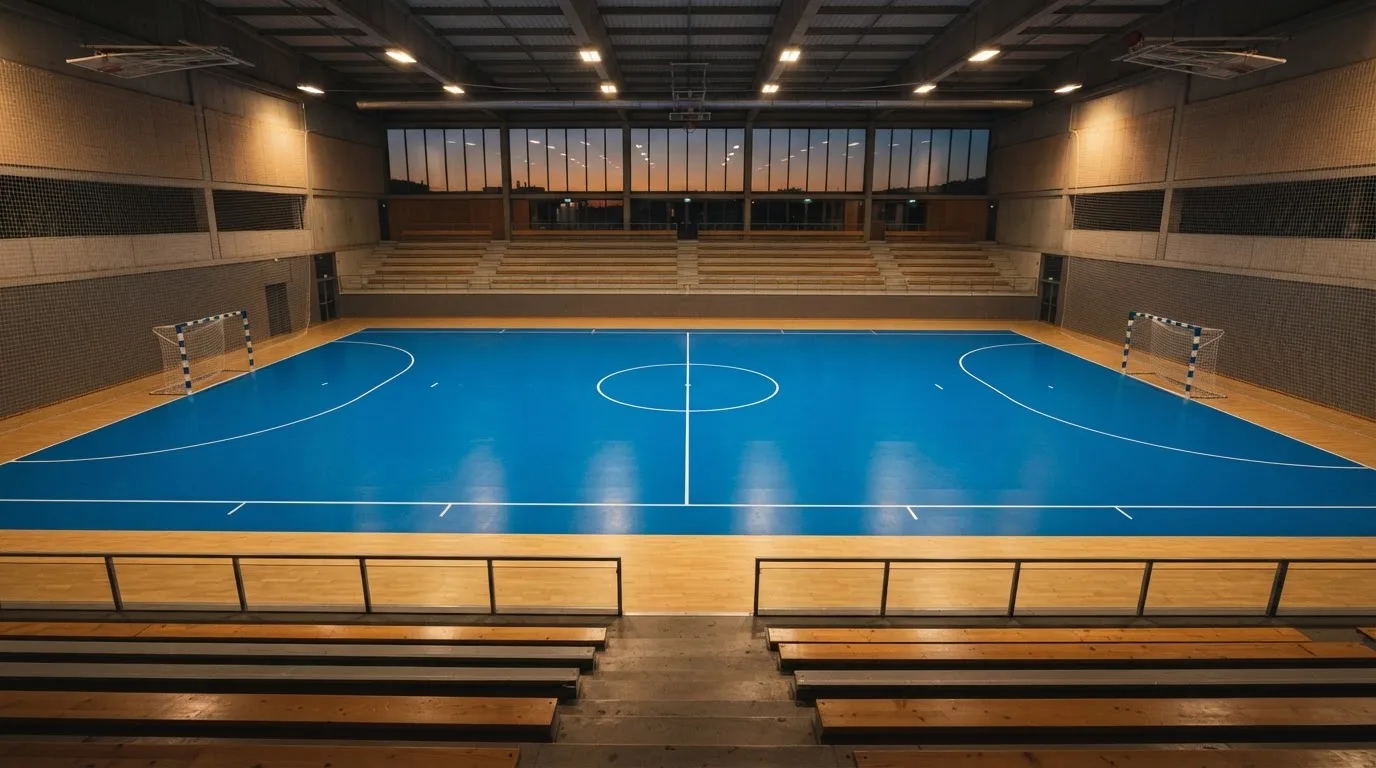
Futsal sits in a strange corner of the betting market. It is played by two teams of five on a 40 m by 20 m court, with a size-4 ball that bounces lower than a football, two 20-minute periods and a clock that stops at dead balls. The smaller court compresses everything — shots, fouls, momentum swings — into a tighter frame than eleven-a-side. For a bettor, that compression is the whole opportunity and the whole hazard. The opportunity is faster information: fouls accumulate visibly, a goalkeeper pulled for a flying keeper resets the geometry, a sixth foul in a period hands the opposition a 10 m direct free kick with no wall. The hazard is the same thing — the data you would use to price a market is thin, the markets themselves are thin, and the bookmaker’s cut can be heavier than it looks in football.

This guide is built around consequence. The subject is how a futsal tip is built and what it costs the bettor, and the page works forward from there: from the bet types you actually meet, to the tournaments where liquidity exists, to the licensed brands taking those bets, to what their offers really mean in turnover, to the in-play and cash-out mechanics that change mid-match, to the staking discipline that decides whether the method survives a losing run. Nothing on this page predicts a match. Nothing on this page tells you who will win. The arithmetic shown here is illustrative, the prices named are examples of how a market is priced, and the verdict on every brand is the page’s own.
Current as of 27 October 2026 · operator and offer data verified against the Gambling Commission’s public register and each operator’s UK terms page.
How futsal prices actually work
A futsal price is a decimal number that does two jobs. It tells you what the bookmaker thinks is likely to happen, and it tells you what a winning stake pays back. Decimal odds are the convention used by every GB-licensed operator and the convention used throughout this page: a price of 2.50 means every £1 staked returns £2.50 if the selection wins, of which £1.50 is profit. Fractional odds — the older British form — express profit only, so 3/2 reads as 2.50 in decimal.
Two prices sit on either side of a market. On a one-off match between Spain and Brazil, Spain might be priced at 1.90 to win and Brazil at 1.95 to win. The stake returns are straightforward: a £10 stake on Spain returns £19 if Spain wins, a £10 stake on Brazil returns £19.50 if Brazil wins. The numbers that hide inside those prices are less obvious. Take the inverse of each — 1 ÷ 1.90 is 0.5263, and 1 ÷ 1.95 is 0.5128 — add them, and the sum is 1.0391. The bookmaker’s payout share, the fraction of every pound staked that returns to winning customers on this market, is 1 ÷ 1.0391, which is 0.9624. The margin, the fraction the bookmaker keeps, is 1 − 0.9624, which is 0.0376, or roughly 3.8%.
That margin is the only number that matters when two prices look the same. Two bookmakers can both post Brazil at 1.95 and disagree by nothing visible to the bettor, while one keeps 3% of every pound on this market and the other keeps 6%. The bettor does not see the margin on the price; the bettor sees it as a slightly worse payout over hundreds of bets. It is the page’s job to make the invisible visible, because every other section of this guide rests on it.
The illustrative market used elsewhere on this page is the even-money pair: both sides priced at 1.90. The inverse of 1.90 is 0.5263; twice that is 1.0526. The payout share is 1 ÷ 1.0526, around 95.0%; the margin is therefore in the 4.8% to 5.1% range depending on rounding. A margin that high is normal for a two-way market on a mid-liquidity event. It is roughly twice what the tightest football 1X2 markets charge, and it is the ceiling any serious futsal bettor works against.
The bet types you meet on a futsl match
The four bet types below are the ones every GB-licensed brand carries on a top-tier futsal match. Lower-division fixtures, women’s fixtures and friendly tournaments often have only one or two of them — that thinness is itself a signal of how much the market trusts the data.

Match result (1X2, adapted). Futsal does not draw often enough to carry a separate draw price on most fixtures — at international level only a fraction of games end level after forty minutes, and at club level the proportion is lower still — so the standard market is two-way: Team A or Team B. The return is stake × decimal odds. A £10 stake at 1.90 returns £19, profit £9. The math is identical to football’s 1X2 with the draw removed.
Total goals over/under. Futsal averages more goals per game than eleven-a-side, but the exact threshold depends on the competition. The line moves by half-goal increments on most operators: 4.5, 5.5, 6.5, with prices around 1.85 to 1.95 for each side. The bet settles on the count of goals across both periods, including extra time if the match goes to it.
Handicap. A favourite can be priced at a -1.5 handicap: it must win by two clear goals for the bet to land. The underdog at +1.5 wins the bet if it draws or wins. Handicaps are the standard way a bookmaker shortens the price of an obvious favourite without removing the market, and they are common on futsal because mismatches in the international game can be brutal.
Both teams to score. A binary on whether each team scores at least once. BTTS lands more often in futsal than in football because goalkeepers are pulled for the flying-keeper tactic and own-goal deflections are not rare — a side down by one with four minutes left will routinely sacrifice its keeper to chase an equaliser. A 1-0 home win does not land BTTS; a 1-1 draw does.
Beyond these four, most licensed brands carry team totals (Team A over 2.5 goals, Team B under 1.5 goals), race to X goals, next goal, method of next goal (shot, header, own goal, penalty), and — on the bigger events — player-specific markets such as first goalscorer. The first goalscorer market on a futsal match is harder to price than the same market on a Premier League fixture because goalkeepers and defenders score far more often than they do in football, and the bookmaker’s margin on these markets is correspondingly wider.
Combination bets and what they cost
A combination bet — an accumulator or “acca” — multiplies the prices of its selections into one combined price. Two legs at 1.90 each become 3.61; three become 6.86; four become 13.04. The maths is correct, but the combined price hides a compounded margin. The 4.8% to 5.1% margin on each even-money leg becomes a roughly 14% margin on a two-leg acca and around 23% on a three-leg. The bookmaker’s cut grows faster than the bettor’s stake. That is why a long acca pays out so rarely — not because the legs are hard, but because the margin has eaten a quarter of the headline price before a ball is kicked.
A bet builder or same-game multi is a combination bet on one match: match result plus total goals plus BTTS plus first goalscorer, all on the same fixture. It pays the multiplied price, but the legs are correlated — a 3-0 home win is much more likely to also clear the over 2.5 line than an independent calculation would suggest — and a serious futsal bettor treats the bet builder as a separate market with its own margin, often a wider one.
Where futsal is actually played and bet on
Futsal has fewer top-tier events than eleven-a-side, and the betting calendar follows that fact. The events below are the fixtures a GB-licensed operator’s futsal tab will actually carry during the year.
The FIFA Futsal World Cup sits at the top. It has been held since 1989, runs roughly every four years, and pulls the deepest liquidity of any futsal event on a licensed bookmaker’s site — by a wide margin, because the entire international betting market watches it. The UEFA Futsal Champions League and the continental equivalents are the second tier: club competition, mid-liquidity, and where most in-season action concentrates outside World Cup years. National leagues — Spain’s Primera División de Futsal, Brazil’s Liga Nacional de Futsal, Portugal’s Liga Placard, Russia’s Superliga — run in season from roughly September to May and carry prices almost every weekend, but the liquidity per match is a fraction of what the World Cup sees.
Below the national leagues sit women’s futsal, youth futsal, regional and amateur competitions. The first FIFA Futsal Women’s World Cup was held in the Philippines in 2025, which means women’s international futsal now has a quadrennial headline event; club women’s futsal has fewer televised fixtures and fewer markets. On any GB-licensed site the women’s international fixtures show up in the futsal tab; the club game usually does not.
Tournaments in futsal follow a knockout-heavy shape more often than league play — group stages followed by single-elimination rounds — and that shape matters for two reasons. First, the price of a knockout favourite shortens sharply as the rounds progress: the same team at 1.90 in the group stage can be 1.40 by the semi-final because the field has thinned. Second, dead rubbers, in-team games with nothing at stake for either side, are more common in futsal than in football, because the gap between haves and have-nots is wider. A dead rubber at a moment introduces no signal about either side’s form, and prices on dead rubbers are weaker than on competitive fixtures by a margin that varies.
The historical point worth its weight: futsal as a formalised sport was created in 1930 by Juan Carlos Ceriani at the YMCA in Montevideo, Uruguay. FIFA is the highest governing body. That history explains why the international game is dominated by South American and Iberian sides — Uruguay, Brazil, Argentina, Spain, Portugal — and why those nations carry the deepest liquidity in any licensed bookmaker’s prize lines.
What a novice in FUTSAL WANTS from the markets
A novice in FUTSAL — someone new to the sport — wants three things from a price: a signal about who is likely to win, a guide to how the game works, and a way to tell whether the price they have been given is fair. The first two the sport itself supplies: five-a-side, smaller court, faster transitions, more shots, more fouls, more set-pieces. The third the math supplies, and it is the part this page spends the most time on, because every other decision the novice makes rests on whether the price is fair in the first place.
The ten licensed bookmakers taking futsal bets in Great Britain
Every operator below holds a remote general betting standard (real events) licence from the Gambling Commission for customers in Great Britain, as recorded on the Commission’s public register. The list is not a ranking. Each review carries the operator’s licence number, the licence holder named on the register, and what the operator’s own terms page states on the point that distinguishes it in the comparison.
1. BetTom – a small-stake welcome matched with a slot funds offer
Licence holder: Bet Tom Limited · Gambling Commission account: 64959
BetTom’s sports welcome offer is described on the operator’s own terms as 50% back as a free bet of up to £50, paired with a matching 50% back up to £50 as free slot funds for casino play; full terms apply. The sports side is a free-bet return, not a cash bonus — the stake is not paid back with a win — and the headroom is modest at £50. For a futsal bettor with a small budget, that headroom is the offer’s main feature: it does not pretend to be a high-roller product and the qualifying stake stays manageable. Read the qualifying-bet terms before claiming, because the minimum price and the eligible markets decide whether the qualifying bet is actually worth placing.
The verdict: a sensible welcome for a small-budget bettor who wants to try futsal without committing a large qualifying stake. Anyone staking in larger units will find the £50 ceiling too low to matter.
2. VBet – bet builder, live streaming and a deep in-play page
Site holder: SCGO Limited · Gambling Commission account: 44662
VBET’s GB app exposes Bet Builder, pre-match and in-play betting, live streaming and a live calendar that bundles results and stats. For futsal the relevant features are the bet builder — for the same-game-multi markets discussed earlier — and the live calendar, which is a working alternative to the dedicated stats subscriptions some rival brands push. Live streaming is the harder of the two to evaluate from a terms page, because the catalogue is event-by-event and the futsal coverage depends on which tournaments the operator has rights to in any given quarter. The headline feature is the breadth of in-play tools on one screen, which matters more in futsal than in football because the game is faster and the in-play price moves faster.
The verdict: the most complete in-play stack among the ten, and the one a bettor who wants to combine a pre-match bet with a live position on the same match should look at first. The brand’s licence, account number and operator are recorded on the Gambling Commission’s public register.
3. DAZN Bet – low deposit thresholds and a wide method set
Site holder: DZBT Limited · Gambling Commission account: 48756
DAZN Bet’s deposit terms, as stated on the operator’s help pages, set the floor at £5 by debit card, Apple Pay, Paysafecard, Trustly and Skrill, and at £20 by PayPal, with no processing fees on the operator’s side. For a bettor testing a new bookmaker with a small initial deposit — a natural move when a brand is new to futsal and the bettor wants to feel out the markets first — the £5 floor across five methods is the headline feature. PayPal’s £20 floor is higher than the others, a deliberate constraint of that method rather than a brand-level choice. The deposit side of the comparison is the page’s clearest read on DAZN Bet; the sports-product side has to be tested by the reader against the operator’s own sportsbook.
The verdict: a low-friction entry point for a bettor who wants to deposit £5, place one or two qualifying bets on a futsal match, and judge the price depth before committing more.
4. Betfred – the established high-street name with a deep sports app
Site holder: Petfre (Gibraltar) Limited · Gambling Commission account: 39544
Betfred’s app exposes Bet Builder, Sub Switch, Racing Post data, Extra Places, live casino and bingo. The features that translate to futsal are the bet builder and the Sub Switch, which substitutes a player selection with another if the named player does not start — a feature aimed more at football team-news swings than at futsal, where named players are rarer on the bet slip. The Racing Post integration and Extra Places are horse-racing features that do not move the needle for a futsal bettor. The brand’s broader strength — long-running UK high-street presence, retail shops, established name — is what carries the trust account on the betting side; the app’s futsal depth has to be checked by the reader against the operator’s own sportsbook.
The verdict: a recognisable UK brand with a deep sportsbook app, but the headline features are racing-shaped. A futsal bettor should look at the actual markets on offer before assuming the retail footprint translates to futsal depth.
5. DragonBet – cash out both pre-match and in-play plus live racing
Site holder: DragonBet Ltd · Gambling Commission account: 64908
DragonBet offers cash out both in-play and pre-match, and live streaming of racing. The cash-out coverage on its own is what sets it apart in this comparison: pre-match and in-play cash out together means a bettor can lock in a position at any of several points in the match, and on a sport as fast as futsal that option has real value. Live streaming of racing is irrelevant to futsal but is a brand-level feature for the bettor who mixes sports. The size of the cash-out window on any given match — the gap between the live price and the cash-out figure the operator offers — is not stated on a terms page; it is a property of the in-play screen and of the live market at that moment.
The verdict: the broadest cash-out coverage in the ten on its own terms, which suits a bettor who wants the option to close a futsal position mid-match. Confirm the live market depth before relying on it for a fast-moving in-play match.
6. Fafabet – best odds guaranteed on UK and Irish racing
Site holder: Taichi Tech Limited · Gambling Commission account: 57385
Fafabet pays Best Odds Guaranteed on UK and Irish horse racing win and each-way bets from 9am on race days: if the starting price is bigger than the original price, the bigger odds are paid. Best Odds Guaranteed is a horse-racing concession and does not apply to futsal, but the brand’s racing feature is part of its broader offering and a futsal bettor who also bets on racing gets it on the racing side. The futsal side of Fafabet’s sportsbook has to be checked by the reader against the operator’s own pages; no futsal-specific terms were returned for this comparison.
The verdict: a useful racing concession for the mixed-sport bettor, but futsal depth is not what the headline feature addresses. A futsal-focused bettor should verify the markets are there before depositing.
7. London Bet – sportsbook, casino and live in-play on one app
Site holder: Thistle Bet Limited · Gambling Commission account: 66162
London.bet’s app combines sports betting — football, tennis, horse racing, greyhounds, darts, golf, cricket, NFL, NBA, MLB, snooker — with Pragmatic Play casino slots and live in-play betting. The app’s sportsbook covers the major British sports and a selection of US sports; futsal is not named in the operator’s app description, which is a real signal that futsal markets, where they exist, sit inside the broader in-play offering rather than on a dedicated tab. Live in-play is the headline feature across the whole sportsbook, and on futsal that translates to whatever the in-play page exposes for the tournaments the operator carries. The operator’s app has a 17+ App Store age rating, in line with the legal minimum age of 18 — the App Store rating band for gambling apps is broader than the legal age.
The verdict: a generalist sportsbook with casino and live in-play, not a futsal specialist. A bettor who wants a single app for sport and casino should check the actual futsal tab before assuming coverage.
8. Octobet – best odds guaranteed with a £150 cap
Site holder: Octopus Game Limited · Gambling Commission account: 62545
Octobet offers Best Odds Guaranteed on UK and Irish horse racing, up to £150 per customer per race. As with Fafabet, the BOG concession is a racing feature rather than a futsal feature, but the £150 per-race cap is the point of comparison: it is the operator’s stated ceiling for a single customer’s BOG payout on one race, and that ceiling matters because some rival brands impose no per-race ceiling. For a futsal bettor the relevant question is the depth of the operator’s futsal markets and the price competitiveness of the in-play offering, neither of which is stated on a terms page.
The verdict: a clear racing concession with a stated ceiling. A futsal bettor should check the sportsbook directly; the brand’s headline feature is racing rather than futsal.
9. Geoff Banks – ante-post prices and a smaller sportsbook
Site holder: GB Sports Advisors Limited · Gambling Commission account: 54095
Geoff Banks’ app offers live in-play prices and ante-post prices on future events. Ante-post is a British term for a bet placed before the final field is declared — most familiar on the racing side, where it means betting on the Grand National weeks before the runners are confirmed. In a futsal context, ante-post applies to tournament winner markets priced weeks or months ahead of the event. The app’s stated feature set is narrower than the bigger brands’ — it is not exposing a full sportsbook marketing surface — and that narrowness is a mixed signal: a focused bookmaker can mean tighter margins on what it does cover, but it can also mean thinner markets. Both are possible.
The verdict: a focused operator with live in-play and ante-post capability, suited to a bettor who bets on the outright winner of a tournament rather than on individual matches. Check the actual futsal market depth before staking.
10. LiveScore Bet – five payment methods and a clean payments page
Site holder: LiveScore Betting and Gaming (Gibraltar) Limited · Gambling Commission account: 56859
LiveScore Bet accepts debit cards (Visa and Mastercard), Apple Pay, PayPal, Pay by Bank (Open Banking) and Revolut Pay. The five-method set is broader than most of the rival apps in this comparison and is the headline feature on the payments side. For a futsal bettor whose preferred method is one of those five — particularly Revolut Pay, which is newer and not universal across GB-licensed brands — the breadth is the page’s clearest read on LiveScore Bet. The sportsbook side has to be evaluated by the reader against the operator’s own pages; no futsal-specific terms were returned.
The verdict: the broadest payment-method set in the ten, useful for a bettor whose preferred method is Revolut Pay or Pay by Bank. The sportsbook depth is the open question for futsal.
How the ten compare on what their own terms state
| Brand | Licence holder | Gambling Commission account | What the operator’s terms state on the page’s subject |
|---|---|---|---|
| BetTom | Bet Tom Limited | 64959 | 50% back as a free bet up to £50, plus matching slot funds up to £50 |
| VBet | SCGO Limited | 44662 | Bet Builder, pre-match and in-play, live streaming, live calendar |
| DAZN Bet | DZBT Limited | 48756 | £5 deposits by debit card, Apple Pay, Paysafecard, Trustly, Skrill; £20 by PayPal; no processing fees |
| Betfred | Petfre (Gibraltar) Limited | 39544 | Bet Builder, Sub Switch, Racing Post data, Extra Places, live casino, bingo |
| DragonBet | DragonBet Ltd | 64908 | Cash out in-play and pre-match, live racing streaming |
| Fafabet | Taichi Tech Limited | 57385 | Best Odds Guaranteed on UK and Irish racing from 9am on race days |
| London Bet | Thistle Bet Limited | 66162 | Sportsbook covering football through to MLB, Pragmatic Play casino, in-play |
| Octobet | Octopus Game Limited | 62545 | Best Odds Guaranteed on UK and Irish racing, £150 cap per customer per race |
| Geoff Banks | GB Sports Advisors Limited | 54095 | Live in-play prices and ante-post prices on future events |
| LiveScore Bet | LiveScore Betting and Gaming (Gibraltar) Limited | 56859 | Debit cards, Apple Pay, PayPal, Pay by Bank, Revolut Pay |
The licence holder names and account numbers above are recorded against the corresponding licence on the Gambling Commission’s public register, and the right-hand column reflects only what each operator’s own published terms page states. Any property of a futsal market — the depth of the price line, the breadth of the in-play offering, the margin on a particular fixture — is not stated on a terms page and is not a property this comparison can return.
What a futsal bet really is: the basics the rest rests on
Futsal betting is not a separate discipline from football betting. It uses the same bet types — match result, totals, handicap, BTTS, bet builder — and the same margin maths. The differences are in the sport: smaller court, more goals, more fouls, more set-pieces, faster swings. A futsal bettor who understands football betting already understands most of futsal betting; what changes is the weight given to different inputs. Recent form matters more than head-to-head, because the player turnover in futsal is higher and a team that beat another last season may have lost half its starting line-up. Home advantage is real but smaller than in football — the court is symmetrical, the crowd is closer to the pitch, and travel distances are smaller. Set-pieces matter more than open play, because the court is smaller and the defences are tighter.
A futsal match has two 20-minute periods with the clock stopping at dead-ball situations. That clock-stopping rule changes what “live” means. In a football match the clock runs and a one-goal lead in the 88th minute is roughly as close to full-time as the task allows. In a futsal match the clock stops for dead balls, so a one-goal lead in the 38th minute can still have ten minutes of play in it — and with the clock stopping for the flying-keeper substitution, time-outs and dead balls, those ten minutes can stretch further. The in-play market in futsal is therefore a different shape from football: late swings are larger, draws are rarer, and the favourite-to-underdog price gap narrows faster.
The court is 40 m by 20 m, and the ball is a size 4, smaller and heavier than a football, with a lower bounce. Those two facts explain almost everything about how futsal is played. The smaller court compresses play; the lower bounce rewards close control and punishes long passes that bounce away from the receiver. A bettor watching the ball skip off the floor in a way a football does not is seeing the reason shots come from closer in, the reason defenders press higher, and the reason the foul count is what it is.
The sixth-foul rule is the part of futsal that changes the maths most. From the sixth accumulated foul in each period, the opposing team gets a direct free kick from the second penalty mark — 10 m from goal — with no wall allowed. A team that commits its sixth foul with fifteen minutes to play is handing the opposition a shot worth roughly 0.7 expected goals per attempt for the rest of the half. That is a market-altering event: a team trailing by one with three fouls in the second half is a different proposition from a team trailing by one with five fouls in the second half, because the next foul is a free shot at goal with no wall.
Substitutions in futsal are unlimited and can be made without stopping play, which is why the flying-keeper tactic — pulling the goalkeeper for an outfield player in the final minutes — is a routine part of the game rather than a desperate measure. A 1-0 lead in the 36th minute is much safer in football than in futsal because the trailing side can substitute a flying keeper in seconds and force the issue with an empty net. That is the mechanism behind the in-play price moves the section on live futsal describes.
What the law requires of a bookmaker serving customers in Great Britain
A bookmaker serving customers in Great Britain needs a Gambling Commission licence, regardless of where the operator is based. The framework is the Gambling Act 2005, which covers England, Scotland and Wales; Northern Ireland runs under separate law, so the right phrase is “Great Britain” or “GB-licensed” rather than “UK-licensed”. Since the Gambling (Licensing and Advertising) Act 2014, an operator whose remote facilities are used in Great Britain needs a Commission licence wherever it is based — sections 33 and 36 of the 2005 Act as amended. A Curaçao, Maltese or Gibraltar licence is not a substitute, even though several of the operators in this comparison are headquartered in Gibraltar. The Commission’s public register is the test: it can be searched by business name, trading name, domain or account number, and it is the only authoritative source for whether a brand holds a licence.
The Commission’s licensing categories matter because they map to the bets an operator is allowed to take. The relevant category for futsal is remote general betting standard (real events) — the licence every operator in this comparison holds. Other categories — virtual events, pool betting, betting intermediary (the licence for exchanges) — sit beside it but do not cover sports betting. There is no cap on the number of licences, no state monopoly, and no statutory list of permitted bets: an operator holding the relevant category can offer whatever markets its licence conditions and its own commercial judgement allow, subject to the LCCP (Licence Conditions and Codes of Practice).
Financial spread betting is regulated by the Financial Conduct Authority, not the Commission, and the FCA-regulated and Commission-regulated sides of an operator are separate businesses for the purpose of the regulator. Spreadex, for example, is regulated by the FCA for spread betting and by the Commission for fixed-odds betting — and the spread-betting side of the business can produce losses that exceed the deposit, which is a structural feature of spread betting rather than a feature of a particular brand.
The minimum age to bet with a licensed operator is 18, and identity verification — name, address and date of birth — has been required before the first deposit or bet since 7 May 2019. The check applies equally to free bets and bonuses, which is why a free bet cannot be claimed without completing verification. For a futsal bettor this means no anonymous play at a licensed site, and the verification step is built into the sign-up flow rather than something to seek out.
An offshore brand — one licensed only outside Great Britain, or unlicensed — can still accept a customer from a British IP address in practice, and the Commission does not publish a list of such brands. The legal frame treats the operator’s offence under section 33 of the 2005 Act — providing gambling facilities in Great Britain without the required licence — as the regulatory target, not the customer. A bettor who uses an unlicensed site loses the British protections — no GAMSTOP coverage, no Commission complaints route, no approved dispute resolution body, no British consumer redress if funds are withheld, no application of the bonus cap or the vulnerability check — and the framing should be that loss of protection, never that the site is “legal to use”. The Commission’s enforcement is disruption, not blocking: cease-and-desist notices, search-engine referrals, registrar and payment-provider work, and court-order DNS blocking powers that have been granted or are imminent.
Safer gambling tools and what they actually do
A GB-licensed bookmaker has to offer a defined set of safer-gambling tools, and the tools differ from those a casino operator offers because the law is written for both. For a futsal bettor the relevant ones are:
Deposit limits. The customer sets a gross deposit limit over a fixed time frame — daily, weekly or monthly — and the operator must apply it. The first changes to the operator-side rules have applied since 31 October 2025, with a second phase postponed to 30 September 2026; whether the second phase is live at the moment is not established, but the customer-side right to set a limit is in force. Limits are the customer’s choice: there is no state-set ceiling, and a limit set high is still a limit, but a low limit set by the customer is binding on the operator.
Time-out and self-exclusion. A time-out is a short break — 24 hours, seven days, a month — during which the customer cannot deposit or bet. Self-exclusion is the longer version, with a minimum period of six months and options for one year, five years, or five years with auto-renewal. After the minimum period the exclusion stays in place for a further seven years unless the customer asks GAMSTOP to remove it, which makes self-exclusion a serious commitment and not a switch to flick.
GAMSTOP. The national multi-operator online self-exclusion scheme is mandatory for every online GB-licensed operator since 31 March 2020, so signing up to GAMSTOP blocks the customer’s access across every GB-licensed site at once. It covers online sites and apps; betting shops use a separate service. GAMSTOP is the strongest single tool a GB bettor has, and a futsal bettor who wants a hard break can set it in one place rather than at each brand.
Financial vulnerability check. This is the public-record check that licensed remote betting operators run when a customer’s deposits minus withdrawals exceed £150 in a rolling 30 days, in force since 28 February 2025. It is a public-record check — bankruptcies, county court judgments and similar registers — not an income check and not a credit-reference check. The point is to flag customers whose financial position is publicly distressed, not to set a budget. Financial risk assessments — the affordability checks of the press — have been announced in a staged plan by the Commission (Commission article of 7 July 2026), with no start date yet. Until the start date is in force, the framing is “announced, staged, no start date”, not “in force”.
Help. GamCare runs the National Gambling Helpline; GambleAware signposts services; the NHS runs gambling clinics in several regions; Gamblers Anonymous runs peer-support meetings. These are the routes a futsal bettor — or anyone affected by someone else’s betting — can take without going through the bookmaker. Unibet’s safer-gambling page, for example, lists BeGambleAware, GamCare, GAMSTOP, Gambling Therapy and the BGC alongside the operator’s own deposit limits and self-exclusion, and that pattern is the GB norm rather than a brand-specific choice.
What a futsal bonus or free bet really costs
A bonus and a free bet are different products with different mechanics. A cash bonus credits the customer’s account with bonus money that can be bet, but the bonus is not withdrawable until a wagering requirement has been met — the customer has to bet the bonus amount (or, in some cases, the bonus plus the deposit) a set number of times at a minimum price or above. A free bet credits the account with a free-bet stake: the stake is not paid back with a win, only the profit is. The two products look similar on a marketing page but cost the customer very different amounts to clear.
The 2026 promotion rules cap wagering requirements on bonuses at 10x: a £10 bonus at 50x wagering needed £500 of bets to clear before the new rules, and under the cap it needs at most £100. Mixed-product promotions — an offer that requires gambling on two or more product types, for example “bet on football to get free spins” — are banned under the same rules in force since 19 January 2026. Whether the cap applies to free bets with no wagering condition, and any cap on the money value of a bonus, are not established and depend on each operator’s terms.
The general mechanics for a futsal bettor to work through:
Wagering requirement. If the bonus is £50 at 10x wagering, the customer has to place £500 of qualifying bets before the bonus becomes withdrawable. At £10 per qualifying bet, that is 50 bets; at £25 per bet, 20 bets. The stake size does not change the wagering requirement, only the number of bets.
Minimum price. Qualifying bets usually have to be at minimum odds — 1.50, 2.00, or higher — for the bet to count toward the wagering requirement. A bet at shorter odds does not count. The minimum price is set by each operator and stated in the offer terms.
Eligible markets. Some bonuses exclude certain markets — outright tournament winner, enhanced odds, in-play bets. A bonus that excludes in-play bets is a worse fit for a futsal bettor who wants to use the bonus on live markets.
Free-bet stake not paid back. On a £10 free bet at 2.00, the return is £10 — the £10 profit only, not the £20 a cash stake would return. The free-bet stake is consumed by the bet whether it wins or loses.
Free-bet winnings cap. Some free bets cap the winnings — a £10 free bet at 5.00 caps the payout at, say, £50 rather than the £40 profit a 5.00 price would normally pay. The cap is operator-specific and is stated in the offer terms.
Deadlines. Bonuses and free bets usually expire — 7 days, 14 days, 30 days from the date the offer is credited. An unused bonus or free bet is forfeit at the deadline.
The arithmetic of a free bet is straightforward and worth stating because it undercuts the marketing. A £10 free bet at 2.00 returns £10 if it wins — that is the £10 profit, with the £10 stake not returned. For a free bet whose stake is not paid back, the value on average across many bets at price *p* is the free-bet amount × (*p* − 1) ÷ *p*, multiplied by the payout share of the market. At a price of 2.00 on a market with a 95% payout share, the value of a £10 free bet is roughly £10 × 1.00 ÷ 2.00 × 0.95, which is £4.75. The free bet is not free in the strict sense; it is worth roughly half its face value on average, and the rest is the bookmaker’s margin.
The expected cost of clearing a bonus follows the same logic. A £50 bonus at 10x wagering means £500 of bets; at an even-money market with the 4.8% to 5.1% margin band from the earlier section, the expected cost is turnover × margin = £500 × 0.05 = £25. That is half the bonus value gone to margin before the bonus becomes withdrawable. The bonus is still worth claiming for a bettor who would have placed those bets anyway — the cost is sunk — but it is not the “free money” the marketing describes.
Live futsal betting and cash out
Live futsal betting is faster than live football betting for two reasons. The first is the clock: a futsal match has more dead-ball stoppages than a football match, so the in-play page refreshes more often and the price moves more often. The second is the score: futsal averages more goals per match than football, so a one-goal lead is less stable and the price swings are wider.
In-play bet types. The in-play markets on a licensed futsal tab are the same four the pre-match page carries — match result, totals, handicap, BTTS — plus the live-only markets the in-play screen enables: next goal, method of next goal, race to X goals. The bet builder is usually available in-play as well, with the same correlation penalty as the pre-match version.
Cash out. Cash out is the operator’s offer to close a bet before the event settles, at a price the operator sets. The cash-out price reflects the live market and the operator’s margin on the cash-out itself, which is wider than the margin on the underlying market — the cash-out price is, in effect, a spread. On a fast-moving sport like futsal the cash-out price can move several times in a minute, and the customer who clicks “cash out” at a price is accepting the operator’s price at that moment.
Pre-match cash out. Most licensed operators offer cash out on pre-match bets as well as in-play bets, and the pre-match cash-out price reflects the market movement since the bet was placed. A pre-match bet on Brazil at 1.95 that has shortened to 1.70 in the hours before kick-off can be closed at a price that locks in most of the profit. The pre-match cash-out is less exciting than the in-play version but is a useful tool for a bettor who wants to take a profit before the match starts.
Why the live market is harder. Futsal has fewer dedicated stats feeds than football, so the live market moves on less information. The bookmaker’s in-play trader therefore has more discretion, and the margin on in-play futsal markets tends to be wider than on the equivalent pre-match market. A futsal bettor should expect to give up a couple of percentage points of margin on the in-play side compared to the pre-match side, and should size in-play stakes accordingly.
How a futsal tip is built — and why no tip is ever certain
A tip is a prediction that a particular outcome is more likely than the price implies. The mechanic is straightforward: estimate the probability of each outcome, convert to fair prices (probability 0.60 → fair price 1.67), compare to the bookmaker’s price, and bet where the bookmaker’s price is longer than the fair price. The mechanic is also brittle, because every step of the estimate can be wrong.
Form. Recent form is the most accessible input and the most over-weighted. A team that has won its last five matches is a real signal, but it is a signal already priced into the bookmaker’s number — the bookmaker has the same form data. The bettor who finds a price edge from form alone is finding the bookmaker has mispriced a well-known input, which is rare.
Head-to-head. Head-to-head is less informative in futsal than in football because the player turnover is higher and a head-to-head from two seasons ago may share no players with the current fixture. It is a tie-breaker, not a primary input.
Line-ups. Futsal line-ups are less public than football line-ups. The starting five is usually named an hour or so before kick-off, but the named starting five does not tell the bettor what shape the team will use or whether the flying-keeper substitution is planned. The information asymmetry on line-ups is wider than in football and is one of the few places a bettor can find an edge.
Statistics. Shots, shots on target, fouls, cards, possession — the stats feeds exist but are thinner than the football equivalents. A serious futsal bettor pays for a stats subscription; the casual bettor works with the surface-level data the bookmaker’s match page exposes.
Bookmaker’s odds. The bookmaker’s odds are themselves an input. The market on a high-liquidity event — the FIFA Futsal World Cup, the UEFA Futsal Champions League final — is sharp and prices close to fair; the market on a low-liquidity event is soft and prices can be wider than the true probability. The bettor’s edge, where one exists, is on the soft side of the market, not the sharp side.
Bankroll discipline. A tip is a probability, not a certainty, and the losing run is part of the method. A bettor staking 5% of bank on a 55% probability tip will lose over a five-bet losing run; a bettor staking 1% of bank on the same tip survives the same run with most of the bank intact. Staking discipline is the part of the method the marketing ignores, and it is the part that decides whether the method survives a year.
Why no tip is certain. A bookmaker’s margin sits inside every price, which means even the strongest favourite has a payout share below 100%. At 1.20 on a heavy favourite the payout share is 1 ÷ (0.5 + 0.5) × 1.20 ÷ 1.20, which is 1 ÷ (1 ÷ 1.20 + 1 ÷ 6.00) — a payoff share of around 88% on a 1.20 / 6.00 pair, a margin around 12%. The bettor who backs the favourite at 1.20 is right more often than wrong, but the bookmaker keeps roughly 12p of every pound staked on this market. Over many bets, the bookmaker keeps more than the bettor gains from picking the right side. That is the structural reason no tip, however good, produces guaranteed profit over time.
A quick worked example: the maths in two sentences
Take a hypothetical even-money two-way market with both sides priced at 1.90. The payout share of the market is 1 ÷ (1 ÷ 1.90 + 1 ÷ 1.90) ≈ 0.9500; the margin is roughly 1 − 0.9500 ≈ 0.0500, or about 5%. A £10 stake on either side returns £19 if it wins, profit £9. The bookmaker keeps roughly 5p of every pound staked on this market across both outcomes.
That is the only calculation the page’s maths comes down to. The payout share is what determines the expected return; the margin is what the bookmaker keeps; the stake × odds is what a winning bet returns. Every other calculation on this page — the value of a free bet, the cost of clearing a bonus, the margin on a deeper market — is a rearrangement of these three.
What to look for when comparing two prices
Three tests separate a price worth taking from a price that looks the same.
The margin test. Convert both sides of the market to inverses, sum them, and check whether the sum is meaningfully above 2.00. A two-way market with both sides at 1.90 sums to about 2.105; a two-way market with both sides at 2.00 sums to exactly 2.000, which is a margin of zero — a bookmaker cannot offer a margin-free market and stay in business, so a sum below 2.05 in the two-way case is suspect. The bettor’s edge starts when the bettor finds a market where the bookmaker’s margin is meaningfully below the rival’s margin on the same fixture at the same time.
The price test. Take the bookmaker’s price and the bettor’s estimate of the true probability. If the bookmaker’s price is higher than 1 ÷ probability, the bet has a positive expected value before margin and is worth a stake; if lower, the bet is negative expected value and is not worth a stake even at a low margin. The price test is the only test that decides whether a bet is worth placing.
The timing test. The bookmaker’s price on a high-liquidity event is sharp at kick-off and loosens in the hours before. The price on a low-liquidity event is loose throughout and tightens only when a sharp bettor takes a position. The timing test is to take the soft side of the market, when one exists, rather than the sharp side.
The three tests together — margin, price, timing — are the entire toolkit. A bettor who applies them consistently and stakes a fixed percentage of bank on each bet is staking on a method rather than on a tip; the method is what survives a losing run, not the tip.
The limits a futsal bettor is most likely to hit
Three limits matter more than the rest on a GB-licensed operator.
Stake limits. Operators set their own maximum stakes and may restrict customers. There is no statutory cap on stakes, and the limit is operator-by-operator and event-by-event. A bettor who wants to stake a large amount on a low-liquidity futsal event will often find the operator’s stake limit is below what the bettor wanted to stake.
Payment limits. The minimum deposit is set by the payment method, not by the operator’s terms. DAZN Bet’s deposit floor of £5 across five methods and £20 by PayPal is the kind of structure a futsal bettor meets across the licensed market; the withdrawal minimum is similar and is also method-dependent. A withdrawal that fails the minimum is held by the operator until the bettor’s account reaches the threshold, which is why a small-balance account can take longer to withdraw from than a large one.
Verification limits. Identity verification happens before the first deposit or bet, and source-of-funds questions appear at higher spend. A futsal bettor who has not previously verified can be asked to upload a payslip or a bank statement before a withdrawal is processed, and the verification step is the delay most withdrawals hit on first attempt. The verification is the law’s requirement rather than the operator’s choice, and it is the reason the same withdrawal takes 24 hours on the second attempt and 72 hours on the first.
Frequently asked questions
What is a value bet in futsal and how is it worked out?
A value bet is one whose price is longer than the inverse of the bettor’s estimated probability. If the bettor estimates Spain at 60% to win and the bookmaker prices Spain at 1.90, the fair price is 1 ÷ 0.60 ≈ 1.67; the bookmaker’s 1.90 is longer than 1.67, so the bet has positive expected value. No tip is certain: a value bet loses 40% of the time at the 60% probability, and the bookmaker’s margin sits inside every price, so the bettor needs a sustained edge across many bets to overcome the margin in the long run.
How does the bookmaker’s margin show in the odds?
The margin is the fraction of every pound staked on a market that the bookmaker keeps. On a two-way market at 1.90 / 1.90, the inverses sum to about 1.0526 and the payout share is 1 ÷ 1.0526 ≈ 95.0%; the margin is about 5.0%. On a one-off match the margin can be 3% to 4% on the biggest events and 7% to 10% on the smallest. The margin is invisible on a price but shows up over many bets as a slightly worse return than the prices implied.
How is the return on a futsal bet worked out?
Return on a single bet = stake × decimal odds. A £10 stake at 1.90 returns £19, profit £9. Return on a combination bet = stake × the multiplied price; two legs at 1.90 each return £10 × 3.61 = £36.10 on a win. The stake is what the bettor pays; the return is what the bookmaker pays on a win; the profit is the return minus the stake.
How can a bettor check whether a bookmaker holds a Gambling Commission licence?
The Commission’s public register can be searched by business name, trading name, domain or account number, and the search returns the licence type, the licence holder and the brand names trading under the licence. The register is the test. A brand that does not appear on the register, or that appears only under a different name from the one the bettor is dealing with, is not licensed for Great Britain. The ten operators in this comparison each appear on the register under the licence holder named beside them.
What safer-gambling tools does a licensed bookmaker have to offer?
A licensed remote betting operator in Great Britain has to offer deposit limits, time-out, self-exclusion, GAMSTOP registration, and access to help services such as GamCare. A futsal bettor can set a deposit limit at any time, take a 24-hour time-out, or self-exclude for six months to five years; self-exclusion via GAMSTOP covers every GB-licensed site at once. The financial vulnerability check at £150 net deposits in a rolling 30 days is a public-record check, not an income check, and applies to every customer at a licensed remote bookmaker.
Football – Bookies Trust
Content created by the «Bookies Trust» team
