
UFC betting in Great Britain — who is licensed, what they offer, what it costs
 Available in US
A UFC fight night opens faster than most readers expect. A card is announced, odds land within hours, and the question becomes not *who wins* but *where do you place it*. This guide walks through that question in the order it actually arrives: who holds a Gambling Commission licence, what those licences commit the operator to, what UFC markets are on offer, how the odds are built, and what a promotional headline really hands the punter after the small print is read. The numbers that follow are the operators’ own, current as of 27 October 2026 and checked against the Gambling Commission’s public register.
Staying in Control of the Bet
Responsible gambling sits at the top because everything below it costs less when the bettor is in command of the spend. The bare mechanics of the UFC itself, the round structure and the judging, are summarised in their own section; the point of this one is the human side.
GAMSTOP is the national multi-operator self-exclusion scheme that every GB-licensed remote operator joins as a condition of its licence. A customer who registers with GAMSTOP is blocked at every participating site for six months, a year, five years, or five years with auto-renewal, and the minimum exclusion runs for a further seven years unless the customer actively asks for it to come off. Coverage extends to all online operators and apps in scope; the separate self-exclusion arrangement for betting shops does not overlap.
A deposit limit is every customer’s right, not a favour. Since the end of October 2025 the operator must offer a gross deposit limit on a fixed time frame, and the specific controls on changes and the second phase of those rules were on the schedule. Set the limit before the first deposit rather than after a losing streak; afterwards the operator’s own rules determine how quickly it can be raised.
The financial vulnerability check is a soft check, not a credit check. Once a customer’s deposits minus withdrawals exceed £150 over a rolling 30 days, the operator runs a public-record check on bankruptcy and county-court judgments. There is no income question and no credit-reference inquiry. A financial risk assessment is on the published roadmap of the Commission, staged and not yet dated; the page does not treat it as in force.
Help, when the line has already slipped. GamCare runs the National Gambling Helpline and the largest face-to-face counselling network in Great Britain. GambleAware funds treatment and prevention. The NHS runs specialised gambling clinics, and Gamblers Anonymous runs meetings in most cities. Every GB-licensed bookmaker links to these services from a footer or a safer-gambling page, and a missing link is a signal worth noting.
What an unlicensed brand does not hand the punter. A brand without a GB licence runs outside GAMSTOP, outside the Commission’s complaints route, outside an approved dispute-resolution body and outside British consumer redress if funds are withheld. The bonus cap that just took effect, and the £150 vulnerability check, do not bind such a brand either. A customer is not committing an offence by betting on such a brand, and a punter who funds the account from a UK debit card is unlikely to find any statutory shield thrown around the transaction when it goes wrong.
Crypto, Bitcoin and the Question of Anonymity
Cryptocurrency deposits surface on every comparison of “UFC betting” because Bitcoin settles quickly and clears across borders without the friction of a bank. Every figure in this section is the operator’s own statement or the registered position on the Commission’s public file; crypto values themselves are the operators’ pricing at the moment of deposit and not verified line by line.
An important point first. A GB-licensed bookmaker verifies the customer’s name, address and date of birth before the first deposit, with or without a bonus. The verification covers a free bet as much as a paid stake. That fact closes the door on anonymity at a licensed site however the deposit is funded, and a debit card is not unique to that check — bank transfer, e-wallet and crypto are equally covered once the operator’s compliance team turns its attention to the account. Bitcoin on a licensed site therefore buys speed and convenience, not privacy.
The deposit side of the picture. Several of the featured operators accept crypto as a deposit rail — Bitcoin and a small set of major coins — alongside debit cards and e-wallets. None of that money is licensed by the Commission as a payment method; the licence is on the operator. The crypto route therefore inherits every protection the licence brings: GAMSTOP, the £150 vulnerability check, the 10x bonus cap and the complaints route. What it does not bring is the consumer protection of a deposit guarantee, since no such scheme covers British betting accounts.
The conversion cost. A Bitcoin deposit is converted into pounds at the operator’s quoted rate at the moment it lands; the same rate governs the payout back into the original coin or into sterling at withdrawal. The spread between the two rates, plus any blockchain fee the operator does not absorb, is the price of using the rail. It is not a fixed percentage across brands — research names no number that holds across the segment, and the live spread changes with the market.
What the punter actually owns. The asset sits in an exchange-style wallet controlled by the operator, not in a self-custody Bitcoin wallet the customer controls. A coin balance is a position with the operator, settled in pounds at its discretion, and any dispute over its value runs through the same complaints channel as a sterling withdrawal.
Bonuses and Free Bets on UFC Markets
A welcome offer is a marketing expense the bookmaker hopes recovers through margin. The headline number is rarely the figure that lands in the account, and the gap between the two is where the punter should look before signing up.
The headline and the headline-after. “Bet £10, get £30” reads one way on the page and another way on the terms. The £30 is paid as free bets whose stake is rarely returned on a win: a winning free bet at odds of 5.00 returns £120 of profit without returning the £30 stake itself, because a free bet is, by definition, a stake the operator carries. A real £30 stake on the same selection would have returned £150. Read the headline as the maximum bonus, not as the cash in the account.
Wagering the bonus into cash. The promotion rules that took effect on 19 January 2026 cap a wagering requirement on any bonus at 10x. A £10 bonus at 50x would have required £500 of qualifying bets; under the current rules the same £10 bonus cannot carry more than a 10x requirement, so the maximum qualifying volume is £100. Free bets that carry no wagering condition are not squarely covered by the cap in the text the Commission published; the headline of a “wager-free” free bet is exactly what it says, and the conversion of winnings to withdrawable cash is still governed by the operator’s own rules. Mixed-product offers — bet on football to get casino free spins, for example — are out of bounds for GB-licensed brands under the same rules.
Qualifying conditions on UFC bets specifically. Welcome offers on UFC rarely match those on horse racing or football. A “bet £10 on any UFC market” qualifier is the simpler shape; an “accumulator with three legs at combined odds of 4/1 or above” qualifier appears on at least one of the featured offers. The promotional stake on UFC bouts typically excludes live, in-play and outright markets on UFC, leaving pre-match singles and short accumulators as the qualifying action. The terms matter here, and the punter reads them before placing the qualifying bet rather than after.
Expiry and the time-cost. A free bet that expires in seven days has to be settled within a UFC card or two; one that expires in 30 days fits around a pay cycle or a fight-night schedule. The free bet’s minimum odds — usually 1/2 or higher in fractional terms, 1.50 in decimal — limit the value of the bet to a reasonable favourite rather than to the longest-priced outsider the punter can find. Deadlines and minimums combined shrink the headline number: a £15 free bet that has to be on three-leg accumulators at 1.50 minimum, settled in seven days, is worth less than the same headline on a single bet at any price over 1.20.
Accumulator insurance and price boosts. Two related offers do not gate a bonus behind turnover. Accumulator insurance returns the stake as a free bet when one leg of a five- or six-fold accumulator loses by a single outcome. Price boosts lift the odds on named selections, usually singles on the night’s headline fight. Both are useful on the right card and easily ignored on the wrong one; they do not replace the kind of value a low-margin market gives a punter in the first place.
The honest reading. A welcome offer on UFC is a bettor’s introduction to a brand, paid in promotional credit, and the value of that introduction depends on the speed at which it can be turned into withdrawable cash. Headline-sized numbers read well, but the punter’s actual gain is the difference between the bonus and the volume the terms require it to be wagered at. When the volume approaches the cap and the minimum price is restrictive, the offer’s value falls.
Mobile Apps and the UFC Betting Slips That Matter
Mobile betting on UFC is no longer a question of whether; it is a question of how many apps and how much storage the phone has. Most of the GB-licensed bookmakers in this guide ship native iOS and Android apps, with a mobile browser fallback for tablets and the small share of punters who do not install a betting app.
What separates the apps. A betting app earns its place on the home screen by the time it takes to reach the UFC page, the depth of in-play markets and the smoothness of a Bet Builder on a five-inch screen. bet365, named in one of the featured cards, is the official global betting partner of the UEFA Champions League and one of the most-downloaded sports betting apps in the UK; it sets a benchmark the rest of the segment measures itself against. Other names on the list have narrower identities — spread betting, exchange layers, bet-and-get specials — that determine where they sit on a phone with three or four sports apps.
The fights-list. Every app stacks fights by event, then by market: outright winner, method of victory, total rounds, fight to go the distance, double chance on the winner’s method. The wider the menu on a particular card, the more comprehensive the app looks on that card; the depth changes from week to week and from card to card. A line on the most popular bet on a specific fight card is not a measure of the operator’s overall depth, only of its depth on that night.
Bet Builders on a phone. The named Bet Builder on at least one of the featured apps runs up to ten selections per ticket: match result, both teams to score, corners, total goals, player scoring and card markets — that menu is football-shaped, and the UFC version trims it to method of victory, total rounds, fight to go the distance and a few fight-specific specials. A Bet Builder on UFC is therefore a smaller product than the same function on football, and a punter should not expect ten UFC selections to fit on a single slip.
Cash out on the move. Cash out is the operator’s right to settle a bet before the fight finishes, at a price of its own choosing. On a phone it has to be a thumb-confirmed action, because the price jumps from second to second on a finish, and a misclick on a one-inch screen is the difference between cashing out a winning position and a confirmed punt. LiveScore Bet’s ten-selection bet slip and the other apps in this segment all carry some form of cash out, and the speed of the cash-out button under live action is the practical test of any UFC betting app.
Notifications and responsible gambling on a handset. An app’s notification settings decide whether the punter sees a price drop on a parlay leg or a free-bet expiry within working hours. A serious app pairs notifications with deposit-limit controls reachable in three taps: a player who has to call customer service to change a limit is more likely to push the change through the gambling flow than the friction path.
In-Play Betting, Cash Out and the Live UFC Picture
Live UFC betting is the segment that grows fastest and varies most by operator. A fight that goes three rounds offers a moving target on every leg: the favourite after the first round may not be the favourite after the second, and a finish in the fourth changes the closing line of every other market on the card.
The mechanics of in-play. A licensed operator accepts in-play bets on licensed markets at its own discretion under licence conditions and Codes of Practice; the lawfulness of in-play on a UFC event is a question of operator compliance rather than statute. The window during which an in-play bet can be placed is tight: a market goes off between rounds while a judge signs off on a clean round; it reopens a few seconds before the next round starts; it closes again on a knockout, submission or stoppage. The punter’s edge on live betting is knowing when that window is wide enough to be useful — usually between rounds, before the referee’s signal — rather than chasing the price during the action.
Cash out as a separate product. Cash out on UFC is independent of in-play betting. A pre-match bet on the night’s headline fight can be cashed out the moment the round one bell rings, before any meaningful in-play line has been established. The price offered is the operator’s valuation of the position, given the current state of the fight, and on UFC that price can stay close to the pre-match price for an entire round if the fight is going to script. A punter who wants the cash-out value of a winning position has to look at it frequently — and a Bet Builder with five legs does not cash out at a clean price: the operator hedges the legs separately, and the consolidated cash-out price is the price after hedging.
Streaming on a fight card. Several of the featured apps stream some events live inside the betting app: UK and Irish horse racing on at least one app, football markets on at least another. UFC fights are not part of those free streaming rights. A punter who wants to watch a fight while betting on it pays for the UFC broadcast or watches on a free-to-air delay, and the betting app does not move the picture on that. Streaming inside a betting app does not have to be on a UFC bout to be a useful feature; a football stream is a free additional screen for a punter whose UFC bout is being watched on the main TV.
LiveScore Bet’s 90-minute payout market. The Betfair Bet Builder is one form of in-play convenience; a 90 Minute Payout market on football is another, where the bet is paid out as a win if the team backed goes two goals up at any point in the match. The market is a parallel to a UFC “method of victory” bet: if the fight goes the way the bet specifies at any point, the book pays out regardless of the eventual result. It is a useful product on football and a parallel thinking aid on UFC, where a knockout in round two settles a method-of-victory bet before the third round even begins.
The honest comparison. In-play and cash out on UFC are heavier lifts than the same products on football. The product is smaller because the schedule is tighter — three fights on the main card, twelve minutes apart — and the operator’s market menu has to be set up around a smaller event. The punter who wants to use in-play on UFC at speed has to install the apps that handle that menu well, and the apps that handle it badly are best avoided on a fight night rather than on a quiet Wednesday.
Tips, Predictions and the Pretence of Knowing
UFC tips and predictions are a search category because the sport lends itself to expertise narratives: the takedown defence rate, the reach, the cardio, the fighter’s record against southpaws. None of that lets the tipster pick the winner reliably.
What a tip can do. A tip can frame a market: identify the over-priced favourite, the under-priced method of victory, the line on total rounds that ignores a fighter’s tendency to push for early finishes. The conversion from tip to position is the punter’s job, and a tip that does not come with a stake size and an odds threshold is a tip that has not done its work. A bankroll — a fixed fund set aside for the punter’s UFC bets — is the difference between a streak of bad picks and a position in the account that runs out.
What a tip cannot do. A tip cannot pick the winner reliably because no one can. Past UFC results, weight cuts, training camps and recent form are inputs into a probabilistic call, not a forecast. The punter who pays for tips pays for the framing, not the certainty, and the site’s own duty of care requires that the description above its tip sections is a “guide to the markets” rather than a “guide to who wins”.
Bankroll management as practice. A bankroll is measured in units rather than pounds. A unit is the size of bet the punter is comfortable risking on any single fight: a half-unit on a tip the punter trusts, one unit on a confident position, two units on a maximum-conviction play. The benefit of the unit system is not that it picks winners; it is that it keeps the punter in the game when a five-fight streak goes the wrong way. A punter who can stomach a five-fight streak in either direction has a budget that survives the volatility of UFC.
The slow build of an angle. A market specialty — what the punter reads when no other fight is on — separates a profitable approach from a string of singles. A specialty in method of victory, or in total rounds, or in the favourite’s record against southpaws, builds a perspective that survives a bad run. The specialty does not have to be exotic. “I back the heavier favourite only when the price is over 1.50 and the line is no more than 70% on the favourite” is a specialty; the only thing it requires is the discipline to apply it.
Where the punter who knows the least loses the most. The promotion line on UFC is heavy on the headline fight, light on the undercard. The odds on the undercard are more generous than the price on the main event because fewer punters look at them; that does not make them more right, only less priced in. The undercard is where a UFC-aware book yields the most, because the operator’s margin is wider where its pricing model has less to lean on. A risk-aware punter studies the undercard before the main event, not after.
Bet Types, Odds and the Anatomy of a UFC Slip
A UFC bet is a contract between punter and bookmaker: the punter offers a stake, the book offers a price, and the result is settled at the end of the fight. The mechanics below the headline are where the punter’s edge sits.
Single bets. The simplest form: one stake, one outcome, one price. Decimal odds state the total return per unit stake, including the stake; fractional odds state the profit per unit stake; British bookmakers carry both. A 5/2 shot (decimal 3.50) returns £7.50 of profit on a £2 stake, total return £9.50. The same selection as a £10 stake returns £25 profit and £35 in total. The punter’s choice between decimal and fractional is purely about reading the price; the bet is identical underneath.
Each-way bets. Common on horse racing, available on the outright winner market for the longer-priced UFC fights. Each-way is two bets of equal stake, one on the win and one on the place; the place terms are determined by the operator and printed on the slip. Each-way doubles the stake and halves the per-bet position. UFC each-way payouts typically only matter on outright tournament markets rather than individual fights, because the place threshold on a single bout usually maps to the favourite and the price collapses accordingly.
Accumulator bets. A bet whose legs multiply into one price. A treble at odds of 2.00, 3.00 and 4.00 returns 24.00 times the unit stake: a £5 treble pays £120, a £10 treble pays £240. The reward is high; the difficulty is higher. Three matches at a 50% probability each are not a 12.5% probability together, because the bookmaker’s margin compounds across legs. Every leg the punter adds carries a slice of the operator’s margin, and the trailing leg of a six-fold accumulator is the worst-priced line on the slip.
Bet Builders. The single-game multi: a bet whose legs are all on one event. A UFC Bet Builder might combine a winner, a method of victory, a total rounds line and a “fight to go the distance” flag into one ticket. The price is built from the underlying legs plus an operator margin; the punter’s job is to compare the Bet Builder price against the equivalent single bets, which the punter may not be able to do because the underlying legs may not be available as singles on that fight. Without a comparator the punter cannot tell whether the Bet Builder is over-priced.
How the bookmaker’s margin sits inside the price. A market margin is the bookmaker’s share of every pound bet on that market. For a two-way market at decimal odds of 1.90 on each side, the calculation below the price gives a payout share of 1 ÷ (1 ÷ 1.90 + 1 ÷ 1.90) = 0.95, and the margin is 1 − 0.95 = 5%. On a UFC market the figure varies by market depth: a heavily-priced favourite market carries a smaller margin than a market on total rounds or method of victory, because the former is priced more accurately. The punter’s best single move on UFC is to back the favourite where the operator’s margin is tightest; the worst is the deeper market on an undercard fight where the operator has priced less defensively.
Cash out and partial cash out. Cash out is the operator’s right to settle the bet before the result is known, at its own valuation. Partial cash out lets the punter close part of the position and let the rest ride. On a UFC accumulator the partial cash out is the punter’s way of hedging a leading leg when the trailing leg is the live event.
In-play betting. Betting during the fight. Discussed in the section on in-play, in the same guide. From a market-structure standpoint the in-play line is independent of the pre-match line, so the punter cannot reliably lock in a value position pre-match and hedge it in-play unless the operator’s in-play margin is small enough that the position is worth hedging.
Fractional to decimal. Conversion is fraction ÷ denominator + 1. 5/1 → 6.00; 11/4 → 3.75; 1/2 → 1.50; evens (1/1) → 2.00. A reader can do the arithmetic in the head, but most British apps now display decimal prices alongside the fractional form on a fight card.
The UFC Itself — Fights, Cards and Dates
The UFC is the dominant MMA organisation. It ran its first event on 12 November 1993 in Denver, Colorado, and is owned and operated by TKO Group Holdings, with Dana White the president since 2001. The promotion had held more than 750 events by 2026, with eleven active divisions — eight men’s and three women’s — and a fight card roughly every weekend of the calendar.
The shape of a UFC fight. Each round is a maximum of five minutes, with one minute’s rest between rounds. Championship fights and non-title main events are scheduled for a maximum of five rounds; other bouts go three rounds. A fight can end inside any round, at any moment, by submission, by knockout, by technical knockout, or by judges’ decision at the end of the scheduled rounds. A unanimous, majority, split or technical decision is each its own outcome; a disqualification ends the fight in a different way again; a no contest is a result with no winner recorded. If a UFC title fight ends in a draw the defending champion keeps the title.
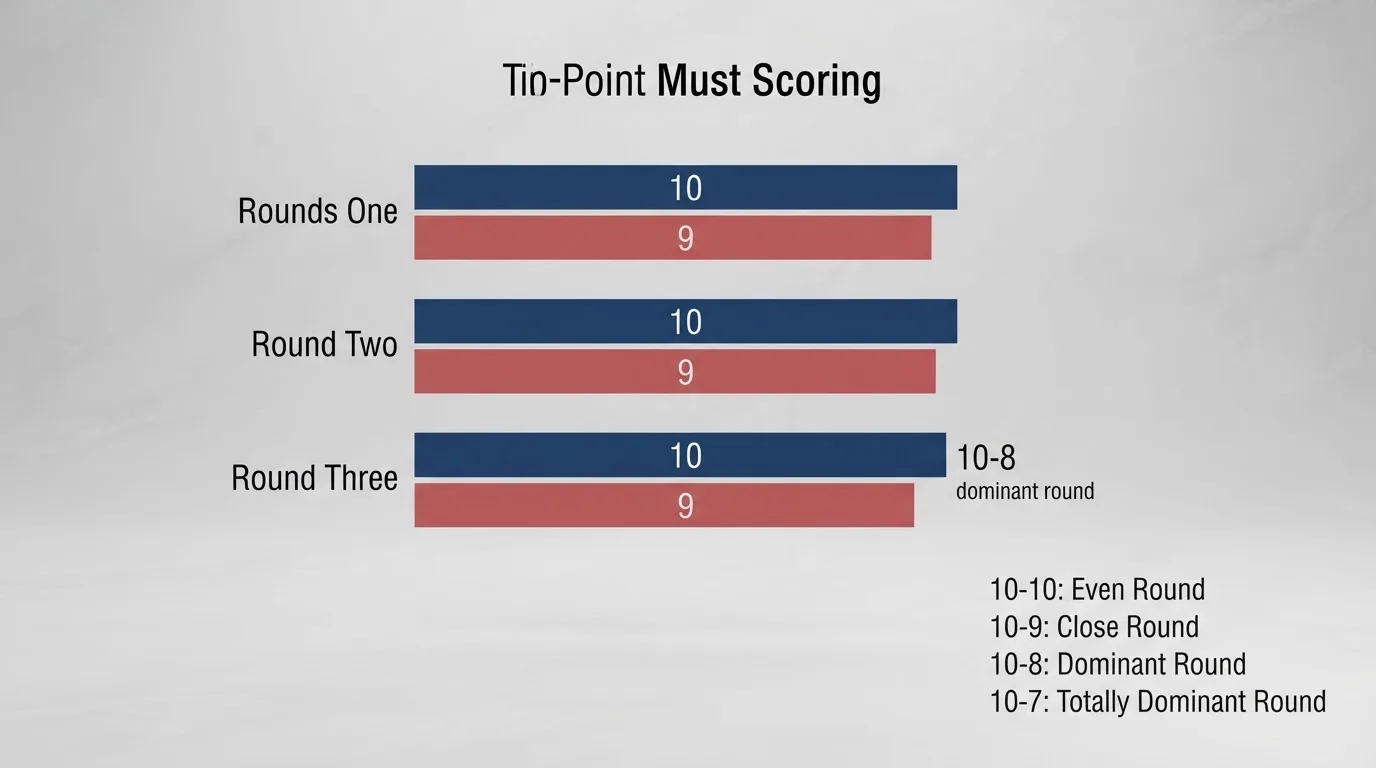
The judging system. The ten-point must system applies. Three judges score each round; the round’s winner receives ten points, the loser nine or fewer. A 10-8 round is the score for a dominant round, and that score is rare. The judges do not communicate with each other; the bout is settled on the consensus of the three scorecards.
The schedule. Cards stack into roughly 40 numbered events a year, plus Fight Night events on most weekends. The next two numbered events research names are UFC 334 at Madison Square Garden on 14 November 2026, and UFC 335 at the T-Mobile Arena in Las Vegas on 12 December 2026. Most weeks carry a Fight Night card that bookmakers price separately.
The schedule and betting volume. A fight night builds betting volume in three windows: pre-fight, in-play and post-fight cash-out. The three windows have different market depths. The pre-fight window has the deepest menu. The in-play window is the smallest. The post-fight window is a cash-out window, not a betting window. The punter’s day on a UFC card looks like a Tuesday-evening price check, a Saturday-night in-play hand on the headline fight, and a Sunday morning review of the undercard cash-outs that did or did not trigger.
The British punter’s schedule. A UFC card in Las Vegas lands in the early hours of Sunday morning UK time. Saturday-night prime-time cards are rare in the British schedule. The punter’s decision has to land in the small hours on most weekends, when the operator’s in-play team is at its thinnest and the punter’s reaction time is at its longest. That scheduling fact is why prep on the undercard matters more on UFC than on a Saturday football card: the fights fall into the punter’s lap at the wrong time of day, and the undercard bets are settled before the main event bell.
Why the undercard is informative. A bookmaker’s UFC model is fed by the same data feed as everyone else’s, and is calibrated on the bouts that drew the most bets in the past. The undercard gets less attention from the model’s training, which leaves room for a price to drift or to be over-tight. That is where the value sits in an otherwise efficient market. It is not a guarantee; it is where the variance is high enough for the punter to be wrong without being punished.
The Ten Licensed Brands and How They Sit Against One Another
The list below carries ten GB-licensed operators and the licence number that ties each to the Gambling Commission’s public register. Each holds a remote general betting standard (real events) licence. Brands running under the same licence holder are not independent operators, and none of these names is the only licensed brand in Great Britain — the register lists many more. What each operator offers below is what the operator’s own terms state about UFC and the related markets; details beyond what an operator publishes about UFC on its own pages are not verified by the public file.
| Brand | Gambling Commission licence | What the operator’s terms state |
|---|---|---|
| LiveScore Bet | 056859-R-332720-005 (account 56859); licensee LiveScore Betting and Gaming (Gibraltar) Limited | Bet Builder accepts up to ten selections, on markets including match result, both teams to score, corners, total goals, player scoring and cards. |
| BetGoodwin | 002927-R-327985-008 (account 2927); licensee Goodwin Racing Limited | Sports welcome offer is in three free-bet tokens, contingent on a sports bet, an acca and a Sub-Cover bet. |
| Bet600 | 044731-R-323941-016 (account 44731); licensee Tyche Tech Limited | Best Odds Guaranteed is paid on horse racing by reference to the starting price. |
| William Hill | 039225-R-319373-015 (account 39225); licensee WHG (International) Limited | BOG runs on UK and Irish racing from 8am on race day, on singles and multiples, not ante-post or pari-mutuel. |
| Hollywoodbets | 053028-R-330019-013 (account 53028); licensee Hollywoodbets International UK Limited | Welcome offer refunds losing accumulator stakes as a free bet up to £30 on three-plus legs at combined odds of 4/1 or above, settled in seven days. |
| Fitzdares | 000400-R-103839-030 (account 400); licensee Fitzdares Limited | App stacks cash out, accumulators, Lucky 15s, specials, antepost markets, in-play live odds on a wide racing-and-sports menu. |
| Betfair | 039439-R-319330-013 (account 39439); licensee PPB Counterparty Services Limited | In-play, Bet Builder, free in-app streaming on UK and Irish racing and football, plus a 90 Minute Payout market. |
| DAZN Bet | 048756-R-327274-019 (account 48756); licensee DZBT Limited | Deposits from £5 via debit card, Apple Pay, Paysafecard, Trustly, Skrill; from £20 by PayPal; no processing fee. |
| NetBet | 039170-R-319343-032 (account 39170); licensee Netbet Enterprises Limited | Daily Boosts, Profit Boosts, free bet offers, Bet Builder with instant dynamic odds and stats for major leagues. |
| Sporting Index | 027343-R-308898-011 (account 27343); licensee Sporting Index Limited | Switches between fixed odds and spread betting, with in-play, Bet Builder on football, auto cash-out and Multi-Markets. |
A UFC fight card sits inside a much wider sportsbook. The ten brands carry different backgrounds, and the comparison above pulls each operator’s strongest verifiable football, racing or product feature into the column. UFC-specific terms — exact markets, the size of free-bet welcome offers, the speed of in-play on a UFC bout — are not all in the public file, and the column is what each operator names about its own product rather than a UFC-side-by-side. Reading the brand’s own terms page is the routine step that fills the gap.
The UK Scene and What UFC Betting Looks Like from Here
The wider sports betting market in Great Britain is licensed, advertised and taxed by a single regulator under a single statute, and that frame shapes what a UFC punter sees on screen and behind the public file. The summary below carries the frame that defines the licence, the rules and the limits.
The regulatory frame. The Gambling Commission is the regulator, sponsored by the Department for Culture, Media and Sport. The Gambling Act 2005 covers Great Britain (England, Scotland and Wales), so a “GB-licensed” brand cannot lawfully ignore Northern Ireland, where the older law still applies. A bookmaker taking bets from customers in Great Britain must hold a Commission remote licence; the holders run under the Licence Conditions and Codes of Practice (LCCP). There is no state monopoly and no statutory cap on licence numbers. Minimum age 18; identity verification, with name, address and date of birth, runs before the first deposit at every GB-licensed brand.
UFC and the permitted-markets question. There is no statutory list of sports or markets allowed under a GB licence. An operator chooses the markets it offers, the licence category under which it offers them, and the controls it runs on its own customers under the LCCP. The result is that no GB licence binds a bookmaker to offer UFC at all, and a bookmaker that does offer UFC sets its own maximum stake on the line. The punter’s recourse on a UFC market is the operator’s own complaint route and beyond that the Commission’s ADR routes.
In-play on UFC. In-play betting is offered by GB bookmakers on licensed markets. Whether the operator offers in-play on a specific UFC bout is a per-operator decision, controlled by the LCCP and the operator’s own licence conditions. In-play on UFC is not “unrestricted” by statute, and the legal frame around it is the operator’s conditions rather than a stated right. A punter who only bets in-play on UFC reads the operator’s menu before looking at the headline price.
Betting tax and what the punter actually pays. The player pays no tax on betting winnings in Great Britain. General Betting Duty is the operator’s tax on gross profits — currently 15% — and a new remote rate of 25% sits on the statute book from 1 April 2027. Spread betting has its own rates (3% on financial, 10% on other). When — or whether — an operator passes any change through to the punter’s odds is not established, and the page does not state any change as if it had already flowed through.
Credit and debit on betting in Great Britain. Credit cards are banned for gambling in Great Britain (since 14 April 2020). Debit cards and bank-based payments are not covered, and the ban extends to credit-card-funded payments through an e-wallet. The check on the account is a payment-method check, not a deposit-limit check, and a punter who funds through PayPal needs a debit card or a bank balance behind the e-wallet.
Bonuses and the marketing frame. Advertising is not licensed by the Commission; it is regulated through the CAP Code (non-broadcast) and BCAP Code (broadcast) under the ASA, alongside the LCCP marketing conditions. The CAP Code’s section 16 requires marketing to be socially responsible, not strongly appealing to under-18s, and not to feature anyone who is or appears to be under 25 in a significant gambling role; the rule is on who appears in the ad, not on who is allowed to place a bet. Wagering on bonuses is capped at 10x, mixed-product promotions are banned, and a 9pm watershed under the whistle-to-whistle ban runs on most live sport before 9pm. The Premier League’s voluntary withdrawal of gambling sponsorship from matchday shirts in front (from 2026/27; sleeves and hoardings remain) is voluntary, not law.
Offshore, point-of-consumption. A GB licence is compulsory at the point of consumption. Providing gambling facilities in Great Britain without the licence the Act requires is a criminal offence aimed at the operator. A customer who bets on an unlicensed site is not committing an offence under the Act, but has no GAMSTOP coverage, no Commission complaints route, no approved dispute-resolution body, no British consumer redress if funds are withheld, and is not bound by the 10x bonus cap. Enforcement against unlicensed sites is disruption (cease-and-desist notices, search-engine referrals, work with registrars and hosts, payment-provider pressure), and court-order DNS blocking powers are in train. The honest summary: a licensed brand gives the punter checks, limits, GAMSTOP, the bonus cap and a complaints route; an unlicensed brand gives the punter none of that, with the same chance to bet.
The Anatomy of a Betting Offer — Working the Numbers
A bookmaker’s margin sits inside the odds. A punter who understands the line between the bet’s price and the bookmaker’s share sees the punter’s real position on every wager, and works out whether the headline offer pays the punter what the punter thought it paid.
Consider a typical two-way market. Both outcomes carry decimal odds of 1.90 — quoted as 9/10 in fractional form, just inside the favourite. The payout share per unit staked is 1 ÷ (1 ÷ 1.90 + 1 ÷ 1.90) = 0.95; the bookmaker’s margin is 1 − 0.95 = 5.00%. In plain words: 95p of every pound bet on this market returns, on average, to the punters; the other 5p is the bookmaker’s take. The actual margin on a UFC market depends on the depth of the menu and on where on the card the market sits. Heavily-priced favourites tend to carry a smaller margin than markets on total rounds or method of victory, simply because the operator has more data on a heavily-priced favourite than on the smaller cards.
Wider price, wider margin. As the price drifts away from even-money, the bookmaker’s share of every pound bet grows. A two-way market at 2.20 and 1.65 returns 1 ÷ (1 ÷ 2.20 + 1 ÷ 1.65) = 0.945, margin 5.5%. A two-way market at 3.50 and 1.30 returns 1 ÷ (1 ÷ 3.50 + 1 ÷ 1.30) = 0.910, margin 9.0%. The figure is a band, not a constant: 5% on a typical UFC favourite’s price, 9% on the deeper undercard markets where the operator’s data is thinner. The punter’s intuition is right that a long-priced outsider pays more on the win; the punter’s mistake is to ignore that the long-priced outsider’s market carries more of the bookmaker’s margin per pound bet.
What this gives the punter. The conclusion is a band with its condition. On a UFC favourite’s moneyline priced around 1.90/1.90, the bookmaker’s margin is around 5%. On a method-of-victory or total-rounds line on the same fight, the margin sits higher — typically 7–10%. On an undercard bout where the operator has a thinner pricing model, the margin can climb above 10%. The punter’s job is to back the favourite market priced tightly, avoid the deeper markets on undercard fights, and check the operator’s price against the price on a second book before laying a stake. That’s the entire calculation the formula yields: it answers what the bookmaker keeps of every unit staked on the market, never what the punter’s particular bet will return.
Frequently Asked Questions
Where should a punter in Great Britain place a UFC bet?
The starting point is the Gambling Commission’s public register: a brand’s licence number, the licence holder’s name, and the licence category can be searched directly. Among the GB-licensed bookmakers with UFC markets, bet365, William Hill, Betfair, BetGoodwin, NetBet, DAZN Bet, Hollywoodbets, Fitzdares, LiveScore Bet, Bet600 and Sporting Index each hold a remote general betting standard (real events) licence. The choice between them comes down to welcome offer, Bet Builder depth, in-play coverage and the punter’s preferred payment rail.
Which sportsbooks are the best for UFC betting in Great Britain?
The best brand depends on what the punter values. An in-play specialist and an exchange-style platform suit a punter who hedges mid-fight; a brand with a deep welcome offer suits a new account; a brand with a wide menu of specials suits an accumulator punter. The Commission’s public register is the floor: a UFC bet should only be placed with a brand whose licence number can be found there and whose licence category covers remote general betting standard (real events).
Which bookmakers let a punt bet on UFC fights in the UK?
Every GB-licensed bookmaker with a remote general betting standard (real events) licence may offer UFC fights under its own licence conditions. Not every licensed bookmaker carries every UFC card, and the menu on a given card can change week to week. The Punishers’ and Fight Night cards are widely covered; the Apex events less so. The punter’s first check is the operator’s UFC page for the upcoming Saturday’s card before staking.
How can a punter check whether a bookmaker holds a Gambling Commission licence?
The public register on the Commission’s website can be searched by business name, trading name, domain or account number. The licence number, the licence holder’s name and the categories on the licence appear on the result. The licence categories confirm whether the licence covers remote general betting (real events), remote pool betting, remote betting intermediary or a different combination. No GB-licensed bookmaker should be staking on if its licence category does not cover the markets it offers.
How is the return on a UFC bet calculated from the stake and the odds?
On a single bet, total return = stake × decimal odds. At odds of 5.00 (4/1), a £10 stake returns £50. Profit is return minus the stake, so £40 of profit on the same bet. The decimal price includes the stake; the fractional price states only the profit per unit stake. On an accumulator, the legs multiply into one price: a treble at 2.00, 3.00 and 4.00 returns 24.00 times the unit stake. A free bet returns only the profit, never the stake.
Combat & motorsport – Bookies Trust
Content created by the «Bookies Trust» team
