
What's a Trixie bet, and what does it actually cost a punter in Great Britain?
 Available in US
A Trixie is a four-bet package wrapped around three picks — three doubles and one treble — with a minimum of two winners needed for any payout. It looks tidy on a betting slip and rewards three correct calls generously, but the same structure quietly penalises a single loser, costs four units of stake, and lets the bookmaker’s margin do its work four times over. Anyone stepping from a single to a Trixie is moving from one transaction into four, and the arithmetic of the move is what this page is for.
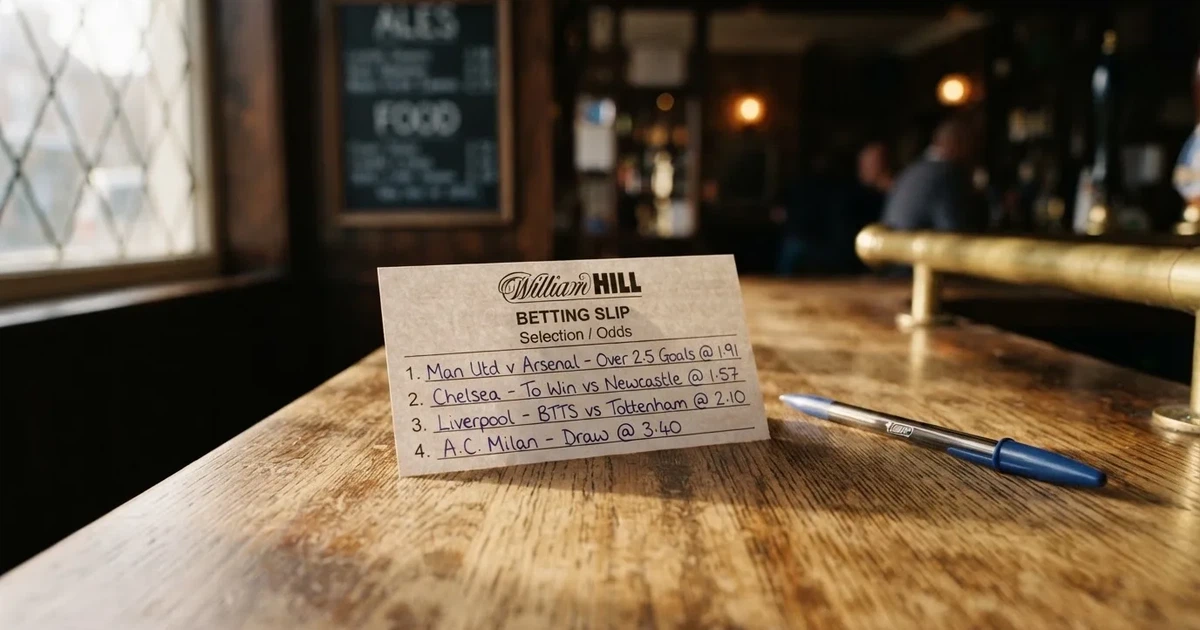
*Current as of 27 October 2026 · verified against the UK Gambling Commission’s public register of remote operating licences.*
Bonuses, free bets and Trixies — where the headline offer meets the small print
Promotional offers around multiple bets look generous at the counter and read less so in the terms. A “free bet” usually means the stake is not paid back, an “odds boost” raises the price but not the underlying value, and a bonus with a wagering condition is a small loan the bettor must run off before withdrawing. The Trixie is a particular focus because it is a multiple-bet structure, and four Trixie bets on one slip is the kind of structure that some free-bet offers restrict or refuse outright.
The first thing to fix in the mind is what the offer actually is. A £10 free bet at 3/1 that wins returns £40 — the £10 stake disappears, because “free bet” means the operator returns winnings only. That single rule changes the arithmetic of every multiple built with a free bet. A Trixie funded by free tokens therefore pays back roughly the same as a Trixie funded by cash, minus the four stakes it never had — a real cost, paid in expectation, that an unannotated slip does not show.
The second thing is the wagering condition that often rides on top. Where a bonus is given as cash and must be turned over a number of times before withdrawal, the bettor is paying the margin on every qualifying bet, and a multiple-bet structure multiplies that exposure. A bonus capped at ten times its value is a useful upper bound; what matters to the bettor is whether the wagering applies to the bonus alone or to bonus-plus-deposit, and what minimum price a qualifying bet must clear. Most licensed operators state a minimum price around 1/2 (1.50), and a Trixie leg below that price simply does not count towards the turnover.
The third thing is which structures a free bet is allowed to land on. Some operators exclude full-cover bets like Trixies, Patents and Yankees from free-bet use — the free bet is valid on singles, doubles and trebles, and stops there. A punner who has been given a free token and assumed it could ride a four-bet package is, in those cases, wrong; the bet simply will not place. Checking the offer page for the list of accepted structures before placing the bet is the cheapest check available.
The fourth thing is the deadline. A free bet commonly expires seven days from credit, sometimes fourteen; a bonus commonly has thirty. A punner who lets a free token lapse loses the offer in full, and there is no partial credit for the legs that did win. The same holds for wagering: the bonus window ends, the unfilled turnover is forfeit, and any winnings earned off a partial turnover are taken back at the operator’s discretion.
Across all of this, the rule of thumb is that the headline number is the smallest number on the page. The wagering multiple, the minimum qualifying price, the deadline and the list of accepted bet structures each cost something, and each one is set by the operator and stated in the operator’s own terms. Reading those terms before clicking “claim” is the only way to know what the offer actually costs.
Trixie systems, strategies and the difference between a system and a tip
A “Trixie system” is a phrase the betting industry uses loosely. It can mean a staking plan — flat stakes, percentage of bank, Martingale, Fibonacci — or it can mean the betting structure itself: the four-bet package of three doubles and one treble. The two are independent. The structure decides what returns look like if the legs win; the staking plan decides how much of the bank is at risk while the bets are running.
The honest way to frame either one is by what it cannot do. A staking plan cannot overcome the bookmaker’s margin in expectation; over enough bets at the same market, the margin is what the punner pays for the privilege of betting. A Trixie cannot turn a short-priced favourite into a value bet, because the margin baked into three short prices compounds across four bets, and a Trixie on three favourites pays less than the sum of its parts the moment the margin is taken out. What a Trixie can do is raise the return for a given set of prices, by combining the doubles and a treble that pay more than the singles would.
A Trixie strategy in the marketing sense is usually a list of tips. There is no analytical content in that list that the punner could not have produced himself, because the page or video giving the tips does not know which team will win either. The Trixie is the package around the picks. Whether the package is profitable over time depends on the price of each leg net of margin, and that is decided by the bookmaker, not by the tipster.
The two practical questions for a punter using a Trixie are which legs to choose and how much to stake. On the first, the rule is price, not name: a Trixie leg is a bet in its own right, and a leg below 1/2 (1.50) does not pay enough to cover the cost of the four-bet structure once the margin is taken out. On the second, the rule is the bank: four units per Trixie means a £1 unit costs £4 per bet, and a £100 unit costs £400, which is the figure the punner should hold in his head when judging whether a Trixie is the right structure for the picks he has.
The last thing to say about a Trixie system is what it is not: it is not a hedge. A Trixie is four bets on three picks, with no singles. If one pick loses, the punner still has two doubles in play, and one of those doubles wins if — and only if — the other two picks win. A Patent adds three singles on top of the Trixie structure for seven bets in total; a Yankee on four picks adds eleven. The package gets bigger and the cost rises with it; the protection it offers is “one loser can still pay”, and that protection is paid for in stake.
The Trixie bet, the calculator and the odds format
A Trixie bet is built around three selections. The structure is three doubles (one over each pair of selections) and one treble (the three together). The stake is paid on each of the four bets, so a £1 Trixie costs £4. If all three selections win, the punner is returned the sum of the three double returns plus the treble return. If two selections win and one loses, only one double pays, and the punner is returned that double’s return. If one or fewer selections win, the whole package is lost.
The odds are usually shown in two formats. British bookmakers display fractional odds by default — 5/1 means a £1 stake returns £6 (£5 profit plus the £1 stake back) — and the equivalent decimal price is 6.00. A Trixie calculator takes the three selections in either format, multiplies the legs into doubles and a treble, multiplies the result by the unit stake, and shows the return for every combination. There is no secret to a Trixie calculator; it is the multiplication written out, with a stake field added.
What the calculator does not show is the margin. Every three odds the bookmaker publishes already carries his margin, and a Trixie of three such prices compounds the margin four times. A Trixie on three prices at 2/1 (3.00) pays 27/1 (28.00) if all three win, but the fair price — the price without the margin — would be higher. The difference between the two is what the bookmaker keeps on average across all Trixies on those three selections.
Settlement is automatic. As each leg settles — win, lose, void — the relevant doubles and the treble are recomputed. A non-runner in horse racing usually makes that leg an effective winner at a Rule 4 deduction, and in a Trixie the other two doubles and the treble continue as before. A void selection is treated as a winner at odds of 1.00 (evens minus the stake, which means the bet is run off at no price and returns the stake for that leg); the Trixie reduces to the doubles and the treble built around the two remaining selections, and the punner is paid on those.
The settlement rules are the same on every licensed British bookmaker’s site, because they are stated in the operator’s own terms and in the industry codes the operator follows. What differs between operators is how each one formats the slip, how the void-rule price is presented, and whether a free bet can ride a Trixie leg at all. A punter who has placed the bet on one operator’s slip and wants to move it to another cannot — the bet is placed, the stake is held, and the bettor cannot move it.
Comparison of Trixie-friendly operators and their terms
Ten UK-licensed bookmakers sit in this comparison. Each holds a remote operating licence from the Gambling Commission for general betting on real events, and each is named on the Commission’s public register. The list is not a ranking by quality — it is a list of operators that meet the same licensing test. The ranking is on the Trixie-relevant features each operator publishes in its own terms, and on what those features cost the punter.
The columns matter in order. The licence number is the verification of the licence itself — the punter can search the Commission’s public register by that number, by business name, by trading name or by domain, and the register is the whole test of who holds a licence. The licence holder is the company that holds the licence; several brands can run under one licence holder, and a punter comparing offers needs to know who he is actually dealing with. The third column is the operator’s own published position on the feature the comparison is built around — what the operator states about its Trixie settlement, its free bet, its minimum qualifying price, or whatever the column specifies.
| Brand | Gambling Commission remote licence number and licence holder | What the operator’s own terms state on the subject |
|---|---|---|
| NetBet | 39170; licence held by Netbet Enterprises Limited | Daily Boosts and Profit Boosts apply to selected markets; Bet Builder produces a single price on one event with dynamic odds updating instantly |
| QuinnBet | 61011; licence held by QuinnBet (Gibraltar) Limited | Free bets valid for 7 days from credit, used on any market at 1/2 (1.50) or above with maximum odds of 50/1; Trixies, Patents and Yankees excluded |
| BetTom | 64959; licence held by Bet Tom Limited | 50% back as a free bet up to £50 with a matching 50% back up to £50 in free slot funds for casino play |
| Dabble | 65677; licence held by Dabble Sports UK Ltd | £10 free bet on a £10 first deposit for new customers, with a 7-day expiry, minimum odds applying, and stake not returned on a free-bet win |
| BetUK | 39198; licence held by LeoVegas Gaming PLC | Free bets exclude virtual sports, esports and non-UK/IE horse racing, with minimum odds applying |
| DAZN Bet | 48756; licence held by DZBT Limited | Cash Out available on selected markets, not guaranteed; bet stands if Cash Out is unavailable; Bet Builder and price boosts present |
| 10bet | 43173; licence held by Blue Star Planet Limited | Sportsbook covers football, tennis and horse racing; Cash Out, Bet Builder and Live Streaming present |
| Tote | 54779; licence held by TDCO Limited | Pool-betting operator; settlement and market depth follow pool-betting rules rather than fixed-odds conventions |
| Betfred | 39544; licence held by Petfre (Gibraltar) Limited | Bet Builder, Extra Places, Racing Post data and Sub Switch present on the sportsbook |
| Fitzdares | 400; licence held by Fitzdares Limited | Cash Out, accumulators, Lucky 15s, specials, antepost and in-play live odds across horse racing, football, tennis, rugby, cricket, golf and American football |
The table is one way to read the comparison. The other is what each operator actually does on a Trixie — the settled structure, the offer around it, the slot it occupies in the punter’s portfolio. That is what the write-ups below are for.
NetBet — a wide sportsbook with a price-boost habit
NetBet’s Trixie mark is its Boosts. The operator runs Daily Boosts on selected markets and Profit Boosts on accumulators, both of which apply a higher price to selected legs for the duration of the offer. A Trixie leg that has been boosted feeds into the four-bet package at the boosted price, and the four bets settle at the boosted figures. The cost is that boosts are time-limited, the selection is the operator’s, and the stake limit on the boosted leg is often capped. NetBet’s Bet Builder is a same-event multi-builder — a separate product from the Trixie, and a punter using the Bet Builder for a Trixie on one match’s markets is, technically, betting on a single event rather than three. That is allowed under the licence, but the four-bet structure is the same. The licence is 39170, and the holder is Netbet Enterprises Limited. NetBet suits a punter who wants the Trixie built around boosted prices and is willing to give up some control over the selection list in exchange.
QuinnBet — a free-bet programme that excludes the Trixie
QuinnBet’s headline feature is its free-bet programme: 7 days from credit, used on any market at 1/2 (1.50) or above, with a maximum odds ceiling of 50/1 and the stake not returned on a win. That is the offer. The catch is the structure list: straight accumulators are accepted, but Trixies, Patents and Yankees are not. A punter planning to use a QuinnBet free bet on a four-bet Trixie package will see the slip refuse the bet, because the operator’s own terms do not allow that structure on a free-bet token. The Trixie is available with cash. The licence is 61011, and the holder is QuinnBet (Gibraltar) Limited. QuinnBet suits a punter who bets singles, doubles and trebles and wants a free-bet programme that covers them — and it is the wrong fit for a punter whose standard structure is the Trixie or any other full-cover bet.
BetTom — a 50% back offer split between sports and casino
BetTom’s welcome offer is 50% back as a free bet up to £50, paired with 50% back as free slot funds up to £50 for casino play. The structure is two parallel offers, not one, and the split is enforced by the operator’s terms: the sports free bet and the casino free funds cannot be combined on one slip, and each side carries its own wagering. The Trixie, when used with the sports free bet, follows the same structural rules as QuinnBet’s programme: minimum qualifying odds, expiry window, and the stake not returned on a free-bet win. The licence is 64959, and the holder is Bet Tom Limited. BetTom suits a punter who plays both sports and casino and wants matched offers across the two. For a punter whose primary interest is the Trixie alone, however, the casino portion of the welcome offer provides no sports-betting utility.
Dabble — a £10-on-£10 free bet with a 7-day window
Dabble’s welcome offer is £10 in free bets for a £10 first deposit, with a 7-day expiry and minimum odds applying. The stake is not returned on a free-bet win, which is the standard free-bet rule across the industry and not a Dabblem-specific catch. The Trixie structure is allowed on the cash book, with the same settlement rules as every other licensed bookmaker. The licence is 65677, and the holder is Dabble Sports UK Ltd. Dabble suits a punter looking for a clean, small welcome offer with a short window — £10 in, £10 to play with, seven days to use it — and who is comfortable with the standard free-bet rule that the stake does not return on a win.
BetUK — a LeoVegas-operated sportsbook with a free-bet restriction list
BetUK runs under LeoVegas Gaming PLC, one of the larger operators in the comparison. The free-bet programme excludes virtual sports, esports and non-UK/IE horse racing, with minimum odds applying. A Trixie on football, tennis or UK/IE racing is allowed; a Trixie that touches the excluded categories is refused. The licence is 39198, and the holder is LeoVegas Gaming PLC. BetUK suits a punter whose Trixie is built around football, tennis or UK and Irish horse racing, and who values a LeoVegas-operated platform — and it is the wrong fit for a punter whose Trixie routinely touches esports or virtuals.
DAZN Bet — a sportsbook with Cash Out and Bet Builder
DAZN Bet’s published features are Cash Out, Bet Builder, daily price boosts and in-play betting. The Cash Out caveat is the one that matters: Cash Out is not guaranteed, and a bet stands if Cash Out is unavailable at the moment the punter tries to use it. A punter planning to Cash Out part of a Trixie cannot rely on Cash Out being there for every leg at every moment. The licence is 48756, and the holder is DZBT Limited. DAZN Bet suits a punter who values Cash Out as an option rather than as a right, and who is comfortable with the in-play product on a Trixie where all three legs are live.
10bet — a football, tennis and racing bookmaker with Live Streaming
10bet’s sportsbook covers football, tennis and horse racing, with Cash Out, Bet Builder and Live Streaming. The Live Streaming feature is the differentiator — a Trixie on live football or live tennis can be monitored visually while it runs. The licence is 43173, and the holder is Blue Star Planet Limited. 10bet suits a punter whose Trixie is built around live events and who wants to watch at least one of the legs as it plays out, rather than tracking it on a stats page.
Tote — the pool-betting operator in a fixed-odds comparison
Tote is a pool-betting operator licensed under the same remote general betting standard (real events) category as the fixed-odds bookmakers in this comparison. Pool betting is a different settlement model — the dividend depends on the pool, the runners and the takeout — and a Trixie placed on Tote’s fixed-odds card settles under fixed-odds rules. The two products are not the same. A punter using Tote is choosing between a pool bet, where the dividend is set after the race, and a fixed-odds bet, where the price is set when the bet is placed. The licence is 54779, and the holder is TDCO Limited. Tote suits a punter who plays pool betting on horse racing and wants a single platform for both pool and fixed-odds action.
Betfred — a high-street name with Bet Builder and Extra Places
Betfred is one of the larger high-street brands in the comparison. The sportsbook features Bet Builder, Sub Switch, Racing Post data, Extra Places and live casino. The Trixie is allowed on the fixed-odds book, with Extra Places applying to horse racing. The licence is 39544, and the holder is Petfre (Gibraltar) Limited. Betfred suits a punter who wants the high-street brand’s reach, the Extra Places feature for racing, and a Bet Builder that lets him put multiple markets on one match into a single accumulator.
Fitzdares — a premium bookmaker with full-cover bet coverage
Fitzdares is a smaller, premium-positioned bookmaker. The app offers Cash Out, accumulators, Lucky 15s, specials, antepost and in-play markets across horse racing, football, tennis, rugby, cricket, golf and American football. The Trixie is allowed on the fixed-odds book, alongside the Lucky 15 and other full-cover structures. The licence is 400, and the holder is Fitzdares Limited. Fitzdares suits a punter who wants a smaller bookmaker with a premium positioning and is comfortable with the price differential that often comes with a smaller sportsbook.
What a Trixie pays — the worked example and the calculation
A Trixie on three selections at decimal odds of 2.0 (even), 3.0 (2/1) and 4.0 (3/1), with £2 on each of the four bets (£8 total), pays out as follows if all three win:
- The double on selections 1 and 2 returns £2 × 2.0 × 3.0 = £12.00.
- The double on selections 1 and 3 returns £2 × 2.0 × 4.0 = £16.00.
- The double on selections 2 and 3 returns £2 × 3.0 × 4.0 = £24.00.
- The treble returns £2 × 2.0 × 3.0 × 4.0 = £48.00.
Total return: £12.00 + £16.00 + £24.00 + £48.00 = £100.00. Net profit: £100.00 − £8.00 stake = £92.00. The trebles and doubles of the three selections at 2.0, 3.0 and 4.0 give back roughly twelve-and-a-half times the stake on a winning day.
The band depends on which two of the three legs win. If selections 1 and 2 win and selection 3 loses, only the double on selections 1 and 2 pays: £2 × 2.0 × 3.0 = £12.00, which is £4.00 net profit on an £8.00 stake. If selections 2 and 3 win and selection 1 loses, the double on selections 2 and 3 pays: £2 × 3.0 × 4.0 = £24.00, which is £16.00 net profit. If one selection wins or none, the Trixie is lost.
The same example at the price band the calculation actually uses — odds of 1/2 (1.50), evens (2.00) and 6/4 (2.50), with a £10 stake on each leg — produces a different band. The double on selections 1 and 2 returns £10 × 1.50 × 2.00 = £30.00; the double on selections 1 and 3 returns £10 × 1.50 × 2.50 = £37.50; the double on selections 2 and 3 returns £10 × 2.00 × 2.50 = £50.00; the treble returns £10 × 1.50 × 2.00 × 2.50 = £75.00. Total return on a clean sweep: £192.50. Net profit: £192.50 − £40.00 stake = £152.50. Two winners and one loser pays only the relevant double; one or zero winners pays nothing and the £40.00 stake is lost.
The two illustrations sit at opposite ends of the realistic Trixie range. At low-margin prices the return is modest and the floor is shallow — one winner from three is no return, two winners from three is a small double. At higher prices the upside stretches, and a Trixie on three prices around 3/1 to 4/1 produces a return on the order of twelve-to-one on the stake when all three win. A punter choosing between the two price bands is choosing between a low-stake, low-upside Trixie and a higher-stake, higher-upside one; the arithmetic is the same, and the difference is which prices the bookmaker is offering on the three selections.
The Trixie bet explained — fundamentals, landscape and the place of full-cover bets
A Trixie is one of a family of full-cover bets that package multiple bets around a small number of selections. The family runs from the Patent (three picks, seven bets — three singles, three doubles and one treble) through the Trixie (three picks, four bets — three doubles and one treble, no singles) to the Yankee (four picks, eleven bets), Lucky 15 (four picks, fifteen bets), Super Yankee or Canadian (five picks, twenty-six bets), Heinz (six picks, fifty-seven bets) and Goliath (eight picks, two hundred and forty-seven bets). Each structure adds singles as the selection count rises, and each one costs more in total for a given unit stake, because the unit stake is multiplied by the number of bets in the package.

The Trixie’s place in that family is at the small end. It is the full-cover structure with no singles and no consolation for a single winner. A punter who wants a single-leg payout from the same three picks chooses the Patent, which costs seven units instead of four and pays the singles alongside the doubles and treble. A punter who wants the four-bet Trixie but with one extra selection chooses the Yankee, which costs eleven units on four picks. The Trixie sits between the single-and-doubles Patent and the larger Yankee, and is the cheapest full-cover structure that gives a payout on two-out-of-three winners.
The fair comparison for the punter is not Trixie against Trixie across bookmakers, because the odds differ. The fair comparison is Trixie against the alternatives: a single on each of the three picks (three bets, no payout on two-out-of-three), a Patent (seven bets, payout on a single winner), or an accumulator on the three picks (one bet, no payout on any loser). The Trixie is the structure that pays on two winners and adds a treble on top — the trade-off is four units of stake and the absence of any single-leg return.
A Trixie is settled leg by leg. As each selection wins, loses or voids, the relevant doubles and the treble are recomputed, and the package returns whatever the surviving combinations pay. A non-runner reduces one leg to a void, which is treated as a winner at 1.00 (the stake returns for that leg), and the four-bet Trixie reduces to a three-bet package on the two remaining selections. A Rule 4 deduction adjusts the price of a winning leg when a runner is withdrawn from a race, and the rule applies to Trixie legs in the same way it applies to singles.
The law that surrounds a Trixie bet — statute, jurisdiction and enforcement
A Trixie is a fixed-odds sports bet, and the law that governs it in Great Britain is the Gambling Act 2005. The Act covers England, Scotland and Wales; Northern Ireland has its own older law and sits outside the Act. Since the Gambling (Licensing and Advertising) Act 2014, any operator using remote facilities in Great Britain — meaning websites and apps aimed at customers in Great Britain — needs a Gambling Commission licence, wherever the operator is based. A Curaçao, Maltese or Gibraltar licence is not a substitute for a Commission licence, and an operator licensed only in one of those jurisdictions is not licensed to take bets from customers in Great Britain.
The Commission licences the commercial market under five categories for remote betting: general betting standard (real events), general betting standard (virtual events), general betting limited, pool betting, and betting intermediary. The bookmakers in this comparison hold remote general betting standard (real events) licences; that is the category under which a fixed-odds Trixie on real sporting events is offered. Pool betting on horse or dog racing is a separate category, and financial spread betting is regulated by the Financial Conduct Authority rather than the Commission.
What may be bet on is not set out in statute. There is no government list of permitted markets; an operator holds a licence for a category and offers markets under its own rules and the Licence Conditions and Codes of Practice. In-play betting, esports, virtual events, novelty markets and politics betting are all within the operator’s discretion under a real-events licence. Operators may refuse bets, restrict customers and set maximum stakes, and a punter whose account has been restricted will find his Trixie refused at the slip stage.
The Commission’s public register is the test of who holds a licence. The register is searchable by business name, trading name, domain or account number, and an operator not on the register is not licensed to take bets from customers in Great Britain. The licensed brands in this comparison all appear on the register; the account numbers in the table above are the figures to enter into the register’s search box to verify the licence. A licence number is not a quality mark and not a recommendation; it is the regulatory floor.
Enforcement against unlicensed operators is by disruption rather than blocking. The Commission issues cease-and-desist notices, works with search engines to push unlicensed brands down the results, and coordinates with registrars, hosting providers and payment processors. The Commission has been given, or is about to receive, court-order powers to require DNS blocking at ISPs; the policy is not in operation at the time of writing, and an unlicensed site is therefore reachable from a British IP address. The honest framing for a punter is that an unlicensed site offers none of the protections a licensed site does — no GAMSTOP coverage, no Commission complaints route, no approved alternative dispute resolution, and no British consumer redress if funds are withheld — and is not a substitute on price alone.
Safer gambling — the rules a licensed operator must follow
The Commission’s player-protection regime is the same across every licensed operator, because it sits in the licence conditions and codes of practice rather than in the operator’s own commercial terms. The regime covers age, self-exclusion, vulnerability checks and deposit limits.
Minimum age is eighteen. Identity is verified before the first deposit or the first bet, including with a free bet or bonus, which means there is no anonymous play at a licensed site. The verification check covers name, address and date of birth, and the operator uses a commercial database for the cross-check. A punter who cannot pass the check cannot deposit and cannot bet.
GAMSTOP is the national multi-operator online self-exclusion scheme. Every GB-licensed online operator is a mandatory GAMSTOP member since 31 March 2020. Self-exclusion periods are six months, one year, five years, or five years with auto-renewal; after the minimum period the exclusion stays in place for a further seven years unless the customer asks GAMSTOP to remove it. GAMSTOP covers online sites and apps; the high-street self-exclusion scheme for betting shops is separate.
The financial vulnerability check is a public-record check, not an income check. It applies to licensed remote betting when a customer’s deposits minus withdrawals exceed £150 in a rolling 30 days (since 28 February 2025). The check looks at public records — bankruptcy, county court judgments — and is not a credit reference check. Financial risk assessments have been announced in a staged plan with no start date, and should not be described as in force.
Deposit limits under the Commission’s Remote Technical Standards require operators to offer a gross deposit limit on a fixed time frame. The first changes have applied since 31 October 2025; a second phase has been postponed to 30 September 2026 and whether it is live at the time of writing is not established. There is no state-set ceiling; limits are the customer’s choice within the framework the operator provides.
The bonus cap, in force since 19 January 2026, limits wagering requirements on bonuses to ten times the bonus value, and bans mixed-product promotions — offers that require gambling across two or more product types such as betting and casino. The cap is an upper bound on the bonus side of the offer; it does not guarantee a particular payout on the bettor’s side, and a punter reading the cap as a quality mark is reading more into it than the rule contains.
Help is available outside the operators. GamCare runs the National Gambling Helpline. GambleAware funds treatment and support. The NHS operates gambling clinics in several regions. Gamblers Anonymous runs peer-support meetings. None of these are operator services, and a punner who needs help is not required to go through his bookmaker to get it.
Frequently asked questions
What is a Trixie bet?
A Trixie is a four-bet package over three selections: three doubles (one for each pair of selections) and one treble (the three together). The unit stake is multiplied by four, and a minimum of two selections must win for the package to return anything. With all three winners, the punner receives the sum of three double returns plus the treble return, all multiplied by the unit stake.
How does a Trixie bet work in practice?
The punner picks three selections and chooses a unit stake. The bookmaker builds three doubles and one treble, charges four times the unit stake, and settles the package as each leg runs. Two winners pay the one double that runs over those two legs; one winner or none pays nothing and the stake is lost. The Trixie contains no singles, so a single winning leg returns nothing on its own.
What’s the difference between a Trixie and an accumulator?
An accumulator is one bet on all three selections: it pays only if all three win. A Trixie is four bets covering all combinations. The Trixie pays on two winners as well as three; the accumulator pays only on three. A Trixie at £1 per bet costs £4 in stake, against £1 for the accumulator, and the trade-off is between a higher stake and a payout on two-of-three.
How can I check that a bookmaker holds a Gambling Commission licence?
The Commission’s public register at the gov.uk domain is searchable by business name, trading name, domain or account number. The punner enters one of those and reads the entry: licence type, status, holder and licensed activities. A brand not on the register is not licensed to take bets from customers in Great Britain, regardless of any other licence the brand holds.
How is the return on a bet worked out from the stake and the odds?
Return equals stake multiplied by the odds, with profit being return minus stake. For a double or treble the odds are the multiplication of the leg odds. Decimal odds give the return directly; fractional odds give the profit and the stake is added back. The bookmaker’s margin is already inside the odds; the calculation is the arithmetic of the published price, not of any “true” price.
What is the bookmaker’s margin, and how does it show in the odds?
The margin is the share of every pound staked that the bookmaker keeps on average across a market. It is the difference between the implied probabilities of all outcomes and 100%. A 5% margin means the bookmaker keeps about 5p of every pound staked across the market in the long run. A Trixie compounds the margin of each leg across four bets, and that compounding is the cost of the four-bet structure the punner pays in expectation.
Bet types & in-play – Bookies Trust
Content created by the «Bookies Trust» team
