
What Is a Goliath Bet?
 Available in US
A Goliath is one of the largest wagers a UK punter can place on a single betting slip. Built from eight selections, it stitches them together into 247 separate bets and asks every one of those bets to land before the payout arrives. The structure rewards depth of opinion: get all eight winners and the return rolls up the odds into something substantial, because each combination multiplies with the others. Get three or four right and the smaller multiples still salvage something, but the larger ones flop. The name suits the wager — 247 lines, each a small claim on the same idea.
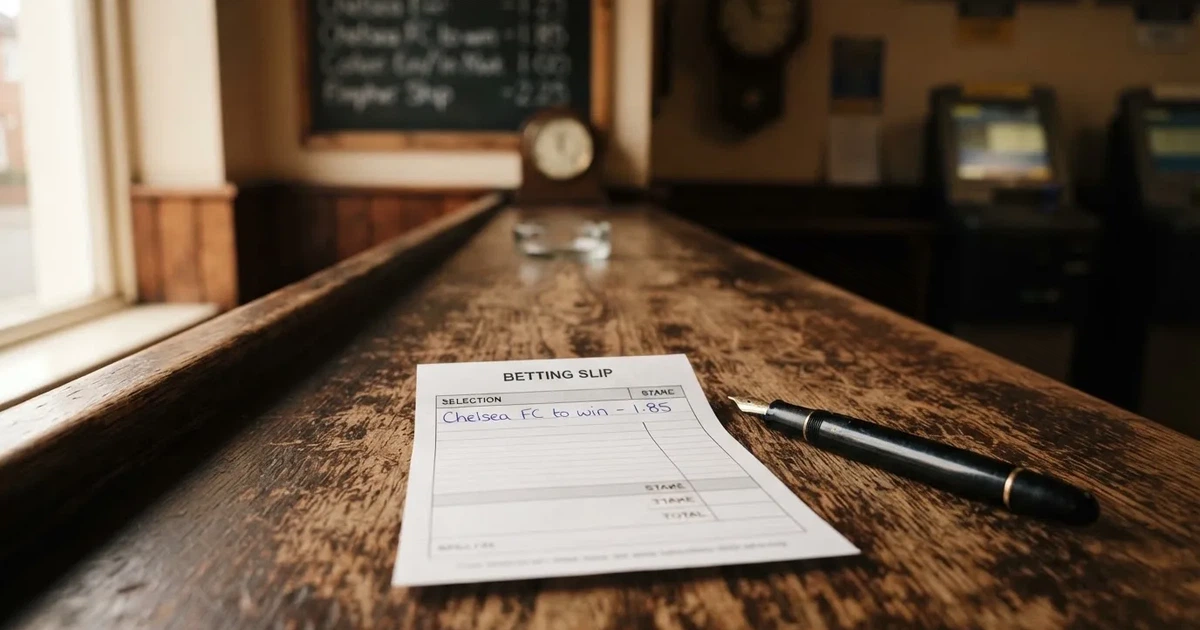
This page walks through what that actually means: how the 247 breaks down, what each tier of bet does, what decimal or fractional odds do to the numbers, which bookmakers let you stake one, and what the wager looks like next to the industry’s self-exclusion, identity and bonus rules. Comparisons sit at the back, with a table of licensed operators’ position on the bet. Calculation details are on the page wherever a number is doing work — the worked example uses a £10 accumulator and £2 per line on the full-cover variant so the two stake patterns can be compared side by side.
Data current as of 27 October 2026 and verified against the Gambling Commission’s public register and the operator terms cited in each operator section.
The Goliath at a Glance
Eight selections. 247 bets covering every possible combination of two or more of those eight. No singles — a Goliath does not back any of the eight as a standalone wager. Every multiple from the doubles up to the eight-fold accumulator must win for the top prize to land.

The 247 lines split into fixed tiers: 28 doubles, 56 trebles, 70 four-folds, 56 five-folds, 28 six-folds, 8 seven-folds and 1 eight-fold accumulator. Add to those a single bonus category for each-way betting — which doubles the count if each-way is selected on a horse race or an event with place terms — and the running total climbs further. Stake the bet at £2 per line and the punter is committing £494 before a ball is kicked or a horse is loaded. Cut that to £1 per line and the same structure costs £247. The wagering bill is the first thing the Goliath teaches.
A Goliath is a member of the full-cover family, which the betting industry groups by the count of selections. A Trixie backs three selections in four bets. A Yankee does four in eleven. A Canadian (also called a Super Yankee) does five in twenty-six. A Heinz does six in fifty-seven. A Super Heinz does seven in one hundred and twenty. The Goliath is the eight-selection peak of this sequence, and just as a Heinz is named for the “57 varieties” of a baked-bean brand, the Goliath takes its name from the giant of the same family tree. Other full-cover bets — Lucky 15, Lucky 31, Lucky 63 — include the singles alongside the multiples, which the Goliath and its named relatives do not.
When every leg lands, the eight-fold accumulator multiplies all eight odds together, and the smaller tiers layer their own product underneath. Because the tiers are independent, the payout can grow very quickly. The catch — and there is always a catch with full-cover bets — is that 247 lines have to be filled before the bet is placed, and most of those lines lose. A Goliath pays back with seven winners far less often than a single does, because the seven-fold missing the eighth pays nothing on its top tier, and what remains from the smaller combinations is seldom enough to cover the stake.
How the 247 Lines Break Down
The math behind the tiers is combinatorial. The number of ways to choose any combination of legs from eight selections is “eight choose k”, and that number rises then falls as k moves from 1 to 8.

For eight selections, the number of combinations at each tier is:
- 8 doubles, choosing 2 of 8 = 28
- 8 trebles, choosing 3 of 8 = 56
- 8 four-folds, choosing 4 of 8 = 70
- 8 five-folds, choosing 5 of 8 = 56
- 8 six-folds, choosing 6 of 8 = 28
- 8 seven-folds, choosing 7 of 8 = 8
- 8 eight-folds (the full accumulator), choosing 8 of 8 = 1
The total is 28 + 56 + 70 + 56 + 28 + 8 + 1 = 247. The shape peaks at the four-fold tier and thins out toward the singletons (which the wager excludes) and the top accumulator (which can only be one combination out of eight).
The formula is reusable. A six-selection Heinz holds “six choose k” combinations of each k from 2 to 6: 15 + 20 + 15 + 6 + 1 = 57. A Canadian at five selections is “five choose k” combinations: 10 + 10 + 5 + 1 = 26. The full-cover family lines up arithmetically as much as it does by name.
A subtlety for horse racing: each-way Goliath bets back every combination with a place component. The place side of an each-way doubles the bet count, because the punter is staking two equal amounts per combination — one for the win, one for the place. A £1 each-way single combination holds £2 of stake. At 247 combinations, each-way staking doubles the total commitment to £494 at the £1 base level. Place terms — usually a quarter or a fifth of the win odds — depend on the race type and the bookmaker’s published table.
How a Goliath Pays Out
The full-cover bet’s payout is the sum of every winning combination’s winnings. Each line settles separately under the bookmaker’s rules.
Take a worked example. Imagine a punter selects eight horse races at decimal odds of 1.50, 2.00, 2.50, 1.80, 3.00, 2.20, 1.60 as well as 2.40 (a mix of short, middling and slightly longer prices, not a copy of any bookmaker’s actual board). A £10 single-stake accumulator on all eight would return the product of those eight prices multiplied by the £10 stake — but for the accumulator leg only, not the full Goliath.
Plain stake × odds is the formula for any combination. For a treble with decimal odds 2.00, 2.50 and 1.80 at a unit stake of £2: return = £2 × (2.00 × 2.50 × 1.80) = £2 × 9.00 = £18.00. Net profit on that line is £16.00 when the stake is returned.
The arithmetic holds at every tier. Two hundred and forty-seven such calculations run at the end of the meeting, one per line. A winning four-fold adds its unit stake times its four multiplied odds to the running total, a winning seven-fold adds its unit stake times seven multiplied odds, and the running total at the end is what settles into the punter’s account.
The result lands as a band, not a single figure, because the picks themselves are variable — every real Goliath pays what its specific prices paid. All eight winners at the prices above would land the punter’s eight-fold accumulator and every smaller combination underneath, leaving the payout somewhere in the high hundreds of pounds for a £1-per-line stake and the low thousands for a £2-per-line stake. The exact figure is the product of the punter’s specific odds, the unit stake and the count of winning combinations. A different set of picks produces a different number, sometimes by an order of magnitude.
A punter can also run an accumulator alone — eight selections, a single eight-fold line, no doubles or trebles cushioning the bet. That costs £10 at a £10 stake, settles on whether all eight land, and pays back much more than the same eight selections in a Goliath if every one of them wins, because the single line carries the full stake across the full odds. The trade-off is exposure: a single accumulator pays nothing if even one leg fails, and the smaller combinations in a Goliath salvage some value when the top line falls.
Bookmaker Margin in Goliath Odds
Every price on every market at a bookmaker carries a margin — the slice of every £1 staked that the bookmaker keeps, on average, over many bets. The margin hides in the odds because the bookmaker’s prices add up to more than a true “fair” reflection of the event. For a three-way football market at true odds of 33.3% on each of home, draw and away, a margin of 5% would push the implied probabilities to roughly 35%, 35% and 35%, with decimal odds of about 2.86, 2.86 and 2.86.
Bookmaker margins run from about 2% on mainstream football match odds to 10% or higher on niche markets. The market the bettor picks drives the margin, and a Goliath made of football match odds carries roughly the margin of football match odds on every one of its 247 lines. A Goliath combining football with horse racing, MMA and darts takes a blended margin — each leg adds its own margin into the product, so the eight-fold accumulator’s overall margin runs higher than any single leg’s. The compounding arithmetic — odds multiplied together mean margins compounded too — is the structural reason full-cover bets cost more per leg than their individual legs would suggest.
The bettor checks the margin by converting every price to an implied probability (1 / decimal odds) and summing those probabilities across every outcome of one market. A clean 1X2 football market at true probabilities of 33% on each side sums to 100%. A bookmaker’s market sums to more, and the excess is the margin.
Where Full-Cover Bets Sit in UK Law
UK betting runs under the Gambling Act 2005. The Gambling Commission, a non-departmental public body sponsored by the Department for Culture, Media and Sport, is the regulator, and the Act covers Great Britain — England, Scotland and Wales. Northern Ireland is on its own statute, so a “GB-licensed” bookmaker is one regulated for Great Britain under this framework.
The Commission does not list permitted or forbidden markets. No statutory schedule of bets exists; instead an operator holds a licence for a category and offers markets under that licence, its own commercial rules and the Licence Conditions and Codes of Practice (LCCP). The licence categories that matter for this page are remote general betting standard (real events) — the typical online sports licence — and remote betting intermediary (the betting-exchange variety). A Goliath is a real-events wager placed within those categories; the bet itself is not a special licence class, only the operator needs the right class to offer it.
After the Gambling (Licensing and Advertising) Act 2014 an operator whose remote facilities are used in Great Britain needs a Commission licence wherever the operator is based. Sections 33 and 36 of the 2005 Act (as amended) cover that requirement. A Curaçao, Maltese or Gibraltar authorisation is not a substitute — it does not let a brand accept bets from customers in Great Britain. The Commission’s public register, searchable by business name, trading name, domain or account number, is the only test of who holds a current licence. Brand websites use both .co.uk and .com addresses, so the domain does not prove a licence on its own.
The 10 featured operators named in the comparison section sit on that public register and hold a remote general betting standard (real events) licence. Several bigger brand families run on one licence — Ladbrokes and Coral, Paddy Power and Betfair — and a same-family licence does not make separate brands independent operators for this page’s purposes. There is no statutory cap on the number of licences and no monopoly, so the operator set is broader than what any single page can cover.
For Goliath punters specifically, the licence framework means they can place the bet with any remote general betting licensee without further permission, and the bet is not separately regulated. The relevant consumer protections — credit-card bans, vulnerability checks, dispute resolution, GAMSTOP, the bonus cap — are the operator’s terms flowing from the licence, not Goliath-specific rules.
Spreading out — financial spread betting — is a different activity. Spreadex, for example, holds FCA authorisation for spread betting and a Commission authorisation for fixed-odds betting, with both bodies regulating different parts of the business. Spread betting losses can exceed deposits, which a fixed-odds Goliath cannot do.
Money, Identity and the Bonus Cap
Three rules shape every wager a licensed UK bookmaker takes.
Identity: minimum age 18. Name, address and date of birth are verified before any deposit or wager — even a free bet or bonus — settles, since 7 May 2019. There is no anonymous play at a licensed site, and source-of-funds questions at higher spend are a normal part of the money-laundering controls.
Payments: credit cards are banned for gambling in Great Britain since 14 April 2020 under LCCP condition 6.1.2, including credit-card-funded payments through e-wallets. Debit cards and bank-based payments are not covered. There is no state list of permitted deposit methods; operators describe their accepted methods in their own terms. Cryptocurrency deposits at licensed operators are not established as either permitted or prohibited in the regulator’s terms, so the answer is each operator’s own.
Bonuses: from 19 January 2026, wagering requirements on bonuses at UK-licensed operators are capped at 10x (a £10 bonus at 50x wagering would now be capped). Mixed-product promotions — an offer requiring bets on two or more of betting, casino, bingo and lottery in one go — are banned. Whether the 10x cap applies to free bets with no wagering condition, and any cap on the monetary value of bonuses, are not established; the rules run on the offer the operator publishes, not on a textbook definition. Free bets whose stake is not returned with a win are a free-bet token; “risk-free” bets refunded as a free bet are not the same as a money refund.
Financial vulnerability: a public-record check applies when a customer’s net deposits cross £150 in a rolling 30 days (in force since 28 February 2025 under LCCP 3.4.4). It looks at bankruptcy and county court judgments, not at income or credit files. A financial risk assessment is part of a staged plan announced on 7 July 2026 with no start date — write “announced, staged, no start date”, not “in force”. Deposits limits (RTS 12) have been operating in stages, with a second phase postponed to 30 September 2026 and its live status unclear; limits themselves remain the customer’s choice rather than a state-imposed ceiling.
The tax side is the cleanest. Players in Great Britain pay no tax on betting winnings (this is general information, not tax advice; a professional gambler should ask HMRC or an adviser). General Betting Duty is the operator’s tax, currently 15% on gross profits; from 1 April 2027 a new remote betting rate of 25% applies within it, while remote bets on UK horse racing, self-service betting terminal bets, pool betting and in-person betting stay at 15%. Whether the rate change makes its way into the prices punters see is not established.
Staying in Control of a Goliath
The shape of a Goliath makes it a high-effort bet by default. Two hundred and forty-seven lines pre-loaded, often at more than £1 per line, is a stake commitment that stops looking small the moment eight races are chosen. A few safeguards apply specifically to a bet of this size.
GAMSTOP — the national multi-operator online self-exclusion scheme — is a mandatory licence condition for every online operator since 31 March 2020. Self-exclusion lasts six months, one year, five years, or five years with auto-renewal, with a seven-year tail after the minimum period unless GAMSTOP is asked to remove it. The scheme covers online and app channels; betting shops use a separate service. Every GB-licensed online operator takes part, and participating sites listed on the register with a Goliath bet on offer are all in.
Staking and limits: licensed operators offer gross deposit limits on fixed time frames as part of their safer-gambling duties, and the bettor’s own limits are the practical brake on any single Goliath. Stake-by-stake limits on individual bets are the bookmaker’s call, not the regulator’s, and a Goliath of several hundred pounds may trigger a stake-limit check before the bet is accepted. No statutory stake cap on UK sports betting exists, so the cap that lands on any one wager is the operator’s.
Where to find help if control slips: GamCare runs the National Gambling Helpline, with online chat and phone support, and a directory of free treatment across England, Scotland and Wales. GambleAware funds treatment and education. The NHS runs gambling clinics for severe problems. Gamblers Anonymous runs peer support meetings. These are the routes the regulator points licensed operators to and the routes a bettor in trouble should use.
The offshore problem: an unlicensed site is not a “safer” choice because no checks exist. A bettor using an unlicensed operator from Great Britain gets no GAMSTOP coverage, no Commission complaints path, no approved dispute-resolution service and no British consumer redress if funds are withheld. The bonus cap and the £150 vulnerability check do not apply. Enforcement against unlicensed operators runs through cease-and-desist notices, search-engine referrals, work with registrars and payment providers, and court-order DNS blocking powers granted or being granted — not ISP blocking. There is no offence aimed at a customer who merely bets on an unlicensed site, but the protection that a GB licence buys is not portable offshore.
What Strategy Looks Like for a Goliath
The strategy sections of betting pages usually promise a winning system and never quite deliver one. The honest version for a Goliath is shorter.
Selection quality is the only variable the punter controls. Picking eight selections that win most of the time is the same job as picking one — the eight are eight independent decisions that happen to be tied together. The structure does not improve the chance any one leg wins; it only ties more legs together. A Goliath of eight strong favourites lowers each leg’s variance while raising the bet’s total risk, and a Goliath of eight long shots offers a higher payout ceiling with most lines losing.
Correlation is the risk that doesn’t show in a single bet. Picking all eight legs from the same league, or all eight races from the same meeting, ties the bets to one set of conditions. Rain in the morning, a controversial manager change, a refereeing pattern — any one event that disrupts the league can knock out every leg at once, turning 247 lines into 0 lines. The strategy advice that holds up is the boring version: spread the legs across different events, sports, or meeting days, and accept that picking well is harder than picking cleverly.
Bankroll is the second variable. A Goliath at £1 per line is a £247 commitment. At £2 per line it is £494. The standard advice for full-cover bets is to stake at the smallest unit size the bookmaker accepts (£1 is typical for an online Goliath), and to treat the wager as a small share of a fixed bankroll rather than a “live” bet to be increased after a near-miss. The increase-the-stake response after a partial loss is the path from £247 to £2,470 in three steps, and most bankrolls do not survive it.
Staking patterns: a small-unit Goliath against a £10 single-line accumulator is the genuine comparison to make. The single-line accumulator pays only if all eight land, with the full £10 carrying the full odds product. The Goliath pays smaller amounts on the lower-tier combinations when the top line fails. The punter who predicts all eight right is better off with the single-line accumulator. The punter who predicts four or five right comes out ahead on the Goliath because the lower-tier combinations still pay. The breakeven is the count at which a Goliath’s lower-tier return crosses the single-line accumulator’s nothing.
What no system can do: a Goliath, like any sports bet, has the bookmaker’s margin baked into every leg. The compounded margin across 247 lines is bigger than a single-line accumulator’s margin, which means the same skill at picking winners yields a lower expected return on the Goliath than on a same-priced single-line accumulator. A bettor who likes a set of eight picks should be aware that the structural bet costs more per leg than splitting them into singles or smaller accumulators would, in expectation.
Bet Types a Goliath Sits Alongside
The full-cover family gives the Goliath its place on the betting slip.
- Singles (1 selection, 1 bet) — one wager on one outcome. The most common bet in UK racing and football.
- Double (2 selections, 1 bet) — both must win. First step up from singles.
- Treble (3 selections, 1 bet) — three legs tied together.
- Trixie (3 selections, 4 bets) — three doubles plus a treble. The smallest full-cover bet.
- Patent (3 selections, 7 bets) — three singles, three doubles and a treble. Includes the singles, which a Trixie does not.
- Yankee (4 selections, 11 bets) — six doubles, four trebles, one four-fold.
- Lucky 15 (4 selections, 15 bets) — four singles, six doubles, four trebles, one four-fold.
- Canadian / Super Yankee (5 selections, 26 bets) — ten doubles, ten trebles, five four-folds, one five-fold.
- Heinz (6 selections, 57 bets) — fifteen doubles, twenty trebles, fifteen four-folds, six five-folds, one six-fold.
- Lucky 31 (5 selections, 31 bets) — five singles plus the 26 Canadian combinations.
- Super Heinz (7 selections, 120 bets) — twenty-one doubles, thirty-five trebles, thirty-five four-folds, twenty-one five-folds, seven six-folds, one seven-fold.
- Lucky 63 (6 selections, 63 bets) — six singles plus the 57 Heinz combinations.
- Goliath (8 selections, 247 bets) — twenty-eight doubles, fifty-six trebles, seventy four-folds, fifty-six five-folds, twenty-eight six-folds, eight seven-folds, one eight-fold.
- Accumulator (≥4 selections, 1 bet) — every leg must win. The single-line bet a Goliath sits next to.
The Trixie, Yankee, Canadian, Heinz, Super Heinz and Goliath form a strict sequence by selection count. Each adds one selection and substantially more combinations: 4, 11, 26, 57, 120, 247. The Lucky variants are the same sequence with the singles mixed in: 15, 31, 63 at the 4-, 5- and 6-selection levels. Picking between them is choosing how much stake the bettor wants to commit relative to the loss-cushion they want at lower tier.
A Goliath’s nearest neighbour, the Super Heinz, is the seven-selection, 120-line version. A Goliath’s two closest by shape are the Canadian (5 selections, 26 bets) and the Heinz (6 selections, 57 bets) — the same no-singles structure, scaled down. A bettor who can’t find eight strong picks can move down the family without changing the logic.
Within those structures, “each-way” doubles the stake count on race bets because a each-way bet is two wagers of equal size (a win part and a place part). A Goliath marked each-way on eight horses is 247 win combinations plus 247 place combinations — 494 lines from the same structure. Place terms — typically a quarter or a fifth of the win odds — vary by race type (handicap, non-handicap) and by bookmaker’s published terms.
The bet builder — a same-game multi or cross-event multi — is a different product. A bet builder is several legs from the same event (or a close cluster), built up by the bettor and priced by the bookmaker. A Goliath is a fixed structure across any eight selections; a bet builder is an arbitrary structure across a single event. Both are multi-leg bets, but the bet builder’s legs are correlated by design (goals, corners and cards in one match, for example) while a Goliath’s are correlated only by the punter’s choice.
Picking a Bookmaker for a Goliath
Not every licensed operator offers a Goliath bet by default. Some show it on the betting slip only when the punter is choosing from a market where full-cover bets apply — horse racing, greyhound racing, football coupons. Others build the structure into a one-click wager across any selection. Picking a bookmaker for a Goliath comes down to a few practicalities:
- Minimum stake per line. £1 is the industry norm, with some books letting the punter go below it and others setting £1 as the floor. Punters running a £1 base have the cheapest entry; some books let the line count flex downward and the punter can dial a Goliath down for a fraction of the unit cost.
- Maximum payout. Some books cap the maximum payout per bet — a cap a £2-per-line Goliath can hit on a winning day. The cap is published in the bookmaker’s terms or maximum-payout schedule.
- Each-way place terms. Horse racing punts depend on the operator’s place terms (a quarter the odds for handicaps, a fifth for non-handicap races is the bookmaker-cupboard standard). Look at the bookmaker’s published table before staking.
- Cash-out availability. A Goliath that has lost three of its eight and looks unlikely to recover is a candidate for cash-out, which books offer — or don’t. DAZN Bet’s terms, for instance, state that cash out is not guaranteed and the bet stands if it is unavailable.
- BOG and price boosts. Best Odds Guaranteed — paying the starting price if it is bigger than the original price — applies to UK and Irish horse racing at several operators, with some capping the maximum payout per race.
- App availability and slip interface. A Goliath is a heavier slip than a single; a clean app interface matters more than it does for simpler wagers.
- Bonus eligibility. Some welcome offers exclude full-cover bets, or carry minimum-odds rules that disqualify the legs of a Goliath. The bonus-cap rule (10x wagering max) applies to bonuses but not necessarily to free bets without a wagering condition.
The “best bookmaker” question has no single answer. A £1-per-line base, payout cap and BOG coverage at one operator may suit a small-stakes punter, while a higher maximum payout at another suits a heavier punter staking to win. The licensed operator set is broad enough that the bettor can move between them.
The Licensed UK Operator Set for a Goliath
Ten operators sit on the Commission’s public register with a remote general betting standard (real events) licence and offer the kind of markets a Goliath fits — horse racing, football, or any price-by-price market full-cover bets are built on. Each operator has a stake, a payout limit and a set of bonus terms that shape what a Goliath punter can do there.
| Brand | Gambling Commission remote licence | What the operator’s own terms state on full-cover bets |
|---|---|---|
| Fafabet | 57385 (Taichi Tech Limited) | Best Odds Guaranteed on UK and Irish horse racing win and each-way bets from 9am on race days; bets priced on the bookmaker’s own board |
| Betway | 39372 (Betway Limited) | New UK and Ireland customers receive £40 in free bet tokens (4 × £10) on settlement of a first bet of at least £10 at minimum odds of 2.0, 7-day expiry, debit card deposits only |
| Bar One Racing | 56516 (Bar-One Racing Limited) | Irish independent bookmaker rebranded as BAR 1 Betting; shops across Ireland and horse racing sponsorships at Dundalk, Fairyhouse, Navan, The Curragh, Curraheen Park and Cork |
| Unibet | 45322 (Platinum Gaming Limited, Gibraltar) | Sports welcome offer delivers £40 in free bets on a £20 sports bet at minimum odds of 2.0 (1/1), 7-day expiry, new GB customers, debit card or instant bank transfer only |
| DAZN Bet | 48756 (DZBT Limited) | Cash Out, Bet Builder, daily bet boosts and in-play betting; cash out availability is not guaranteed and the bet stands if unavailable |
| Midnite | 101839 (Midnite Limited) | New customers who bet £5 or more on pre-match odds of EVS (2.0) or greater within 14 days of sign-up receive £25 in free bets and 50 free spins, valid 7 days; in-play, acca builder, popular accas and price boosts with maximum-stake limits on the app |
| Sporting Index | 27343 (Sporting Index Limited) | New-customer offer: a £10 fixed odds bet at minimum odds of 1/2 unlocks three £10 fixed odds free bets, three £5 Total Goals spread bets, three £5 Winning Favourites spread bets and a £1 Race Index spread bet; qualifying bet cannot be placed in play or cashed out |
| BetMGM | 39198 (LeoVegas Gaming PLC) | New UK customers who deposit £10 or more and place a sports bet within 7 days receive four £10 free bets (two football accumulators of 4+ selections, two sports multiples of 2+), 7-day validity, minimum odds apply and opt-in required |
| Fitzwilliam Sports | 48760 (SBKI Limited) | Prices based on Oddschecker’s average price per selection; mobile apps on Apple and Google |
| Octobet | 62545 (Octopus Game Limited) | Best Odds Guaranteed on UK and Irish horse racing, up to £150 per customer per race |
The licence numbers are exact entries from the Commission’s public register. Several bigger brand families run on a single licence — Paddy Power and Betfair on the Flutter licence, Ladbrokes and Coral on the Entain licence — so independent-looking brands on the same site may share a parent licence; the comparison above shows only each distinct licence holder named in research. There is no “the only licensed UK bookmaker” claim on this page; the Commission’s register lists many more brands than any one page features, and Goliath punting is part of what most of them offer.
Fafabet
Fafabet’s edge for a Goliath bettor is its BOG scope on UK and Irish horse racing — if the starting price on a race-day bet beats the price the punter took in the morning, Fafabet pays the bigger number. That alone is worth knowing about if any of the eight legs in a Goliath comes from an ante-post or morning price. The licence on the Commission’s public register is 57385, held by Taichi Tech Limited, and the licence category is remote general betting standard (real events). A Goliath punt at Fafabet falls inside that licence, just as it does at every licensed remote general betting operator. The trade-off is that Fafabet is a mid-sized bookmaker, and a £1-per-line Goliath is the practical entry stake; the published maximum-payout schedule applies to all bets, with the exact cap on a winning Goliath at the table on the day.
Betway
Betway operates with a UK-licensed parent (commission account 39372, Betway Limited) and is well-known in UK football and racing markets. Its new-customer offer names a free-bet package — 4 × £10 free bet tokens after a £10 qualifying bet at minimum odds of 2.0, with a 7-day expiry and debit card deposits only. A Goliath bettor would not normally use free bet tokens to place a Goliath (the bonus cap and minimum-odds rules typically don’t mesh well with full-cover bets), and staking the qualifying bet as an accumulator is a familiar route. The free bet stake is not paid back with a win, so a successful £10 free bet at odds of 5.00 returns £40 in profit, not £50 — a 20% haircut built into the bonus.
Bar One Racing
Bar One Racing — rebranded BAR 1 Betting — is an Irish independent operator (commission account 56516, Bar-One Racing Limited). The bookmaker’s focus is Irish racing and sponsorship at the major tracks (Dundalk, Fairyhouse, Navan, The Curragh, Curraheen Park and Cork). For a Goliath bettor, BAR 1’s published place terms and shop-derived pricing matter: the place terms on Irish racing differ from the GB standard, and an Irish-racing-heavy Goliath should be checked against the table on the operator’s racing page. The bookmaker’s app is the practical channel for online play and the only way to place a Goliath remotely under its licence.
Unibet
Unibet has been operating since 1999 (its own claim), with UK operations run by Platinum Gaming Limited, Gibraltar under commission account 45322. The bookmaker’s sports welcome offer delivers £40 in free bets on a £20 qualifying bet at minimum odds of 2.0 (1/1), 7-day expiry, for new GB customers using a debit card or instant bank transfer. Unibet’s deep betting menu covers UK, European and US sports, and its cash-out feature and acca-builder options sit alongside the simpler full-cover bet structure. A Goliath bettor at Unibet has a £1 base stake as the practical minimum and the operator’s maximum-payout terms at the ceiling.
DAZN Bet
DAZN Bet is the sports-betting arm of the DAZN streaming business, with a UK licence at commission account 48756 (DZBT Limited). Its terms publish cash out, a bet builder, daily bet boosts and in-play betting, with cash out explicitly described as not guaranteed and the bet standing if cash out is unavailable. For a Goliath bettor the absence of a guaranteed cash out is the headline: when a Goliath has lost three legs and looks unrecoverable, the cash-out value may not appear on the slip and the bet settles on the in-running result. The trade-off is a streamlined in-play experience and a visible boost schedule.
Midnite
Midnite sits on commission account 101839 (Midnite Limited) under the remote general betting standard (real events) category. The app shows in-play events, an acca builder, popular accas and price boosts with maximum-stake limits on each. The new-customer offer delivers £25 in free bets and 50 free spins after a £5 pre-match qualifying bet at EVS (2.0) or greater within 14 days of sign-up, valid 7 days. A Goliath bettor at Midnite will see the leg-by-leg stake on the slip, with the total commitment shown clearly before the bet is confirmed. The price-boost and maximum-stake rules affect individual legs more than the full-cover bet as a whole.
Sporting Index
Sporting Index runs under commission account 27343 (Sporting Index Limited). The bookmaker’s specialisation is spread betting — total goals, winning favourites, race index — and it is dual-regulated: the FCA covers the spread-betting side and the Commission covers the fixed-odds side. For a Goliath bettor the relevant product is the fixed-odds offering, with a new-customer structure that includes spread-bet free bet tokens as well as fixed-odds free bets. The qualifying bet on the offer cannot be placed in play or cashed out — a rule that pushes the bettor toward ante-post staking. Fixed-odds Goliaths settle like any other fixed-odds bet, with the same full-cover payout as elsewhere.
BetMGM
BetMGM UK is published by LeoVegas Gaming PLC under commission account 39198. The new-customer offer delivers four £10 free bets — two football accumulators of 4+ selections and two sports multiples of 2+ — on a £10 deposit and a sports bet within 7 days. The offer structure hints at the operator’s specialisation: football accumulators and accumulators of 2+ selections across sports are exactly the markets a Goliath fits. Opt-in is required and minimum odds apply. A Goliath bettor at BetMGM lands inside the app and the slip supports multi-leg full-cover bets in either £1 or higher base stakes.
Fitzwilliam Sports
Fitzwilliam Sports prices its markets on Oddschecker’s average price for each selection (the operator’s own published approach) — a model that pays the mean of several books’ prices on a given market rather than the bookmaker’s own line. Commission account 48760 (SBKI Limited) is on the public register. The mobile apps on Apple and Google give the operator its practical footprint, and the pricing approach is the meaningful difference for a Goliath bettor: where the bookmaker’s own line may be sharper on a particular leg, an average is a sensible hedge.
Octobet
Octobet (commission account 62545, Octopus Game Limited) publishes Best Odds Guaranteed on UK and Irish horse racing, up to £150 per customer per race. A Goliath with several racing legs uses BOG across the legs at the race-day payout. The £150-per-race cap is the practical ceiling, and the rule applies per customer per race rather than per bet. A Goliath of £1-per-line racing legs at odds that might, on a starting price, generate larger returns is held inside that cap; a £2-per-line Goliath against a mid-range card is comfortably under it.
What the Spread Looks Like
The licensed UK operator set for a Goliath is broad — ten operators is one slice of a register that lists many more — and the differences among them are mostly on stake minimums, payout caps, BOG coverage, bonus eligibility and pricing approach. None of those differences change the structure of the 247 bets underneath the wager, and none of them changes the Commission’s regulation under the 2005 Act. The common factor across the ten is the licence category (remote general betting standard, real events) and a working GAMSTOP enrolment, a credit-card ban, a 10x bonus cap and the £150 vulnerability check flow.
What the page does not rank: a Goliath bettor who wants a single “best bookmaker” answer has to pick one based on their own stakes, their sport mix and their cash-out preferences. The licensed set makes the comparison honest because every operator on the register answers to the same regulator, and none has a licence-level edge that the page can fairly call out.
How the Return Is Worked Out
For a single-line bet, the return on a winning wager is the stake multiplied by the decimal odds; the net profit is the return minus the stake.
Stake = £10. Decimal odds = 4.00. Return = £10 × 4.00 = £40. Net profit = £40 − £10 = £30.
For an accumulator or any multi-leg bet, the formula holds: multiply the stake by the product of every leg’s decimal odds.
Stake = £10. Decimal odds across three legs = 2.00 × 2.50 × 1.80 = 9.00. Return = £10 × 9.00 = £90. Net profit = £80.
For a full-cover Goliath, the return is the sum of every winning combination’s return. There is no single-product short-cut — the bookmaker’s slip computes the combinations leg-by-leg at the prices in place. The punter’s running total is the sum of those line returns.
The takeaway for a Goliath: stake the smallest unit the book accepts, knowing the prize is banded rather than fixed; watch the margin compounding across the 247 lines; and let the structure settle on its own merit, free of bonus-token pressure.
Frequently Asked Questions
What is a Goliath bet?
A Goliath bet is a full-cover bet on eight selections made up of 247 separate bets covering all doubles, trebles, four-folds, five-folds, six-folds, seven-folds and the eight-fold accumulator. It excludes singles, so every leg must be part of at least one winning combination for the punter to see any return. The 247 lines split as 28 doubles, 56 trebles, 70 four-folds, 56 five-folds, 28 six-folds, 8 seven-folds and 1 accumulator. At a £1 unit stake the bet costs £247 in total; at £2, £494; and a successful all-eight hit pays a stake-times-product figure on the eight-fold plus the smaller-tier winnings underneath.
How many bets in a Goliath?
A Goliath contains 247 bets across the seven multi-leg tiers. Tier by tier, those are: 28 doubles, 56 trebles, 70 four-folds, 56 five-folds, 28 six-folds, 8 seven-folds and 1 eight-fold accumulator. The numbers come from “eight choose k” for each k from 2 to 8 — the same combinatorial logic that produces 57 combinations for a six-selection Heinz and 26 for a five-selection Canadian. Marking the bet each-way doubles every line into a win part and a place part, lifting the count to 494 lines.
How does a Goliath bet work?
A Goliath works by staking the same unit amount on every one of the 247 combinations derived from eight selections. Each combination settles on its own at the price in place at kick-off or race time. A winning combination pays stake × (the product of that combination’s decimal odds); a losing combination pays nothing. The payout is the sum of every winning combination’s return. All eight selections winning produces every line as a winner; a partial set pays the lower tiers only. The bet depends on a single decision — how many of the eight land — and the structure is fixed.
How can it be checked that a bookmaker holds a Gambling Commission licence?
The Commission’s public register, available on the regulator’s own website, is searchable by business name, trading name, domain or account number. Looking up the brand returns the licence number, the licence holder, the licence category and any active conditions. Holding an account number on the register with a remote general betting standard (real events) category is the relevant test for a sports Goliath brand. Several big brand families share a parent licence — Paddy Power and Betfair on Flutter’s, Ladbrokes and Coral on Entain’s — so the trading name on the register may differ from the brand on the punter’s slip. A licence check takes seconds and is worth doing before any first deposit.
How is the return on a bet worked out from the stake and the odds?
Decimal odds carry the answer directly: multiply the stake by the odds to get the return. Net profit is the return minus the stake. Fractional odds convert by adding 1 (a/b → a/b + 1), so 5/1 becomes 6.00 and 11/4 becomes 3.75. For a multi-leg bet the leg prices are multiplied together first, then by the stake. A Goliath runs that calculation across 247 lines and sums the winning ones. Some bookmakers quote fractional odds and some quote decimal, and any bookmaker’s slip converts between them on the betting page.
What is the bookmaker’s margin and how can it be seen in the odds?
The margin is the slice of every £1 wagered the bookmaker keeps on average across many bets. It is the difference between the implied probability sum of every outcome in a market and 100%. Convert each price to a probability by dividing 1 by the decimal odds; sum the probabilities across every outcome of the market; subtract 100% to get the margin. A clean 1X2 football market with each outcome at true 33.3% probability has a 100% sum and 0% margin — a state no bookmaker offers. Real markets run from low single-digit margins on mainstream football to double digits on niche markets, and a Goliath inheriting the margin on each of its 247 lines inherits the multiplied cost on the eight-fold accumulator on a winning day.
Bet types & in-play – Bookies Trust
Content created by the «Bookies Trust» team
