
Snooker Betting Odds 2026: Markets, Margin and Where the Licensed Bookmakers Stand
 Available in US
A £10 single at 5/1 returns £60 — £50 profit on top of the stake — and the same bet at decimal 6.00 says exactly the same thing in another notation. That much is arithmetic. What is harder to see, and what this page is about, is everything that sits underneath the number a bookmaker posts: the margin the operator keeps off every market, the rules a price is settled by, and the licensed-bookmaker landscape a British punter actually bets into.
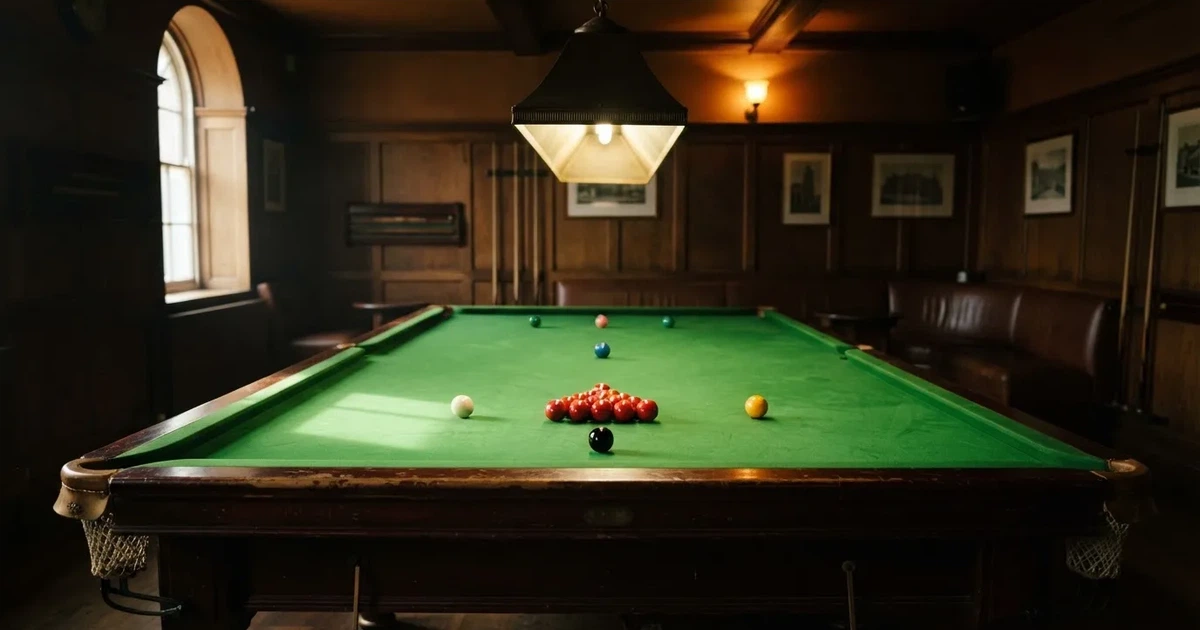
Snooker offers odds year-round, not just during the four weeks the Crucible is open. The professional circuit runs almost constantly — the UK Championship in December, the Masters in January, the Players Championship and Tour Championship in March, the World Championship in April and May, the Shanghai Masters in the autumn — and alongside those sit ranking events, qualifiers and exhibition formats from which bookmakers still frame a market. The bookmaker’s job is to keep a price live on every match; the punter’s job is to read what that price contains.
That is what the rest of the page does.
*Current as of 27 October 2026 · verified against the Gambling Commission’s public register.*
Bonuses and free bets at snooker bookmakers
A bonus is a marketing budget dressed up as a giveaway. The number on the offer page is the headline; the figure that matters is the one on the terms page.

Two welcome offers from this set make the point clearly. Coral pays £40 in free bets for a £20 qualifying sports bet at minimum odds of 2.0 (1/1), issued within 7 days and expiring 7 days after issue, for new GB customers who opt in. Unibet runs the same headline — £40 in free bets for a £20 sports bet at 2.0, on a debit-card or instant-bank-transfer deposit, expiring within 7 days. The two offers are interchangeable on the surface. BetMGM does something structurally different: a £10+ deposit and a qualifying sports bet within 7 days unlocks four £10 free bets — two football accumulators at 4+ selections and two sports multiples at 2+ — also valid 7 days, also opt-in. Three sportsbooks, three reward shapes for the same marketing budget.
Free bets are not cash. A £10 free bet at 5/1 pays £50 in winnings, not £60; the £10 stake is forfeit. That is the rule with almost every free bet a British bookmaker issues and it is the single most-misread line in any welcome-offer small print. Vbet goes in the other direction: if a new, verified customer’s first-ever £10+ bet loses, Vbet credits a £10 free bet — the stake is preserved on the losing side and only the loss is converted, so the customer never has a free bet in hand before risking one. A “risk-free” offer that refunds in free bets is not a refund in money: it pushes the customer one bet further from a clean balance, and the smaller the first bet, the larger that proportion looks.
The cap on bonus wagering in Great Britain is 10x (LCCP, in force since 19 January 2026). A £10 bonus carries a maximum £100 of qualifying turnover; a £50 bonus, £500. Any offer that asks for more than 10x is, by definition, not a British-licensed offer, and the marketing rule also bans mixed-product promotions — an offer that requires gambling on, say, both the sportsbook and the casino to clear the bonus. That rules out a class of large-looking headline numbers altogether. What remains is the smaller, plain-vanilla offer where the qualifying bet, the odds floor and the expiry are all spelled out. The £40-for-£20 deals above are exactly that shape, and they are the headline price most licensed books converge on.
Snooker-specific offers do appear during the World Championship: enhanced odds on the outright, acca insurance on daily multi-match tickets, free-to-enter predictor games. They are seasonal and they are rarely visible outside the four-week window, so the rest of the year the standing offer is the welcome package, and a punter who treats it as the headline rather than the bonus reads the terms more usefully.
The arithmetic of a free bet is worth doing once, even roughly. A £10 free bet at decimal odds 4.00 on a market with a 5% margin settles at an expected value close to £22 over many bets at that price: the £10 stake is forfeit, the £30 winnings on a win are paid, and the margin means roughly one in 4.2 such bets lands. A £40 free bet at the same conditions and price is worth roughly £88 on average. That is what the offer is worth. It is rarely what the marketing copy suggests it is worth, and it is also rarely the whole story — every bonus carries a deadline, a minimum odds line, a market restriction and a cap on what the winnings will pay.
In-play and cash out on snooker
Snooker is one of the better sports for in-play betting, for a reason that has nothing to do with snooker and everything to do with frame structure. A best-of-11 match offers five distinct swinging points: at 1-0, 1-1, 2-1, 2-2 and 3-2. Each is a discrete market with a fresh price, and the bookmaker’s trader can hold a price almost continuously without the kind of liquidity shock a five-minute football match produces. Frames last 25 to 40 minutes; a trader can post a price, watch a passage of play, adjust, and repost.
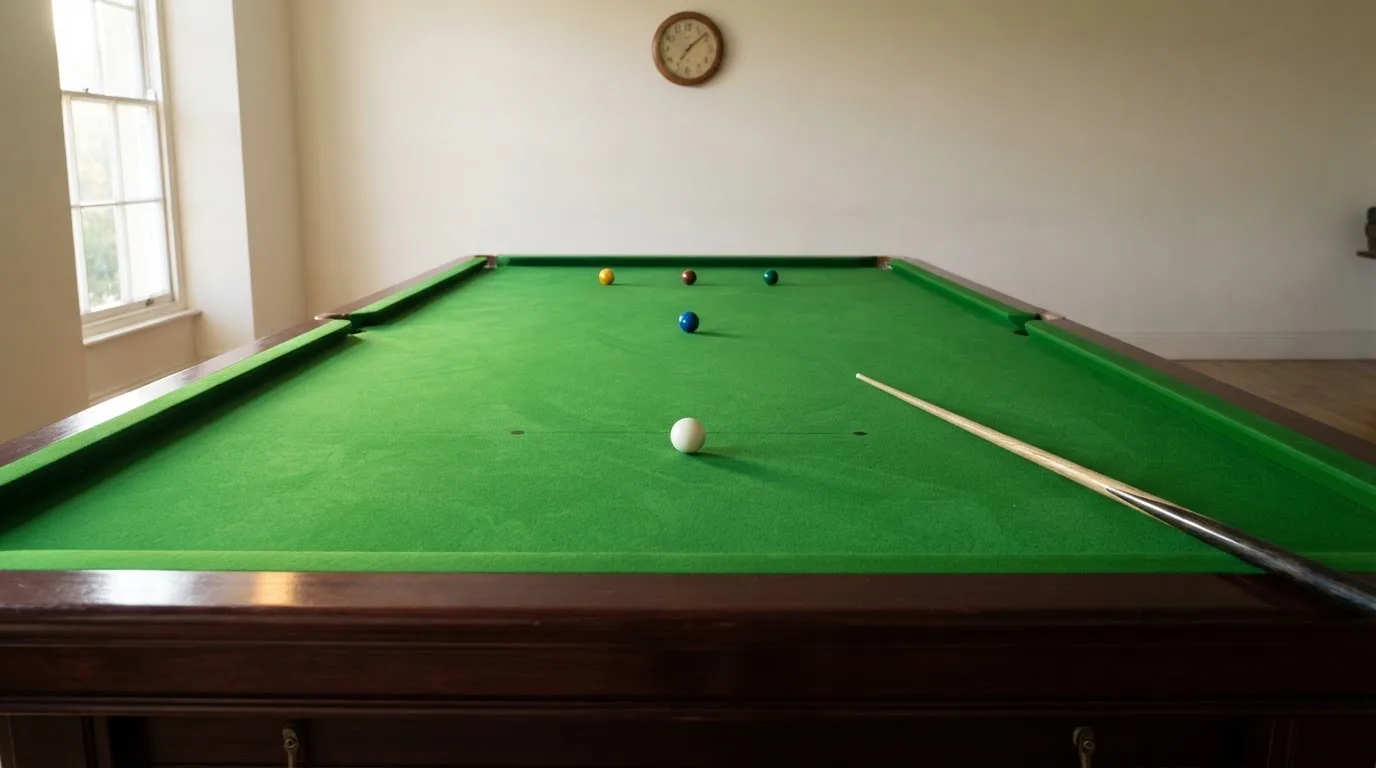
Cash out turns that structure into a tradable instrument. A backer who took 5/1 on a player at the start of the match and finds that player 3-1 up can lock in a profit before the match ends, taking the bookmaker’s offer rather than waiting for the final frame. The offered cash-out value depends on three things: the current score, the frame-format (best of 7 leaves almost no margin; best of 35 still has five frames to play), and the underlying live odds on the same selection if a new bet were placed now. Where the cash-out offer is well below the underlying odds, the bookmaker is keeping the spread; where it tracks the live price closely, it is paying a fair exit. The shape of that gap is the cost of using the feature.
Midnite runs an in-play tab on its home page with the live events from across the sportsbook, alongside an acca builder and a price-boost feed with maximum-stake limits. 888sport takes a similar approach: pre-match and in-play betting together, Cash Out, Bet Builder, racing streams, a BetFinder form tool, a live bet feed and daily boosted odds — every common in-play feature listed on one product page, which is a near-complete map of what a British snooker bookmaker offers frame-by-frame.
What in-play does not do is give the punter an edge. The price on the next frame updates from a trader’s screen, not a clock, and the delay between event and price (a few seconds in a stable frame, longer in a break) is the bookmaker’s information advantage. Cash out is the same model on the exit side — the bookmaker closes the position at its price, not the punter’s. In-play is a tool, not a workaround, and on snooker it is one of the few sports where the tool is genuinely suited to the format.
Predictions, previews and the limits of “tips”
Snooker tips exist in two forms. The first is journalism — form tables, head-to-head records, recent results, an analyst’s reading of the draw. The second is selling — paid picks, “best bet” emails, tipster services with a strike-rate claim. The two are easy to confuse and only one is useful to a punter.
Form tables are useful. Snooker is an individual sport with an established ranking, a points structure across the season and a long head-to-head record between the leading players. Stephen Hendry and Ronnie O’Sullivan between them have seven World Championship titles in the modern era, Joe Davis won fifteen in a row from 1927 to 1946, and the Crucible has been the venue since 1977 — meaning a researcher can build a player’s record at the venue without going back further than five decades. Recent form (last six to ten matches), venue form (Wins at the Crucible, losses at the Crucible), and head-to-head form (this player’s record against that one) are the three inputs a sensible preview considers, and a price is built from. A punt who never looks at form is paying the bookmaker’s margin for the privilege of guessing.
Paid tipsters are a different market. Strike-rate claims are unverified by definition, and the return a tipster claims is rarely net of subscription cost, let alone net of the bookmaker’s margin on the bets they recommend. A tip that wins at 4/1 still loses the bettor money once the 5%–8% overround on the market is taken into account over enough bets. The honest version of “tips” is the same as the honest version of analysis: form, conditions, frame structure, head-to-head, and a price written by a market-maker who has done the same work.
The other limit is the sport itself. Snooker produces long runs of one-sided matches — a 6-0 whitewash in a best-of-11 is not unusual at the lower ranks — and the same two players can meet on consecutive days in the same round of a tournament. There is no home advantage, no crowd factor, no weather. A tip is a reading of two players’ forms at one venue on one date, and a price reflects all of that already. The punter’s contribution is to disagree with the price, with reasons; an opinion without a reason is a bet on the favourite.
Bet types and how snooker odds are settled
Snooker has a small menu, compared to football. Most markets are single-game rather than outright, and the format of the match determines what can be bet on.
Match winner. The single most common market. One selection per match, settled on the final score. A best-of-11 contest has a clean match-winner market from frame 1; a best-of-19 first round at the Crucible is settled over more frames, so the price is tighter and the favourites shorter.
Frame winner. A market on the next frame, posted in-play. The price reflects the current score: at 0-0 in a best of 11, the favourite frames the next frame around 1.50–1.70; at 4-2 up with the favourite serving, the price on the favourite to take the next frame shortens to roughly 1.30. Like all in-play markets, the price stops when the match stops — at a frame interval, the next-frame market is suspended until the players return.
Handicap. A market that gives one selection a head start in frames. On a best-of-11 match, a -2.5 handicap on the favourite settles only if they win by 4 frames or more — a 6-2 or 5-1 score. The price is larger because the condition is harder. The market is for punters who believe the favourite will win convincingly.
Total frames. Over/under on the total number of frames played. A best-of-11 match has totals set at 8.5, 9.5 or 10.5 in most cases; an over 10.5 settles only on a 6-5 final score. A tight match in form picks up the over; a routine win, the under.
Outright. The winner of a tournament. The market is open from the moment the draw is published until the final frame, and the price on the favourite shortens during the event as field size reduces. Outright markets carry larger margins than match markets (10%–15% is typical) and that margin is the bookmaker’s take from every backer who picks a name without weighing the field.
Century break / highest break. Whether a player will make a 100+ break in a match or tournament, and which player will post the highest break of a tournament. The price depends on the format (best-of-11 frames favours century-break markets more than best-of-7), on the players’ potting records, and on table conditions. A maximum break — potting all 15 reds with blacks and then all six colours, for a 147 — is the rarity bookmakers price at 50/1 or longer on most formats, sometimes 33/1 or 25/1 on the shorter ones.
Each-way. Each-way is a horse-racing term borrowed into snooker for outrights. A £10 each-way bet at 5/1 is in fact two £10 bets — one on the win, one on the place — and the place terms depend on the field size of the tournament. The total stake doubles and the return is split between the two. A backing-to-lay punter should always check the place terms; a half-the-odds place pays 5/2 in this example, a one-quarter-the-odds place pays 5/4.
Bet builder. A same-event multi. Some bookmakers allow it on snooker; 888sport lists a Bet Builder alongside its in-play product. A builder multiplies the leg prices into a single price, and the margin of the multi is the sum of the margins of its legs. A two-leg multi at 2.00 and 3.00 on markets with 5% margin each carries a combined margin north of 10% on the multi price — the legs multiply, the bookmaker’s edge compounds, and a two-leg multi is the worst-priced bet the bookmaker offers in headline form.
Each settlement is in the operator’s terms, and a small list of settled and voided cases does more for a punter than a long explanation. Where the match is not completed, where a player retires mid-frame, where a frame is re-racked under the WPBSA rules, the rules say exactly what happens to the price. The WPBSA — the World Professional Billiards and Snooker Association — owns the official rules of professional snooker; the IBSF runs amateur competition; and bookmakers build their settlement rules around both.
The calendar, the venues and the World Championship
The professional snooker calendar runs almost every month. A punter who tracks snooker at one event per quarter will see every ranking title the tour awards; a punter who follows the World Championship alone will see the biggest outright market of the year. The arithmetic of betting on snooker, particularly on the complex pool-betting structures, is designed to be clear: the operator’s commission is stated, and no payout guarantee exists beyond the calculated pool share.
The events with the heaviest betting volume are the Triple Crown — the World Championship at the Crucible Theatre in Sheffield, the UK Championship in York, and the Masters at Alexandra Palace in London — plus the Players Championship and Tour Championship as the season-ending ranking finals. The Shanghai Masters, the Champion of Champions, the Wuhan Open, the English Open and the Scottish Open fill out the ranking calendar with smaller fields, and most ranking events are best-of-7 in early rounds, best-of-9 in the quarters, and best-of-11 or best-of-17 in the semis and final. The Crucible is the outlier: the World Championship runs best-of-19 frames in the first round, best-of-25 in the quarters, best-of-33 in the semis, and best-of-35 in the final. A punter pricing any of these markets needs to know which format is in play.
The 2026 World Championship ran from 18 April to 4 May 2026 at the Crucible, with Wu Yize beating Shaun Murphy 18-17 in the final and taking £500,000 from a £2,395,000 prize fund. A best-of-35 final produced that 18-17 scoreline — a margin of one frame, the closest possible finish in a final that long. Markets on the final itself settled on the frame score; outright markets settled on the tournament winner; and any in-play markets tied to the final frame had a price that moved on every ball.
Venue information is portable. A full-size snooker table is 12 ft by 6 ft with six pockets; most professional matches are best of 7, 9 or 11 frames; the World Championship is the only major event at best-of-19 or longer. The Crucible has been the venue since 1977; few professional circuits have stayed at one address that long, and bookmakers list it on outrights as a “venue factor” only in the sense of fixture familiarity — the table, the seating, the lighting. Form is form, and a price reflects it.
Snooker is played with 22 balls: a white cue ball, 15 reds and six colours, the colours worth yellow 2, green 3, brown 4, blue 5, pink 6 and black 7. The maximum break is 147 — potting all 15 reds with blacks and then all six colours. A century is a break of 100 or more; a maximum is a single-frame event for which bookmakers carry a specials market on most professional events.
Below the professional tour sit the amateur game, the seniors tour, the women’s tour and the secondary ranking events that nevertheless carry a live market. Smarkets, 888sport, Vbet and BetMGM all carry snooker outrights through most of the calendar; a snooker-only bookmaker sits in this set too — and indeed Kalooki Sportsbook is a snooker-niche operation, licensed by the Gambling Commission under account 57730 and a GAMSTOP member, run by Kalooki Sports Book Ltd (company number 12938274). For the dedicated snooker punter, that is a different proposition from a sportsbook that carries snooker alongside its football and racing feed.
Comparing ten licensed bookmakers on snooker
The set below is drawn from the Gambling Commission’s public register. Each operator holds a remote licence for Great Britain at the time of writing; each takes part in GAMSTOP; each is presented here by what its own terms state about how it serves a snooker punter, with one closing judgement of where it actually fits.
The table is built around four matters available for most rows. A column that cannot be completed for most rows does not appear.
| Bookmaker | Licence (Commission account) | Gambling Commission licence holder | What the operator’s own terms say on snooker, bonuses and in-play |
|---|---|---|---|
| BetMGM | 39198 | LeoVegas Gaming PLC | A £10+ deposit and a qualifying sports bet within 7 days unlocks four £10 free bets — two football accumulators of 4+ selections and two sports multiples of 2+ — valid 7 days; in-play is part of the sportsbook product; snooker outrights and match markets are listed across the calendar |
| Bar One Racing | 56516 | Bar-One Racing Limited | Irish and UK horse racing is the primary product, with Dundalk, Fairyhouse, Navan, The Curragh, Curraheen Park and Cork among the racing sponsorships; snooker markets are carried as part of the sportsbook feed rather than a dedicated vertical |
| QuinnBet | 61011 | QuinnBet (Gibraltar) Limited | Best Odds Guaranteed applies to UK and Irish horse racing from 10:00am daily, on singles, multiples and system bets, capped at £150 per customer per race; snooker markets are listed but the racing-led product places horse racing at the centre of the offering |
| Coral | 54743 | LC International Limited | £40 in free bets for a £20+ sports bet at minimum odds 2.0 (1/1), free bets issued within 7 days and expiring 7 days after issue, opt-in for new GB customers; a Ladbrokes sister brand under the same parent; snooker markets and outrights are part of a full multi-sport product |
| Smarkets | 39173 | Smarkets (Malta) Limited | Operates as a betting exchange, so the “odds” a punter sees are posted by other punters and matched against a commission on net winnings; open-bank-transfer deposits instant from £10 to £10,000, withdrawals processed within 6 hours from £10 to £100,000; UK debit card deposits instant from £10 to £15,000; snooker markets are listed with peer-to-peer liquidity |
| VBet | 44662 | SCGO Limited | A £10 free bet if a new, verified customer’s first-ever £10+ bet loses — the refund is in free bets, the qualifying stake is preserved on the losing bet, no free bet is in hand until a stake has been risked; snooker is part of the standard sportsbook product |
| Unibet | 45322 | Platinum Gaming Limited | Has run since 1999 under a Gibraltar-licensed operator; £40 in free bets for a £20+ sports bet at minimum odds 2.0, free bets expiring within 7 days of issue, debit-card or instant-bank-transfer deposit for new GB customers; snooker outrights and match markets across the calendar |
| 888sport | 39028 | 888 UK Limited | Pre-match and in-play betting, Cash Out, Bet Builder, racing streams, BetFinder form tools, a live bet feed and daily boosted odds are all listed on the product page; snooker markets are part of that full multi-sport offering |
| Tote | 54779 | TDCO Limited | A pool-betting-led product rather than a fixed-odds sportsbook; the tote dividend on a snooker event is a place-by-stake settlement rather than a fixed price, so the “odds” displayed are a guide to recent support rather than a guarantee of return |
| Kwiff | 44448 | Eaton Gate Gaming Limited | Trades under a “kwiff” mechanism in which selected bets receive a randomised odds boost at settlement; the underlying bet still settles at the posted price, and any boost is on top; licensed by the UK Gambling Commission and operated by Spryme Ltd; snooker markets are part of the standard feed |
A note on the table. The licence column shows the Gambling Commission’s account number — a number a punter types into the Commission’s online register to verify the licence. The licence holder is the legal entity named on the register, which is sometimes a parent company and not the trading name the customer signs up with. The third column carries the operator’s own statements on snooker, welcome offers and in-play features drawn from each bookmaker’s product page and terms.
The same set of ten names recurs across UK review sites with minor ordering changes. The ranking is not the licence and the licence is not the ranking: BetMGM and Unibet and Coral are interchangeable on the £40-for-£20 headline, but a punter who wants a betting exchange goes to Smarkets regardless of what Coral offers in fixed-odds, and a punt on horse-racing-specific mechanics (Best Odds Guaranteed, an each-way place term) takes the punter to a racing-led bookmaker like QuinnBet. Where the operator’s core product is snooker-adjacent rather than snooker-first, the comparison is honest about it: Bar One Racing and QuinnBet both list snooker markets but both lead their product with horse racing, and a snooker-only punter is served by them but is not their target reader.
The bookmakers reviewed below carry the matters the table holds up — licence, holder, what their own terms state — and end each block on a verdict that is the page’s judgement of where the brand actually fits a snooker punter’s needs, rather than a recap of the table.
BetMGM
BetMGM is run on the LeoVegas Gaming PLC licence and offers the welcome offer described in the table — a £10+ deposit and a qualifying sports bet within 7 days unlocks four £10 free bets split between football accumulators and sports multiples. The shape of the offer matters: it is divided into four, and two of the four are football-specific, so a snooker-only punter who does not bet on football gives up half the headline value. The lifetime value of the welcome package depends on whether the punter uses four legs or two.
The standard sportsbook carries snooker outrights, match markets and in-play, alongside boosted odds and a bet builder. A snooker punter finds match-winner, frame-winner, handicap and totals across the calendar with the price-volume profile of a mainstream product. The verdict: the welcome offer rewards a multi-sport punter more than a snooker-only one, and the snooker product is comprehensive without being best-in-class.
Bar One Racing
Bar One Racing trades as BAR 1 Betting — an Irish independent bookmaker with shops across Ireland and a racing sponsorship portfolio at Dundalk, Fairyhouse, Navan, The Curragh, Curraheen Park and Cork. The £40-for-£20-shape welcome offer is not what Bar One Racing leads with; the racing-driven product is, and snooker markets are a feed within that product rather than a separate vertical. A punter who places most bets on horse racing will find a familiar racing-led brand; a snooker-only punter will find markets but no snooker-specialist features.
The verdict: the brand sits on the racing side of the comparison, and a snooker punt happens through it the way a football punt happens through Coral — as part of a wider feed.
QuinnBet
QuinnBet’s Best Odds Guaranteed applies to UK and Irish horse racing from 10:00am daily, on singles, multiples and system bets, capped at £150 per customer per race. The mechanic is the headline. Snooker markets are listed across the calendar but the product is built around racing. The £150 cap is a per-race ceiling rather than a per-day ceiling, which means a multi-race Saturday can stack several £150 caps without overrunning them.
The verdict: the racing product is the reason to use QuinnBet, and a snooker-only punter’s first reason to look elsewhere.
Coral
Coral is a Ladbrokes sister brand under LC International Limited, carries the £40-for-£20 welcome offer and runs an in-play product that includes Cash Out, Bet Builder and boosted odds alongside a full sportsbook. The brand is one of the better-known names in British betting, and the snooker product on a Tuesday afternoon in November carries fewer markets than the same product on a Tuesday afternoon in May.
The verdict: a mainstream sportsbook with a mainstream welcome offer and a snooker product that is best during major events.
Smarkets
Smarkets runs as a betting exchange rather than a fixed-odds sportsbook. The “odds” a punter sees are not posted by Smarkets; they are posted by other punters and matched against the lay side, and Smarkets earns a commission on net winnings rather than a margin off every price. The pricing model is structurally different: peer-to-peer liquidity can produce tighter margins than a fixed-odds book on big events and noticeably thinner liquidity on small ones.
Payments are fast. Open-bank-transfer deposits are instant from £10 to £10,000; withdrawals processed within 6 hours from £10 to £100,000. UK debit card deposits are instant from £10 to £15,000. The verdict: a snooker punter looking for an exchange-side price on a popular market at the World Championship will find it; a punter looking for a price on a Wuhan Open qualifier will find fewer takers.
VBet
Vbet issues a £10 free bet if a new, verified customer’s first-ever £10+ bet loses. The shape is a “risk-free” refund — except the refund is in free bets rather than cash, and the qualifying stake on the losing bet is preserved. The customer’s free bet is in hand only after a qualifying loss, and the free bet itself is the standard forfeit-stake variety. The net effect of a win is one win; the net effect of a loss is one free bet.
The verdict: a snooker punt’s first bet is the only one the offer covers, and a punter who chooses Vbet for the offer alone is choosing a thin first-bet sweetener rather than an ongoing product edge.
Unibet
Unibet has run since 1999 and the UK site is operated by Platinum Gaming Limited under Commission account 45322. The welcome offer mirrors Coral’s: £40 in free bets for a £20+ sports bet at minimum odds 2.0, free bets expiring within 7 days of issue, with a debit-card or instant-bank-transfer deposit for new GB customers. The shape of the offer is the shape of the British fixed-odds welcome in 2026.
The verdict: a mainstream product with a mainstream offer; interchangeable with Coral in headline terms and chosen on the secondary features — racing form, livestream, in-play depth — that suit a particular punter.
888sport
888sport’s product page lists pre-match and in-play betting, Cash Out, Bet Builder, racing streams, BetFinder form tools, a live bet feed and daily boosted odds. The set is a near-complete British fixed-odds product; a snooker punter finds in-play frame-by-frame, a cash-out exit and a bet builder across the calendar.
The verdict: the product is comprehensive rather than specialist, and the snooker feed runs at full volume during the World Championship and at steady volume the rest of the year.
Tote
Tote runs a pool-betting product rather than a fixed-odds sportsbook. The dividend on a snooker event is settled by stakes placed — by the pool — rather than by a price posted in advance. A £1 each-way at the tote on the World Championship winner pays whatever the pool pays, divided by the winning stake, after a deduction. The product suits a punter who likes pool-betting structure and understands that the displayed “odds” are a running guide.
The verdict: a snooker pool-bet is a different bet from a snooker fixed-odds bet, and the difference is the structure rather than the name.
Kwiff
Kwiff describes itself as a trademark operated by Spryme Ltd and is licensed by the UK Gambling Commission. The product runs an unusual mechanic: a kwiff is a bet where the odds are randomly boosted at settlement, and the underlying bet still settles at the posted price. A bet at 4/1 can land at 20/1 if the kwiff triggers; the bet still settles at 4/1 if it does not. The pull is variance rather than value.
The verdict: a snooker punt at Kwiff is one priced normally with a chance of a much larger payout on the winning side, and the mechanic rewards a punter who wants the upside without doing the form.
What governs snooker betting in Great Britain
There is no statutory list of permitted sports or markets in Great Britain. A bookmaker serving customers in Great Britain needs a Gambling Commission licence wherever it is based, under sections 33 and 36 of the Gambling Act 2005 as amended by the Gambling (Licensing and Advertising) Act 2014. A Curaçao, Maltese or Gibraltar licence is not a substitute. The Commission’s public register is the whole test of who holds a GB licence — searchable by business name, trading name, domain or account number — and no count is useful without the access date.
The bookmakers reviewed on this page each hold a remote general betting standard licence (real events) under a parent or group entity. Smarkets additionally holds a remote betting intermediary licence — the licence for betting exchanges. QuinnBet and Tote also carry categories the table omits; only the matters research backs for most rows appear in the comparison. The licence types that exist are remote general betting standard (real events), remote general betting standard (virtual events), remote general betting limited, remote pool betting and remote betting intermediary. The category on the licence is what defines the legal scope of the operation.
Identity verification is compulsory before the first deposit or bet at every licensed site, including with a free bet or bonus. Name, address and date of birth are checked; the verification has been in force since 7 May 2019. The minimum age is 18. A credit card has been banned for gambling in Great Britain since 14 April 2020 (LCCP 6.1.2), and a credit-card-funded payment through an e-wallet is also covered. Debit cards and bank-based payments are not. No state-set stake or deposit ceiling exists; the operator sets maximum stakes and may restrict a customer’s account.
A licence does not guarantee a snooker punter anything other than the regulatory floor. It guarantees that the operator has passed the Commission’s checks, that the operator participates in GAMSTOP, that the operator is bound by the bonus cap, that the operator must run vulnerability checks on a customer’s deposits net of withdrawals over £150 in a rolling 30 days, and that the customer has access to approved alternative-dispute-resolution if funds are withheld. A snooker punter comparing licensed bookmakers is comparing within the regulatory floor, not above it; a punter considering an unlicensed brand is leaving the floor.
Responsible gambling on snooker betting sites
Every GB-licensed online operator takes part in GAMSTOP, the national multi-operator online self-exclusion scheme. Periods are six months, one year, five years, or five years with auto-renewal; after the minimum period, the exclusion stays in place for a further seven years unless the customer asks GAMSTOP to remove it. Online sites and apps are covered; betting shops use a separate in-shop self-exclusion service. Signing up to GAMSTOP is a single-sign-up route out of every licensed sportsbook.
The Commission’s player-protection rules in force in 2026 have three moving parts. First, a financial vulnerability check (LCCP 3.4.4, in force 30 August 2024) applies at licensed remote betting when a customer’s deposits minus withdrawals exceed £150 in a rolling 30 days (since 28 February 2025): it is a public-record check (bankruptcy, county court judgments) rather than an income check or a credit-reference check. Second, financial risk assessments have been announced in a staged plan (Commission article of 7 July 2026) with no start date — write “announced, staged, no start date”, never “in force”. Third, the deposit-limit rules (Remote Technical Standards 12) require operators to offer a gross deposit limit on a fixed timeframe: first changes from 31 October 2025, a second phase postponed to 30 September 2026, and whether it is live is not established. None of the three is a state-set ceiling; each is a process the operator must run.
The help that sits beside those processes: GamCare runs the National Gambling Helpline; GambleAware funds treatment and education; NHS gambling clinics provide specialist treatment in several regions; Gamblers Anonymous runs peer-support meetings. The names recur on every British sportsbook’s safer-gambling page because every licensed sportsbook is required to link to them.
A snooker punter has the same pathways as any other. A self-exclusion with GAMSTOP closes every licensed sportsbook at the same time; a deposit limit with one operator is independent of the deposit limits on others; a vulnerability check that triggers on one site triggers on every licensed site the customer uses. The mechanics are uniform across the comparison set above; the differences lie in the supporting product — the safer-gambling tools each operator puts on the page.
Fitzwilliam Sports, an operator outside the comparison set above, lists instant deposits, fast withdrawals, timeouts and deposit limits, with explicit links to GambleAware, GamStop and Gamblers Anonymous on its home page — a useful marker for what a licensed safer-gambling surface looks like in 2026. Kwiff runs a 17+ age rating on its app store listing, and licensed operators default to 18 even where the store’s listing is lower.
Cryptocurrency and anonymity at snooker bookmakers
There is no British rule against or for cryptocurrency deposits at licensed operators, and no statutory anonymity right at any GB sportsbook. The identity check that runs before the first deposit — name, address, date of birth, verified before a penny moves or a bet is placed — applies to a crypto-funded deposit the same way it applies to a debit-card deposit. The customer can move funds in bitcoin; the customer cannot move funds in unnamed.
A licensed operator’s terms state which coins and which chains it accepts on its own house rules, and a snooker punter using crypto at a licensed site effectively deposits at the GBP-denominated equivalent the operator’s system shows. The exchange rate and any fee are the operator’s settings; the verification and the compliance are the Commission’s. The cheapest version of the question — “can I bet on snooker with bitcoin?” — has a yes answer; the more expensive version — “can I do so without proving who I am?” — has a no answer that follows from the licence.
A punter who wants the chain-side pseudonymity instead uses an unlicensed brand. That brand holds no GB licence, and the comparison made on this page does not extend to it. A licensed punter who deposits in crypto at a licensed bookmaker is buying the regulatory floor: GAMSTOP coverage, dispute resolution, the bonus cap, the vulnerability check — paid for by the verification step the chain does not change.
The arithmetic of a snooker price
Every bookmaker’s price contains a margin — the slice of every unit bet the operator keeps, whatever the result. The margin is built into the prices on both sides of a market, and the punter pays it whichever outcome settles.
Take an illustrative two-way market at decimal odds of 1.90 on each side, the kind of price a snooker match-winner might briefly show on a closely-matched contest. The implied probability of either outcome at fair odds — the price if the operator took no margin and the punter laid exactly the true probability — would be 1 ÷ 1.90 = 0.5263, or 52.63%. Two such prices, both fair, sum to 105.26%. The 5.26% above 100% is the overround — the book’s margin, expressed as a percentage of the betting pool. The payout share is the inverse: 100 ÷ 105.26 = 95%, meaning the book returns 95p of every £1 staked across the market, on average, and keeps 5p.
That 5.26% is the cost of the bet. A two-way match-winner market at 1.90/1.90 with a £10 stake on either side returns a maximum of £19 on a win and an average of £19 × 0.50 of true probability × 0.95 of payout share = £9.02 across both outcomes combined, before the operator’s take. That is the punter’s average outturn on this market; whatever individual bets win or lose, the pool settles to the operator’s edge. The punt the price pays is the marginal difference between what the operator priced and what the true probability was — and that margin is what the price costs in expected terms.
The same arithmetic on a snooker outright market runs higher. A three-way or four-way market with one favourite and several outsiders carries a larger overround — 10% to 15% is common — and the same kind of calculation gives a payout share of 85% to 91%. The World Championship outright, with twenty or more selections at the start of the draw, can run higher still. A punt who only ever bets on outrights is paying a margin two to three times larger than the same bettor pays on match markets, and the difference shows up over a season’s betting.
The margin appears in the prices, not the rules. A 1.90/1.90 market looks symmetric; the symmetry hides the operator’s edge. The 1.05/5.00/500.00 shape of a typical World Championship outright — favourite, mid-field, outsider — looks generous on the favourite and puny on the long shots; the generosity hides the same edge in a different form. The way to read the margin is the difference between the implied probabilities and 100%; the way to remove it from a single bet is impossible, and the way to reduce it over a season is to bet on markets whose margins are narrowest — match-winner and total frames — rather than on outrights and specials where the margin is widest.
A two-way market at decimal odds 1.90/1.90 carries a margin in the band of about 5% on the match-winner market, depending on operator. That is the indicative figure this margin calculation yields, and it is the cost of using the licensed comparison set above at standard match prices.
Verdict: what the comparison leaves a snooker punter with
Ten brands, ten slightly different products, and one regulatory floor they all share. The licensed comparison set above is not a ranking and the table does not produce one: it sets out what each operator’s own terms state on the matters that differentiate snooker products in 2026, and the verdicts under each name tag where the operator actually fits.
A snooker punter looking for a fixed-odds sportsbook with a mainstream welcome offer, in-play on every frame and bet-builder across the calendar has at least four interchangeable candidates in BetMGM, Coral, Unibet and 888sport. A punter looking for an exchange-side price on a popular market finds Smarkets; a punter looking for a racing-led product with a snooker feed finds QuinnBet or Bar One Racing; a punter looking for pool-betting structure finds Tote. Vbet sits beside these on the welcome-bet side, and Kwiff offers a randomised boost on top of a normal price. None of them, individually, is best on snooker across every matter — each leads on one, lags on another, and the punter’s choice is a choice of which matter matters most.
The matters that decide the choice for most snooker punters are three, and they sit on different shelves of the comparison. First, the welcome offer: two of the ten are £40-for-£20 at 2.0 minimum odds, one is four £10 free bets split between football and sports multiples, one is a first-bet-if-loss refund, and the rest do not lead with a sports welcome in the table. Second, the in-play product: the licensed set carries in-play on most major events, with Midnite and 888sport showing the in-play product on the home page in forms a snooker punter can read at a glance. Third, the payment mechanics: Smarkets’ instant-deposit, six-hour-withdrawal setup is the front of the field and is rare at the licensed sportsbooks; the rest are debit-card-and-bank-transfer with operator-specific minimum and maximum figures.
A punter who decides on one column of the table has decided on a bookmaker; a punter who decides on one row has decided on the licensed comparison set. The choice within the set is real, and the choice outside it is a different kind of choice.
Frequently asked questions
How is a bet on snooker placed at a licensed bookmaker?
A snooker punter opens an account at a licensed bookmaker from the comparison set, completes the identity check that runs before any deposit (name, address and date of birth), funds the account with a debit card or bank transfer, selects a snooker event from the sportsbook, chooses a market — match winner, frame winner, handicap, total frames or outright — sets a stake within the operator’s posted limits, and confirms the bet. The bet settles in the operator’s terms when the match or frame reaches the operator’s settled state; a voided match leaves the stake returned in full, a settled match pays the stake plus winnings on a win and forfeits the stake on a loss.
Is snooker betting available at every licensed British bookmaker?
Snooker is not a mandatory product for licensed operators, but every mainstream British sportsbook carries it, particularly during the World Championship and the UK Championship, and the comparison set above lists outrights, match markets and in-play from at least eight of the ten names. The market depth varies by season: snooker markets reach full volume in April and May for the World Championship, and slim down to one or two outrights and match markets between events.
How is a Gambling Commission licence checked before a bet is placed?
A snooker punter types the bookmaker’s business name or account number into the Commission’s public register at the URL published on the Commission’s website. The register lists the licence category (remote general betting standard, real events, or remote betting intermediary for exchanges), the licence holder’s name, the trading name, the domain and the licence status. The register is the whole test of who holds a GB licence; the dates the licence was issued and is valid to appear on the licence’s page. A punter who cannot find a brand on the register should not deposit with it.
How is the return on a snooker bet worked out from stake and odds?
A £10 single at fractional odds of 5/1 returns £60 in total — £50 of winnings and the £10 stake. A £10 single at decimal odds of 6.00 returns the same £60. The arithmetic is stake × (fractional odds + 1) on the fractional side or stake × decimal odds on the decimal side; both produce the same return. A multi multiplies the decimal odds across legs: a £10 accumulator at 6.00 × 4.00 × 2.50 returns £600 if all three legs win.
What is the bookmaker’s margin and where does it sit in the price?
A two-way market at decimal odds 1.90 and 1.90 carries a margin of about 5%, because 1 ÷ 1.90 + 1 ÷ 1.90 = 1.0526, and the 5.26% above 100% is the operator’s slice of every unit bet across the market. The margin is built into both prices, and the payout share is the inverse — about 95% on a market this close — meaning the book returns 95p of every £1 staked on average and keeps 5p. A bookmaker’s margin is what the operator keeps; a punter’s payout share is what the punter gets back over many bets at the same shape.
How do fractional snooker odds such as 5/1 convert to decimal odds such as 6.00?
The decimal odds are the fractional odds expressed as a single number: 5/1 becomes 5 ÷ 1 + 1 = 6.00; 11/4 becomes 11 ÷ 4 + 1 = 3.75; evens (1/1) becomes 2.00; odds-on 4/6 becomes 4 ÷ 6 + 1 ≈ 1.67. The conversion runs the same way for every fractional pair (a/b → a ÷ b + 1), and the decimal odds include the stake in the return, where fractional odds quote only the profit. A £10 bet at 5/1 returns £60 in total; a £10 bet at 6.00 returns the same.
Tennis, darts & cue sports – Bookies Trust
Content created by the «Bookies Trust» team
