
Best Betting Exchange Sites in 2026 — How Exchanges Work, What They Charge, and Who Holds a UK Licence
 Available in US
Data current as of 27 October 2026 and verified against the Gambling Commission’s public register of operating licence holders. Odds and commission rates age faster than anything else on this page; figures shown reflect each operator’s own published terms on the date of access.
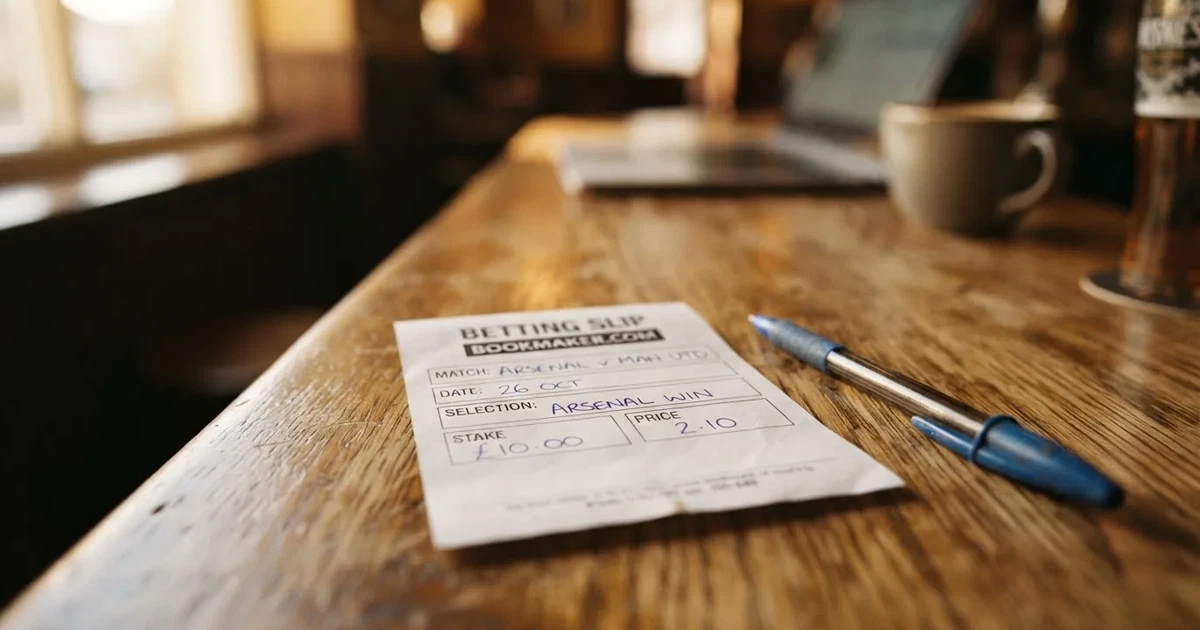
A betting exchange is not a bookmaker with a different skin. It is a marketplace where one punter backs an outcome and another lays it, with the exchange taking a slice of net winnings rather than baking its cut into the price. That single difference explains why exchange odds are usually bigger than bookmaker odds, why a backer’s liability is the stake but a layer’s liability can dwarf it, and why the regulator calls this category of licence a “betting intermediary” rather than a general betting one. The page that follows is built around what that distinction costs the person placing the bet: what commission does to a winning price, why an unmatched bet is a different bet from a matched one, what the Gambling Commission’s public register tells you about who actually holds a licence to operate one in Great Britain, and where the limits sit that the operator’s homepage does not put in the headline.
Exchange Bonuses, Commissions and the Real Cost of “Free”
A bookmaker gives back a percentage of your stake as a bonus. An exchange gives back a percentage of what you won. That is the commission model, and it is the lens through which every “exchange offer” on the market has to be read. On a standard bookmaker welcome, the headline number is the percentage of your deposit the house matches. On an exchange, the headline number is a flat commission rate or a time-limited zero-commission window, because the customer is paying for the match, not being paid to arrive.

How exchange commission actually eats a price
Most exchanges apply commission as a percentage of a customer’s net winnings per market; losing bets incur no commission. Smarkets, for instance, applies a standard commission of 2% on eligible exchange bets, with new customers historically offered 0% commission for 60 days on a minimum first deposit of £10. That looks generous, but it sits on top of the backer’s profit, not on top of the gross return. A £100 back bet at 3.00 that wins returns £300 — of which £200 is profit; at 2% commission, £4 leaves the punter’s account before the rest is paid out, and £296 lands. On a longshot at 50.00 the commission feels larger; on a winning accumulator it can run into double digits if the same customer’s net profit on the market is five figures. The commission is small in percentage terms but it is taken off the backer’s profit, which is the one figure that was already at risk.
The flipside is the layer. A layer takes the position a bookmaker normally occupies, and a lay bet wins when the outcome does not happen. A £100 lay bet at 3.00 puts £200 of liability at risk (the backer’s potential profit); if the lay wins, the layer’s profit is the £100 stake minus commission on it. A layer who lays a 1.20 shot to win £100 is risking £20 of liability for £1 commission if successful, which is a worse commission-to-profit ratio than the backer takes on a longshot — and the difference shows up in any systematic comparison of “best odds” claims across back and lay.

Why exchange “free bets” are not bookmaker free bets
A bookmaker free bet returns profit only, not stake; an exchange’s equivalent is a similar credit, but the cost is again taken off the net profit, not added on top of the price. A “0% commission for 60 days” offer is the exchange industry’s closest analogue to a welcome bonus, and it is the kind of headline a punter should weigh against the headline “100% deposit match” elsewhere — they are not the same thing, and they do not compensate each other.
Promotion rules under the Gambling Commission’s framework, in force since 19 January 2026, cap wagering requirements on bonuses at 10x — so a £10 bonus at 50x would require £500 of qualifying bets; the cap means no more than £100 of wagering for a £10 bonus. Mixed-product promotions — an offer that demands a bet on football to unlock free spins, for example — are banned. The rule concerns bonuses, not commission; an exchange with a 0% commission window is not the same product as a bookmaker with a 50% deposit match, but the operator running both has to honour the same marketing rules for the bookmaker side of its business.
The “commission free” label and what sits beside it
A zero-commission market is not always what it looks. Some exchanges advertise 0% on certain sports, certain markets or certain time windows, then apply the standard rate everywhere else. Others advertise 0% commission on net losses over a period and 2% on net winnings. The standard rate on a Smarkets-style platform is 2%; elsewhere it can be 5%, and the Liquidity Premium or similar programmes can drop the rate further for high-volume customers. The figure to compare is the rate on net winnings at the sports and markets the punter actually uses, not the headline.
Exchange Apps, Mobile Sites and the Touchscreen Difference
An exchange is a market in continuous motion. Prices update with every matched bet, sometimes several times a second in-play. The interface that presents those prices has to keep up, and the difference between a bookmaker app and an exchange app starts with the price ladder, the depth-of-market display and the one-click back/lay button. A bookmaker app shows you a price and takes your bet; an exchange app shows you a price, shows you the stake someone will take at that price, and waits to see whether you back, lay or skip.
Native apps versus the mobile site
The two routes into an exchange on a phone are the iOS or Android app and the mobile browser version of the desktop site. Apps tend to be faster at placing in-play bets, push notifications for price moves, and biometric login (Touch ID, Face ID) for quick re-entry between sessions. The mobile browser version is the fallback when an app is unavailable — for instance in jurisdictions where the App Store does not carry the operator, or for the punter who would rather not install another piece of software. Betfair’s sports app, Matchbook’s app and Smarkets’ app are all in this category; a native download on the App Store in Great Britain is the route the punter checks before anything else.
What “in-play” looks like on a phone
On an exchange, in-play means a market that has been suspended, repriced and reopened every few seconds as goals, wickets, sets or breaks happen. The bookmaker’s cash-out button — one tap to settle at a current price — is the closest analogue, but on an exchange the cash-out equivalent is a back or lay bet at the current price, which means the punter has to think about which side of the trade they want to close. A backer who wants to lock in profit before the final whistle places a lay bet at a price someone else will take; the layer closes with a back. The result is the same economic outcome as a cash-out, only with the punter explicitly naming the role.
Push notifications and price alerts
Several exchanges let the punter set a price alert: “tell me when this market crosses 2.00” or “tell me when someone offers £500 at the back”. The alert arrives as a push on the phone and the punter decides whether to act. It is the exchange industry’s answer to “watch a market” without sitting at the desktop, and for in-play trading it is closer to a tool than a feature. Most bookmaker apps do not offer it.
Live Markets, Cash Out and the Unmatched Bet
The single mechanical fact that distinguishes an exchange from a bookmaker is the unmatched bet. A backer who places a back bet at 3.00 and no layer is willing to take it has an unmatched bet, not a settled one. The price the punter asked for is not the price they get. A bookmaker takes the bet at the price shown; an exchange tries to match the bet at the price shown and may not. Liquidity — the volume of opposing customers willing to back and lay — is the difference between an exchange that feels like a bookmaker and one that feels like a waiting room.
What liquidity is and why it varies
Liquidity is the depth of orders waiting at each price in a market. A Premier League match between Liverpool and Arsenal two hours before kick-off will have £50,000 or more waiting on either side of every price from 1.50 to 5.00; a Conference League fixture the punter has never heard of might have £200. The punter who backs at 3.00 in the first market is almost certainly matched within a second; the punter who backs at 3.00 in the second market might wait ten minutes for a partial match, or never get matched at all. Exchange odds are usually better than bookmaker odds precisely because overrounds are smaller — and overrounds can be smaller only when enough opposing liquidity exists to make the book.
Cash out on an exchange versus a bookmaker
A bookmaker’s cash-out is the firm offering to settle the punter’s bet early at a price it sets, with the punter choosing to take it or leave it. The bookmaker carries the risk of the position from the moment the cash-out is offered. An exchange’s cash-out equivalent is a back or lay bet on the opposite side of the original position at the current market price — and it is the opposite punter who carries the risk, not the operator. DAZN Bet’s own help pages make the distinction explicit: cash-out availability is not guaranteed and bets stand if it is unavailable. On an exchange the same caveat applies at a different layer — there is no firm offering to settle, there is a market waiting to be matched, and the punter gets whatever the market will give them at the moment they click.
In-play markets and the suspension problem
Bookmakers and exchanges both suspend in-play markets while a goal, a wicket or a break is being assessed. The exchange then resumes the market, often within a second or two of the resumption, with new prices matched from the order book. The punter who tries to back the next goal within seconds of the restart will meet fewer opposing layers than at any other point in the match, and the price they get will reflect that scarcity. A bookmaker’s “next goal” market resumes the same way, with the bookmaker setting the new price; the difference is whether the new price is matched against an opposing punter or set by the operator.
Exchange Trading, Laying Systems and the Analytics Stack
An exchange punter is also a trader when they want to be. The back-and-lay symmetry means the same market can be entered from either side, exited from either side, and used to lock in profit or cut them at any point. The mechanics are not complex: a back bet at 3.00 followed by a lay bet at 2.50 locks in the difference if both are matched, and the punter no longer cares which outcome wins. A punter who lays at 2.00 and then backs at 1.80 has locked in a £20 profit per £100 of liability, irrespective of the result.
Laying systems and what they cost
A “laying system” in the betting exchange world is a structured approach to placing lay bets, usually across a sequence of races, football matches or tennis matches, with staking rules that escalate after each loss in the same way a bookmaker-side martingale does. The label “system” is descriptive, not evaluative: there is no statistical evidence that any published laying system beats the margin, and the margin on a betting exchange is the commission rather than the overround — but the commission is taken on profit, so a laying system’s net cost depends on the punter’s strike rate and the prices they take. A punter running a laying system on short-priced favourites in horse racing pays 2% of net winnings; the same punter running a system on longshots pays the same 2% on much larger profits when they win.
Trading the price rather than the outcome
The activity that gives the betting exchange its other name — “exchange trading” — is the practice of placing a bet, watching the price move, and closing the position for a profit before the event settles. The punter is not betting on the outcome; they are betting on the direction of the price, in the same way a financial spread bettor is betting on the direction of the underlying. It is the same set of mechanics that drives financial spread betting — which is why Spreadex, regulated by the FCA for spread betting and by the Gambling Commission for fixed-odds betting, operates in the adjacent regulatory regime.
Tips, predictions and the analytics tools
Tipping services and prediction models exist on both sides of the betting exchange. A bookmaker-side tip is usually a prediction of the outcome, with the punter backing at the price offered; an exchange tip is sometimes a prediction of the direction of the price, with the punter trading into and out of a position before the outcome matters. The two are not the same product, and the punter who treats a tipster’s football prediction as a trading signal at an exchange is usually disappointed. The honest framing: a tip is a forecast of an outcome; a trade is a forecast of a price. The tools overlap; the objectives do not.
Bet Types, Odds Formats and the Ladder
The bookmaker offers a price; the punter takes or leaves it. The exchange offers a book of opposing prices and the punter decides which side to be on, at what stake, and at what price. The mechanics of the bet — single, each-way, accumulator, bet builder, lay — are the same in both cases; what changes is how the bet is matched, who carries the risk, and what the price ladder looks like in the seconds before the punter clicks.
Back and lay, in plain terms
A back bet wagers that an outcome will occur; a lay bet wagers that it will not. The backer is the punter in the traditional bookmaker sense. The layer takes the bookmaker’s side of the trade. On a betting exchange, the punter can be either at any time, and a market only exists when both sides have orders in the book. Liability is the most a layer can lose in the worst case — for a £100 lay bet at 3.00 the liability is £200, which is what the layer would owe the backer if the outcome happens; for the same lay bet at 1.20 the liability is £20. The punter’s maximum loss on a back bet is the stake; on a lay bet it is the liability, and the punter has to set the stake with the liability in mind, not the stake.
Fractional, decimal and American
British bookmakers and exchanges publish odds in fractional form (5/1, 11/4, evens) by convention and in decimal form (6.00, 3.75, 2.00) alongside. American odds (+500, +275, +100) appear on some exchanges for international markets. The conversion is a/b → a ÷ b + 1; 5/1 is 6.00, 11/4 is 3.75, evens is 2.00. The price does not change between formats; the punter’s arithmetic changes. Decimal form is the format the page uses for any worked example.
Accumulators, bet builders and in-running singles
An accumulator combines the odds of two or more selections into one price; the stake wins if all legs win, loses if any leg loses. On a bookmaker, the price is the product of the legs; on an exchange, the price is the product of the legs only if all legs are matched. An unbettyed leg turns the accumulator into a partial match — sometimes the price adjusts, sometimes the bet is voided, sometimes the remaining legs are settled independently. Bet Builder on a bookmaker is a same-game multi with bookmaker-set prices on each leg; Bet Builder on an exchange (Matchbook offers one) is a same-game multi with prices set by opposing customers on each leg. The product looks the same; the matching is different.
The 1.01 to 1000 odds range
Betting exchanges generally limit odds to between 1.01 and 1000. The floor is a sanity check against accidental clicks at 0.01; the ceiling is a sanity check against a typo on a six-figure longshot. Bet sizes are not restricted as long as opposing customers match the stake. A punter who wants to place a £50,000 back bet on a 1.10 shot can do so — if a layer is willing to take the other side at that price and size. Most markets do not have that depth; the major horse races and Premier League matches do.
The Ten Reviewed Exchanges and Bookmakers
The set below is the set the Commission publishes. No brand is “the only” licensed operator; a place in this shortlist is not a ranking, an endorsement or a recommendation. Several brands can run under one licensee — for example Ladbrokes and Coral, Paddy Power and Betfair — and that is shown only where it is material to a punter’s choice. Each review is built around what the operator’s own terms and App Store listing say, plus the licence line the Commission register confirms.
| Brand | Gambling Commission licence | What the operator’s own terms say |
|---|---|---|
| Betfair | 039439-R-319330-013 (39439), PPB Counterparty Services Limited | In-play, Bet Builder, free live streaming of horse racing and football within the app, 90 Minute Payout market |
| Smarkets | 039173-R-319366-011 (39173), Smarkets (Malta) Limited | 2% standard commission; historical 0% for 60 days on £10+ first deposit |
| Matchbook | 039504-R-319407-024 (39504), Triplebet Limited | Customer-to-customer betting; Bet Builder, multiples, in-play, live streaming of horse racing and greyhounds |
| Kalooki Sportsbook | 057730-R-333396-005 (57730), Kalooki Sportsbook Limited | General betting standard (real events) under a Kalooki Sports Book Ltd |
| BetTom | 064959-R-339314-003 (64959), Bet Tom Limited | Sports welcome: 50% back as a free bet up to £50, plus 50% back up to £50 as free slot funds |
| DAZN Bet | 048756-R-327274-019 (48756), DZBT Limited | Cash Out, Bet Builder, daily bet boosts, in-play; cash-out availability not guaranteed |
| Midnite | 101839-R-342850-001 (101839), Midnite Limited | In-play, acca builder, popular accas, price boosts with max-stake limits |
| Star Sports | 009177-R-104555-019 (9177), Star Racing Limited | Pre-event and in-play, Bet Boosts, Daily Specials, Weekend Enhanced Boosts, in-play on football, horse racing, golf, US sports |
| Fafabet | 057385-R-333191-006 (57385), Taichi Tech Limited | Best Odds Guaranteed on UK and Irish horse racing win and each-way from 9am |
| Bet600 | 044731-R-323941-016 (44731), Tyche Tech Limited | Best Odds Guaranteed on horse racing at the starting price |
The table is the licence frame and the operator’s own terms at a glance; the sections underneath it go through each brand in the order it appears above, on the same axes the table does not carry.
Betfair
Betfair’s licence sits under PPB Counterparty Services Limited, which is the same licensee that runs Paddy Power and several other Flutter Entertainment brands. The platform is the longest-running betting exchange in the UK and the reference point most other exchanges benchmark themselves against; Betfair’s commission structure, its in-play offering and its market-maker reputation are the things the rest of the industry has spent twenty years catching up to. The sportsbook side of the business — distinct from the exchange — offers in-play, Bet Builder, free live streaming of UK and Irish horse racing and football within the app, and a 90 Minute Payout market on football that settles on the 90-minute result regardless of extra time. That 90-minute rule matters for any punter trading the result of a cup tie: the exchange settles on the same convention.
The Flutter and Betfair merger in 2001 is the moment the modern exchange industry starts. Flutter Entertainment (then Flutter.com) had been a smaller exchange; Betfair was the larger; the combined group chose Betfair as the primary exchange and shut Flutter.com down in January 2002. The merged entity eventually became Flutter Entertainment plc, the parent company of Paddy Power, Betfair, Sky Betting and Gaming, FanDuel and several others, and the cross-licence between them is the reason several of those brands share a single Commission account. For a UK punter, the relevant fact is that Betfair is the operating brand and PPB Counterparty Services Limited is the licensee — and the public licence register acts as the definitive check for the link between brand and licensee.
Smarkets
Smarkets runs under a Malta-licensed holder, Smarkets (Malta) Limited, with the Commission’s remote betting intermediary licence 039173-R-319366-011 sitting on top of the Maltese base. The platform’s headline number is the standard commission rate of 2% on eligible exchange bets, with the historical new-customer offer of 0% for 60 days on a minimum first deposit of £10 the closest thing the exchange industry has to a welcome bonus. The 60-day window matters because it is long enough for a punter to settle into the platform’s order book and learn the price ladder before the standard rate kicks in. The 2% rate is at the lower end of the industry — Betfair’s standard rate is higher, Matchbook’s lower is variable — and is the figure a punter compares against when reading “best odds” claims.
The Malta licence base is the structural reason Smarkets describes itself as a Malta-licensed company with a Gambling Commission overlay. Since the Gambling (Licensing and Advertising) Act 2014, any operator whose remote facilities are used in Great Britain needs a Commission licence wherever it is based; a Curaçao, Maltese or Gibraltar licence is not a substitute, and the Commission’s licence is what authorises the offering. The punter checks the Commission’s public register by Smarkets’ domain, business name or account number; all three query points point toward the exact same authorised licence.
Matchbook
Matchbook’s licence sits under Triplebet Limited, with both remote general betting standard (real events) and remote betting intermediary categories on the Commission’s register. The platform’s USP is customer-to-customer betting — the punter bets against other users, with Bet Builder, multiples, in-play and live streaming of horse racing and greyhounds on the offering. Matchbook’s pitch has historically been a lower commission rate than Betfair at the cost of a thinner order book on some sports; on horse racing and greyhounds the live streaming fill the gap that the smaller liquidity would otherwise leave.
The Commission account 39504 is the number the punter enters into the register search to confirm the licence; the register will show both the general betting and the betting intermediary categories, which is the difference between Matchbook and a bookmaker-only operator. A platform with only an intermediary licence cannot offer casino, slots or any non-betting product; a platform with both can. The punter who wants a casino product on the same wallet has to check whether the licensee offers it separately.
Kalooki Sportsbook
Kalooki Sportsbook is the only brand in this shortlist that does not run an exchange in the conventional sense — it is a sportsbook under a Commission remote general betting standard (real events) licence, operated by Kalooki Sports Book Ltd (company number 12938274), with account 57730 on the register. The brand is a GAMSTOP member, which is the standard for every GB-licensed remote operator; it is in the shortlist because the Commission’s register lists it as a UK-licensed operator and the topic of this page is the licensed UK market, not exclusively the betting-intermediary category. The punter looking at Kalooki on a “best exchanges” page should know that it is a sportsbook: the bets are placed with the operator, not against other customers, and the price is set by the operator rather than matched in a book.
The distinction matters because the punter who chooses an exchange for the back-and-lay flexibility is not going to get it from Kalooki, and the punter who chooses a sportsbook for the welcome offer is not going to get the matched-bet mechanics of an exchange. Both are legitimate products under the Commission’s regime; they are not the same product.
BetTom
BetTom is a sportsbook under Bet Tom Limited, with account 64959 on the register. The headline offer is a sports welcome package of 50% back as a free bet of up to £50, with a matching 50% back up to £50 as free slot funds for casino play — full terms apply, and the relevant Commission rule is the 10x cap on wagering requirements that took effect on 19 January 2026. The 10x cap is a structural ceiling on the bonus terms any GB-licensed operator can offer; a 50% back free bet at a £50 cap is comfortably under that ceiling, and the punter reading the small print is checking for the wagering multiple and the minimum odds for qualifying bets rather than the headline percentage.
BetTom’s offer also illustrates the mixed-product ban that took effect at the same date: a promotion that demands a bet on football to unlock free spins is banned under the new rules, but a sports welcome of 50% back as a free bet plus a separate casino welcome of 50% back as free slot funds is two independent offers, not one mixed-product promotion. The punter reading the offer should treat them as two distinct products with two distinct wagering terms, which is what the operator’s terms separate them into.
DAZN Bet
DAZN Bet sits under DZBT Limited, account 48756 on the register. The platform offers Cash Out, Bet Builder, daily bet boosts and in-play betting — with the explicit caveat from DAZN’s own help pages that cash-out availability is not guaranteed and bets stand if it is unavailable. The cash-out caveat is industry-standard and applies to every bookmaker that offers cash-out; on an exchange the equivalent is the punter’s ability to back or lay at the current price, and the caveat there is whether a counterparty is available at the desired price.
The “daily bet boosts” line is worth reading carefully: a price boost is a one-off enhanced price on a specific selection, usually for a single bettor or a small group, and the punter treating it as a sustained margin improvement will be disappointed. A boost on a 2.00 shot to 5.00 for £10 stake is a £30 uplift on a one-off basis; it does not change the next price the punter takes. It is a marketing tool aimed at a specific bettor at a specific time, and its economic value is what the punter would have paid for the bet at the unboosted price.
Midnite
Midnite’s licence is held by Midnite Limited under account 101839 on the register. The platform offers in-play, an acca builder, popular accas and price boosts with maximum-stake limits. The sports welcome offer is a £5+ pre-match bet at EVS (2.0) or greater within 14 days of sign-up, with £25 in free bets and 50 free spins credited on settlement and valid for 7 days. The 14-day qualification window, the EVS minimum price and the 7-day free-bet expiry are the terms the punter checks before claiming; the £5 minimum stake is what most GB-licensed operators consider the floor for a qualifying welcome bet.
The price boost with a maximum-stake limit is the line worth flagging. A boost at £10 max stake and a boost at £100 max stake are different offers; the headline “boosted odds” is the same, the realised value is not. The punter reading the small print is checking the max-stake alongside the price, and the comparison between two boosted-odds offers is the product of the two.
Star Sports
Star Sports sits under Star Racing Limited, account 9177 on the register. The platform offers pre-event and in-play markets with Bet Boosts, Daily Specials and Weekend Enhanced Boosts, plus in-play betting on football, horse racing, golf and US sports. Star Racing Limited is one of the older GB-licensed operators and the platform has a strong horse-racing heritage; the in-play on golf and US sports is a recent addition and the depth on those markets is thinner than on football.
The Bet Boosts and Daily Specials line follows the same pattern as DAZN Bet’s daily boosts: a one-off enhanced price on a specific selection, with the realised value limited by the max stake. Star Sports’ “Weekend Enhanced Boosts” is a weekly cluster of boosts for the Saturday and Sunday racing and football fixtures, and the punter who takes them at face value is getting a marketing schedule rather than a structural margin improvement.
Fafabet
Fafabet’s licence is held by Taichi Tech Limited under account 57385 on the register. The headline feature is Best Odds Guaranteed on UK and Irish horse racing win and each-way bets from 9am on race days: if the starting price is bigger than the original price, the bigger odds are paid. Best Odds Guaranteed is industry-standard on UK and Irish racing; Fafabet’s 9am cut-off is one of the standard windows and the punter checking the small print is confirming the cut-off and the eligibility of each-way bets (which double the stake).
BOG applies to the original price the punter took, not the price the operator would have offered at 8.59am; the punter who backs at 11.0 in the morning and the SP drifts to 8.0 does not get BOG, because the original price was bigger. BOG is one-directional: the bigger of the two prices wins. It is also a feature that adds up over a year of racing bets; the punter who backs three or four horses a day at BOG-eligible meetings will see the difference between the original and starting prices over hundreds of bets.
Bet600
Bet600 sits under Tyche Tech Limited, account 44731 on the register. The headline feature is Best Odds Guaranteed on horse racing, settled at the starting price if the SP is bigger than the early or show price taken. The BOG rule is the same as Fafabet’s; the difference is in the depth of the platform’s order book and the markets it offers outside horse racing. Bet600 is one of the smaller sportsbooks in the shortlist, and the punter who picks it for a specific market is checking the depth of that market on the day.
How Betting Exchanges Work: The Mechanics From the Punter’s Side
A betting exchange is a marketplace where customers bet against each other on the outcome of discrete events; the exchange itself is not a party to the bets. That is the formal definition, and it is the sentence that explains why exchange odds are usually better than bookmaker odds. A bookmaker takes a margin inside every price — the book is “overround” by 5% or 10% or more depending on the market and the operator — and the margin is the operator’s revenue. An exchange does not set prices; it matches opposing prices and takes a commission on net winnings. The result is that the matched price at an exchange is closer to the “true” price the market participants collectively set, with the only friction being the commission.
The mechanics on the punter’s side are five steps:
- Pick the market. Football, horse racing, tennis, politics — the exchange lists a market and the punter enters it.
- Choose back or lay. The punter decides which side of the outcome they want to be on. A back bet wagers that the outcome will happen; a lay bet wagers that it will not. The punter can be on either side at any time.
- Set the price and stake. The punter chooses the price they want (or accepts the best available) and the stake they want to risk. The exchange shows the opposing book — what other customers are willing to take at each price.
- Wait for a match. The punter’s bet sits in the order book until a counterparty takes the other side at the same price. A matched bet is a settled contract between the two customers; an unmatched bet is an order waiting to be filled.
- Settle on the outcome. When the event settles, the winning side gets paid by the exchange (which collects from the losing side) minus commission on net winnings.
The unmatched bet is the most important concept on this list. A punter who places a back bet at 3.00 and no layer takes it has nothing more than an order; the punter who places a back bet at 3.00 and a layer takes £50 of the £100 stake has a £50 matched bet at 3.00 — which settles the same way as a £100 bet at 3.00 in proportion, but the punter’s exposure is half. A punter who wants the full £100 stake matched at 3.00 needs to either wait for the layers to arrive or accept the available liquidity at the price.
What a UK Betting Exchange Licence Actually Means
The Gambling Commission (UKGC) licenses the whole commercial market in Great Britain under the Gambling Act 2005. The Commission’s public register can be searched by business name, trading name, domain or account number, and is the whole test of whether a brand holds a licence. A brand on the register is licensed; a brand not on the register is not licensed to take bets from customers in Great Britain, and the punter who uses one has lost the British consumer protections — no GAMSTOP coverage, no Commission complaints route, no approved dispute-resolution body, no British consumer redress if funds are withheld.
The relevant licence category for a betting exchange is “remote betting intermediary”, which sits alongside the more familiar “remote general betting standard (real events)” used by bookmakers. An exchange licence authorises the platform to match bets between customers and take commission; a general betting licence authorises the operator to take bets on its own book. Matchbook’s licence carries both categories, which is why it operates as both an exchange and a bookmaker on the same wallet. Smarkets carries only the intermediary category. Betfair’s account carries the general betting category because the brand runs both an exchange and a sportsbook.
The verification before the first bet
Every GB-licensed remote operator verifies the customer’s name, address and date of birth before they can deposit or gamble, including with a free bet or bonus. That rule has been in force since 7 May 2019. The consequence for a punter: there is no anonymous play at a licensed site. A credit-card-funded payment is also banned (since 14 April 2020), including credit-card-funded payments through an e-wallet. The punter looking for anonymity will not find it on a licensed exchange; the only route is an unlicensed operator, and the cost of that route is the loss of the protections above.
The £150 vulnerability check
Since 28 February 2026, a financial vulnerability check applies to licensed remote betting when a customer’s deposits minus withdrawals exceed £150 in a rolling 30 days. The check is a public-record check — bankruptcy or county court judgments, for example — not an income check and not a credit reference check. The punter who crosses the £150 threshold in a month is checked against public records; the punter who does not is not. Financial risk assessments (the “affordability checks” of the press) are announced in a staged plan, with no start date as of the Commission’s article of 7 July 2026 — and the punter reading the small print should know that the £150 vulnerability check is in force and the affordability checks are not.
Responsible Gambling on a Betting Exchange
Every GB-licensed operator takes part in GAMSTOP, the national multi-operator online self-exclusion scheme. GAMSTOP is a mandatory licence condition for online operators since 31 March 2020; the periods are six months, one year, five years, or five years with auto-renewal. After the minimum period the exclusion stays in place for a further seven years unless the customer asks GAMSTOP to remove it. GAMSTOP covers online sites and apps; betting shops use a separate service.
Why GAMSTOP matters more on an exchange than a bookmaker
An exchange is a faster-moving interface than a bookmaker: prices update more often, in-play is more prominent, and the same punter can be on either side of a market at any moment. The combination is a higher-risk environment for a punter who is trying to stop, and GAMSTOP’s all-operator scope is the protection that closes the punter out of the entire licensed remote market for the duration of their exclusion. A punter self-excluding via GAMSTOP cannot open a new account at any GB-licensed exchange or bookmaker; the only licensed route back in is to wait out the period.
The financial vulnerability check and safer gambling
The £150 rolling-30-days check is the financial vulnerability check, in force since 28 February 2026 under LCCP condition 3.4.4. It is one of the safer-gambling checks the Commission has layered on top of the basic identity verification; the punter who is depositing more than £150 net a month triggers a public-record check. The check is not an income check and is not a credit reference check; it is a check against published records of financial difficulty. Help is available through GamCare (the National Gambling Helpline), GambleAware, the NHS gambling clinics and Gamblers Anonymous, and the punter who wants help does not have to go through their operator to reach any of them.
The deposit limit
Operators must offer a gross deposit limit on a fixed time frame under RTS 12; the first changes have applied since 31 October 2026, a second phase was postponed to 30 September 2026, and whether it is live as of the date of access is not established. There is no state-set deposit or loss ceiling for betting: limits are the customer’s choice. The punter who wants to set a personal deposit limit at a licensed exchange can do so in the account settings; the limit the operator imposes is a minimum of zero and a maximum of whatever the punter asks for.
Crypto, Bitcoin and the Anonymity Question on a Betting Exchange
Crypto and anonymity are not the same topic, and the licensed UK market treats them as separate questions. A GB-licensed betting exchange is a credit-card-banned, identity-verified, GAMSTOP-covered operation — there is no anonymous play at a licensed site, and a cryptocurrency deposit does not change that. A crypto-funded deposit still requires the customer to verify their name, address and date of birth before placing a bet. The punter who is using Bitcoin to deposit at a GB-licensed exchange is doing so for speed, lower fees, or preference, not for anonymity.
The current state of crypto at GB-licensed betting operators is not established: a state list of permitted payment methods, a named-account rule for crypto, and any rule for or against cryptocurrency deposits at licensed operators are all not established in the public Commission materials. Some licensed operators accept crypto through payment processors; some do not. The punter looking to deposit with Bitcoin or another cryptocurrency at a betting exchange should check the operator’s payments page directly; that information is not contained within the public licence register.
Why unlicensed “crypto exchanges” are a different product
A crypto-branded “betting exchange” operating outside the GB licensed market is, by definition, not licensed to take bets from customers in Great Britain. The punter using one has lost the GB protections: no GAMSTOP, no Commission complaints route, no approved dispute-resolution body, no British consumer redress if funds are withheld. The crypto branding does not change the loss of protection; the loss of protection is the same as on any unlicensed operator. The honest framing is that crypto-funded betting at a GB-licensed operator is identity-verified and Commission-supervised; crypto-funded betting at an unlicensed operator is not.
Frequently Asked Questions
What is a betting exchange and how does it work?
A betting exchange is a marketplace where customers bet against each other on the outcome of events; the exchange itself is not a party to the bets and earns its revenue from a commission on net winnings rather than from a margin in the price. A punter backs an outcome (wagers that it will happen) or lays it (wagers that it will not), with the layer taking the role a bookmaker normally plays. Liability is the most a layer can lose on a single bet.
How is the return on a bet worked out from the stake and the odds?
For a single back bet, the return is stake × odds and the net profit is stake × (odds − 1). At decimal odds of 3.00 on a £100 stake, the return is £300 and the net profit is £200. For a combination bet the odds of the legs multiply into one price — three legs at 2.00, 3.00 and 4.00 give a combined price of 24.00 — and the return is the stake multiplied by that combined price.
What is the bookmaker’s margin and how can it be seen in the odds?
The margin is the share of every unit staked that the operator keeps on average across all outcomes of a market. For a two-way market at odds 1.90 / 1.90 the payout share is 1 ÷ (1/1.90 + 1/1.90), which is 0.95, and the margin is 0.05, or 5%. The higher the margin, the worse the price for the punter; a bookmaker at 1.80 / 1.80 has a margin closer to 11% and is keeping 7p more of every pound than the 1.90 example. As a band, an exchange at low commission will typically offer effective margins in the 2–5% range on liquid markets, while a sportsbook on the same event may run 5–10%.
How can it be checked that a bookmaker holds a Gambling Commission licence?
The Commission’s public register can be searched by business name, trading name, domain or account number and is the whole test of whether a brand holds a licence. The punter enters the operator’s name or domain, confirms the licence category (remote general betting standard, remote betting intermediary, or another), and confirms the licence holder. A brand not on the register is not licensed to take bets from customers in Great Britain, and the punter using one has lost the British consumer protections.
Why is the price at an exchange usually bigger than at a bookmaker?
Exchange odds are usually better because overrounds are smaller. A bookmaker sets prices on its own book and builds a margin into each price; an exchange matches prices between customers, and the matched price reflects the opposing views in the market, with commission being the operator’s only revenue. The result is that an exchange at 2% commission on net winnings typically offers better odds than a bookmaker at 5–10% margin on the same event, with the difference showing up most clearly on liquid markets.
Betting sites & exchanges – Bookies Trust
Content created by the «Bookies Trust» team
