
The ten best UK accumulator bookmakers, ranked on what actually matters
 Available in US
Data current as of 27 October 2026, verified against the Gambling Commission’s public register and each operator’s own published terms.
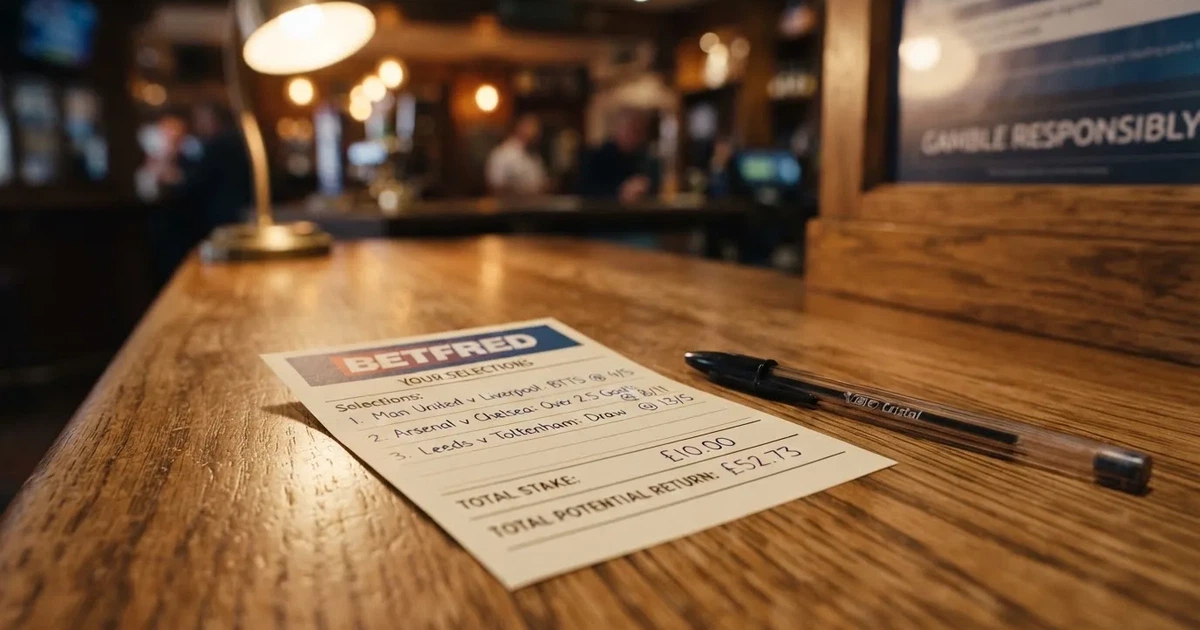
An accumulator links two or more selections into one bet. The price multiplies through every leg, so a £10 stake at four combined odds of around 6.00 returns roughly £600 if all four win and returns nothing if any one of them loses. That shape — one stake, multiplied price, all-or-nothing settlement — is the reason accumulators exist and the reason most of them lose. Every UK-licensed bookmaker offers them. Few of them tell a punter what the multiplication really means once the bookmaker’s margin is taken back out, which is what this page sets out to do.
The bookmaker’s margin is the portion of every pound wagered that the operator retains, regardless of the outcome. It sits inside every individual price and compounds through the accumulator because the prices multiply rather than add. A four-fold acca whose legs each carry a 5% margin has, before any leg is even chosen, an embedded margin well into double digits. Knowing that shape is the difference between treating the bet as a long shot at a long price and treating it as a long shot at a long price with the bookmaker already paid. That is the page’s centre of gravity, and it is where the cost angle does its work.
How an accumulator bet actually works
An accumulator — acca, parlay, multi, combo bet — is a single wager that joins two or more selections. The stake is placed once, and every leg must win for the bet to pay out. A losing leg voids the whole thing; a tied leg (a push, where the result lands exactly on the line and the stake is returned) is removed and the price is recalculated across what remains.

Decimal odds suit accumulators because they multiply cleanly. A treble at illustrative odds of 7.50 returns £75 for a £10 stake. The same three prices expressed fractionally — 1/2, evens and 6/4 — produce exactly the same return. Most UK bookmakers let a punter toggle between fractional and decimal on the bet slip; the price is the same either way.
The mechanics have a few wrinkles worth knowing before staking real money. A leg that is settled as a non-runner is treated like a push in most houses and is removed from the price rather than voiding the whole acca. A leg that is part of an each-way accumulator runs as two parallel accumulators — one on the win part and one on the place part — so the stake doubles and the place terms follow the operator’s place fraction for that race. An accumulator can also be settled early under a bookmaker’s cash-out offer, which pays a fraction of what the bet would pay if it ran to the end; the cash-out price is the bookmaker’s own quote at that moment and is typically lower than the fair value of the remaining legs.
Three things follow from the structure. First, the payout odds on an accumulator are the product of the odds of each leg, so adding a fourth selection of decimal odds 2.00 multiplies the existing combined price by two. Second, the variance of an accumulator grows fast with the number of legs: four legs at 50% implied probability each carry a combined probability of about 6%, not the 50% a casual reader might assume. Third, the bookmaker’s margin is in every leg and compounds through the multiplication, which is why the headline price on a long acca is rarely as generous as it looks.
The acca family: doubles, trebles, and full-cover bets
A double links two selections. A treble links three. An accumulator links four or more, although most UK bookmakers will happily take a two-leg bet and call it an acca on the bet slip. The names matter less than the structure: any bet whose price is the product of its legs is, mechanically, an accumulator.

A fuller set of bets sits beside the straight accumulator and is worth knowing, because some bookmakers — and most acca insurance offers — treat them differently. These are full-cover bets, where the stake is spread across every combination of the named selections in twos and threes (and fours, and so on). A Trixie covers three selections in four bets — three doubles and a treble. A Yankee covers four selections in eleven bets. A Lucky 15 covers four selections in fifteen bets and adds four singles. A Canadian, also called a Super Yankee, covers five selections in twenty-six bets. A Heinz covers six selections in fifty-seven bets. A Super Heinz covers seven selections in one hundred and twenty bets. A Goliath covers eight selections in two hundred and forty-seven bets.
The stake on a full-cover bet is the unit stake multiplied by the number of bets. A £2 Trixie costs £8 in total. A £2 Lucky 15 costs £30. A £2 Goliath costs £494. The headline price on the bet slip is the price of the largest combination inside it — usually the accumulator across all selections — but the bet wins something on smaller combinations too, which is why a Lucky 15 returns a small amount even when only two of the four selections win. Full-cover bets are not better value than straight accumulators in any mathematical sense; they are a different shape of variance, paying smaller amounts more often.
Payouts, prices, and the math behind the bet slip
Three worked examples carry the math without burying it.
A £10 accumulator at decimal prices of 1.50, 2.00 and 2.50 — the prices research uses as an illustration, not a quoted market — has a combined price of 7.50. A winning bet returns £75, which includes £65 of profit and the original stake.
A £2 each-way Lucky 15 on four selections at combined odds of around 18.00 for the four-fold acca costs £30 in win stakes and £30 in place stakes, £60 in total. A win on all four pays the four-fold accumulator on both parts. A place on all four — every runner placed but no winner to the front — pays the four-fold acca at the operator’s place fraction on the place part and the four-fold acca in full on the win part, because the win part still loses. The exact place fraction depends on the type of race and the number of runners; the house rules carry it.
A £2 Super Heinz on seven selections — one hundred and twenty bets in total — costs £240 and pays on every combination from two legs up. The largest combination is the seven-fold accumulator; the smallest paying combination is a double on any two of the seven. A Super Heinz is closer to a lottery than a betting position; the structure is what the punter pays for, not the expected return.
The arithmetic behind every one of these is the same: stake multiplied by the combined decimal odds of the winning combination gives the return. The punter who knows that does not need a calculator. The punter who does not is the punter the marketing is written for.
The bookmaker’s margin and how it shows up in acca odds
The margin represents the percentage of each pound staked that the bookmaker retains across a market in the long run. A market whose true probabilities sum to 100% has no margin. Conversely, a market whose bookmaker prices imply probabilities summing to 105% carries a 5% margin. The extra 5% is the bookmaker’s cut, taken before a single punter places a bet.
On a single match-result market — home, draw, away — most UK bookmakers price at margins between 4% and 8% on the major football leagues. On a tight three-way market the margin compounds with the number of outcomes: a 5% margin on a coin-flip-style market is closer to the floor than the ceiling. On an accumulator, the prices of the legs multiply and so do their margins. Four legs at 5% each carry an embedded margin closer to 19% than to 20%, but the precise figure depends on whether the margins in the four markets are independent of the outcomes, which they usually are not. The point is plain: an accumulator’s headline price carries a margin larger than any single leg, often several times larger.
The practical effect is that an accumulator punter pays for the multiplied price and is paid back, on average, less than a comparable set of singles would pay. A punter who backs four singles of decimal odds 2.00 each at a £10 stake risks £40 and returns £80 on four winning singles; the equivalent four-fold acca at the same prices carries a combined price of 16.00 and risks £10, returning £160 on a four-fold win — but the four-fold acca pays nothing if any one of the four loses, while the four singles return £80 on three wins and a loss. The acca is not “free” extra price. It is a different shape of variance for a higher headline payout, and the bookmaker’s margin in the price is higher on the acca than on the singles.
That is the page’s point about cost. The bookmaker’s marketing tends to lead with the headline payout, the long-shot appeal of a small stake returning a large sum. The arithmetic leads with the margin. The reader who knows both decides with eyes open.
Safer gambling tools and what a GB licence actually gives
Every brand on this page holds a Gambling Commission remote licence for Great Britain, the test of which is the Commission’s public register. A licence means the operator is bound by the Gambling Act 2005, the Licence Conditions and Codes of Practice (LCCP), and the Remote Technical Standards (RTS). It also means the operator is part of GAMSTOP, the national multi-operator self-exclusion scheme, and offers the safer-gambling tools the rules require.
The headline protections to know. Minimum age is 18, and identity, address and date of birth are verified before a customer can deposit or place a bet, including with a free bet or a bonus, since 7 May 2019. Credit cards are banned for gambling in Great Britain since 14 April 2020, including credit-card-funded payments through an e-wallet. Debit cards and bank-based payments are not covered by that ban. A financial vulnerability check applies once a customer’s deposits minus withdrawals exceed £150 in a rolling 30 days; the check is a public-record check, not an income check and not a credit reference check. Operators must offer a gross deposit limit; the first changes have applied since 31 October 2025, a second phase was postponed to 30 September 2026, and whether that second phase is live is not established. No state-set ceiling exists on stakes, deposits, or losses; limits are the customer’s choice.
Bonuses carry a wagering cap of 10x since 19 January 2026, so a £10 bonus needs no more than £100 of qualifying bets. Mixed-product promotions — an offer that requires gambling on two or more product types, such as betting on football to unlock free spins — are banned. The 10x cap does not necessarily apply to free bets with no wagering condition, and any cap on the money value of a bonus is not established.
Help is available through GamCare and its National Gambling Helpline, through GambleAware, through NHS gambling clinics and through Gamblers Anonymous. Self-exclusion runs through GAMSTOP for online operators, with periods of six months, one year, five years, or five years with auto-renewal; after the minimum period the exclusion stays in place for a further seven years unless the customer asks GAMSTOP to remove it. A punter who needs to take a break from a single bookmaker can also use that operator’s own product-level exclusion, which sits beside the GAMSTOP scheme.
Two caveats frame the whole frame. First, a GB licence is not a regulator of personal outcomes — no licence stops a losing streak or refunds a staked bet that lost fairly. Second, the protections above are the protections of a GB-licensed operator; an offshore brand offers none of them. A punter who bets with an unlicensed site loses the GAMSTOP coverage, the Commission’s complaints route, the approved dispute-resolution body, the British consumer redress if funds are withheld, the 10x bonus cap and the £150 vulnerability check. Honest framing, then: licensed means checks, limits, GAMSTOP and the bonus cap, but also verification before the first bet; unlicensed means none of those. Neither is “the safe choice” by default.
Bonuses and free bets on accumulators
A free bet is a token the bookmaker credits to a customer’s account, usable as stake but — in most houses — not paid back with the win. A £10 free bet at decimal odds of 5.00 that wins returns £40 of winnings, not £50, because the £10 stake is forfeit. That shape is the centre of the cost: a free bet is worth its face value multiplied by the marginal value of the price at which it is used, less the margin of the market it is used in. On a market with a 5% margin, a £10 free bet is worth roughly £8.50 if used at decimal odds of 5.00 and a little less if used at longer prices.
Several free-bet structures recur. A matched free bet credits the stake of a qualifying bet as a free bet once the qualifying bet settles; the qualifying bet is paid in cash and the free bet follows. An acca free bet is a free bet usable only on accumulators, often at a minimum number of legs (three or four) and a minimum price per leg (1/2, evens, or 3/1 depending on the offer). A bet-and-get offer credits a free bet once a qualifying bet of a stated size has settled; the size of the free bet is set against the size of the qualifying bet. An acca insurance offer refunds a stake — usually as a free bet, not cash — if one leg of a named accumulator lets the bet down. Enhanced odds and price boosts raise the price of a named selection for new or existing customers, with stake limits and eligibility windows attached.
The Marketing of every one of these tends to lead with the headline. The arithmetic follows with the qualifier. A £60 free bet for a £10 qualifying bet sounds generous until the £10 is staked at minimum odds that push the qualifying bet toward a long-shot outcome the punter would not otherwise have taken. An acca insurance offer that refunds in free bets rather than cash is not the same as a refund in cash; the refund has its own wagering requirement, its own minimum price and its own expiry. A price boost on a named selection usually caps the stake that counts toward the boosted price, so a £100 stake at boosted odds returns the boosted payout on the first £10 or £20 and the un-boosted price on the remainder. The reader who reads the headline is not the reader who reads the terms. This page reads the terms.
The 10x wagering cap, in force since 19 January 2026, is the most important rule change to land on the bonus side of the market in years. Before the cap, large wagering requirements made modest bonuses effectively uncashable; after the cap, a £10 bonus needs at most £100 of qualifying bets, and a £100 bonus at most £1,000. The cap does not ban bonuses. It bans the worst of them.
Mobile and apps for accumulator builders
A modern UK bookmaker’s app is where most accumulator bets are built. The bet slip carries the selections, the combined price is calculated live, and the cash-out button sits beside the open position. Bet builders — same-game multis, where the customer combines several markets from one match into a single price — have moved from a niche feature to a default. Most apps let the punter switch the bet slip between fractional and decimal odds, save a selection as a favourite, request a price on a market the app does not list, and watch live odds move on selections already on the slip.
The quality of the app is judged on three things. First, how quickly the bet slip accepts selections and recalculates the combined price when a leg is added or removed — anything past a beat of latency is too slow. Second, how cleanly the cash-out button works on a partial position, both in singles and in accumulators, and whether the partial-cash-out function is offered. Third, whether the live odds on the in-play tabs update fast enough to be tradable, which is a matter of milliseconds per refresh on the major football and tennis markets.
Several apps in this comparison carry a fully built acca tab — a feed of pre-built accumulators on the day’s matches, with the combined price and the leg-by-leg breakdown visible before the bet is placed. The pre-built acca is not a tip — it is a structure the bookmaker has put in front of the customer, with the bookmaker’s margin embedded in every leg. Treating it as a starting point for editing is a reasonable use; treating it as a recommendation is not.
Apps also carry their own native deposit and withdrawal flows, and the deposit limit the LCCP requires is set inside the app rather than on a separate page. A punter who wants a weekly deposit cap sets it once and the cap applies across the app and the desktop site. The safer-gambling tab sits beside the deposit tab; both are reachable in two taps from the account screen on every app reviewed here.
Predictions, tipsters, and the betting-tips market
The accumulator tips market is a market of its own, with paid tipsters, free tipsters, social-media tipsters and bookmaker-built accas. The mechanics of a tipping service are simple: the tipster sells selections, the punter backs them, the tipster keeps the subscription whether the bets win or lose. The track record, where it is published, is often unaudited and rarely long enough to be statistically meaningful. A tipster with a 12% return on staking over six months and a sample of 200 bets is, statistically, somewhere between promising and indistinguishable from noise.
The honest framing of tipping is this. No tipster can know the outcome of a football match. The bookmaker’s margin sits inside every price the tipster backs, and a tipster who beats the margin in the long run is beating the bookmaker’s pricing model with information the bookmaker does not have, which is the same condition under which a bookmaker bans a winning customer. The same applies to accumulators: a tipster who picks winners at a rate that beats the margin across four legs of an acca, over a sample large enough to be meaningful, is doing something the bookmaker’s models have missed. It happens. It does not happen often.
What a tipping service is for, if it is for anything, is structure. A punter who backs a tipster’s acca is not outsourcing the prediction; the punter is outsourcing the work of building the slip. Whether that is worth the subscription depends on the punter’s time and the tipster’s price. It is not a way to beat the margin.
The bookmaker-built acca — the pre-built accumulator on the app’s home tab — is a different proposition. The bookmaker has an interest in the bet winning, because winning customers come back; the bookmaker also has an interest in the bet being priced with the margin in it, which is the same interest as on every other market. Treat the book-built acca as a starting point for editing, not as a tip. Treat the tipster-built acca the same way.
Reading the comparison: what each operator does with accumulators
Ten bookmakers hold a Gambling Commission remote licence for Great Britain and offer accumulator betting under that licence. The table that follows sits beside this section. The licence numbers are quoted from the Commission’s public register and the operator’s own published terms; the URL fields are for the reader’s own check and are not printed on this page.
A short note on coverage. Several UK-licensed brands run accumulator features that are not detailed in this comparison because their licences, products or trading positions place them outside the ten reviewed here. A reader who sees a brand named in the wider market and not on this page should check the Commission’s public register against the brand’s domain and trading name; the register is the test of a GB licence, not a place in a comparison.
A second note on offer shape. Welcome offers and free-bet structures change frequently. The figures in the operator cards below are the figures published in each operator’s own terms at the snapshot date this page carries; a reader who has the page open six months later is reading figures that may have moved. The mechanics of an offer — minimum odds on the qualifying bet, expiry of the free bet, whether the free bet stake is returned with the win, whether acca insurance refunds in cash or free bet — change less often than the headline numbers, and the mechanics are the durable part of the read.
A third note on the licence structure. Several UK brands share a licensee: Paddy Power and Betfair, for example, run under one group; Ladbrokes and Coral run under another. The licence number on the register is the licence number of the group, not the licence number of the individual brand. A punter who sees a licence number quoted for one brand and the same number quoted for another is looking at the same licence.
The ten reviewed bookmakers
1. BetUK — LeoVegas Gaming PLC’s everyday acca book
BetUK runs on a Gambling Commission remote licence held by LeoVegas Gaming PLC, the same group that publishes BetMGM UK. The licence covers remote general betting standard for real events. BetUK’s free-bet structure, as published in its own terms, excludes virtual sports, esports and non-UK or non-Irish horse racing, with minimum odds attached. For accumulator punters the relevant exclusion is the esports line; an acca punter who slips a CS2 or League of Legends leg into a BetUK free-bet wager will not have that leg qualify, and the bet will be settled as if the leg were not there. The rest of the standard exclusions — virtual sports, racing outside the UK and Ireland — are not the everyday case for a football-led accumulator.
The product itself sits inside the LeoVegas stack: a clean bet slip, a working bet builder, an acca feed on the home tab and a cash-out button on most pre-match and in-play positions. The LeoVegas stack has a reputation for a tidier app than the average legacy book, and BetUK is on the cleaner end of the comparison. The deposit-and-withdrawal flow is on the simpler side of the market, with debit cards and the standard e-wallets, and the safer-gambling tab is two taps from the account screen.
For accumulator punters, BetUK suits the everyday case: football, a few legs, a working cash-out, a clean app and a free-bet structure that does not surprise when it settles. It does not suit the punter who wants the deepest market selection in the comparison — BetUK’s market coverage is mainstream rather than exhaustive — and it does not suit the punter whose free-bet wagering leans on esports or virtual sports.
The verdict: a solid mainstream choice for someone building accumulators from Premier League, Championship, and Champions League fixtures who prioritises app usability. The free-bet exclusions on esports and non-UK/IE racing are the primary rules to check first; once within those parameters, the experience is straightforward.
2. Midnite — modern app, acca builder, price boosts with caps
Midnite runs on Gambling Commission account 101839, with Midnite Limited as the licence holder. The product shows pre-match and in-play events, a built-in acca builder, a popular accas feed and a price-boost tab. The price boosts carry maximum-stake limits, and the cap is the durable part of the boost — the boosted odds apply on the first £10 or £20, with the un-boosted price on the remainder.
The welcome offer is a worked example of how the modern UK welcome offer is built: a £5 qualifying bet on pre-match odds of evens (2.0) or greater, placed within 14 days of sign-up, returns £25 in free bets plus 50 free spins, with the free bets valid for 7 days. The free-bet structure is acca-friendly in the sense that the qualifying bet can be an acca; the minimum odds apply per leg, so a four-fold acca at per-leg decimal odds of 1.50 does not qualify, even though the combined odds are above evens. The qualifying bet has to clear the minimum odds on every leg, which is the rule most acca punters miss.
Midnite’s acca builder — the same-game multi — sits inside the match tab, and the legs pull from the standard markets (result, both teams to score, over/under, corners, cards, player shots). The legs are combinable into a single price, and the price updates live as each leg is added. Cash-out is offered on most positions, with partial cash-out available on a subset.
The verdict: a credible everyday book for the punter whose accumulator is built in the app and whose welcome offer is taken on its own terms. The price-boost caps are the durable rule to read; the free-bet expiry is the other one. Midnite is less attractive for a punter seeking deep racing coverage, or one who prefers a free-bet structure without minimum-odds restrictions per leg.
3. Bet Ahoy — straightforward welcome, acca leg built in
Bet Ahoy runs on Gambling Commission account 100094, with Bet Ahoy Ltd as the licence holder. The welcome offer is a £10 qualifying bet returning £10 in free bets, split into a £5 sports free bet and a £5 acca free bet. The acca-specific free bet is the interesting half: the bookmaker has carved out a free bet that can only be used on an accumulator, with a stated minimum number of legs and a minimum price per leg. A punter who takes the welcome offer is committed to building an acca with the £5 acca free bet, which is the cleanest acca nudge in the comparison.
Bet Ahoy’s product sits inside the standard UK bookmaker stack: pre-match, in-play, bet builder, cash-out, an acca feed on the home tab. The depth is mainstream rather than exhaustive. The app is on the simpler side of the market, which suits a punter who wants the bet slip to behave like a bet slip.
For accumulator punters, Bet Ahoy’s offer has the right shape: a dedicated acca free bet as half the welcome, with the £5 sports free bet available for singles and doubles. The downside is the same as on every smaller UK bookmaker — the depth of the market catalogue is narrower than the bigger books, and the live-streaming catalogue is thinner.
The verdict: a good fit for the punter whose welcome offer is the deciding factor and whose accumulator is built from a short list of mainstream markets. The acca-specific free bet is the feature to use; the rest of the product is the standard stack. Does not suit the punter who wants a deep racing product, a deep esports product or a price-boost catalogue with the breadth of the bigger books.
4. Smarkets — exchange pricing, low commission, thin acca product
Smarkets runs on Gambling Commission account 39173, with Smarkets (Malta) Limited as the licence holder. The licence category is remote betting intermediary — the licence for a betting exchange, not for a traditional bookmaker. The welcome offer, as published at the snapshot date, is 0% commission for 60 days with a minimum first deposit of £10, against a standard commission rate of 2% on eligible exchange bets.
The exchange shape changes what an accumulator means. On a traditional bookmaker, an accumulator is a single bet priced by the bookmaker. On an exchange, an accumulator has to be built as a sequence of back bets on individual selections, with the punter taking the price the exchange is offering at each step. The exchange’s acca product, where one is offered at all, is a separate construction rather than a single bet slip. For a punter who wants a four-fold acca on Smarkets, the practical shape is four back bets at the exchange’s prices, settled in sequence, with the returns of each leg rolling into the stake of the next.
The commission rule applies to the net profit on each winning market. The 0%-for-60-days offer is the most generous commission structure in the comparison and is the single feature that distinguishes Smarkets for a punter whose primary metric is the long-run cost of betting. The exchange’s market depth on Premier League football is competitive; the depth on smaller leagues and on racing outside the UK and Ireland is thinner.
The verdict: a different shape of bookmaker, with the lowest commission in the comparison and the thinnest acca product. Suits a punter who is happy to build the acca as four separate back bets and whose main interest is the long-run cost of betting. This platform is not ideal for anyone prioritising a single-bet-slip accumulator with standard bookmaker acca-feeds and promos.
5. BetGoodwin — racing-shaped book with a £5 acca free bet
BetGoodwin runs on Gambling Commission account 2927, with Goodwin Racing Limited as the licence holder. The welcome offer is a £10 qualifying bet returning £15 in free bets, split into a £5 sports free bet, a £5 acca free bet and a £5 Sub-Cover free bet. The Sub-Cover free bet is the unusual one — a free bet usable on a named racing-market structure that sits between a single and a full-cover bet.
The racing tilt is the durable feature. BetGoodwin’s racing product sits ahead of its football product in market depth and in streaming coverage, and the price-boost catalogue leans on the racing side of the book. The acca product is mainstream rather than specialist; the £5 acca free bet is the headline acca feature in the welcome offer, and the standard acca-feed and bet-builder sit inside the app.
For accumulator punters, the £5 acca free bet is the spec to read: minimum number of legs, minimum price per leg, expiry of the free bet, whether the stake is returned with the win. The Sub-Cover free bet is an extra, suited to a punter who bets racing more than football. The football acca product is on the cleaner side of the comparison.
The verdict: a good fit for a punter whose accumulator is built from racing more than football, who wants a £5 acca free bet as part of the welcome, and who is comfortable with a smaller bookmaker’s market catalogue. It may be less suitable for those targeting the absolute deepest football acca selection or a football-centric price-boost catalogue.
6. Kalooki Sportsbook — small book, GAMSTOP-covered, basic acca stack
Kalooki Sportsbook runs on Gambling Commission account 57730, with Kalooki Sportsbook Limited as the licence holder. The company is operated by Kalooki Sports Book Ltd under company number 12938274, and the operator is a GAMSTOP member, which is the standard licence condition rather than a distinguishing feature. The acca product sits inside the standard UK bookmaker stack — pre-match, in-play, bet builder, cash-out, acca feed — at the mainstream depth.
The smaller licence holders in the UK market carry a thinner market catalogue than the bigger books, and Kalooki is on the thinner side. The welcome offer, where one is published, is on the modest side of the comparison. The acca product is competent rather than specialist.
The verdict: a competent mainstream platform for a punter whose accumulator is built from a select list of common markets and who prefers a simplified interface. The more limited market catalogue is the main trade-off, but the essential features remain functional.
7. 888sport — established brand, full-feature acca product
888sport runs on Gambling Commission account 39028, with 888 UK Limited as the licence holder. The product carries pre-match and in-play betting, Cash Out, Bet Builder, racing streams, BetFinder form tools, a live bet feed and daily boosted odds. The catalogue of acca-friendly features is the broadest in the comparison: an acca feed on the home tab, a bet builder for same-game multis, a cash-out button on most positions, partial cash-out on a subset, and a price-boost tab that runs daily.
The BetFinder form tool is the under-appreciated feature: a form database built into the app, with head-to-head records, recent results and form lines for the major leagues. For accumulator punters who build their own slips rather than backing the book-built acca feed, the form data is a faster way to filter the day’s fixtures than opening a separate statistics site.
The welcome offer, as published at the snapshot date, is the standard welcome shape rather than an acca-specific free bet. The daily boosted odds are the durable acca feature: a price boost on a named selection each day, with a stake cap that the punter reads before staking.
The verdict: a broad-featured book for the punter who wants the standard stack at full depth — bet builder, cash-out, form tools, racing streams, daily boosts — and who is happy with a mainstream welcome offer rather than an acca-specific free bet. The BetFinder form tools are the under-used spec. This brand is less competitive for those seeking the lowest exchange-style commissions or the niche depth of specialist racing-only books.
8. Swifty Sports — best odds guaranteed, cash-out, bet builder coming
Swifty Sports runs on Gambling Commission account 58957, with Swifty Global (UK) Ltd as the licence holder. The published product list includes Best Odds Guaranteed, Cash Out on markets including horse racing and football, daily price boosts, live streaming and in-play betting; Bet Builder is listed as coming soon at the snapshot date.
Best Odds Guaranteed — BOG — is the headline racing feature. On UK and Irish horse racing, the bookmaker pays the starting price (SP) if the SP is higher than the price the punter took when placing the bet. BOG is a standard feature on the bigger UK books and is the durable rule that distinguishes a racing-friendly bookmaker from a racing-only bookmaker. For accumulator punters whose slips include racing legs, BOG applies leg by leg; the accumulator’s combined price is recalculated at settlement using the higher of the taken price and the SP for each racing leg.
The cash-out function is offered on markets including horse racing and football; the cash-out availability across other sports is on the mainstream side of the market. The bet builder being listed as coming soon is the spec to check before staking: a punt stake on a same-game multi at a book without a working bet builder is a punt at the bookmaker’s discretion rather than at the punter’s.
The verdict: a racing-friendly book for the punter whose accumulator is built from racing and football, with BOG and Cash Out as the headline features. The bet-builder status is the spec to read on the day; the rest of the stack is the standard mainstream depth. It is less suitable for a punter prioritising deep football-specific accumulator markets or those specifically seeking an acca-specific welcome bonus.
9. Spreadex — fixed odds and spread betting under one roof
Spreadex runs on Gambling Commission account 8835, with Spreadex Limited as the licence holder. Spreadex is dual-regulated: by the Gambling Commission for fixed-odds betting and by the Financial Conduct Authority for spread betting on financial markets. The split matters for an accumulator punter, since fixed-odds accumulators live on the gambling side of the licence and spread bets live on the financial side; the two are not combinable in a single bet slip.
The fixed-odds welcome offer, as published at the snapshot date, is £60 in free bets for a £10 fixed-odds qualifying bet, with the free bets usable across fixed-odds and spread betting, and the qualifying bet to be placed within 28 days of opening the account. The 28-day qualifying window is the longest in the comparison; the £60 free-bet return is the largest. The split usability of the free bet — fixed odds and spread betting — is the unusual feature.
The spread betting product carries its own risk profile. Spread betting losses can exceed the deposit, which is the FCA-regulated risk disclosure rather than a marketing line; the punter who reads the disclosure is the punter who understands that spread betting is leveraged and that the upside and the downside are not symmetrical. For an accumulator punter whose interest is fixed-odds betting, the spread-betting side of Spreadex is adjacent rather than central.
The verdict: a strong fixed-odds book for the punter whose accumulator is built from mainstream football and racing markets and whose welcome offer rewards a longer qualifying window with a larger free-bet return. The split usability of the free bet — across fixed odds and spread betting — is a feature for a punter who wants both, but may be less relevant if only fixed-odds betting is sought. It is less ideal for a punter seeking short-term qualifying windows or someone comparing margins exclusively on major football leagues.
10. Betfair — exchange and sportsbook under one licence
Betfair runs on Gambling Commission account 39439, with PPB Counterparty Services Limited as the licence holder. The Betfair Sportsbook offers in-play betting, Bet Builder, free live streaming of events such as UK and Irish horse racing and football within the app, and a 90 Minute Payout market that pays out on the full-time result for goals scored before the 90th minute. The 90 Minute Payout market is the distinctive sportsbook feature and is built for the accumulator punter whose slips include goalscorer markets and team-result markets.
Betfair’s dual structure — the exchange and the sportsbook — sits under the same licence group, with the exchange on the betting intermediary licence category and the sportsbook on the remote general betting standard category. The acca product on the sportsbook is the standard stack: bet builder, cash-out, partial cash-out, acca feed. The exchange’s acca product is the same as Smarkets — a sequence of back bets rather than a single bet slip — but with a different commission structure.
The welcome offer on the sportsbook, as published at the snapshot date, is the standard welcome structure rather than an acca-specific free bet. The exchange’s commission structure is the durable feature for the punter whose interest is the long-run cost of betting.
The verdict: a broad book for the punter who wants the sportsbook’s standard stack and the exchange’s commission structure under one group, with the 90 Minute Payout market as the distinctive sportsbook feature for accumulator punters. Suits a punter whose slips include goalscorer markets and who wants the cash-out function on most positions. Does not suit a punter who wants the lowest commission in the comparison (Smarkets is that book) or a smaller bookmaker’s tighter acca-specific welcome offer.
What the comparison shows
Three patterns run through the ten cards above. First, every operator on the list holds a Gambling Commission remote licence for Great Britain and is part of GAMSTOP, which is the test of a UK-licensed bookmaker rather than the test of a good one. Second, the welcome offers are the standard welcome shapes: matched free bets, bet-and-get structures, acca-specific free bets and commission-free periods — with the differences in size, qualifying-bet minimum and free-bet usability, not in kind. Third, the acca-specific features cluster on three points: an acca feed on the home tab, a working bet builder and a cash-out button that handles partial positions cleanly. The rest of the comparison is depth: market catalogue, price-boost catalogue, live-streaming catalogue and form data.
For a punter whose accumulator is built from Premier League football with an occasional racing leg, BetUK, Midnite, 888sport and Betfair are the mainstream fit. For a punter whose accumulator leans on racing, BetGoodwin and Swifty Sports are the racing-friendly fit, with 888sport and Betfair carrying racing depth alongside the football product. For a punter whose main metric is the long-run cost of betting, Smarkets and Betfair’s exchange are the cost-friendly fit, with the trade-off of a thinner acca product. For a punter whose welcome offer is the deciding factor, Bet Ahoy and BetGoodwin carry acca-specific free bets as half the welcome; Midnite, BetUK and Spreadex carry larger headline returns on standard shapes; Smarkets carries the commission-free period.
The reading is not that one bookmaker beats the others. It is that ten licensed bookmakers carry different combinations of the same building blocks, and the punter who picks the right one has read the comparison rather than the headline.
Landscape of UK-licensed accumulator bookmakers
The table below sets out the licence register data and the operator’s own published terms on accumulators for the ten brands reviewed. The licence numbers are the Gambling Commission’s remote licence numbers as published on the public register; the URL fields are for the reader’s own check.
| Brand | Licence number and holder | Terms on accumulators |
|---|---|---|
| BetUK | Remote licence 039198-R-319450-029 (Commission account 39198), held by LeoVegas Gaming PLC | Free bets exclude virtual sports, esports and non-UK/IE horse racing; minimum odds apply |
| Midnite | Remote licence 101839-R-342850-001 (Commission account 101839), held by Midnite Limited | Welcome offer credits £25 in free bets plus 50 free spins after a £5+ qualifying bet at evens or greater within 14 days; free bets valid 7 days; price boosts carry stake caps |
| Bet Ahoy | Remote licence 100094-R-341742-003 (Commission account 100094), held by Bet Ahoy Ltd | Welcome offer is £10 in free bets after a £10 qualifying bet, split £5 sports and £5 acca; acca free bet carries minimum legs and minimum price per leg |
| Smarkets | Remote licence 039173-R-319366-011 (Commission account 39173), held by Smarkets (Malta) Limited | Standard commission 2% on eligible exchange bets; 0% commission for 60 days with a £10 minimum first deposit at the snapshot date |
| BetGoodwin | Remote licence 002927-R-327985-008 (Commission account 2927), held by Goodwin Racing Limited | Welcome offer is £15 in free bets after a £10 qualifying bet, split £5 sports, £5 acca and £5 Sub-Cover; acca free bet and Sub-Cover free bet carry their own minimums |
| Kalooki Sportsbook | Remote licence 057730-R-333396-005 (Commission account 57730), held by Kalooki Sportsbook Limited | Standard UK bookmaker stack: pre-match, in-play, bet builder, cash-out, acca feed; GAMSTOP member |
| 888sport | Remote licence 039028-R-319297-014 (Commission account 39028), held by 888 UK Limited | Pre-match, in-play, Cash Out, Bet Builder, racing streams, BetFinder form tools, live bet feed, daily boosted odds |
| Swifty Sports | Remote licence 058957-R-334734-006 (Commission account 58957), held by Swifty Global (UK) Ltd | Best Odds Guaranteed, Cash Out on horse racing and football, daily price boosts, live streaming, in-play betting; Bet Builder listed as coming soon |
| Spreadex | Remote licence 008835-R-104580-022 (Commission account 8835), held by Spreadex Limited | Welcome offer is £60 in free bets for a £10 fixed-odds qualifying bet within 28 days; free bets usable across fixed odds and spread betting; FCA-regulated for financial spread betting |
| Betfair | Remote licence 039439-R-319330-013 (Commission account 39439), held by PPB Counterparty Services Limited | Sportsbook offers in-play, Bet Builder, free live streaming of UK/Irish horse racing and football in-app, 90 Minute Payout market; exchange commission structure runs alongside |
A note on the table’s limits. The licence numbers are quoted from the Commission’s public register at the snapshot date and should be re-checked by the reader against the register; the offer structures are quoted from each operator’s own published terms at the snapshot date and may have changed by the time the reader visits the operator. The table does not carry every line of every term — the minimum odds on a free bet, the expiry, the stake cap on a price boost, the eligibility for an acca insurance refund — because those lines run by the dozen in each operator’s terms and would not fit in a column. The card for each operator above carries the headline lines of the relevant terms; the reader who wants the full terms reads the operator’s own page before staking.
The cost of an accumulator, worked through
The worked math this page uses is the payout of an accumulator bet, the most basic quantity in the comparison. An illustrative £10 stake at combined decimal odds of 7.50 returns £75 on a winning treble, of which £65 is profit. An illustrative £10 stake at four combined odds of around 6.00 returns £60 on a winning four-fold, with £50 of profit. The full-cover shape — the Trixie, the Yankee, the Lucky 15, the Heinz, the Goliath — pays the same way, with the unit stake multiplied by the number of bets and the winning combination’s combined price returning the corresponding fraction of the full stake.
The arithmetic is a band rather than a point. A treble at the illustrative decimal odds of 7.50 returns £75 for a £10 stake, but the same treble at lower prices returns significantly less, and at higher prices returns more. The range is wide, and the headline price on a bet slip sits inside it. The punter who reads the bet slip’s combined price before confirming the stake has read the right number.
The hidden cost is the bookmaker’s margin. A four-fold acca at four prices each carrying a 5% margin has, before any leg is even chosen, an embedded margin closer to 19% than to 20%. This 19% is the share of every pound staked that the bookmaker keeps on the acca across many trials. A punter who backs the acca at £10 a time across 100 accas risks £1,000 and receives, on average, the equivalent of £810 back — with the rest kept by the bookmaker. The honest framing is that the punter pays for the multiplied price and is paid back, on average, less than the multiplied price implies. The dishonest framing is that the punter is “winning” the long-shot payout when most long shots lose.
The math, then, is plain: stake multiplied by the combined decimal odds returns the payout on a winning bet. The bookmaker’s margin in the price is the cost of every leg, compounded through the multiplication. The reader who knows both runs an accumulator with eyes open.
Choosing a bookmaker: the durable specs
Four specs decide the comparison. The first is the licence. A punter who bets on an unlicensed site loses the GAMSTOP coverage, the Commission’s complaints route, the approved dispute-resolution body, the British consumer redress if funds are withheld, the 10x bonus cap and the £150 vulnerability check. A punter who bets with a GB-licensed bookmaker has those. The Commission’s public register is the test, not a place in a comparison.
The second spec is the welcome offer. The 10x wagering cap, in force since 19 January 2026, is the rule that bounds the offer; the size, the qualifying-bet minimum and the free-bet usability set the rest. A punter who takes the welcome offer reads the small print — minimum odds on the qualifying bet, expiry of the free bet, whether the stake is returned with the win, whether acca insurance refunds in cash or free bet — and decides whether the offer is worth the qualifying bet.
The third spec is the acca product. The bet builder, the cash-out button, the partial cash-out, the acca feed on the home tab and the form data are the durable features. A bookmaker with a working bet builder and a clean cash-out button is a bookmaker the punter can build and manage an accumulator on; a bookmaker with neither is a bookmaker the punter places the bet on and hopes. The depth of the market catalogue is the second part of the spec.
The fourth spec is the cost. The bookmaker’s margin in the price, the commission on the exchange, the wagering requirement on the bonus and the stake cap on the price boost are the durable costs. A punter who knows the cost can decide whether the offer is worth taking; a punter who knows only the headline is taking the marketing’s word for it.
The choice between the ten bookmakers is a choice between combinations of these four specs. There is no single bookmaker that wins on every spec, and there is no spec on which a single bookmaker wins by so much that the rest do not matter. The punter who picks the right bookmaker has decided which spec matters most — the licence for safety, the welcome for value, the acca product for the everyday use, the cost for the long run — and chosen the bookmaker that wins on that spec without losing on the others.
Where to check the licence yourself
The Gambling Commission’s public register is at gamblingcommission.gov.uk and is searchable by business name, trading name, domain or account number. A punter who wants to check whether a bookmaker holds a GB licence types the bookmaker’s domain into the register’s search box and reads the result. The register lists the licence number, the licence holder (which may be a parent company rather than the trading brand), the licence categories and the licence status.
A punter who sees a brand on a comparison page and not on the register should treat the brand as unlicensed for the purposes of this page, regardless of what the brand’s own marketing says. A punter who sees a brand on the register and not on a comparison page should treat the brand as licensed and consider it for the punter’s own comparison rather than this one’s. The register is the test, not a place in a list.
A punter who sees a licence number quoted for one brand and the same number quoted for another is looking at the same licence, which is the case for brands that share a parent group. The licence is the licence of the group, not the licence of the individual brand.
Help, support, and the safer-gambling frame
Safer gambling is part of the licence, not an optional extra. Every GB-licensed bookmaker offers GAMSTOP for self-exclusion, a deposit limit the customer can set, time-out periods and product-level exclusion tools. A punter who wants to take a break from a single bookmaker uses that bookmaker’s product-level exclusion; a punter who wants to take a break from all GB-licensed online bookmakers uses GAMSTOP.
Help is available through GamCare and its National Gambling Helpline (0808 8020 133), through GambleAware, through NHS gambling clinics and through Gamblers Anonymous. A punter who feels the betting is getting away from them — chasing losses, staking more than planned, betting money needed for something else — should reach out before the next bet rather than after.
The Commission’s LCCP and RTS are the durable frame. A punter who bets with a GB-licensed bookmaker is betting inside that frame; a punter who bets with an unlicensed bookmaker is betting outside it. The frame does not stop a losing streak or refund a staked bet that lost fairly. It does set the safer-gambling tools, the bonus cap, the credit-card ban, the age verification, the GAMSTOP coverage and the complaints route.
A punter who reads this page and decides to pick none of the ten bookmakers has read the page correctly. A punter who reads the page and decides to pick one has also read it correctly. The choice is the punter’s; the comparison is the page’s.
The shape of an accumulator, summed up
An accumulator is a single bet that joins two or more selections. The price multiplies through every leg; the stake is placed once; every leg must win for the bet to pay out. A tied leg is removed and the price is recalculated across what remains; a losing leg voids the whole bet. Decimal odds suit the bet because they multiply cleanly, and most UK bookmakers let a punter toggle between decimal and fractional on the slip.
The full-cover family — Trixie, Yankee, Lucky 15, Canadian, Heinz, Super Heinz, Goliath — spreads the stake across every combination of the named selections in twos and threes and fours, with the unit stake multiplied by the number of bets. The headline price on the slip is the price of the largest combination inside it; the bet pays smaller amounts on smaller combinations.
The bookmaker’s margin sits inside every price and compounds through the multiplication. A four-fold acca at four prices each carrying a 5% margin has, before any leg is even chosen, an embedded margin well into double digits. The honest framing is that the punter pays for the multiplied price and is paid back, on average, less than the multiplied price implies. The dishonest framing is that the punter is “winning” the long-shot payout when most long shots lose.
A GB licence is the test of a UK-licensed bookmaker and the Commission’s public register is the test of a GB licence. A punter who bets with a GB-licensed bookmaker has the GAMSTOP coverage, the Commission’s complaints route, the approved dispute-resolution body, the British consumer redress if funds are withheld, the 10x bonus cap and the £150 vulnerability check. A punter who bets with an unlicensed bookmaker has none of those.
The welcome offer, the acca product and the cost are the three specs the punter reads to choose between the licensed bookmakers. The licence is the spec the punter reads to choose between licensed and unlicensed. Both choices are the punter’s. The comparison is the page’s.
Frequently asked questions
What is an accumulator bet?
An accumulator is a single bet that links two or more selections. The stake is placed once, the price multiplies through every leg, and the bet pays out only if every leg wins. A losing leg voids the whole bet; a tied leg is removed and the price is recalculated across what remains. Decimal odds suit accumulators because they multiply cleanly, and most UK bookmakers let the punter toggle between decimal and fractional on the slip.
How do football accumulator bets work?
A football accumulator joins two or more match-result or match-related selections — result, both teams to score, over/under, goalscorer, corners, cards and the rest — into a single bet. The stake is placed once, the price of each leg multiplies into a combined price, and the bet pays out only if every selection wins. A losing leg voids the whole bet; a tied leg is removed at settlement and the price is recalculated across the remaining selections.
How can it be checked that a bookmaker holds a Gambling Commission licence?
The Gambling Commission’s public register at gamblingcommission.gov.uk is searchable by business name, trading name, domain or account number. A punter who wants to check whether a bookmaker holds a GB licence types the bookmaker’s domain or trading name into the register’s search box and reads the result. The register lists the licence number, the licence holder, the licence categories and the licence status; it is the test of a GB licence, not a place in a comparison.
How is the return on a bet worked out from the stake and the odds?
The return on a winning bet is the stake multiplied by the combined decimal odds. A £10 stake at decimal odds of 2.00 returns £20, of which £10 is profit. A £10 stake at combined decimal odds of 7.50 across a three-leg accumulator returns £75, of which £65 is profit. Fractional odds convert to decimal by dividing the numerator by the denominator and adding one; 5/1 is 6.00 in decimal.
What is the bookmaker’s margin and how can it be seen in the odds?
The margin is the percentage of every pound staked that the bookmaker holds on a market across many trials. It manifests in the odds because bookmaker prices imply probabilities summing to more than 100%, with the excess being the operator’s fee. A market whose prices imply probabilities summing to 105% carries a 5% margin. On accumulators the margins in each leg multiply through the combined price, so a four-fold acca at four prices each carrying a 5% margin has an embedded margin well into double digits before any leg is even chosen.
Bet types & in-play – Bookies Trust
Content created by the «Bookies Trust» team
