
How darts betting odds really work for UK punters in 2026
 Available in US
Darts looks cheap to follow. The action moves in seconds, the scoreboard does the arithmetic, and a televised tournament runs through winter like clockwork. The price the bookmaker shows on each player looks small too: two opponents, two numbers, a near-even contest, a one-figure percent gap to the next player down the board. None of this survives a second look. The number in the box is built to keep the bookmaker whole regardless of who wins the leg, and the gap between the two sides is exactly what they are taking from every pound that crosses the counter. This page is about that gap — what it is, where it hides, and what it costs someone with a £20 wallet on a Tuesday evening Premier League night.
The currency stamp sits one line below this lead, by convention: current as of 27 October 2026, checked against the Gambling Commission’s public register of Great Britain licence holders.
How a bookmaker prices a dart
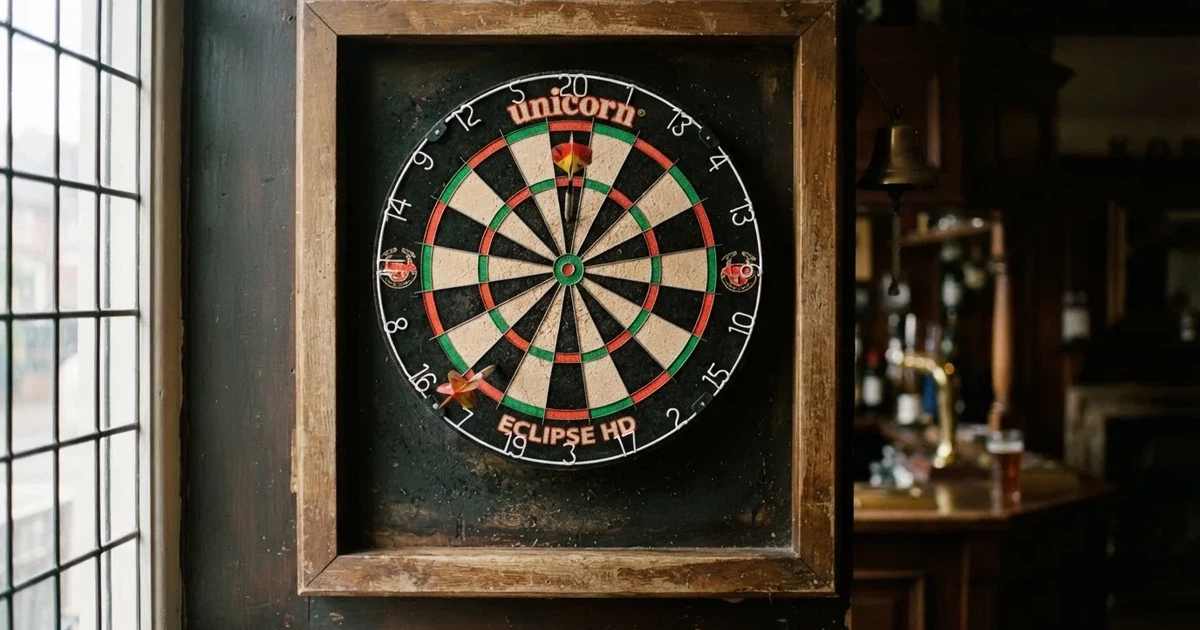
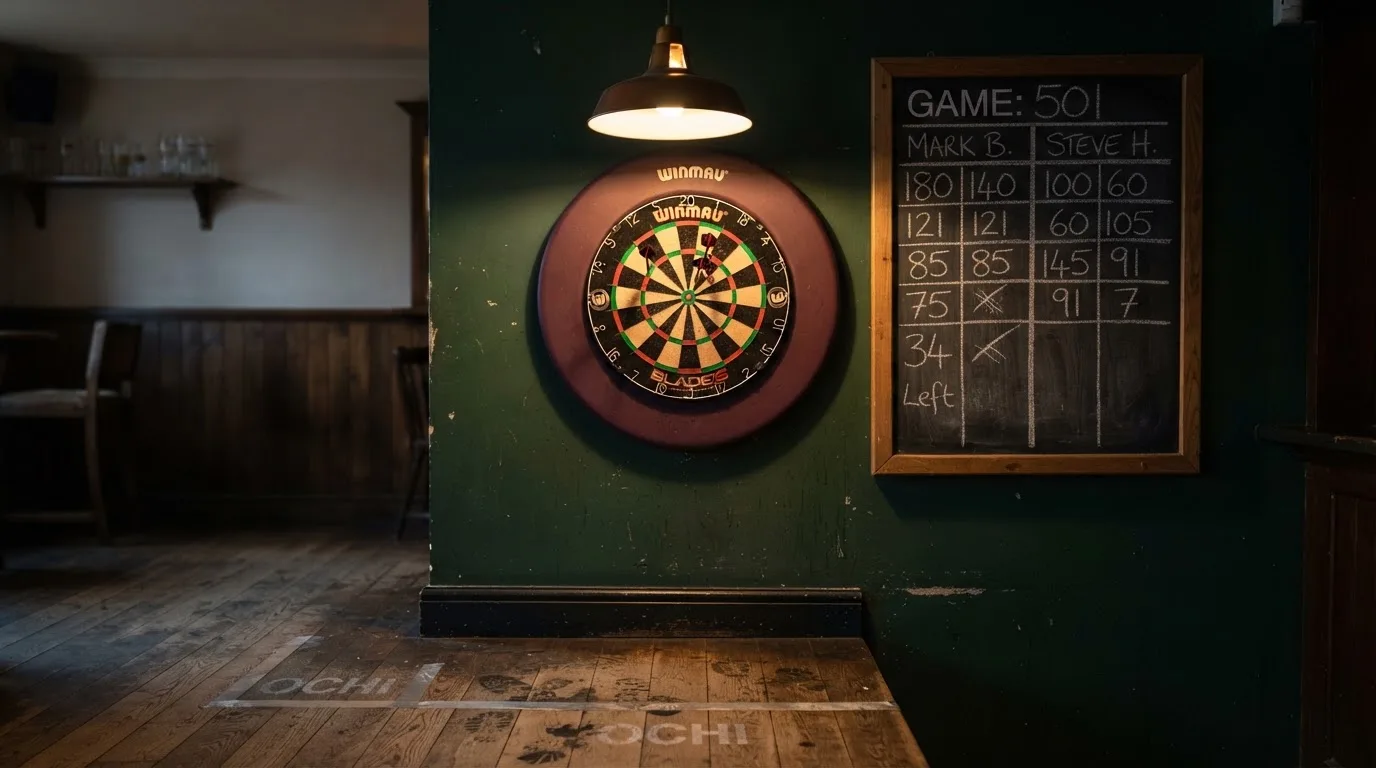
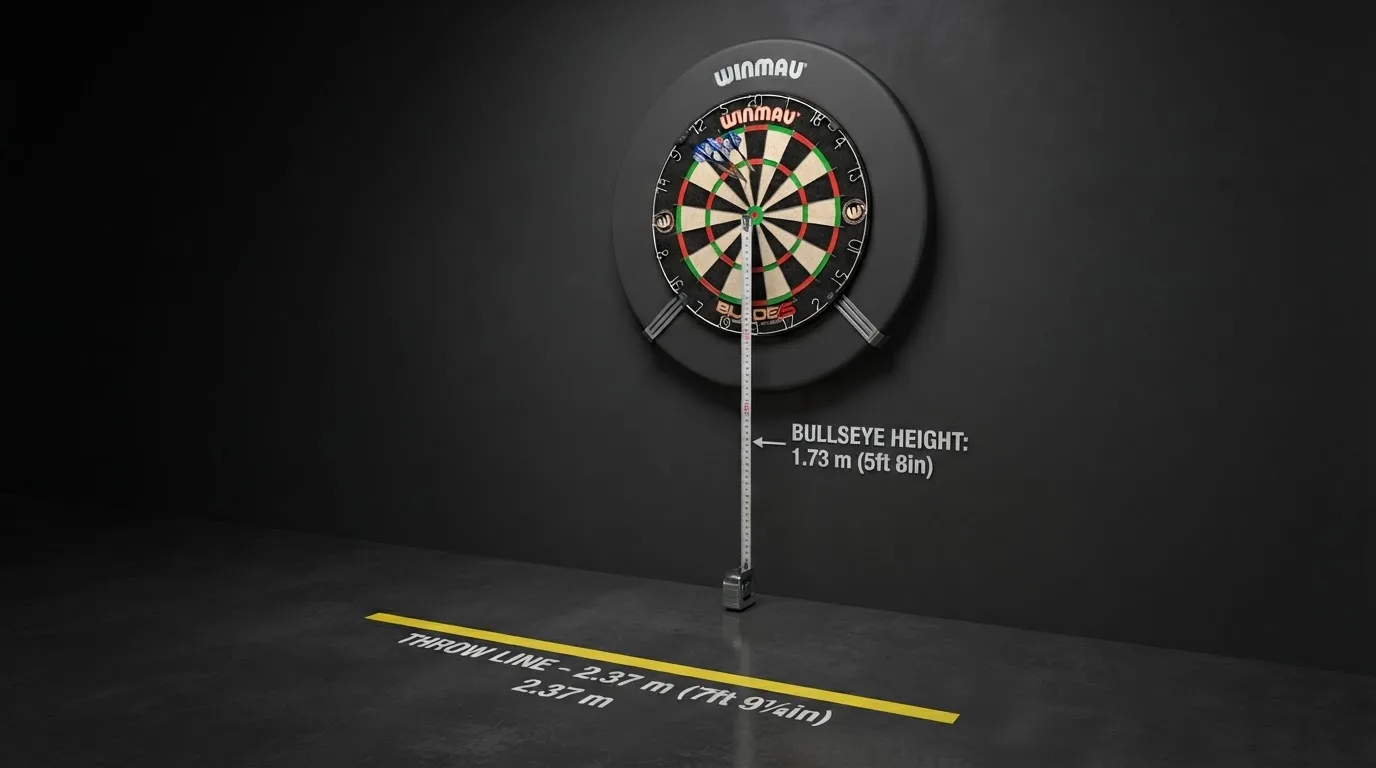
A dart is a single visit of three throws. Twenty numbered segments ringed by a double and a treble ring, an inner bull worth 50, an outer bull worth 25. The board is hung 1.73 m above the floor, and the oche — the line a player stands behind — sits 2.37 m back. None of that is in the odds directly; it is in the match result the odds are built on. To price the match, the bookmaker starts with two probabilities — one for each player winning — and turns them into prices. A 60/40 contest becomes 1.67 against the favourite and 2.50 against the outsider, before the house takes its cut.
The cut is the bit that never appears as a line on the betting slip. It lives inside the gap between the two prices on offer. Take a balanced match at decimal odds of 1.90 on each player. The bookmaker’s payout share on that two-way market is 1 ÷ (1/1.90 + 1/1.90), which comes to 0.5263 — a hair over 52.6%. The remaining 47.4% is the overround, or margin: the slice of every pound wagered that the bookmaker expects to keep on a perfectly balanced book. State the number plainly: a balanced two-way market priced at 1.90 carries a margin of about 5.3% per side combined, not 5.3% on the stake. Read it as a band, not a point — bookmakers run their darts margins anywhere from the low single digits on the outright winner markets for televised majors to mid-single digits on handicap lines and short-format legs, and the same firm varies its take from tournament to tournament.
A £10 stake on either player at 1.90 returns £19 if it wins, for a £9 profit. The bookmaker keeps £9.50 from every £100 wagered across both sides; on an unbalanced book the keep is larger still, because the implied probabilities were overstating one side from the start. The point of the margin is not to guess who wins — it is to ensure the operator wins whatever happens, provided the book is balanced. A reader who learns nothing else from this page should learn that.
Moneyline, handicap, totals
Match result — who wins the match — is the dart equivalent of the 1X2 line on football. Most televised darts matches are best-of-X legs, and the price swings with each leg won. A best-of-19 leg match is essentially a coin flip with one player slightly better; a best-of-35 leg final is a longer format where the better player usually pulls away. Bookmakers price every leg as a separate two-way market inside the match, which is why a player 4-2 up in a best-of-11 still gets quoted at around 1.50 to win the match.
Handicap lines are how the bookmaker evens up the price on a mismatch. One player is given a leg handicap of −2.5: they must win by three clear legs for the handicap bet to pay. The price drifts towards evens because the handicap absorbs the favourite’s edge. The same mechanic turns a 1.20 shot into a 1.85 shot for the price of giving up the head start. On short formats the line is brutal — a one-leg swing is 8–12% of the match — and on long formats it is much smaller.
Totals are rare on darts at most firms. The match has a fixed length, so totals on full-match legs are unusual; totals on individual legs come and go as specials. Most punters who want a non-winner market will move to checkout or in-play rather than totals, and the firms price those instead.
Outrights, futures and format quirks
Outright winner markets open weeks before a tournament starts and stay live until the final is underway. Prices drift with form, withdrawals and crowd money — the same player can be 8.00 in October and 5.50 in December if news breaks. The margin on outrights is wider than on individual matches because the bookmaker carries the uncertainty of a large field across weeks, and many firms write the book as a parimutuel-style pool among their own customers rather than a fixed margin. A reader looking at outrights is comparing two things at once: each firm’s take on the field, and the wisdom of the punters who got there first.
The format itself changes the price. Sets versus legs is a different bet. The 2026 PDC World Darts Championship ran from 11 December 2025 to 3 January 2026 at Alexandra Palace, with 128 players; rounds one and two were first to three sets, rounds three and four first to four, quarter-finals first to five, semi-finals first to six, and the final first to seven. Luke Littler beat Gian van Veen 7–1 in that final, taking £1,000,000 of a £5,000,000 prize fund. Prices move on this format the way football prices move on whether a tournament is a group stage or a knockout — the longer the format, the closer to true probability the line tends to sit, because variance washes out across more legs.
501 and the checkout
501 is the format that defines professional darts. Each player starts at 501 and must reach zero exactly, finishing on a double or the bullseye. The highest possible three-dart finish is 170 (triple 20, triple 20, bullseye), and the minimum possible leg is nine darts — a perfect visit every time. Almost no leg goes in nine; the average is somewhere in the mid-teens to low twenties, depending on the format. The bookmaker prices checkout markets off these averages: most 170 attempts are televised novelties rather than betting lines, but checkout specials on the next visit, or on the highest checkout of the match, appear on most televised nights.
The reason checkout matters on the betting slip is the same reason it matters in the room: it is the die that decides a leg. A player down to a 32 finish and a 16 finish is finishing the leg; a player down to a 170 is not. In-play markets price the next leg on this logic, and a reader who watches the board rather than the price usually sees the move before the bookmaker updates the screen.
Margin as a band, not a number
The margin on a darts market varies more than the marketing implies. Match result on a televised Premier League night sits in the low single digits; match result on a Challenge Tour event runs wider. Outright winner on the World Championship runs wider still. The same firm charges one bettor on a Saturday night football coupon a different take to another bettor on a Wednesday afternoon darts Challenge Tour event, and the market-by-market variation is where a sharp reader finds value. State it as a band — low single-digit percent on televised match result, mid-single-digit percent on handicaps and short-format specials, wider on outrights and minor events — and treat any single-figure claim as an illustration, not a measurement.
Tournaments, tours and where the action sits
Darts runs on three overlapping tours. The PDC ProTour runs the year, the BDO legacy is mostly historical now, and the World Darts Federation governs the amateur side. The television product the British punter watches is overwhelmingly the PDC: Premier League nights in spring, the World Series through the summer, the Grand Slam in November, and the World Championship at Alexandra Palace over the festive fortnight. The WDF runs its own World Championship and a calendar of national opens; bookmakers that price WDF events run a thinner book than on PDC nights, and the margin is wider.
The Premier League Darts is the weekly broadcast that runs from February to May, with eight invited players playing each other home and away across sixteen nights, plus a play-off night at the end. Prices settle into a narrow band across the season because the field is the same every week and form is observable. The World Championship is the outright market that opens the year: 128 players, sets format, the field cut from 96 the year before, and a £5,000,000 prize pot. The World Matchplay, the Grand Slam, the Players Championship Finals and the World Grand Prix round out the televised majors, each on its own format and each with its own pricing quirks. Outrights on the televised majors are the markets where the longest-priced runners are worth looking at, because the field is small enough that a 100.0 outsider occasionally drifts shorter as the tournament progresses.
Tournament structure matters because the price the bookmaker publishes depends on it. A best-of-X sets match is a longer match than a best-of-X legs match, and longer matches favour the better player. A best-of-19 legs match is effectively a coin flip with one player 53/47, and the bookmaker will price it close to evens; a best-of-35 legs final is a 60/40 contest at the top of the market. The reader who bets on darts without knowing the format is betting on the wrong number.
What the broadcast does to the price
Television moves darts prices. A 180 — three treble-20s in one visit — used to be a special; now most televised legs contain several, and the bookmaker’s in-play market updates with each one. The Premier League’s weekly broadcast has shortened the lag between a leg swinging and a price moving: most firms push in-play prices inside a second of the winning dart landing. On a non-televised Challenge Tour event, the lag is longer, the in-play book is thinner, and the margin on the in-play market is wider. The broadcast is part of the product, and the punter who only bets on what is on the screen is paying the firm for the screen.
The UK-licensed operators that price darts
Ten operators hold a Gambling Commission remote licence for general betting on real events in Great Britain and price darts. The list below is taken from the Commission’s public register and is current as of the date on the stamp at the top of this page; it is not a ranking, not a recommendation, and not the whole market. Several firms run two brands under one account. LiveScore Bet, Star Sports, Kwiff, Unibet, Betboro, Tote, Copybet, Betway, Betfred and 888sport are reviewed below. Each one stops as soon as the verdict lands — the judgement on which bettor the operator suits — and each verdict is the page’s own.
| Brand | Gambling Commission remote licence | What the operator’s own terms say on darts pricing |
|---|---|---|
| LiveScore Bet | 056859-R-332720-005 — LiveScore Betting and Gaming (Gibraltar) Limited | In-play pricing across match result and short-format specials; bet builder allows up to 10 selections covering match result, totals, player scoring and card markets where applicable |
| Star Sports | 009177-R-104555-019 — Star Racing Limited | Trading desk opens accounts by phone on 08000 521 321 and takes bespoke stakes outside the published board |
| Kwiff | 044448-R-323408-017 — Eaton Gate Gaming Limited | Surprise-priced markets (“supercharged” odds) on selected darts fixtures; in-play board updates during televised legs |
| Unibet | 045322-R-324275-019 — Platinum Gaming Limited | Match result, handicap, set winner and outright markets on televised PDC events; price boosts on Premier League nights |
| Betboro | 044181-R-324363-007 — Webmedia Development N.V. | Match result, correct score, total legs and player specials on televised PDC and WDF events |
| Tote | 054779-R-331321-008 — TDCO Limited | Pool-style pricing on darts outrights; fixed-odds match result on televised nights |
| Copybet | 053774-R-330743-010 — Copybet UK Limited | Match result, handicap and outright markets; copy-betting on other customers’ stakes |
| Betway | 039372-R-319367-029 — Betway Limited | Match result, set betting, correct score and player specials; Free Bet Club on weekly sports spend |
| Betfred | 039544-R-319290-010 — Petfre (Gibraltar) Limited | Match result, handicap, total legs, 180s and highest checkout specials; outright winner on televised majors |
| 888sport | 039028-R-319297-014 — 888 UK Limited | Pre-match and in-play pricing, cash out, bet builder, boosted odds daily on selected darts markets |
The licence number in column two is the account number a reader types into the Commission’s public register to confirm the licence is in force. The column three entry is what the operator’s own terms or app store listing state on the relevant subject — for the darts pricing key, that is what markets the operator’s site shows on televised darts. It is the operator’s own claim, not an audit.
LiveScore Bet — for the bet builder habit
LiveScore Bet’s bet builder is the reason a reader ends up here rather than on a rival site. Up to ten selections from a single match — match result, both teams to score, corners, total goals, player scoring and cards — combine into one price, and the same mechanic runs across the sports catalogue where it applies. On darts the builder offers match result and a small set of player specials, and the published markets update in-play during televised legs. The site runs under Gambling Commission account 56859 in the hands of LiveScore Betting and Gaming (Gibraltar) Limited.
The verdict: LiveScore Bet suits the punter who builds prices rather than picking them. A reader who treats darts as a singles market will find the board thinner than at the larger firms; a reader who wants to combine match result with a player checkout line in one price will find the builder earns its keep. The licence is live and the in-play board updates fast on televised nights, which is the operative measure of a darts bookmaker.
Star Sports — for the trader who wants a voice on the other end
Star Sports does not run a standard online-only operation. The firm lets a customer ring 08000 521 321 to open an account, place a bet or chase a query, with a backup inbox at [email protected]. For the punter who wants to negotiate a price on a televised major or settle a dispute by voice, this is the model. The published board covers darts match result, set winner and outright markets; a stake the trader will not print online can usually be priced over the phone. The licence sits under Star Racing Limited on Gambling Commission account 9177.
The verdict: Star Sports suits the reader who treats the bookmaker as a counterparty rather than a website. Anyone with a £20 app bet will not get the same service as a customer ringing the desk on a televised night — that is the trade, and it is the reason the firm survives alongside the giants.
Kwiff — for the price that surprises
Kwiff’s headline pitch is the surprise-priced market: odds the firm moves after the bet is placed, in the customer’s favour, on selected fixtures. Darts televised legs are a regular inclusion. The firm runs under Gambling Commission account 44448 in the hands of Eaton Gate Gaming Limited; the GB App Store listing gives it a 17+ age rating. The published board covers match result, handicap and outright markets, with the surprise-price mechanic applying to a subset.
The verdict: Kwiff suits the punter who likes the odds to move up after they have placed the bet. A reader who treats darts as a singles market will find the board narrower than at Unibet or Betfred; a reader who likes the surprise mechanic will find it is exactly what it says it is. The firm holds a Gambling Commission licence and is a GAMSTOP member by virtue of being online-licensed, and its market coverage is a specialist’s choice.
Unibet — for the televised night on a big board
Unibet has been trading since 1999, and the UK site is run by Platinum Gaming Limited, Gibraltar, on Gambling Commission account 45322. The published board covers match result, handicap, set winner and outright markets on televised PDC events, with price boosts on Premier League nights and a long menu of specials. Unibet’s welcome package for new GB customers is “Get £40 in Free Bets when you bet £20”: deposit and a sports bet of £20 or more at minimum odds of 2.0 (1/1), with the free bets expiring within seven days of issue.
The verdict: Unibet suits the regular Premier League and World Championship punter. The board is wider than most rivals’ and the price boosts add value on televised nights, but the welcome offer’s seven-day expiry on the free bets is tight against offers that give thirty days. The firm is licensed by the Gambling Commission, and the in-play board is deeper than at most rivals, making it a reliable pick for a televised-darts punter.
Betboro — for the bettor who likes a first-bet package
Betboro runs under Webmedia Development N.V. on Gambling Commission account 44181. The board covers match result, correct score, total legs and player specials on televised PDC and WDF events. The published welcome package is a 100% matched free bet of up to £25 on the first qualifying wager: a debit card deposit of at least £10, with the first bet between £5 and £25 carrying at least three selections, each at minimum odds of 3/5 (1.60) or higher. Darts accumulators fit naturally — three Premier League match result legs at 1.60 each multiply to 4.10.
The verdict: Betboro suits the bettor who wants a small stake to ride into a larger free bet. The three-selection minimum is the operative rule — a single match result will not qualify, and a reader who tries to use a free bet as a single will find the bet voided. With a Gambling Commission licence in place, the WDF coverage is wider than at most rivals, though the accumulator-only offer dictates the betting style.
Tote — for the pool-style outright
Tote is the legacy pool-betting brand, now running under TDCO Limited on Gambling Commission account 54779. The published board covers fixed-odds match result on televised nights and pool-style pricing on darts outrights — a dividend rather than a fixed price, paid from a pool of stakes on the same race. Tote customers are not betting against the firm in the conventional sense on the pool product; they are betting into a pool with other customers, with the firm taking a cut for running the pool.
The verdict: Tote suits the bettor who likes an outright pool rather than a fixed-odds future. The pool product pays a dividend that varies with the pool’s outcome, and a back-to-lay trade on the favourite will not work the same way it does at a fixed-odds firm. The firm, which holds a Gambling Commission licence, offers a distinct pool-betting alternative to standard fixed-odds markets.
Copybet — for the bettor who follows other people
Copybet’s pitch is copy-betting: the customer can copy the stakes of named tipsters and other customers, with the firm’s commission structure on winning copies. The published board covers match result, handicap and outright markets on televised PDC events. Copybet runs under Copybet UK Limited on Gambling Commission account 53774. Copybet’s racing terms pay first past the post on UK and Irish racing and offer Best Odds Guaranteed on the same fixtures — neither applies directly to darts, but the firm’s terms apply the same logic of post-settlement and price upgrades to selected sports.
The verdict: Copybet suits the reader who wants to copy rather than research. The tipster track records are the operative metric, and the firm charges a commission on winning copies; a reader who copies without checking the tipster’s history will lose the commission without gaining the edge. Regulated by the Gambling Commission, the firm offers a unique copy-betting mechanic, provided the punter is diligent in assessing the tipster’s track record.
Betway — for the regular weekly punter
Betway’s Free Bet Club is the headline feature for a regular sports punter: opt-in, then spend £25 or more on sports in a week and the firm credits 2 × £5 free bets the same week. The published board covers match result, set betting, correct score and player specials on televised PDC events. Betway runs under Betway Limited on Gambling Commission account 39372. The free-bet mechanic is weekly rather than a one-shot welcome, which suits a punter betting through the season rather than a once-a-tournament customer.
The verdict: Betway suits the weekly punter who wants free bets on the back of regular staking. The £25 weekly threshold is modest against Premier League accumulators, but the free-bet stake is not paid back with a win, so the headline value is the win-only payout, not the £10 face value. Holding a licence from the Gambling Commission, the firm’s Free Bet Club rewards the regular staker, with the £25 threshold being modest compared to larger accumulator offers.
Betfred — for the specials board on a televised night
Betfred’s published board covers match result, handicap, total legs, 180s and highest checkout specials on televised darts, with outright winner markets on the televised majors. The Betfred Sports, Casino & Games app is published by Done Brothers (Cash Betting) Ltd; the underlying remote licence sits under Petfre (Gibraltar) Limited on Gambling Commission account 39544. The specials board — number of 180s in the match, highest checkout — is where Betfred’s televised coverage runs deeper than most rivals.
The verdict: Betfred suits the reader who likes a specials board rather than a match result singles line. The 180s and checkout markets are the operative edge over the giants, and a reader who only wants match result will pay for a board they do not use. The firm’s specials coverage is the widest on this list, and it operates under a licence from the Gambling Commission.
888sport — for the reader who wants every mechanic on one site
888sport’s app lists pre-match and in-play betting, cash out, bet builder, racing streams, BetFinder form tools, a live bet feed and daily boosted odds. The same coverage applies to darts as to the rest of the catalogue, with match result, handicap and outright markets on televised PDC events. 888sport runs under 888 UK Limited on Gambling Commission account 39028. The site’s daily boosted odds on darts are the operative mechanic on televised nights, with one boosted price per fixture per day in most cases.
The verdict: 888sport suits the reader who wants a single app for cash out, bet builder and a boosted price. The bet builder runs narrower on darts than on football, but the cash out and boosted odds mechanic is the same across sports and earns its keep on a televised night. The licence is current and the all-in-one app is the reason a punt ends up here.
What darts betting is in Great Britain
Darts betting in Great Britain is a fixed-odds bet on a televised or streamable darts match, placed with a bookmaker licensed by the Gambling Commission for remote general betting on real events. The bet settles on the result of the match — who wins, what the handicap line is, how many 180s land in the match, what the highest checkout is. There is no statutory list of permitted darts bets, no statutory cap on stakes, and no separate licence type for darts. A bookmaker that holds a remote general betting standard (real events) licence can price darts under that licence, and the firm’s published rules — Rule 4 deductions, non-runner rules, settlement timing — apply as written.
The mechanics the punter meets are the same mechanics that apply to any sport. A stake is the amount the punter risks; the odds are the price the bookmaker pays if the bet wins; the return is the stake plus the winnings, and the profit is the return minus the stake. Decimal odds are the standard online form: a stake of £10 at decimal odds of 2.50 returns £25, for a £15 profit. Fractional odds are the British native form: 2.50 in decimals is 3/2 in fractions (3 ÷ 2 + 1 = 2.50), and the British punter reads 5/1, 11/4, evens as the everyday shorthand.
For a combination bet — an accumulator or “acca” — the odds of the legs multiply into one price. Three legs at 1.60, 1.80 and 2.00 multiply to 5.76, so a £10 stake returns £57.60 if all three win, for a £47.60 profit. If any one leg loses, the whole bet loses. The British bookmaker usually caps the number of legs at a product-specific maximum — most firms cap at twenty for online accumulators — and the margin compounds across the legs. A four-leg acca at 1.60, 1.60, 1.60, 1.60 has a payout share of (1 ÷ (4 × 1/1.60)) = 0.40, or 40%, which is a margin of 60% across the four legs combined. The marketing word “rarer” usually accompanies a higher odds figure; the operative word is “harder”.
What the bet settles on
Match result bets settle on the official result published by the tournament organiser — for the PDC, the result published on the PDC’s own site at the end of the match. A walkover counts as a win for the player awarded the walkover; a retirement mid-match counts as a win for the player who progresses, with most firms paying out on the match result market and refunding other markets. Live, in-play bets settle on the result at the moment the bet was struck; a price taken at 2-1 in legs with the player leading 4-2 settles on the final result, not on the result at 2-1.
Handicap bets settle on the result after the handicap is applied. If a player is given a −1.5 leg handicap and wins 6-4, the handicap-adjusted result is a 4.5-4 win, so the handicap bet pays; if the same player loses 6-4, the handicap bet loses. Outright winner bets settle on the player who wins the tournament, with non-runner rules applying before the tournament starts; once a tournament begins, outright bets usually stand regardless of mid-tournament withdrawals.
The British betting duty
General Betting Duty is paid by the operator on its gross profit from betting, currently 15% in the main rate, with a 25% rate on remote betting (other than remote bets on UK horse racing) coming into force on 1 April 2027. The duty is the operator’s tax and not the punter’s; the punter pays no tax on betting winnings in Great Britain. Whether operators pass the duty on through narrower odds is not established, and a reader who assumes the duty appears as a line in the price is reading a number that does not exist.
The legal frame and who is licensed
Darts betting in Great Britain is regulated under the Gambling Act 2005, with the Gambling Commission as the regulator. An operator whose remote facilities are used in Great Britain needs a Commission licence wherever it is based — the Gambling (Licensing and Advertising) Act 2014 closed the previous loophole that let an operator based offshore serve British customers on a home-jurisdiction licence. A Curaçao, Maltese or Gibraltar business licence is not a substitute for the Commission’s remote licence.
The Commission’s public register is the whole test of whether a brand holds a licence. The register can be searched by business name, trading name, domain or licence account number; the entry lists the licence categories, the licence holder’s legal name and the trading names the licence covers. Several brands run under one licence: Ladbrokes and Coral share a licence, and Paddy Power and Betfair share a licence, so a search for one trading name often surfaces the other. A reader checking a brand against the register is checking the licence account number the firm’s own site or app listing publishes, not the trading name alone. Brands use .com as well as .co.uk, so the domain proves nothing on its own; the licence number proves everything.
Spread betting that is a financial contract — contracts for difference on indices, shares and forex — is regulated by the Financial Conduct Authority, not the Commission. A firm offering both fixed-odds sports betting and financial spread betting carries two licences, one from each regulator. Spreadex, for example, is regulated by the FCA for spread betting and by the Commission for fixed-odds betting, and its own site states that spread betting losses can exceed the deposit. A reader betting on darts with Spreadex is on the fixed-odds side; a reader trading indices with Spreadex is on the FCA side.
The minimum age is 18 across the board. A licensed online operator verifies name, address and date of birth before a customer can deposit or gamble, including with a free bet or bonus — the verification has been a Commission requirement since 7 May 2019, and a site that lets a customer place a bet without verification is not licensed. The verification can be a third-party database check (a credit-reference-style identity check), a photo of a passport or driving licence, or both; a reader who has not verified cannot deposit and cannot bet, and a free bet credited before verification is held until verification completes.
Bonuses in the post-19 January 2026 frame
From 19 January 2026, two rules apply to bonuses at GB-licensed operators: wagering requirements on bonuses are capped at 10x (a £10 bonus at 50x needs £500 of bets; under the cap no more than £100), and mixed-product promotions — an offer that requires gambling on two or more product types such as betting, casino, bingo and lottery, for example “bet on football to get free spins” — are banned. The 10x cap applies to bonuses with a wagering requirement; whether it applies to free bets with no wagering condition is not established, and any cap on the money value of a bonus is not established. A reader chasing a welcome offer reads the wagering cap and the mixed-product rule in the operator’s terms; both apply whether or not the marketing material mentions them.
A “free bet” at a GB-licensed firm is, in practice, a stake-not-returned free bet: the stake does not come back with the win, and the customer receives only the profit. A £10 free bet at decimal odds of 3.00 pays £20 profit if it wins, not £30. The headline face value is the stake, the operative value is the profit, and the difference is exactly the marketing mechanic. The same applies to free-bet fragments: Betway’s 2 × £5 free bets credit on a £25 weekly sports spend are stake-not-returned, so the operative value is the win-only payout, not the £10 face value.
The cash out and in-play mechanics
Cash out is the operator’s offer to settle a bet before the match has finished, at a price derived from the current in-play board and the original stake. A back bet on player A at 2.50 pre-match, with player A leading 3-1 in legs, can usually be cashed out at a price reflecting the lead — somewhere between 1.20 and 1.40 on most firms, depending on the format and the lead margin. The cash out price carries its own margin, which the firm sets higher than its pre-match margin because the firm is now quoting a single bet rather than a two-sided market. A punter who uses cash out frequently pays a higher margin than a punter who lets bets run.
In-play betting on darts is the act of placing a bet after the match has started, with the bookmaker updating prices leg by leg. The in-play board on televised darts at a firm like Unibet or Betfred is wide enough to cover match result, next leg, handicap and a small set of specials; the in-play board on a non-televised Challenge Tour event is narrower. The in-play price updates inside a second on televised Premier League nights at most firms, and the lag is longer on streamed-only events. The reader who bets in-play during a televised leg is paying the in-play margin, not the pre-match margin.
Player protection under the LCCP
The Licence Conditions and Codes of Practice (LCCP) is the Commission’s rule book for licensed operators, and the social responsibility code sits inside it. The codes require operators to offer deposit limits, timeouts, self-exclusion via GAMSTOP and a route to problem-gambling help. The codes are not optional for the operator; an operator that does not implement them is in breach of its licence and faces regulatory action.
GAMSTOP is the national multi-operator online self-exclusion scheme, mandatory for online operators since 31 March 2020. A customer who registers with GAMSTOP is excluded from every GB-licensed online operator for the period they choose — six months, one year, five years, or five years with auto-renewal — and the exclusion stays in place for a further seven years after the minimum period ends unless the customer asks GAMSTOP to remove it. GAMSTOP covers online sites and apps; betting shops use a different self-exclusion service. The customer can register at gamstop.co.uk and the registration applies immediately at every licensed site on the operator’s side.
The financial vulnerability check (LCCP condition 3.4.4, in force since 30 August 2024) applies to licensed remote betting when a customer’s deposits minus withdrawals exceed £150 in a rolling 30 days (since 28 February 2025). The check is a public-record check — for example a bankruptcy order or a county court judgment — not an income check and not a credit reference check. A customer who trips the threshold can keep betting unless the check surfaces a vulnerability flag, and the firm may then apply further affordability checks (the financial risk assessments of the press) under the staged plan the Commission announced on 7 July 2026, with no start date. The reader’s operative experience is a soft block at higher spend and a request for source-of-funds documentation in some cases.
Deposit limits (Remote Technical Standard 12) require operators to offer a gross deposit limit on a fixed time frame; the first changes have applied since 31 October 2025, a second phase was postponed to 30 September 2026, and whether that second phase is live is not established. There is no state-set deposit or loss ceiling for betting: limits are the customer’s choice, and the operator must offer the tools but not set the customer’s number. A reader who wants a hard ceiling sets it themselves.
Offshore, and what is lost without a GB licence
A GB licence is compulsory at the point of consumption. Providing gambling facilities in Great Britain without the licence the Act requires is an offence under section 33 of the Gambling Act 2005 — on summary conviction up to 51 weeks’ imprisonment, a fine up to level 5, or both; six months in Scotland — and the offence is aimed at the operator. No offence aimed at a customer who merely bets on an unlicensed site was found in the statute; the practical loss for the customer is the loss of the protections the licensed operator offers. No GAMSTOP coverage, no Commission complaints route, no approved dispute-resolution body, no British consumer redress if funds are withheld, and not bound by the 10x bonus cap or the £150 vulnerability check. The site may not verify identity before the first deposit, may not offer a deposit limit, and may not pass winnings to the customer at the firm’s discretion.
Enforcement against unlicensed operators is disruption, not blocking. The Commission serves cease-and-desist notices, refers sites to search engines for removal from results, and works with registrars, hosts and payment providers to take sites down. The Commission has been given, or is about to receive, court-order DNS blocking powers — never write that ISP blocking is in operation as a standing rule. The honest framing: licensed means checks, limits, GAMSTOP, the bonus cap and identity verification; unlicensed means none of those protections and possible loss of funds. Neither is the safe choice by default; the licensed side is the one with the recourse when something goes wrong.
Responsible gambling — what to know before the bet lands
GAMSTOP, deposit limits, timeouts and the financial vulnerability check are the operator-side mechanics. The customer-side help is GamCare, which runs the National Gambling Helpline, GambleAware, the NHS gambling clinics and Gamblers Anonymous. GamCare’s helpline is open every day of the year; GambleAware funds treatment and research; the NHS clinics offer cognitive-behavioural treatment for problem gambling in several regions; Gamblers Anonymous runs peer-support meetings across the country. A reader who feels their betting is moving beyond the means they set should reach one of these before they reach the next deposit button.
The licensed operators link to GamCare, GAMSTOP, GambleAware and Gamblers Anonymous in their safer-gambling pages; Fitzwilliam Sports, for example, links to GambleAware, GamStop and Gamblers Anonymous on its home page, and most operators do the same. A site that does not link to help is not licensed in Great Britain. A reader who cannot find a safer-gambling page on a sportsbook’s site is looking at a site that does not hold a Commission licence, and the rest of this page does not apply to it.
A self-exclusion via GAMSTOP is the strongest single tool a customer has. It is irrevocable for the chosen period, it applies to every licensed operator at once, and the only route back is the seven-year tail after the minimum period ends. A punter who self-excludes and tries to register a new account at a different licensed firm is refused at the verification step, because the firm checks GAMSTOP before allowing a first deposit. The seven-year tail is the reason GAMSTOP is not a cooling-off period — it is a near-permanent exclusion unless they lift it.
A deposit limit the customer sets themselves is the everyday tool. Most firms let the customer set a daily, weekly or monthly gross deposit limit; the limit applies to deposits, not net losses, and it does not stop withdrawals. A punter who hits the limit cannot deposit until the next period starts, and most firms let the customer lower the limit immediately but require a seven-day wait before raising it. The waiting period is the operator’s defence against a customer in a losing streak raising the limit to chase.
Bonuses and free bets on darts
A welcome offer at a GB-licensed firm in 2026 reads as a deposit-gated package with a stake-not-returned free bet, a wagering requirement capped at 10x, and a fixed expiry. The marketing calls this a “free” bet or a “risk-free” bet; the operative reality is a free bet whose stake does not come back with a win, with a turnover requirement that turns a small bonus face value into a large betting target.
Take Unibet’s “Get £40 in Free Bets when you bet £20”. The headline face value is £40; the operative face value is the win-only payout on £40 worth of free bets, which is the sum of (stake × (odds − 1)) across the free bets the customer places. If the customer places the four free bets at decimal odds of 3.00 each, the win-only payout is £80 of profit per £40 of face value, but the customer must win all four bets to realise it; the expected value is the win probability times the payout, summed across the bets. The £20 qualifying bet is at minimum odds of 2.0 (1/1), and the free bets expire within seven days. The 10x bonus cap does not apply because there is no wagering requirement on the free bet itself; the cap applies to bonuses that require a turnover. Betboro’s “100% matched free bet of up to £25” requires a debit card deposit of at least £10 and a first bet of £5 to £25 with at least three selections each at 3/5 (1.60) or higher — the three-selection rule is the operative term, and a single does not qualify.
The value of a stake-not-returned free bet is the face value times (odds − 1) divided by the odds, multiplied by the payout share of the market the free bet is placed on. A £10 free bet at decimal odds of 4.00 has a face value of £10 × (4 − 1) / 4 = £7.50 of expected value on a market with a 100% payout share; on a market with a 95% payout share (a 5% margin), the expected value is £7.13. The marketing calls a £10 free bet “worth £10”; the arithmetic says it is worth what the win-only payout expected value produces, and the difference is the marketing mechanic. A punter who treats a free bet as a £10 cash bet is overstating its value by the stake’s worth.
The wagering cap on bonuses with turnover
Bonuses at GB-licensed firms that carry a wagering requirement are capped at 10x turnover as of 19 January 2026. A £10 bonus with a 10x cap needs £100 of qualifying bets before the bonus and any winnings become withdrawable. The qualifying bets usually need to be at or above a minimum price — most firms set the minimum at 1.50 (1/2) or 2.00 (evens), and a bet below the minimum does not count towards turnover. The reader’s operative number is the bonus times the wagering multiple, divided by the average stake, divided by the fraction of bets that win — and the expected cost of clearing the bonus is the turnover times the margin of the market the qualifying bets are placed on.
A £10 bonus with a 10x cap, cleared on a market with a 5% margin, costs the punter on average £5 of the bonus value, leaving £5 of expected net value before the bonus is even withdrawn. A £10 bonus with a 50x cap (the kind of bonus the 10x rule prohibits) would cost £25 on the same market, leaving the punter £15 down on a £10 headline. The 10x cap is exactly the rule that turns the headline “100% bonus” from a loss-leader into a near-even proposition, and a reader who understands the cap understands why the welcome offer is no longer the bargain the marketing still claims it is.
Mixed-product promotions
A mixed-product promotion — an offer that requires gambling on two or more product types — has been banned at GB-licensed operators since 19 January 2026. A “bet £20 on football to get 50 free spins” is the banned shape: the betting leg and the casino leg are two product types in one offer, and the offer is no longer permitted. A sportsbook that requires casino play to clear a sports bonus is in breach; a sportsbook that runs sports-only or casino-only promotions is fine. A reader who sees an offer that ties betting to casino, bingo or lottery play in one package is looking at either an unlicensed site or an offer the operator is about to amend.
What “Best Odds Guaranteed” means and does not mean
Best Odds Guaranteed is a racing product, not a darts product. William Hill pays Best Odds Guaranteed on UK and Irish horse racing from 8 AM on the day of the race, on both single and multiple bets; the rule does not apply to ante-post bets, tote bets or pari-mutuel bets. Copybet offers Best Odds Guaranteed all day, every day on UK and Irish racing and pays first past the post on horse racing even if the winner is later disqualified. The mechanic is the bookmaker promising to upgrade the price to the starting price if the starting price is higher than the price the punter took.
BOG is racing-specific. A darts equivalent — a bookmaker promising to upgrade the price if the in-play board drifts higher — does not exist as a standard product at most firms. The marketing for “best odds” on a darts match is usually a price boost, which is the operator offering an enhanced price on a single selection for a limited time, and a price boost is not the same as BOG. The two are different products with different mechanics, and a reader who treats them as the same is reading marketing, not mechanics.
Live betting, in-play and cash out on darts
Live betting on darts is the act of placing a bet after the match has started, with the bookmaker updating prices leg by leg. The mechanics of live betting on darts are simpler than on football or tennis: there is no break in play to wait for, the score updates after every three darts, and the price moves with the score. The lag between a leg swinging and a price updating is the operative edge the punter is buying — a fast update gives the punter time to read the next leg, a slow update gives the bookmaker time to move first.
Cash out is the operator’s offer to settle a bet before the match has finished. The cash out price is derived from the current in-play board and the original stake, with the firm’s margin added on top. A back bet on player A at 2.50 pre-match, with player A leading 3-1 in legs, can usually be cashed out at a price reflecting the lead — somewhere between 1.20 and 1.40 on most firms, depending on the format and the lead margin. The cash out price carries a higher margin than the pre-match price because the firm is quoting a single side of a market rather than a two-sided book.
A punter who uses cash out on every bet pays a higher cumulative margin than a punter who lets bets run. The arithmetic: a £10 bet at 2.50 with a £15 cash out at 1.40 locks in £21 against the original stake of £10, a profit of £11. The pre-match bet would have returned £25 if it won, for a profit of £15. The cash out crystallises a £4 smaller profit in exchange for removing the chance of losing. A punter who cashes out at a £4 cost every time is paying the cash out margin for certainty, and the cost compounds across a season.
In-play on darts lends itself to a specific pattern: the favourite trailing early tends to drift in price, and the favourite leading tends to shorten. The drift on the trailing favourite is wider than the shortening on the leading favourite, because the in-play book prices the comeback probability higher than the markets do, and the firm moves the price accordingly. A punter who reads the board rather than the screen can catch the drift at its widest and back the trailing favourite at the loosest in-play price. The bookmaker’s response is to widen the in-play margin and shorten the lag, and the edge erodes with each televised night.
Streaming and data
Live streaming of darts is offered by most televised-night firms — bet365 is the official global betting partner of the UEFA Champions League and its app is the most downloaded sports betting app in the UK, with darts streaming as part of its coverage; 888sport’s app lists racing streams alongside the rest of the catalogue. A streamed match does not change the price, but it changes the lag — a punter watching the stream sees the leg swing before the in-play board updates, and the timing edge is real on close matches. The bookmaker’s response is the same as the in-play price response: shorten the lag.
Data on televised darts is published by the PDC and the WDF in real time, and most firms subscribe to a data feed that drives the in-play board. The data feed updates the score, the visit and the running average within a second of the dart landing, and the in-play board follows. A reader who watches the data feed’s score rather than the broadcast’s picture sees the same update with the same lag.
Predictions, tipsters and what to read into them
The marketing word for “prediction” is “tip”. A tip is a forecast of who will win a match, a leg or a tournament, usually published by a tipster, a media outlet or an algorithm. The marketing word for “tipster” is “expert”; the operative word is “person or system with a published track record”. A tipster with a published, audited track record over thousands of bets is the closest thing the market has to a usable prediction; a tipster with a handful of recent wins is marketing, not analysis.
The honest framing: no one can know the outcome of a darts match in advance. The 2026 PDC World Championship was won by Luke Littler, who beat Gian van Veen 7-1 in the final — but that result was not knowable in advance, and any tipster who claimed to have predicted the 7-1 scoreline in detail was either lucky or lying. A punter who bets on a tip is buying the tipster’s record, not a guaranteed outcome, and the cost of buying the tip is the loss the punter would have made betting without it. If the tipster’s record is audited and shows a long-run edge, the tip is worth the subscription; if the record is unverified or self-reported, the tip is worth exactly what was paid for it.
Bankroll and staking plans
A bankroll is the amount of money the punter has set aside for betting, separate from rent, bills and savings. A staking plan is the rule the punter follows for how much of the bankroll to risk on each bet. The most common staking plans are level stakes (a fixed amount per bet, usually 1-2% of the bankroll), proportional stakes (a fixed percentage of the bankroll, rising and falling with the bankroll) and Kelly staking (a fraction of the bankroll proportional to the edge, with the fraction reduced to manage variance). None of these plans produce a winning edge by themselves; they manage the variance of whatever edge the punter has.
Level stakes at 2% of the bankroll per bet is the most common starting point for a darts punter. A £500 bankroll with level stakes at 2% is £10 per bet; a £1,000 bankroll is £20 per bet; a £5,000 bankroll is £100 per bet. A punter who raises the percentage to chase losses or to chase a tipster’s record is gambling on the staking plan rather than the edge, and the staking plan does not have an edge. The reader’s operative number is the bankroll times the percentage, and the percentage stays flat through winning and losing streaks.
What an edge looks like in practice
An edge is the difference between the punter’s estimate of a probability and the bookmaker’s implied probability. If the punter thinks player A has a 60% chance of winning and the bookmaker is offering decimal odds of 1.80 (implied probability 55.6%), the edge is 4.4 percentage points. A punter who only bets when the edge is positive, with a level staking plan, makes money in the long run; a punter who bets without checking the edge is gambling. The edge on darts at a televised Premier League match is small — the bookmaker’s margin is tight — and the edge on a non-televised Challenge Tour event is wider, but the markets are thinner and the liquidity is lower.
The arithmetic for a single bet at a 4.4% edge with level stakes of £10 is: expected value = £10 × 0.60 × (1.80 − 1) − £10 × 0.40 = £10 × 0.48 − £4 = £0.80 per bet. Over 100 bets, the punter expects £80 of profit before variance; over 1,000 bets, £800. The variance is the operative cost: a £0.80-per-bet edge can produce a £300 losing streak inside 100 bets, and the punter’s bankroll has to be sized to absorb it. A bankroll of £500 is too small for a darts punter betting £10 per bet at 2%; a bankroll of £2,000 is on the small side; £5,000 is the operative minimum for a punter who wants to ride out variance without raising the stakes.
Why no system wins
Every system that promises a winning edge on darts — the martingale, the Fibonacci, the doubles-chasing progression, the “back the favourite every match” rule — has the same problem: it cannot overcome the bookmaker’s margin. The margin is built into every price, and the system either ignores it or bets around it, and either way the punter pays it. The martingale doubles the stake after every loss; the doubling recovers the loss on the next win, but the doubling also increases the stake to a number that exceeds most punters’ bankrolls before the next win arrives. The Fibonacci increases the stake according to the Fibonacci sequence; it is the same mechanic with a different sequence, and the same failure mode. The “back the favourite” rule pays the favourite’s margin on every bet, and the favourite’s margin is the tightest margin in the market — the punter pays the smallest slice but pays it every time.
The honest framing: a punter who wants to beat the bookmaker’s margin needs an edge, not a system. The edge comes from information the bookmaker does not have — a model, a data source, a tipster with a track record. The system does not provide the edge; the system only manages the variance of whatever edge the punter has. A punter without an edge who runs a system has a smaller expected loss, not a positive expected return.
Frequently asked questions
How do I bet on darts in Great Britain?
A punter in Great Britain bets on darts by opening an account with a bookmaker licensed by the Gambling Commission for remote general betting on real events, verifying name, address and date of birth, depositing by debit card or bank transfer (credit cards are banned for gambling), and placing a stake on a televised or streamable darts match at the price shown. The bet settles on the official result published by the tournament organiser. Walkovers, retirements and non-runner rules apply as written in the operator’s terms.
What is darts betting?
Darts betting is a fixed-odds wager on the outcome of a darts match or tournament — who wins, the handicap line, the total legs, the highest checkout, or the outright winner of the televised major. The bookmaker sets the price; the punter chooses the stake; the return is the stake times the decimal odds if the bet wins. In-play betting on darts is placing the bet after the match has started, with the bookmaker updating the price leg by leg.
How does darts handicap betting work?
Handicap betting on darts gives one player a head start of legs: a player with a −1.5 leg handicap must win by two clear legs for the handicap bet to pay. The handicap evens up the price on a mismatch; the favourite’s price drifts towards evens because the head start absorbs the favourite’s edge. Set handicaps work the same way at one set per side. The handicap line moves with the format: a one-leg handicap in a best-of-11 legs match is around 9% of the match; the same handicap in a best-of-35 legs match is closer to 3%.
How can I check that a bookmaker holds a Gambling Commission licence?
The Commission’s public register, at the regulator’s own site, lists every licensed operator with the licence account number, the licence holder’s legal name, the licence categories and the trading names the licence covers. A reader types the licence account number the operator’s own site or app listing publishes into the register’s search; the result confirms the licence is in force and lists the trading names. A brand that does not surface in the register is not licensed in Great Britain, and a brand with a Curaçao, Maltese or Gibraltar business licence alone is not licensed here.
How is the return on a bet worked out from the stake and the odds?
Return = stake × decimal odds; net profit = stake × (decimal odds − 1). A £10 stake at decimal odds of 2.50 returns £25 (£10 × 2.50), for a £15 profit. For a combination bet the odds of the legs multiply into one price — three legs at 1.60, 1.80 and 2.00 multiply to 5.76, so a £10 stake returns £57.60 if all three legs win. Fractional odds convert to decimal as a/b → a ÷ b + 1, so 5/1 is 6.00 and 11/4 is 3.75.
What is the bookmaker’s margin and how can I see it in the odds?
The bookmaker’s margin is the slice of every pound wagered that the firm keeps on a perfectly balanced book. On a two-way market priced at 1.90 / 1.90, the payout share is 1 ÷ (1/1.90 + 1/1.90) = 0.5263, leaving a margin of 1 − 0.5263 = 0.4737, or about 5.3% across both sides combined. The margin is not printed on the betting slip; it is the gap between the implied probabilities of the prices on offer and 100%. State the margin as a band — low single-digit percent on televised match result, mid-single-digit on handicaps and short-format specials, wider on outrights and minor events — rather than a single figure.
Tennis, darts & cue sports – Bookies Trust
Content created by the «Bookies Trust» team
