
Field hockey betting tips in the UK: a guide, not a tip sheet
 Available in US
Pricing current as of 27 October 2026 and checked against the Gambling Commission’s public register.
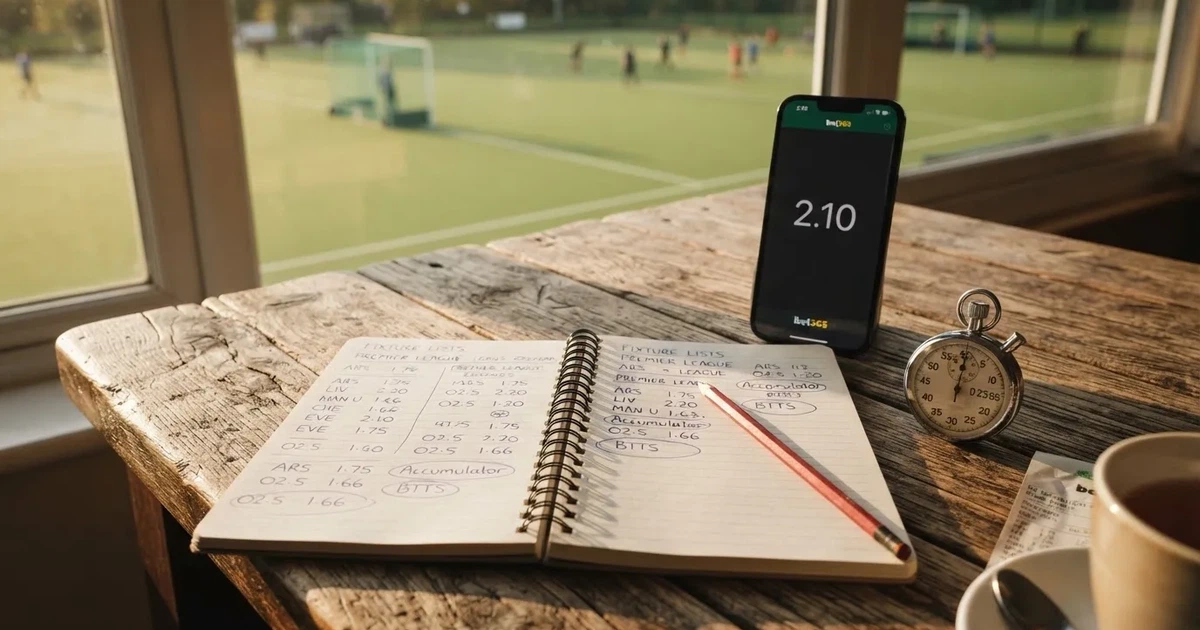
A “tip” sounds like the thing that decides whether you win. It rarely is. What decides whether a bet wins is the price the bookmaker has set and the price you would have set yourself; everything else — the form table, the head-to-head, the injury list — feeds into that second number, and the gap between the two is where value lives or does not. Field hockey is a small sport on most British bookmaker menus, which makes that gap the difference between a market worth a stake and one worth skipping.
This page is a guide, not a tip sheet. No team is named to win. The point is to walk through how a field hockey price is built, where the bookmaker’s margin hides inside it, what a “value bet” actually means once that margin is taken out, and how to keep a bankroll intact while you learn. Ten licensed UK bookmakers sit at the end as a comparison, each one checked against the Gambling Commission’s public register.
How field hockey prices are set, and where the margin sits
A bookmaker does not publish its true belief about who will win. It publishes a price, and the price contains two things stacked together: a probability estimate and a margin. The estimate is the part the form book and the head-to-head can challenge. The margin is the cut the bookmaker keeps regardless of who wins. Splitting the two is the first job of any punter who wants to call a price fair.

For a two-way market with decimal odds of 1.90 on each side, the implied probabilities are 1 ÷ 1.90 on each outcome, or about 52.63% apiece. Added together they come to about 105.26%. The extra 5.26 percentage points above 100% are the overround — the margin baked into both sides of the book. A perfectly fair market would have the two implied probabilities sum to exactly 100%; the gap above 100% is what the bookmaker earns on every pound matched. State the margin as a band: a market at 1.90 / 1.90 keeps between roughly 5% and 5.5% of every pound staked.
The same arithmetic on an evenly priced three-way market — match odds with the draw quoted — gives a noticeably larger overround. Three outcomes at decimal 2.50 each imply 40% on each, summing to 120% and a margin near 16.7%. That is why match odds on a sport with a draw is a structurally more expensive market than a two-way moneyline: the bookmaker is being paid for three prices, not two, and only one of them resolves. For a punter comparing sports, the two-way moneyline on a sport that allows a tie — basketball, American football, tennis — is one mechanical reason the long-term cost of betting there is lower.
A price is “value” when the punter’s own probability for an outcome is higher than the implied probability the price carries. On a 1.90 shot the bookmaker is saying the chance is 52.63%; if you have worked through form, line-ups and recent minutes per goal and arrived at 60%, that is a value bet. If your number sits at 50%, the price is short and the bet should be skipped, no matter how confident the team looks. This is the discipline the marketing never talks about: the side you like can still be the wrong side to back at the price quoted.
Reading a field hockey match
Field hockey comes in two flavours the bettor should know before reading any stat sheet. The indoor version is six-a-side on a smaller pitch, played indoors; the outdoor version, the Olympic and World Cup code, is eleven-a-side — ten outfielders plus a goalkeeper. Most British bookmakers price the outdoor version because that is what the FIH calendar carries. The indoor version sits in a much smaller betting pool and prices move further on less information.

An outdoor team fields ten outfield players plus a goalkeeper, and a full senior match is 60 minutes long, played as four 15-minute quarters with a 2-minute break between periods and a 15-minute half-time. Since 2017 that is the FIH standard, replacing the older two-30 halves. The change matters because a model that assumed a 70-minute match inflates expected goals. Tied games go to extra time or, for tied classification matches since March 2013, straight to a shoot-out — the format the book lists next to “draw” decides whether your ticket cashes or voids.
The pitch itself is 91.4 m × 55 m, with goals 2.14 m high and 3.66 m wide. The dimensions shape the kind of goals that happen: the shooting circle is small enough that penalty corners concentrate scoring chances into a small number of set-piece situations. A team that concedes few penalty corners and converts a high share of its own is structurally hard to beat at the full-time price, and a team that lives off corners can keep producing goals even when open play is dead. Looking at penalty-corner rates per match, conversion rates and the share of goals that come from open play are three numbers that move a field hockey price more than shots or possession.
Tournaments a UK bookmaker prices
Field hockey is a sport whose calendar runs in short, sharp bursts. The Pro League, the FIH Hockey World Cup and the continental championships (Europeans for both genders, Asia Cup, Africa Cup of Nations, Pan American Games) all sit inside the FIH season, with the Olympics every four years. India’s men won Olympic gold in 1928, 1932, 1936, 1948, 1952, 1956, 1964 and 1980 — eight titles in a row across the pre-war and post-war decades — and remain one of the sport’s reference points for “form”. Women’s hockey joined the Olympic programme in 1980, with the Netherlands, Australia and Argentina the dominant forces of the modern era.
What that history does for a bettor in 2026 is give a long-form baseline. A men’s team that has finished in the top four at two of the last three World Cups is, on a long enough run, a different proposition to one that has not. A women’s team that finished on the podium at the most recent Olympics is again a different price against a side that has not. The trouble is that the calendar between those tournaments is a long quiet stretch of Pro League fixtures and continental qualifiers, which is most of what a UK punter actually bets on. The price on those quiet matches carries less information, because fewer pounds have been matched on them and the bookmaker’s compiler has less market to anchor against — which is the structural reason small-market sports look mispriced more often than football does.
A bettor who watches only the World Cup is also watching a small slice of the season. Most of the betting volume on field hockey in the UK sits on men’s and women’s Pro League weekends, the continental championships in their off years, and the Olympics in its year. The bookmaker’s price on a women’s Pro League match between two mid-table teams is not the same product as the price on a men’s World Cup semi-final, even if both are field hockey. Smaller matches, smaller pools, wider prices.
The ten UK-licensed bookmakers in this guide
The comparison below covers ten brands held against a Gambling Commission remote licence as of the date noted at the top of the page. Each is checked on the Commission’s public register, and the licence line below names the licence holder and the Commission account number from that register. Sites can run under a single licence — multiple brands under one operating company is normal in this market — so the licence holder matters more than the brand on the shirt.
The column on what each operator’s own terms state on the key’s subject is read from each brand’s home page or app listing and is descriptive only. An offer described as a bookmaker states it is not a recommendation to take it. Operators can change terms; the register entry and the operator’s own terms page are the documents that bind.
| Brand | Licence holder and Gambling Commission account number | What the operator’s own terms state on the key’s subject |
|---|---|---|
| BetGoodwin | Goodwin Racing Limited — Commission account 2927 | Pays Best Odds Guaranteed on all UK and Irish horse and greyhound racing, up to £1,000 |
| Sky Bet | SBG Sports Limited — Commission account 67370 | New customers: £30 in free bets, credited as three £10 free bet tokens after a £5 deposit and a first single or each-way bet of at least 5p at odds of 1/1 or greater |
| 10bet | Blue Star Planet Limited — Commission account 43173 | Sportsbook covers football, tennis and horse racing, with Cash out, Bet Builder and Live Streaming |
| bet365 | Hillside (UK Sports) ENC — Commission account 55148 | In-play betting and live streaming of events worldwide, plus Bet Track, Match Live and a Live Golf Tracker |
| Copybet | Copybet UK Limited — Commission account 53774 | Best Odds Guaranteed all day every day on all UK and Irish racing; pays first past the post on horse racing even if the winner is later disqualified |
| BoyleSports | Boylesports Enterprise — Commission account 39469 | Acca Insurance: opt-in, minimum stake £5, minimum odds 1/2, maximum refund £20 as a free bet expiring in 7 days; bets placed and settled same day |
| Betmaster | BM Solutions GB Ltd — Commission account 65699 | Operator’s home page states it holds a Gambling Commission licence |
| VBet | SCGO Limited — Commission account 44662 | Bet Builder, pre-match and in-play betting, live streaming and a live calendar with results and stats |
| BetVictor | BV Gaming Limited — Commission account 39576 | Best Odds Guaranteed on UK and Irish horse racing, enhanced live race streaming, BetFinder feature and Smart Stats |
| Spreadex | Spreadex Limited — Commission account 8835 | £60 in free bets for a £10 fixed-odds bet; free bets usable across fixed odds and spread betting; qualifying bet within 28 days of opening the account |
The list is short on the headline “best for field hockey” verdict no bookmaker’s own page can substantiate. None of these ten publishes a field-hockey-specific welcome offer, and most field hockey markets on UK sites sit inside a wider in-play or pre-match lobby that the operator does not single out. The honest test of a bookmaker for field hockey is whether the match you want is priced at all, how early the price goes up, and what the in-play cadence looks like — three things a price table cannot capture. Where the table tells a story is in the licences: each entry ties to a Commission account on the public register, and that tie is the floor under every other claim on the page.
How a single figure on the table is read
A licence number on its own is not a recommendation; it is the answer to the question “is this brand allowed to take bets from customers in Great Britain”. The number can be entered on the Commission’s register to confirm the licence, the holder, the trading name and the categories of licence held. The holder is the legal entity that has been through the Commission’s checks; the trading name is what the customer sees on the website. Several trading names can sit under one licence holder.
The “what the operator’s own terms state” column is read off each brand’s home page or app store listing. A bookmaker is free to change terms, and a price, an offer or a feature that exists today can be removed tomorrow. The register entry is the longer-lived of the two. For any bet that matters to you, the operator’s own terms page at the moment you place the bet is the document that governs the bet, not this table.
Why a UK bookmaker must hold a Gambling Commission licence
A bookmaker that takes bets from customers in Great Britain must hold a Gambling Commission licence, regardless of where the operator is based, after the Gambling (Licensing and Advertising) Act 2014 amended sections 33 and 36 of the Gambling Act 2005. A Curaçao, Maltese or Gibraltar licence is not a substitute for a Commission licence for the British customer. The Commission’s public register lists every licence holder and is searchable by business name, trading name, domain or account number. A brand that does not appear on the register is not licensed for the British market.
There is no state monopoly and no cap on the number of licences, so a customer has a choice. The licence itself confers three things the customer can rely on: the brand has passed the Commission’s fitness-and-propriety checks on its key people and on its ownership; the brand is bound by the Licence Conditions and Codes of Practice, including the social responsibility code; and the brand’s customer funds sit under rules the Commission enforces. A complaint route exists through an approved alternative dispute resolution body. None of that is true for an unlicensed brand. Holding a Commission licence does not mean the brand pays out promptly or treats customers generously; it means the brand has passed a regulatory floor and is answerable to a regulator when it does not.
A brand can be licensed for one product and not another. The five categories relevant to a sports bettor are remote general betting standard (real events), remote general betting standard (virtual events), remote general betting limited, remote pool betting, and remote betting intermediary (the licence betting exchanges hold). A licence for casino does not by itself cover sports betting, and a brand that holds both does so under separate categories. Spread betting on a financial instrument is not a Commission licence at all — it falls under the Financial Conduct Authority. Spreadex is one of the few UK-facing names that holds both, and its home page is explicit that losses on spread bets can exceed the deposit.
How to check a brand on the register
The Commission’s public register is the whole test of who holds a licence. A brand whose home page claims to be licensed can be checked by typing the brand name into the register’s business-name field. The result shows the licence holder, the account number, the trading names licensed under that account, the licence categories, and any conditions in force. A brand that claims a licence number that does not appear on the register is making a claim that does not hold. The register is updated as licences are added, varied or revoked, and a check dated today is a check dated today.
The “unlicensed” alternative is what most search results outside the UK point at: brands licensed in Curaçao, in Anjouan, in Costa Rica, sometimes nowhere at all. A GB customer who bets with one of these has no GAMSTOP coverage, no Commission complaint route, no approved dispute-resolution body, no British consumer protection if funds are withheld, no protection under the 10x bonus cap, and no £150 vulnerability check. The funds are held by the operator on its own terms. That is the trade a customer is making when they pick an unlicensed site over a licensed one: cheaper bonuses, less paperwork, and the loss of every protection the licence buys.
What safer gambling tools a licensed bookmaker must offer
A licensed UK bookmaker has to offer GAMSTOP, the national multi-operator online self-exclusion scheme, and GAMSTOP participation has been a mandatory licence condition for online operators since 31 March 2020. The minimum exclusion period is six months, with one year, five years, and five years with auto-renewal as alternatives; after the minimum period the exclusion stays in place for a further seven years unless the customer asks GAMSTOP to remove it. GAMSTOP covers online sites and apps; a high-street betting shop runs a separate self-exclusion service. The scheme works because a customer who has self-excluded cannot open a new account with any participating operator until the period has ended, and the brand cannot undo the exclusion.
Beyond GAMSTOP, the LCCP requires licensed remote operators to offer deposit limits, time-out, product blocks and self-exclusion at the brand level. The first stage of new deposit-limit rules (RTS 12) has applied since 31 October 2025, with a second phase scheduled for 30 September 2026 — the status of that second phase should be checked on the day. Financial vulnerability checks (LCCP condition 3.4.4) have applied to remote betting since 30 August 2024, and from 28 February 2025 the trigger is deposits minus withdrawals exceeding £150 in a rolling 30 days; the check is a public-record check (bankruptcy, county court judgments), not an income check or a credit reference check. A wider “financial risk assessment” — the affordability checks discussed in the press — has been announced in a staged plan with no start date, and should not be written up as if it were in force.
Identity verification happens before the first deposit, since 7 May 2019, and covers name, address and date of birth. Verification includes accounts opened with a free bet or bonus — the bonus is not a way to skip the check. The credit-card ban for gambling in Great Britain has been in force since 14 April 2020 and extends to credit-card-funded payments through an e-wallet; debit cards and bank-based payments are not covered by the ban.
The non-Commission support services are not part of the licence but every licensed brand links to them. GamCare runs the National Gambling Helpline. GambleAware funds treatment and research. NHS gambling clinics operate in several regions. Gamblers Anonymous runs peer-led meetings. A bookmaker that does not link to these is failing the spirit of the social responsibility code, and that is a signal worth weighing.
Help, in one paragraph
GamCare is the front door for most people who decide to act. The National Gambling Helpline is free and confidential. The NHS clinics offer treatment for harmful gambling. Gamblers Anonymous runs peer meetings in most major cities. Self-exclusion through GAMSTOP is the practical step for someone who wants the bookmaker side of the relationship to stop, and a single registration closes every licensed online account the customer holds. A bank can also be asked to apply a gambling block to its cards, separately from the bookmaker’s own controls. None of these is a substitute for help; all of them are free, and using one does not appear on any credit file.
Bonuses, free bets and what the headline really costs
The marketing for a sportsbook bonus almost always quotes the largest number on the offer — £60 in free bets, £30 in free bet tokens, “100% bonus” — and almost never quotes the figure that matters, which is the wagering requirement and what it costs on average to clear. The 10x bonus cap that came in on 19 January 2026 capped wagering requirements on bonuses at ten times the bonus base (a £10 bonus at 50x needed £500 of bets; under the cap no more than £100 of turnover), and banned mixed-product promotions that require gambling on two or more product types. The cap is one of the few rules in British gambling that hits the offer directly. It does not cap the money value of a bonus, and it does not yet cover free bets with no wagering condition, so a “free £30 in bet tokens” offer with no turnover requirement sits outside the cap.
What an offer actually costs is the turnover requirement multiplied by the margin of the market the bonus is being cleared on. For a £10 bonus that needs to be turned over 10x at a market margin of 5%, the expected cost is £100 × 5% = £5. That £5 is what the bonus costs on average across all possible outcomes; the £10 bonus has a face value of £10 and an expected cost of £5, leaving a positive expected value of £5 — the part that makes the offer worth taking. A £10 bonus with the same £100 turnover at a market margin of 16.7% (the three-way margin calculated earlier) costs £100 × 16.7% = £16.70 on average, and is a worse offer than the first by a wide margin. Two bonuses of the same face value can be worth very different amounts once the market they are cleared on is named.
Free bets are usually settled as stake-not-returned: a £10 free bet on a 5.00 shot that wins returns £50, not £60, because the £10 stake is not returned with a win. That changes the arithmetic. A free bet of £10 placed at 5.00 has a value of £10 × (5.00 − 1) ÷ 5.00 × payout share of the market. At a 95% payout share (a 5% margin), the value is £10 × 4 ÷ 5 × 0.95 = £7.60. That £7.60 is what the free bet is worth on average, not what it pays back when it wins. The marketing word “free” describes the entry into the bet, not the exit from it.
Why every offer is read on its own terms
A headline number is a marketing number. The terms that decide whether the offer is worth taking are the wagering multiple, the minimum price of qualifying bets, the deadline, the cap on free-bet winnings, the markets the offer is eligible on, and whether the stake is returned with a win. Each one eats into the value of the headline figure. The two offers in the comparison table above — Sky Bet’s £30 in free bets and Spreadex’s £60 in free bets — are not directly comparable on the headline alone. Sky Bet’s qualifying bet is at odds of 1/1 or greater (decimal 2.00), so the offer is closed to accumulators priced under 2.00 and to short-priced favourites. Spreadex’s free bets are usable across fixed odds and spread betting, which is a wider eligibility surface but is tied to a 28-day qualifying window. The £60 figure against the £30 figure has a different shape once the conditions are read.
BoyleSports’s Acca Insurance is a different animal again. The insurance pays a maximum refund of £20 as a free bet on accumulator bets that miss by one leg, with the bet placed and settled on the same day and a minimum stake of £5 at minimum odds of 1/2. The headline is the “money back if one leg lets you down”; the value is what you actually win back over many accumulators, and depends on how often your bets miss by exactly one leg. An accumulator insurance is best read as a small rebate on a popular bet type, not as a way to make a high-risk bet safer.
Live betting and cash out on a small sport
Live betting on field hockey is a thinner product than live betting on football. The Pro League runs weekend fixtures across multiple time zones, and the FIH events cluster their matches into short windows; in between, the in-play lobby at most UK bookmakers is quiet. The bookmaker that carries the match live — usually with a small icon and a clock — is the one that has priced enough volume on the event to maintain a market in-play. A bookmaker that does not carry the match live will suspend the market at the start of each quarter and may not re-open it.
Cash out is a feature the larger UK bookmakers now run as standard. The cash-out price the bookmaker offers is its own live price on the bet, not the price of the underlying market, and the bookmaker’s margin on a cash-out price tends to be wider than the margin on a pre-match price because the bookmaker is taking more risk. A cash-out at the right moment locks in a profit that may not be there two minutes later; a cash-out at the wrong moment crystallises a loss that would have recovered. Neither is “free” — both come with the cost of the wider in-play margin baked in.
Bet Builder and same-game multi are features the larger sites run on football, basketball and the bigger US sports. On field hockey, bet builder coverage is patchier and the markets that combine are usually limited to match result, total goals and a player market if the bookmaker offers one. Where it exists, it works the same way: the prices of the legs multiply into one ticket price, and the margin of each leg is baked into that product. An accumulator across four field hockey matches is a structurally more expensive product than a single bet, because the margin on each leg compounds into the ticket. A bettor who picks two legs and calls it “playing it safe” is paying for both margins.
What in-play on field hockey looks like in practice
The scoreboard moves slowly. Field hockey goals come in clusters around penalty corners, and a 0–0 scoreline after three quarters can turn into a 3–1 win in the final quarter without much warning. The in-play price on a 0–0 scoreline after three quarters is therefore a price on a small sample of play, and the bookmaker’s compiler has to model not only who wins but who scores next. A bettor who has watched the match will see things the compiler has not; a bettor who has not will be guessing on top of a guess. The honest position is that the in-play market on a small sport is one of the few places where watching the match is worth more than reading the form table, because the form table has already been priced in and the live action has not.
Building a forecast, and why no forecast is ever certain
A field hockey forecast starts from the form book and the head-to-head, then strips out the bookmaker’s margin from the prices to get back to implied probabilities, then compares those to a punter’s own model. The form book on a Pro League match is the last five or six results, the goals scored and conceded, and the share of penalty corners won and conceded. The head-to-head is more useful in field hockey than in football because the two teams meet rarely and the result of the last fixture has more signal in it. The line-ups matter because a manager will rest a key striker before a World Cup qualifier and the team sheet will not be public an hour before the match on a small sport.
A “value bet” is the price where the punter’s own probability exceeds the bookmaker’s implied probability, once the margin is taken out. The definition is mechanical; the work is in the second number. A punter who backs every favourite at 1.40 without doing the work is paying the margin on every bet and losing slowly. A punter who backs only matches where their own number is higher than the price is paying the margin on fewer bets and keeping more of what they win. Over a sample of a few hundred bets the difference shows up in the bankroll.
No forecast is certain. Field hockey is a low-scoring sport with a high draw rate in men’s outdoor matches, and the scoreboard is shaped by penalty-corner conversions as much as by open play. A model that ignores set pieces underestimates the favourite; a model that ignores open play overestimates the favourite. Even a good model is wrong often enough that bankroll discipline matters more than model accuracy. A staking plan — flat stakes, or the Kelly criterion with a fraction of full Kelly — keeps a single bad run from ending the bankroll. A flat 1% of bank per bet survives a long losing streak; a flat 5% does not.
What “tip” actually means on this page
A “tip” in this guide is the price at which a bet becomes a value bet, not the team that wins. The reader who takes the page as a list of teams to back is reading it wrong. The reader who takes the page as a method for deciding when a price is fair is reading it right. Every fixture mentioned in this section is named because it is on the FIH calendar in some form; none is named as a recommendation to back.
Bankroll discipline and staking are two names for the same idea: keep the stake small relative to the bank. A staking plan that risks 1% of bank on each bet survives a run of fifteen losers in a row without going broke; a staking plan that risks 10% does not. The Kelly criterion sizes stake at edge ÷ odds, with a fraction of full Kelly to soften the variance; the maths is straightforward and the variance is high, which is why most recreational punters use a quarter-Kelly or a flat unit. A “system” that promises returns is selling a story; a staking plan is selling arithmetic.
The discipline the marketing never sells
The bookmaker’s marketing sells a price. A “boosted” price is the bookmaker’s own price, raised by a margin the bookmaker has chosen to absorb. The bookmaker can absorb that margin because the boost is paid in free bet tokens, not in cash, and the free bet tokens carry the stake-not-returned rule described above. A “best odds guaranteed” offer on horse racing — BetGoodwin, Copybet and BetVictor all run one — is a different product: it pays the higher of the price taken and the starting price, on win singles only, and is the cleanest promotion on a British bookmaker’s site. Neither product makes a tip into a winning bet. Both change the price enough to matter at the margin.
What this page does not promise
This page does not promise a winning tip. It does not promise a betting system. It does not name a team to back. Field hockey is a real sport with a real calendar and real odds, and the page is a guide to the prices, not a forecast for the matches. A reader who treats it as a list of teams to back will lose money; a reader who treats it as a method for pricing bets has a chance of holding their own.
The tax position, briefly
A punter in Great Britain pays no tax on betting winnings. General Betting Duty is the operator’s tax on its gross profits from betting, currently 15% within General Betting Duty, with a new remote betting rate of 25% scheduled to apply from 1 April 2027; remote bets on UK horse racing, bets on self-service betting terminals in licensed premises, pool betting and in-person betting stay at 15%. Spread betting has its own rates — 3% on financial spread bets and 10% on others — and is separate from sports betting. Whether operators pass duty on through their odds is not established, and a punter should not be charged duty by a bookmaker. A professional gambler is in a different position and should ask HMRC or a tax adviser. This is general information, not tax advice.
Off the shelf
The Commission has staged the financial-risk-assessment rules with no start date, and a “no start date” should be read as “no start date”. A bookmaker that claims to apply an affordability check on the basis of the staged rules is claiming more than the rules currently authorise. A bookmaker that limits stake sizes or refuses bets is acting on its own commercial judgment, not on a Commission rule, and the customer can ask for the reason in writing.
Working the price into a return
For a single bet at decimal odds, the return is stake × odds. A £10 stake at 3.50 returns £35; a £10 stake at 1.50 returns £15. The net profit is return − stake, which is stake × (odds − 1) — £25 on the 3.50 shot, £5 on the 1.50 shot. The same formula applies to a free bet whose stake is returned with a win; for a free bet whose stake is not returned, the return is stake × (odds − 1), not stake × odds. The difference is the £10 stake that does not come back, and that difference compounds across a free-bet campaign.
For a combination bet, the odds of each leg multiply into one ticket price. Two 2.00 shots become a 4.00 double; three 2.00 shots become an 8.00 treble. The combined price carries the margin of each leg baked into it, which is why an accumulator is a structurally more expensive product than a single bet. The marketing term “acca” is short for “accumulator”, and the licence of an accumulator is that one losing leg voids the ticket, which is the same thing the insurance offer at BoyleSports is selling a partial refund against.
Fractional to decimal, in one line
British bookmakers publish prices in fractional form by default. A fractional price of 5/1 means a £1 stake returns £5 of profit plus the £1 stake, a £6 return in total. The decimal equivalent is 5/1 + 1 = 6.00. An “evens” shot is 1/1, decimal 2.00. An “odds-on” shot is shorter than evens — 4/6 is decimal 1.67, 1/3 is decimal 1.33. The conversion is one step and worth doing in your head: a/b becomes (a ÷ b) + 1 in decimal odds, and the return on a £10 stake is £10 × (a ÷ b + 1).
Reading the brands in this comparison, one by one
BetGoodwin
BetGoodwin’s licence is held by Goodwin Racing Limited under Commission account 2927, with the site listed on the public register. The brand runs Best Odds Guaranteed on all UK and Irish horse and greyhound racing, paying up to £1,000. Field hockey sits inside the wider sportsbook, and the brand’s identity is horse-racing-led. A bettor whose interest is in field hockey will find the horse-racing terms impressive and the field hockey offer functional. The book is one for a punt on a quiet midweek fixture rather than for a deep field hockey market.
Sky Bet
Sky Bet’s licence is held by SBG Sports Limited under Commission account 67370. The brand’s new customer offer is £30 in free bets, credited as three £10 free bet tokens after a deposit of at least £5 and a first single or each-way bet of at least 5p at odds of 1/1 or greater. The qualifying bet’s minimum odds of 1/1 (decimal 2.00) keep the offer away from very short favourites, and the £5 minimum deposit is unusually low. Field hockey is part of the wider Sky Bet sportsbook, with in-play on the bigger events. The brand suits a punter who wants the wider Sky Bet product with a familiar welcome behind it.
10bet
10bet’s licence is held by Blue Star Planet Limited under Commission account 43173. The sportsbook covers football, tennis and horse racing, with Cash out, Bet Builder and Live Streaming listed on its app store page. Field hockey sits inside the wider product, with the in-play depth and live streaming strengths of the larger UK-facing brands. A bettor who values Bet Builder and in-play streaming above a deep field hockey-specific market gets a familiar product here. This configuration confirms the operator holds the remote general betting licence required to serve UK customers.
bet365
bet365’s licence is held by Hillside (UK Sports) ENC under Commission account 55148. The app listing names in-play betting, live streaming of events worldwide, Bet Track, Match Live and a Live Golf Tracker — a feature set built around following a bet in play across many sports. Field hockey pricing on bet365 is among the deepest in the UK, and the in-play cadence on Pro League weekends is reliable. A bettor whose interest is in following a field hockey match live, with cash out on the table and a price that updates as the match moves, gets the strongest in-play product of the brands in this comparison. Regulatory oversight is provided by the Commission licence held by Hillside (UK Sports) ENC, ensuring compliance with British standards.
Copybet
Copybet’s licence is held by Copybet UK Limited under Commission account 53774. The brand runs Best Odds Guaranteed all day, every day, on all UK and Irish racing, and pays first past the post on horse racing even if the winner is later disqualified. The racing-side backbone is strong, and field hockey sits inside the wider sportsbook. A bettor who values the racing product and wants a Commission-licensed brand with a long BOG window gets a familiar set of terms.
BoyleSports
BoyleSports’s licence is held by Boylesports Enterprise under Commission account 39469. The Acca Insurance offer refunds up to £20 as a free bet on accumulators that miss by one leg, with a £5 minimum stake, minimum odds of 1/2, opt-in required, and bets placed and settled on the same day. Field hockey sits inside the wider BoyleSports sportsbook, and the acca insurance is a partial refund on a popular bet type. The 7-day expiry on the free bet is short, and the same-day settlement rule is unusual. A bettor who regularly backs accumulators gets a familiar rebate; a bettor who backs singles does not need this product.
Betmaster
Betmaster’s licence is held by BM Solutions GB Ltd under Commission account 65699, with the home page stating the licence. The brand is operated by a company registered in Malta, and the home page is brief. Field hockey sits inside the wider sportsbook; the brand’s stronger markets are the headline UK football leagues and the European competitions. A bettor who values a Commission-licensed operator with a Malta-registered holding company gets a familiar licensing chain. The licence is a Commission licence; the operating company is BM Solutions GB Ltd.
VBet
VBet’s licence is held by SCGO Limited under Commission account 44662. The app listing names Bet Builder, pre-match and in-play betting, live streaming and a live calendar with results and stats. Field hockey is part of the wider product, with the in-play and stats coverage that the VBet brand is built around. A bettor who follows a small sport and wants the live calendar and stats alongside the in-play price gets a feature set that fits the request.
BetVictor
BetVictor’s licence is held by BV Gaming Limited under Commission account 39576. The brand runs Best Odds Guaranteed on UK and Irish horse racing, enhanced live race streaming, a BetFinder feature for finding racing bets and Smart Stats. Field hockey sits inside the wider sportsbook, with the racing-led product as the headline. A bettor who values the racing product and the BetFinder tool gets a familiar feature set; the field hockey product is functional rather than deep.
Spreadex
Spreadex’s licence is held by Spreadex Limited under Commission account 8835. The home page makes the dual regulation explicit: the FCA for spread betting and the Gambling Commission for fixed-odds betting, with a note that spread betting losses can exceed the deposit. The new customer offer is £60 in free bets for a £10 fixed-odds bet, with the free bets usable across fixed odds and spread betting, and a 28-day window for the qualifying bet. The dual product is unusual in the British market and is the brand’s defining feature. A bettor who wants a Commission-licensed bookmaker that also runs spread betting gets one; a bettor who wants only fixed-odds betting gets a familiar product with a wider eligibility surface on the free bet. The 28-day window is long enough to be useful and short enough to require action.
Where to go from here
A guide is finished when the reader has the method. The method here is: read the price, strip out the margin, compare the residual implied probability to your own, take the bet only when the gap is positive, size the stake at a small fraction of bankroll, and use the safer-gambling tools the licensed bookmaker is required to offer. A punter who follows that method across a few hundred bets has a better chance of holding their own than a punter who follows a tipster; a punter who follows it across a few thousand has a sample large enough to know.
The bookmakers in the comparison are the licensed UK-facing brands the comparison has covered. The Gambling Commission’s public register is the source of every licence line on this page and is the source a reader should consult when the headline on a brand’s home page does not match the register entry. The Commission approves dispute-resolution bodies for licensed brands, and a complaint that the brand’s own service has not resolved is the route. An unlicensed brand has no route, and the loss of every protection the licence buys is the cost.
Frequently asked questions about field hockey betting
What is a value bet and why is no tip ever certain?
A value bet is a price where the bettor’s own probability for an outcome is higher than the probability the bookmaker’s price implies once the margin is taken out. No tip is ever certain because the price is built on a model that has missed something, and the bookmaker’s margin is paid on every bet regardless of outcome. A value bet is the right side of the price; it is not a prediction of who wins.
What is the bookmaker’s margin and how can it be seen in the odds?
The margin is the cut the bookmaker keeps on every pound matched, baked into both sides of the book. For a two-way market at decimal odds of 1.90 on each side, the implied probabilities add to about 105.26% and the margin sits between roughly 5% and 5.5%. The closer the sum is to 100%, the thinner the margin; the wider the sum, the more expensive the market.
How is the return on a bet worked out from the stake and the odds?
The return on a single bet is stake × odds, and the net profit is stake × (odds − 1). A £10 stake at 3.50 returns £35 and nets £25 in profit. A free bet whose stake is not returned pays stake × (odds − 1), not stake × odds, because the stake is not added to the winnings on a win.
How can it be checked that a bookmaker holds a Gambling Commission licence?
The Commission’s public register is searchable by business name, trading name, domain or account number and is the whole test of who holds a licence. The licence line on this page names the licence holder and the Commission account number from that register, and either can be entered on the register to confirm the licence. A brand whose licence number does not appear on the register is not licensed for Great Britain.
Which tools for controlling play does a licensed bookmaker have to offer?
A licensed UK bookmaker must offer GAMSTOP, deposit limits, time-out, product blocks and self-exclusion. Identity verification happens before the first deposit, since 7 May 2019, and the credit-card ban has been in force for gambling since 14 April 2020. GamCare runs the National Gambling Helpline, and the NHS gambling clinics and Gamblers Anonymous run alongside; every licensed brand links to them from its safer-gambling page.
How do fractional odds such as 5/1 convert to decimal odds such as 6.00?
A fractional price of a/b becomes (a ÷ b) + 1 in decimal. A 5/1 shot is 5 ÷ 1 + 1 = 6.00; an evens shot is 1/1, decimal 2.00; a 4/6 shot is 4 ÷ 6 + 1 = 1.67. The decimal price times the stake is the total return on a winning bet, and the decimal price minus one times the stake is the net profit.
US & other team sports – Bookies Trust
Content created by the «Bookies Trust» team
