
The honest guide to football betting tipsters in Great Britain
 Available in US
Last updated: 27 October 2026 · Verification basis: Gambling Commission public register, operator terms as published

The shortest definition of a football betting tipster is also the most useful: a tipster sells an opinion about the outcome of a football match before the market has settled on its own price. Everything that follows on this page comes back to that. A tip is not a forecast, because nobody can forecast a football match. It is a reading of probability, dressed up in numbers, and the reader’s job is to weigh it against what the bookmaker is already charging for the same outcome. That weighing is what the industry calls finding value, and it is the only reason a tipster’s work is worth paying attention to at all.
This guide covers the terrain a UK punter walks when they start asking whether to follow a tipster. Six areas matter before any operator name comes into the conversation: how the prediction is built, what the betting market actually is, what bookmaker regulation looks like in Great Britain in the current year, how live betting and cash out change the picture, why no tip is ever certain and what “value” really means, and how the comparison of operators is built. Each of those is treated below, in that order, before the ten bookmaker reviews and a worked example of a bookmaker’s margin.
What “fundamentals” actually means in a football betting context
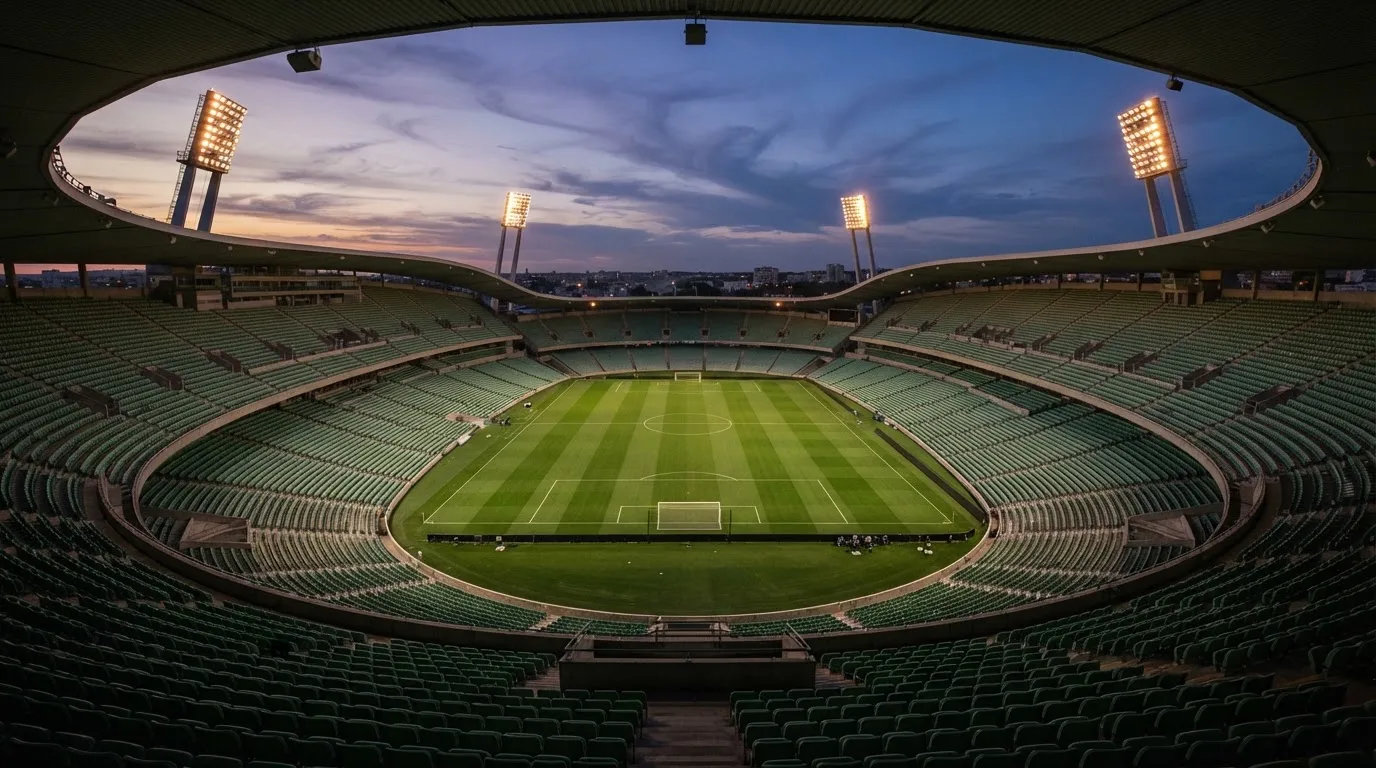
Football looks simple from the outside. Eleven players a side, ninety minutes, a referee and three points for a win. The IFAB has maintained the Laws of the Game since 1886, and within those laws a standard adult match is two halves of forty-five minutes each, with stoppage time added at the referee’s discretion. A tied game can go to two further fifteen-minute periods of extra time, and some competitions then settle it with a penalty shoot-out. Each team fields a maximum of eleven players including the goalkeeper, and the goal is 7.32 m wide and 2.44 m high. Those numbers define the shape of the contest a tipster is trying to read.
Form, statistics and line-ups are the everyday meaning of fundamentals for a tipster. Form is recent results; statistics are the deeper cuts that turn form into signal (expected goals, shots on target, the way a team defends set pieces); line-ups are who actually turns up on the day, because the eleven who start shape everything that follows. A good tipster builds a probability from those three layers and compares it to the price the bookmaker offers. Where the tipster’s probability is higher than the price implies, the bet is “value”. Where it is lower, the tipster passes, and the willingness to pass is what separates a tip sheet from a marketing email.
It is worth saying out loud: even an excellent reading of form, statistics and line-ups does not produce certainty. A penalty in the ninety-third minute, a red card for the goalkeeper, a freak deflection off a defender’s knee, a freak deflection off a striker’s knee — these are the moments that decide fixtures and are invisible from the data. The most a tipster can offer is a probability. The most a punter can do with that probability is to bet only when the price is generous enough for the probability to be worth something.
The landscape: how the tipster market is actually arranged
The British market for football betting tips arranges itself into a small number of distinct shapes, and a newcomer who cannot tell them apart will pay for the privilege of learning the difference.

Free tipsters publish picks publicly — on a website, a YouTube channel, an X account, a Substack or a Telegram channel — and monetise through affiliate links to bookmakers or through advertising around the picks. The picks themselves are free at the point of use. A free tipster has no skin in the punter’s game beyond the affiliate click, so the quality of the picks varies widely and the only test is results over time.
Paid tipsters charge a subscription — monthly, quarterly or per-service — for picks behind a paywall. The pitch is that the picks are sharper than the free ones and the subscription covers the cost. A paid tipster’s track record is the only evidence of whether the subscription is justified, and a track record that cannot be independently verified is not evidence at all.
Tipster competitions run by bookmakers or by affiliate sites offer prize money for the most profitable tipster over a fixed period. Free to enter, often small-stakes, sometimes run on a season. They are a way to test a method against others and to be tipped by the leaders in real time; the prizes do not make the picks any more or less accurate than the form reading behind them.
Matched-betting services are a different beast. A matched-betting tipster walks the punter through the arithmetic of bookmaker free bets and exchange lay bets, exploiting the welcome offers rather than reading football form. The skill is mathematical rather than predictive, and the profit comes from the offers themselves, not from the matches. It is legal in Great Britain but tightly constrained: bookmakers limit or close accounts they detect, and the income from it scales with how many fresh sign-ups a person is willing to manage.
These four shapes overlap in practice — a paid tipster may run a free channel on the side, an affiliate may publish a competition — but they answer different questions and suit different readers. A punter with hours to study form and a small bankroll gets something out of a free tipster a paid subscription would not improve. A punter who wants picks handed to them, and is willing to pay for a track record that holds up to scrutiny, finds the paid route simpler. A punter who likes the contest format wants the competition. A punter whose interest is the welcome-offer arithmetic buys the matched-betting route. None of those choices is the right one for everybody.
Are betting tipsters legal in Great Britain?
The tipster is not the regulated entity. The bookmaker behind the bet is. Anybody can publish football betting tips in Great Britain without a licence — there is no tipster licence, no tipster register, no Commission approval to call yourself a tipster. What is regulated is the gambling operator on whose platform the bet is placed, and the rules around how that operator markets its products and pays its customers.
A bookmaker whose remote facilities are used in Great Britain needs a Gambling Commission licence under sections 33 and 36 of the Gambling Act 2005 (as amended by the Gambling (Licensing and Advertising) Act 2014), no matter where the operator is based. A Curaçao, Maltese or Gibraltar licence is not a substitute. The Commission’s public register is the whole test of who holds a licence — searchable by business name, trading name, domain or account number — and every brand reviewed in this guide sits on it. A GB-licensed online operator also takes part in GAMSTOP, the multi-operator self-exclusion scheme, and that is one of the easier tells when scanning a brand’s home page.
Tipster marketing is regulated on the marketing side. The Committees of Advertising Practice codes (the CAP Code for non-broadcast and the BCAP Code for broadcast, both enforced by the Advertising Standards Authority) restrict how gambling is advertised alongside the licence conditions and codes of practice the Commission applies to operators directly. Since 19 January 2026 the wagering requirement on any bonus offered to GB customers has been capped at ten times the bonus, and mixed-product promotions — an offer that requires the punter to bet on two or more product types to unlock it — are banned. The cap is real and it matters, because a £10 bonus at fifty times wagering is a five-hundred-pound hurdle that no reasonable punter clears without losing the bonus to the margin in the process; under the cap that same £10 bonus tops out at £100 of qualifying bets. What that does to the tipster industry is harder to see. Tipster affiliate income depends on customers signing up through the affiliate link, claiming the welcome offer, and going on to bet. A heavy wagering requirement kept some of that bonus money inside the bookmaker for longer; a light one lets the customer cycle through more offers. Either way the picks themselves are unaffected.
It is worth saying what “legal” does and does not cover in this area. There is no offence against the individual punter for placing a bet with an unlicensed operator; the law aims at the operator. The risk of betting on an unlicensed site is the loss of the protections a GB licence brings: no GAMSTOP coverage, no Commission complaints route, no approved dispute-resolution service, no obligation on the operator to honour the 10x bonus cap or the £150 financial vulnerability check, and no British consumer redress if funds are withheld. A tipster who sends a punter toward an unlicensed site has moved from opinion to recommendation, and the punter who follows has moved into a market where none of the usual checks apply.
Responsible gambling: the safety net a tipster pitch never tells you about
The serious side of any betting guide is the part that says what stops when the fun stops. Gambling in Great Britain carries age, identity and player-protection rules that licensed operators are required to enforce, and the same rules are the spine of the responsible-gambling infrastructure a tipster’s pitch typically omits entirely.
The minimum age is eighteen. Name, address and date of birth are verified before a customer can deposit or gamble on a GB-licensed site, including with a free bet or bonus, and the same checks apply to withdrawals. There is no anonymous play at a licensed bookmaker, and the identity checks have been in place since 7 May 2019. Anyone who frames a tipster as a route to “anonymous” or “no-account” betting is, by that framing alone, pointing away from the licensed market.
GAMSTOP is the national multi-operator online self-exclusion scheme and a mandatory licence condition for online operators since 31 March 2020. A punter who self-excludes through GAMSTOP is blocked from signing up with any participating GB-licensed operator for the chosen period — six months, one year, five years, or five years with auto-renewal — and after the minimum period the exclusion stays in place for a further seven years unless the customer asks GAMSTOP to remove it. The scheme covers online sites and apps; betting shops use a separate service. Tools a licensed operator also offers alongside GAMSTOP include deposit limits, a Player Profile test, product restrictions and self-exclusion, with links to GamCare (and its National Gambling Helpline), GambleAware, NHS gambling clinics, Gamblers Anonymous and Gambling Therapy.
Financial vulnerability checks and financial risk assessments are the parts the industry has argued about loudest in the past year. The Commission’s social responsibility code (LCCP condition 3.4.4, in force since 30 August 2024) requires a public-record check — for example a bankruptcy register or county-court judgment check — when a customer’s deposits minus withdrawals exceed £150 in a rolling thirty days, and that threshold has applied since 28 February 2025. It is not an income check, it is not a credit-reference check, and it is not the affordability check the newspapers have been writing about. Affordability checks were announced on 7 July 2026 as a staged plan; the start date has not been set. Where the rules stand right now: vulnerability check, live; affordability checks, announced, staged, no start date. The difference matters because one is already costing licensed operators time on every customer who crosses £150 of net deposits and the other is not yet in force.
The deposit limits the Commission has been quietly building are also relevant. RTS 12 requires operators to offer a gross deposit limit on a fixed time frame; the first changes have applied since 31 October 2025, a second phase was postponed to 30 September 2026, and whether that second phase is live is not established. What the rules do not set is a state cap on deposits or losses — there is no government number that says no punter may stake more than X per week. Limits are the customer’s choice, and the operator’s job is to offer them and to honour them.
Credit cards have been banned for gambling in Great Britain since 14 April 2020 (LCCP condition 6.1.2), and the ban extends to credit-card-funded payments through an e-wallet. Debit cards and bank-based payments sit outside the ban. A British rule on whether cryptocurrency deposits are accepted at licensed operators does not exist; an operator’s own terms are the only source.
None of this changes the football, and none of it changes whether a tipster’s pick is any good. What it changes is the floor under the punter when the rest of it gets hard. A punter who thinks the tipster is doing the hard part has missed the part where the safety net has to be built by the punter themselves, in advance, with tools that work whether or not the picks come in.
Live betting and cash out: the part that arrives at the whistle
Live betting — placing a bet after a match has kicked off, with the odds changing as the game changes — has been the most disruptive product in football betting for the past decade, and it changes what a tipster can offer in a way that the marketing rarely acknowledges.
A pre-match tipster works from a reading of probability built before kick-off. The price the bookmaker offers has the bookmaker’s margin baked in, and the tipster’s job is to spot the cases where their own probability is higher than the price. After kick-off the picture is changing constantly: a red card, an early goal, a tactical switch, an injury that forces a striker off in the nineteenth minute. A live-betting tipster is reading a moving target, which is a different skill: it requires a feel for momentum, for the way a 1–0 lead at half-time changes the second-half tempo, for the way a side chasing a game opens up gaps at the back.
Cash out sits next to live betting in the same product page because it lets the punter close a position before the final whistle. The bookmaker offers a price based on the current state of the match; the punter takes it or leaves it. The bet ends, the stake (or part of it, or the winnings accrued so far) lands in the account, and the punter walks away from the rest of the match. Used well, cash out is a way to lock in profit on a bet that is winning or to cut a loss on one that is not. Used badly, it is a way to give back profit on a winning position because the punter got nervous. The feature is real and the punters who use it sensibly get something out of it; the punters who use it as a substitute for a staking plan give the bookmaker the margin twice.
In-play markets are not unregulated in Great Britain. The controls are the operator’s licence conditions and customer-protection duties — the same framework as for pre-match — and the bookmakers offering in-play on football are visibly the larger, better-resourced operations. None of the marketing in this area should be read as a claim that in-play is “unrestricted” as a legal conclusion. The opposite is closer: in-play is a regulated product with its own conduct obligations, and “live tipster bet of the day” is the kind of phrasing that hides the regulatory detail.
A punter who follows a tipster into live markets should know what they are doing. The same principle that makes a pre-match tipster useful — that the punter’s own probability has to be higher than the price — applies harder after kick-off, because the margin is the same but the punter has less time to decide and the price is moving. The skill is the same. The window is shorter.
Predictions and strategy: why no tip is ever certain
The honest sentence about football prediction is short and uncomfortable: no tip is ever certain. Not from a paid tipster, not from a tipster who claims a sixty-per-cent strike rate, not from one backed by advanced statistics, not from one who has been right on the last ten picks. Football is a low-scoring sport played by humans in front of humans, and the variance is large enough that even the best-informed prediction loses often. A punt built on the assumption of certainty collapses on the first upset; a punt built on the assumption of probability survives it.
The useful version of the same idea is the value bet. A value bet is any bet where the punter believes the true probability of the outcome is higher than the price the bookmaker is offering implies. If a punter’s reading of probability says Manchester City have a fifty-five per cent chance of winning a match, and the bookmaker’s price implies they have a forty-five per cent chance, the punter’s edge over the bookmaker is whatever sits between those two numbers. That edge does not guarantee a win — Manchester City can lose on the day — but it means the price is generous enough to make the bet worth taking over a long run. The “long run” is the operative phrase. A small sample of picks, even a big one, tells the reader very little. A punter who judges a tipster by their last weekend of picks is judging by variance; a punter who judges by a year of recorded picks at a flat stake is judging by something closer to skill.
Bookmaker margins are the part that never shows up on the marketing slide but sits inside every price a punter is offered. A bookmaker’s margin (also called the overround) is the cut the bookmaker keeps of every unit staked on a market after all outcomes are paid out. It is built into the price, and the price is the only thing the punter sees. The mechanics are straightforward: on a two-way market where the true probability of each outcome is fifty per cent, fair odds would be 2.00 (decimal) or evens (fractional) on both sides. A bookmaker offering 1.90 on each side is keeping more than that fair amount on every pound staked, and the difference is the margin. On a three-way market such as the standard 1X2 (home win, draw, away win) the margin comes off all three prices at once.
The arithmetic that turns decimal odds into a margin is the page’s own worked example, and it sits later in this guide. For the moment it is enough to know that the margin exists, that it is the bookmaker’s structural advantage, and that every tipster who quotes a price without addressing it is asking the punter to ignore the part the punter most needs to see. The punter’s edge, when there is one, is whatever is left over after the margin has been taken out.
Bankroll discipline is the operational side of the same idea. The point of a tipster’s picks is not to be right every time but to make a profit over hundreds of bets. Staking too much on a single pick turns a long-run edge into a short-run catastrophe. A flat stake of one to two per cent of the bankroll per bet is the standard rule of thumb — it is the rule this guide would give a punter who has no other — and a tipster who recommends staking ten per cent of the bank on a “lock” of the week is asking for a story that ends with the punter reloading. The bankroll is the survival kit; staking plans are how the punter uses it.
Staking plans come in two shapes. A level stake (the same amount on every pick) is the easiest to track and the easiest to compare against a tipster’s record: a £10 level stake turning a profit of £45 over 100 picks means exactly what the number says. A proportional stake (a fixed percentage of the current bank on every pick) ramps the stake up in winning streaks and pulls it back in losing ones, smoothing the bankroll journey and compounding any edge the tipster has. The level stake tells the reader what happened; the proportional stake tells the reader what would have happened if the punter had not topped up or topped down. Both are honest, as long as the punter picks one and keeps to it.
How to read the bookmaker reviews on this page
Before the operator-by-operator section starts, it is worth setting out what the reviews are doing and what they are not. Each brand reviewed below is on the Gambling Commission’s public register against a remote general betting standard (real events) licence, and the licences are stated in the licence table further down. That is the floor. What the reviews add is what each operator does with that licence, in the football markets and product features a UK punter is most likely to use: in-play coverage, bet builders, acca insurance, best odds guaranteed on horse racing, free live streaming where it applies, safer-gambling tools that are spelled out on the brand’s own pages.
The licence information is in the licence table; the operator-by-operator text below it is for what each licence is wrapped around. Each review closes on a verdict — who that operator is best for and where it loses to the one before it. The verdicts are the editor’s, and they are written from the same facts that the readers can verify on each operator’s own home page or app store listing.
A note on the source of each fact: the brands’ own sites, app store listings and the Commission’s register are the three sources used. Figures offered by way of welcome bonus, free bet or price boost are described qualitatively rather than reproduced with the exact code, because what an offer is worth is the topic of the comparison — how to claim it is not, and printing the working code turns a review into an advert. Where the licence register names an account number, the number is reproduced for verification; where the operator’s own terms describe a product feature, the feature is described in the operator’s words.
A second note on what the reviews do not do: they do not pick matches, do not predict scorelines and do not identify winners. A football betting guide that pretends to know who will win on Saturday is a tip sheet by another name, and tip sheets lose punter’s money on the weeks they are wrong. The reviews below describe the operator, the product, the safer-gambling cover and the market depth. The reading of form, the reading of statistics, the reading of line-ups and the reading of the price is the punter’s job.
The ten operators in the comparison
The list that follows is a comparison, not a ranking. Ten brands sit on the same licensing footing under the Commission’s remote general betting standard (real events) regime, and the order is editorial rather than merit-based. The reviews that follow name what each brand does, what it costs, and which kind of punter it is built for.
Kwiff
Kwiff is a remote betting brand whose UK licence is held by Eaton Gate Gaming Limited. The product’s distinguishing feature is Supercharge, which can boost the odds on a bet from something ordinary to something much larger in an instant — for example, from 2/1 to 20/1 — on singles or multiples and on any sport. That feature is the brand’s marketing claim and the brand’s product, and it sits on top of a standard football menu: pre-match and in-play on the main leagues, an acca product, and the everyday price-boost cadence a GB punter expects.
The licence is current, the register entry is the type that admits real-event sports betting, and the safer-gambling cover is the standard multi-operator set with GAMSTOP participation. There is no separate quoted product feature for live streaming, acca insurance or a same-game multi in the brand’s published material, and a punter who lives in those features will need to check the current Kwiff site before staking serious money.
Verdict. Kwiff is built around the surprise price. A punter who enjoys a small stake on an enhanced price will find something here, and the Supercharge mechanic is genuinely different from the price-boost cadence other operators run. A punter whose football betting is a steady stake on every Premier League weekend will find the menu thinner than the bigger brands and may end up back on the bigger book for the bulk of the action.
Betmaster
Betmaster runs under BM Solutions GB Ltd, registered in Malta, and holds Gambling Commission account 65699. The brand’s UK home page is a standard sportsbook layout: pre-match and in-play on the major football competitions, the major leagues and the secondary markets a recreational punter uses. The site does not lean on a flagship product in the way Kwiff leans on Supercharge, and that absence is the verdict in itself — Betmaster is set up for the punter who wants a familiar menu without the marketing-led gimmicks.
The operator holds a licence for the standard general betting market.
Verdict. Betmaster is a quiet, licensed sportsbook with a standard menu. A punter who wants a small book with the regulator’s blessing and no surprises will find that. A punter who wants the depth of market, the price-boost cadence or the in-play coverage of a major operator will find less.
BetUK
BetUK runs under LeoVegas Gaming PLC and operates under Gambling Commission account 39198. The brand’s offer tends to be the welcome-bonus style common to the LeoVegas group of brands, and the betting menu covers pre-match and in-play football with the standard price-boost cadence. The free-bet terms exclude virtual sports, esports and non-UK/IE horse racing, and minimum odds apply.
The licence is current. Safer-gambling tools are the standard multi-operator set, GAMSTOP participation applies and the age and identity checks are enforced in line with the Commission’s rules.
Verdict. BetUK is built around the welcome offer. A punter who is selecting a first bookmaker account and intends to claim the sign-up offer will find a competitive headline here and a routine menu behind it. A punter whose bookmaker is built for a hundred weekends a year, not just the first one, will read more from the everyday price than from the welcome headline.
Coral
Coral’s UK sportsbook runs under LC International Limited and operates under Gambling Commission account 54743, which covers both remote general betting standard (real events) and remote betting intermediary (the category that admits betting-exchange features, though Coral itself is a fixed-odds book rather than an exchange). The headline product is the depth of market: pre-match and in-play football on the Premier League, the EFL, the Scottish leagues, the major European competitions, a price-boost cadence through the day and the same-game multi on the fixtures that take it.
The welcome offer at the time of the last verification is a £40 free-bet bundle for a qualifying £20 sports bet at minimum odds of 2.0 (1/1), with the free bets issued within seven days and expiring seven days after issue for new GB customers who opt in. Price boosts, the standard acca product and acca insurance on certain accas are part of the day-to-day product. Live streaming is offered on selected events within the app. The standard safer-gambling tools, GAMSTOP participation and the age and identity checks apply.
Verdict. Coral is one of the bigger high-street names that has migrated its full menu online. A punter who wants the depth of a major operator and the kind of price-boost cadence that runs through a Saturday will find something to work with. A punter whose priority is a higher in-trade margin or an exchange-driven product will read other brands before settling.
Bet Ahoy
Bet Ahoy runs under Bet Ahoy Ltd and operates under Gambling Commission account 100094. The brand’s current product set includes a ten per cent acca bonus up to £1,000, a Sub-Cover feature that handles player substitutions mid-match, Best Odds Guaranteed on UK and Irish horse and greyhound racing up to £100 per day, and a Double Result payout on UK and Irish racing. The football menu is standard pre-match and in-play on the major competitions.
The licence is current.
Verdict. Bet Ahoy is built around acca and racing features. A punter whose football betting is mostly accumulators and whose racing interest is UK and Irish horse and greyhound racing will see something here that the bigger multi-product books do not push as hard. A punter who bets singles all weekend will leave much of the brand’s product on the shelf.
Fafabet
Fafabet runs under Taichi Tech Limited and holds Gambling Commission account 57385. The product set includes Best Odds Guaranteed on UK and Irish horse racing win and each-way bets from 9am on race days — if the starting price is bigger than the original price, the bigger odds are paid — along with a standard football menu on pre-match and in-play.
The licence is current.
Verdict. Fafabet’s product is anchored on horse racing with a steady football book behind it. A punter whose betting is split between Saturday racing and weekend football will find the racing side genuinely useful and the football side routine. A punter who bets football-only and never touches a racecard will not see the brand at its best.
Lottoland
Lottoland UK runs under EU Lotto Limited and operates under Gambling Commission account 38991. The product set is unusual for a comparison like this: the app combines casino, lottery betting, sports betting and scratchcards, and the sportsbook is one product among several rather than the whole pitch. Football markets are present but the depth of market is not the brand’s focus.
The licence is current and covers the standard general betting market.
Verdict. Lottoland is a multi-product brand for the punter who wants sports betting as part of a broader gambling account — a lottery ticket, a scratchcard, a football bet — and is comfortable with the smaller sportsbook depth that comes with it. A punter whose football betting is a serious share of their annual play will find a deeper menu at a brand that does football first.
Betfair Sportsbook
Betfair Sportsbook runs under PPB Counterparty Services Limited and is licensed by the Gambling Commission under account 39439. The product set is the deeper end of the comparison: in-play on football, a Bet Builder product, free live streaming of selected events such as UK and Irish horse racing and football within the app, and a 90 Minute Payout market that pays out on the result at the full-time whistle regardless of extra time or penalties. The exchange side of the brand sits under the same licence account, and the two products cross-pollinate on price.
This licence is valid for the general betting market and for the exchange-based betting intermediary category.
Verdict. Betfair Sportsbook is for the punter who wants depth. In-play coverage, the Bet Builder, the 90 Minute Payout market and live streaming are all real product, and the exchange next door is the structural reason the prices are where they are. A punter who bets football seriously will end up here or at one of the other big brands for most of their year.
NetBet
NetBet runs under Netbet Enterprises Limited and is licensed by the Gambling Commission under account 39170. The product set includes Daily Boosts and Profit Boosts as the price-enhancement rhythm, a free-bet offer cadence, a Bet Builder with instant dynamic odds, and a sports-stats module on the major leagues. Football markets cover pre-match and in-play on the major competitions.
The licence is current. Safer-gambling tools, GAMSTOP participation and the standard age and identity checks apply.
Verdict. NetBet is a middle-of-the-pack bookmaker in this comparison: a real sportsbook with a real menu, a Boost cadence that runs through the week, and a Bet Builder product that is competitive with the bigger brands. A punter who already has an account at one of the major books and is looking for a smaller second account will find NetBet a defensible choice. A punter choosing a single account for the year will be drawn to the brands with the bigger menus.
Matchbook
Matchbook runs under Triplebet Limited and is licensed by the Gambling Commission under account 39504, covering both remote general betting standard (real events) and remote betting intermediary — the exchange licence category. Matchbook is a betting exchange where customers bet against other users rather than against the bookmaker, with a Bet Builder, multiples, in-play betting and live streaming of horse racing and greyhounds offered through the platform.
The licence is current and the exchange side of the product is the structural differentiator: back and lay on football markets, prices set by punters rather than by a trading team, and a margin that compresses when liquidity is high and widens when it is not. Safer-gambling tools, GAMSTOP participation and the standard age and identity checks apply.
Verdict. Matchbook is for the punter who understands exchanges. A back-and-lay reader will see something here that no fixed-odds book offers, and the in-play liquidity on the bigger football fixtures is genuine. A punter who has never placed a lay bet will find the platform steeper to learn than a standard sportsbook.
The licence table: who is licensed, and what each licence covers
The table below sets out the licence account number on the Gambling Commission’s public register, the licensed entity and what the operator’s own published material states on the key subject relevant to this page. Every row is a real entity on the register, and every licence account is the number a reader can search against.
| Brand | Gambling Commission licence account | Licence holder | What the operator’s own terms state on the key subject |
|---|---|---|---|
| Kwiff | 44448 | Eaton Gate Gaming Limited | Supercharge can boost odds on a bet instantly on any sport, single or multi (16.10.2026) |
| Betmaster | 65699 | BM Solutions GB Ltd | Standard sportsbook layout with pre-match and in-play on the major football competitions (16.10.2026) |
| BetUK | 39198 | LeoVegas Gaming PLC | Free bets exclude virtual sports, esports and non-UK/IE horse racing; minimum odds apply (16.10.2026) |
| Coral | 54743 | LC International Limited | £40 in free bets for a qualifying £20 sports bet at minimum odds of 2.0 (1/1), issued within 7 days, expiring 7 days after issue, new GB customers who opt in (16.10.2026) |
| Bet Ahoy | 100094 | Bet Ahoy Ltd | 10% Acca Bonus up to £1,000, Sub-Cover for player substitutions, Best Odds Guaranteed on UK and Irish horse and greyhound racing up to £100, Double Result payout on UK and Irish racing (16.10.2026) |
| Fafabet | 57385 | Taichi Tech Limited | Best Odds Guaranteed on UK and Irish horse racing win and each-way bets from 9am on race days, paying the bigger of original or starting price (16.10.2026) |
| Lottoland | 38991 | EU Lotto Limited | Combines casino, lottery betting, sports betting and scratchcards; licensed by the Gambling Commission for GB customers (16.10.2026) |
| Betfair Sportsbook | 39439 | PPB Counterparty Services Limited | In-play, Bet Builder, free live streaming of UK and Irish horse racing and football within the app, and a 90 Minute Payout market (16.10.2026) |
| NetBet | 39170 | Netbet Enterprises Limited | Daily Boosts, Profit Boosts and free bet offers, a Bet Builder with instant dynamic odds, and sports stats for major leagues (16.10.2026) |
| Matchbook | 39504 | Triplebet Limited | Betting exchange with back and lay on football markets, Bet Builder, multiples, in-play betting and live streaming of horse racing and greyhounds (16.10.2026) |
The Commission’s public register is the source of every licence account number above. The description in the right-hand column is the operator’s own published material, paraphrased into one line per brand. The “key subject” depends on what each brand makes central to its pitch: racing for Fafabet, exchange mechanics for Matchbook, acca features for Bet Ahoy, the Supercharge boost for Kwiff. No row is more licensed than another; the column is descriptive, not hierarchical.
The bookmaker’s margin: a worked example
The arithmetic of the bookmaker’s margin is the page’s worked example, and it earns its place here because it is the thing the tipster pitch never shows. Two sites of the example work below: the two-way case and the three-way case.
The two-way case. Take an illustrative market at decimal odds 1.90 on each side — what the bookmaker would offer as their headline price on a tennis match, an evenly priced football promotion market, a basketball handicap trimmed to the line. The payout share on one side is one divided by 1.90, which is roughly 0.5263, or 52.63 per cent. The other side, at the same price, contributes another 52.63 per cent. Both sides added together give a payout share of around 105.26 per cent, which is more than the 100 per cent the bookmaker needs to pay out in full. The difference, around 5.26 per cent, is the bookmaker’s margin: the cut of every pound staked on this market that the bookmaker keeps across the long run.
A worked example of how that translates into what a winning bet pays back makes the relationship plain. A £10 stake at decimal odds 1.90 returns £19 (£10 × 1.90), a profit of £9 on the stake. The 5.26 per cent margin is not visible in either number — the price shows only the multiple — but it sits in the gap between the price the bookmaker offers (1.90) and the fair price the market would offer on a true fifty-fifty outcome (2.00). That gap is the bookmaker’s edge, repeated on every market, on every fixture, every weekend of the season.
The three-way case. The standard 1X2 football market (home win, draw, away win) is a three-outcome market and the same arithmetic applies across all three prices, not two. A bookmaker offering a Premier League fixture at 2.20 on the home win, 3.40 on the draw and 3.20 on the away win is paying roughly 45.45 per cent on the home side, 29.41 per cent on the draw and 31.25 per cent on the away side — a payout share of around 106.11 per cent and a margin of about 6.11 per cent. The number varies by fixture, by bookmaker and by the time of week the price is taken; the shape is the same. The market is built so that the payout share adds up to more than 100 per cent, and the difference is what the bookmaker keeps on average.
The practical reading is the one that lands in the punter’s account. A punter who reads form and statistics well, and who finds prices where the punter’s own probability is higher than what the price implies, has to do that work against a market where the price already contains a five to seven per cent structural disadvantage. A small edge is genuinely small. A big edge is what the tipster’s pitch, at its best, is trying to expose.
The condition on every figure above. The two-way illustrative case at decimal odds 1.90 / 1.90 and the three-way example at 2.20 / 3.40 / 3.20 are examples, not quotes. The actual margin on a real market depends on the bookmaker, the fixture, the time of week and the type of bet (a 1X2 margin is not a totals margin, and a margin on one Premier League fixture is not the margin on the same bookmaker’s Champions League coverage). A punter comparing the same market across two bookmakers on the same morning will see small differences in margin; a punter comparing different markets on the same bookmaker will see larger ones. The band the example produces — a margin of around five to six per cent — is typical for an even two-way football market and at the lower end of the typical range for a 1X2 football market. A price research has not pinned to a specific snapshot is described in words, not printed as a number.
The estimation, named. The margin is a statistical estimate of the cut the bookmaker keeps on average across a large number of bets, not a guaranteed amount on every individual bet. A punter can win on a margin-laden market; a punter can lose on a fair-priced market; the margin describes what happens in the long run, across thousands of bets, across the season.
How the comparison is built
The ten operators above are sorted by the licence account number on the Gambling Commission’s public register rather than by any subjective quality order. That sorting puts the bigger names — Coral, Betfair Sportsbook, NetBet, Matchbook — next to the mid-sized names — Kwiff, Betmaster, BetUK, Bet Ahoy, Fafabet — and the multi-product brand Lottoland alongside them. Within that ordering, the verdicts above name what each operator is best for and what each one loses on. The licence table is the verifiable floor under the comparison; the verdicts are the editor’s reading of each licence in use.
A punter choosing a single account from this list would do well to start with the brand whose product fits the kind of bets they place. A punter who bets football accumulators daily will move toward Coral, Bet Ahoy, NetBet or Betfair Sportsbook for the Boost cadence and the same-game multi. A punter who bets singles on the Premier League every Saturday will find something to work with at any of the ten. A punter who wants an exchange will move toward Matchbook or the Betfair exchange side of the Betfair account. A punter whose interest is racing in the week and football at the weekend will see Fafabet, Bet Ahoy or Coral as the better fit. A punter who wants a quieter menu with the regulator’s blessing and no marketing gimmicks will find Betmaster.
Every operator above is on the Gambling Commission’s public register, takes part in GAMSTOP and applies the same age, identity and safer-gambling checks. The differences between them are product differences — the depth of market, the cadence of price boosts, the live-streaming coverage, the Bet Builder, the exchange mechanics — and a punter’s choice turns on what matters most to them, not on which brand is “the safest” or “the best”. There is no single licensed operator that out-licences the others in this comparison.
Frequently asked questions
How is the return on a bet worked out from the stake and the odds?
On a single bet, the return is the stake multiplied by the decimal odds. A £10 stake at 2.50 returns £25, of which £15 is profit and £10 is the stake returned. On a combination bet — a double, a treble or an accumulator — the odds of the legs are multiplied together to give one price, and that price is applied to the stake in the same way as a single.
What is the bookmaker’s margin and how can it be seen in the odds?
The bookmaker’s margin is the cut the bookmaker keeps of every unit staked on a market after all outcomes are paid out. It is built into every price the bookmaker offers. On a two-way market at 1.90 / 1.90, the payout share on each side is around 52.63 per cent and the two together add up to about 105.26 per cent; the difference, around 5.26 per cent, is the margin. The bookmaker does not show it on the betting slip; the punter has to take it out.
What is a value bet and why is no tip ever certain?
A value bet is any bet where the punter’s own probability of the outcome is higher than the price the bookmaker offers implies. It is not a bet on what is most likely to win — it is a bet on what is more likely than the price suggests. No tip is ever certain because football is a low-scoring sport with high variance, and a probability is not a guarantee; the value comes from the gap between the punter’s probability and the price, repeated across many bets over the season.
What is a tipster in betting?
A tipster in betting is a person or service that publishes a prediction about the outcome of a football match — or any other sporting event — before the event starts (or during it for in-play tips). The prediction usually arrives with a recommended stake and a short justification. The tipster’s product is the opinion; the punter’s job is to decide whether the opinion is worth acting on, given the price the bookmaker is offering.
Who is the best betting tipster?
There is no public ranking that can answer this. A “best” tipster is one whose record, over hundreds of bets at a flat stake, has produced a profit after the bookmaker’s margin, and whose record can be independently verified. Without that, the label is marketing and nothing else. Picking a tipster is closer to picking a bookmaker than to picking a winner: read the track record, look at the staking discipline, ignore the headline and judge the long run.
How does a punter become a betting tipster?
The honest route is the slow one. Build a method — form reading, statistics, line-up analysis, price reading — and record every pick at a flat stake over hundreds of bets. Publish the record publicly, with closing odds and the bookmaker used. The verifiable record is what separates a tipster from a pundit, and it is what a paying customer has any reason to trust.
Football – Bookies Trust
Content created by the «Bookies Trust» team
