
Reading MMA Betting Odds: Margins, Markets and What the Numbers Actually Cost
 Available in US
Every UFC card, every Bellator event, every PFL playoff: the prices look familiar — a favourite at 1.40, a dog at 3.50 — yet the cost of placing that bet is not the same from one bookmaker to the next, nor from one market to the next inside the same bookmaker. The job of this guide is to read those prices as a punter should: as a margin, a market depth, and a signal of where a bookmaker is leaning. The arithmetic is small. The difference it makes to a bankroll over a season is not.

This page was written against data current as of 27 October 2026, with operator details checked against the Gambling Commission’s public register.
Responsible Gambling in MMA Betting
Mixed martial arts moves fast. A round ends in a flash, a finish comes out of nowhere, and the temptation to chase a loss with a bigger one — “I’ll get it back on the next underdog” — is the single most common way a punter’s bankroll dies. MMA markets compound the pressure: three-round fights settle in fifteen minutes, five-round title bouts in twenty-five, and the in-play prices refresh in seconds. A punter who has just watched a five-round decision go the wrong way needs a moment, not a market.
The framework in Great Britain is built around that reality. GAMSTOP is the national multi-operator self-exclusion scheme, mandatory for every GB-licensed online bookmaker since 31 March 2020; a punter can register for six months, one year, five years, or five years with auto-renewal, and after the minimum period the exclusion stays in place for a further seven years unless the punter asks to remove it. It covers online sites and apps. Betting shops run a separate service. GamCare runs the National Gambling Helpline; GambleAware, NHS gambling clinics and Gamblers Anonymous are the rest of the support network. Every reviewed bookmaker links to at least one of them from its safer-gambling page.
Since 7 May 2019, a GB-licensed bookmaker has to verify a customer’s name, address and date of birth before the first deposit — including when the first use is a free bet or bonus. The trade is that anonymous play is gone; the gain is that the same verification feeds the safer-gambling tools. A financial vulnerability check, in force since 30 August 2024, kicks in when a customer’s deposits minus withdrawals cross £150 in a rolling 30 days; that trigger applies from 28 February 2025 and runs as a public-record search, not an income check. The “affordability checks” headline figures of the press — staged, deeper checks at higher spend — were announced by the Commission on 7 July 2026 with no start date; write that as “announced, staged, no start date”, because that is what the Commission’s own statement says.
Two practical rules follow. First, set a deposit limit before the first bet. The limit is the punter’s choice; there is no state-set ceiling for betting in Great Britain, and a bookmaker has to offer one on a fixed time frame under the Remote Technical Standards. Second, treat any in-play MMA market as the highest-pressure environment the punter will see all week. If a stop-loss is needed, it is needed there.
Crypto, Bitcoin and Anonymity at MMA Bookmakers
The pitch around crypto MMA betting is short: deposit with Bitcoin or another coin, bet on the fight, withdraw back to a wallet. The reality inside Great Britain is more constrained than that sentence suggests. A GB-licensed bookmaker has to verify name, address and date of birth before the first deposit, regardless of how the deposit itself moves; a punter who values anonymity above the protections that come with a licence will find that the licence itself is the obstacle. Credit cards have been banned for gambling in Great Britain since 14 April 2020, and a credit-card-funded e-wallet deposit falls inside that ban; debit cards and bank-based payments do not.
Whether a GB-licensed operator accepts cryptocurrency deposits at all is not established as a market-wide rule. Each operator’s terms page is the answer. Offshore brands sitting on a Curaçao or Anjouan licence may run a coin-only cashier with no document check, and they will quote tighter prices because they pay no General Betting Duty — but the punter also loses GAMSTOP coverage, the Commission’s complaints route, approved dispute resolution, and any practical recourse if a withdrawal stalls. The crypto MMA sites that take GBP-licensed traffic are not a separate tier; they are the same GB-licensed bookmakers, with the same safer-gambling obligations, behind that the cashier.
For a punter who wants crypto for its own sake — to settle on a wallet, to avoid the bank statement — a GB-licensed brand with a crypto cashier is the place to look; it keeps the licence, the safer-gambling tools and the bonus cap, and adds a coin rail. For a punter who values anonymity above all else, the offshore route exists, but the cost is the protections the section above described. The ledger is public; the operator’s duty of care is not.
Bonuses and Free Bets for MMA Punters
The headline reads the same on every reviewed bookmaker: a free bet, a matched deposit, a price boost on a UFC card. The cost of claiming it is what separates a sensible offer from one that takes more than it gives. The Promotion Rules in force since 19 January 2026 cap wagering requirements on bonuses at 10x the bonus amount — a £10 bonus with a 50x wagering condition would need £500 of qualifying bets; under the cap, no more than £100 of wagering can be required for that £10 bonus. Mixed-product promotions, an offer that forces the punter to bet on two or more product types (betting plus casino, for example), are banned outright. Free bets without a wagering condition are not covered by the cap on the face of the rule, and each operator’s terms decide how a no-wagering free bet is treated.
A free bet is rarely what the word suggests. The stake is usually not paid back with a win — a £10 free bet at odds of 4.00 returns £30 in profit, not £40 — and most free bets carry a 7-day expiry, a minimum-odds floor, and a cap on what they pay out. A “risk-free” bet refunded as a free bet is a free bet with the original stake still lost on the first attempt, not a refund in cash. The Marketing Department’s “free” is the punter’s “conditional”; read the small print before claiming.
A price boost on a UFC heavyweight is a different shape. The bookmaker raises the price on one outcome for a limited window; the value of the boost is the price difference over the un-boosted line, and the punter’s edge on it is exactly that difference minus the margin the boost was built on. A boosted 2.50 on a fighter normally priced at 2.20 is worth 0.30 in price, less whatever margin sits inside the boost itself. A Super Boost or a Winnings Boost on an accumulator is paid on top of the normal return, capped at a stated maximum, and applies only to named events. Each reviewed bookmaker runs its own version: bet365’s Super Boosts and Winnings Boosts on Bet Builders and selected singles, Dabble’s a £10 free bet on a £10 first bet at minimum odds, BetUK’s four £10 free bets split across football accumulators and multiples. What the punter keeps is the return after the wagering, the expiry and the cap have done their work.
MMA Betting Apps and the Mobile Experience
A punter watching a UFC pay-per-view at home is not opening a laptop. The MMA market is a mobile market, and the GB-licensed bookmakers have built for it: dedicated apps on iOS and Android, betting slips that survive a phone call, in-play markets that update between rounds, and cash-out buttons that surface a number the punter can take or reject while the next round is being called. bet365’s UK App Store page describes its sports betting app as the most downloaded sports-betting app in the country; whether or not the description is generous, the download rankings put it at the top of the table.
The features that matter on an MMA app are narrow. In-play markets must update fast enough to be useful between rounds — a five-minute round is long; a one-minute rest is the window. A bet builder that lets the punter combine method of victory, total rounds and fight to start round three, all on one fight, saves switching between tabs. A cash-out button that works on a single bet and on an accumulator is a separate tool, and a partial cash-out is a third. Push notifications for the next card’s odds moves keep a punter close without an open app. Friction kills in-play betting, and the MMA market punishes a slow app harder than football does.
The browser path is the fallback. A punter whose phone is on the desk and whose laptop is on the sofa is not switching to a smaller screen for a smaller card. Most reviewed bookmakers run a mobile-optimised site that mirrors the app’s in-play markets and bet builder, with the bet365 and William Hill mobile sites commonly cited for depth. The browser path costs a few seconds of latency against a native app and saves the install. For a casual card the trade is fine. For a five-round title fight, the app wins.
Live MMA Betting and Cash Out
In-play MMA betting is the market’s sharpest tool. The price of a fighter moving through a round is the punter’s read on the fight, updated every few seconds, with a margin the bookmaker takes on top. The punter’s edge on a live bet is information the bookmaker has not priced yet: a cut opened above the eye, a takedown defence that has stopped working, a gas tank emptying in the championship rounds. None of that is certain. The market is faster than the read more often than not.
Cash out closes the bet before the fight ends. A punter who took a fighter at 3.00 and now sees them landing cleanly at the end of round two can take a cash-out offer of 1.80 and lock in a small profit; a punter on the other side who took 1.40 and is now watching their fighter wobble can take 1.10 and recover some of the stake. The cash-out price is the bookmaker’s read on the live fight, refreshed continuously, with its own margin layered on top of the in-play price. A punter using cash out is paying the bookmaker twice for the privilege of certainty: once in the original market’s margin, and once in the cash-out’s margin.
Spreadex’s app combines fixed-odds betting with spread betting, both in pre-match and in-play markets, with one-click, auto and partial cash out across both formats. The spread side sits inside the FCA’s spread-betting regime for financial markets, where losses can exceed the deposit; the fixed-odds side is a normal Commission-licensed bookmaker, with the standard safer-gambling tools and the standard General Betting Duty. A punter who wants the live format and accepts the spread side’s risk profile gets both in one app; a punter who only wants fixed-odds in-play markets gets the fixed-odds side at the same place. Sporting Index runs the same dual structure on its app. Sportingbet’s live markets sit inside the fixed-odds side only.
Streaming is the third leg of a live setup. bet365 offers in-play betting and live streaming of events worldwide on its app; Spreadex streams UK and Irish horse racing, greyhounds, tennis, NFL and selected football. An MMA stream from a licensed bookmaker is a separate question; the rights to UFC and Bellator events sit with the promoters and their broadcast partners, not with the bookmakers, and a GB-licensed app that shows a UFC card live is the exception rather than the rule. The punter’s secondary screen — the broadcast — is still the primary feed for the fight itself; the bookmaker’s app is the market.
MMA Predictions, Tips and Strategy
Every punter has a method: read the tape, check the camp, look at the weight cut, model the finish probability by round. The page is not the place for a method, because no method the page sets out can know a fight’s outcome before it happens, and a punter who acts on a “sure bet” loses real money on the page’s word. The arithmetic is the only honest thing the page can give, and even that arithmetic is an average, not a prediction.
Three rules survive any method. First, the margin sits inside every price; the punter’s job is to find prices whose margin is lower than the rest of the market, on a fight where the punter’s read is sharper than the bookmaker’s. A price of 1.91 on a two-way market is a margin of roughly 4.7 % on each side; a price of 1.85 is a margin of about 7.5 %. The difference is small per bet. Over a season of three or four bets a week it is the difference between a flat bankroll and a slow bleed. Second, the juice on a heavily public favourite is heaviest; a price of 1.20 carries more margin than a price of 3.50, and the punter paying 1.20 is paying for the privilege of being on the side of the market that has already moved. Third, bankroll management is the strategy that survives a bad run: a flat unit size, a stop at a fixed loss, and a refusal to chase with bigger stakes on the next card.
The tipsters and the prediction sites will quote a “lock of the week” every Friday. The lock loses more often than the price suggests; the lock’s price already includes the public money that made it a lock. The punter’s edge is the read the bookmaker has not priced, not the consensus.
Bet Types and Odds in MMA Markets
A fight’s main market is the moneyline — fighter A, fighter B. The price on each side reflects the bookmaker’s read on the fight, with a margin built in. The deeper markets — method of victory, fight to go the distance, total rounds, round groupings, fighter to win by KO/TKO/submission/decision, fighter to win in round three — are layered on top of that read, each with its own margin. A punter who only takes the moneyline pays one margin; a punter who builds a same-fight accumulator pays several.
The method-of-victory market is the MMA equivalent of a correct-score bet. The price on a KO/TKO in round one reflects the bookmaker’s read on each fighter’s finishing ability; the price on a decision reflects the read on each fighter’s gas tank and durability. A five-round title bout opens a “fight to go the distance” market that does not exist on a three-round undercard. The punters with a sharp read on a fighter’s gas tank take the to-go-the-distance side; the punters with a sharp read on a finisher take the other side. Both reads can be right; the market is the meeting point.
Same-fight accumulators — a Bet Builder — combine several markets into one price. LiveScore Bet’s Bet Builder allows up to 10 selections across match result, both teams to score (less relevant on a two-fighter fight, more relevant on a multi-fight card), corners, total goals, player scoring and card markets; on an MMA card the relevant selections narrow to method of victory, total rounds, fight to start round X, and fighter to win by method. Bet365’s Bet Builder+ runs the same logic across pre-match and in-play markets. The accumulator’s price is the product of the legs’ prices; the accumulator’s margin is the sum of the legs’ margins, less the diversification a single event gives. A two-leg same-fight acca is a sharper tool than a five-leg accumulator across different sports; the punter’s information on a single fight does not diversify with the number of legs.
Odds format is British by default. A price of 5/1 (fractional) is 6.00 in decimal; 11/4 is 3.75; evens is 2.00. Conversion is a/b → a ÷ b + 1. A price shorter than evens is “odds-on”; a price longer is “odds-against”. The punter’s return on a winning bet at 6.00 with a £10 stake is £60 (the £10 stake is paid back, plus £50 profit). The punter’s return on a £10 free bet at 6.00 is £50 — the stake is not paid back with a free bet. Best Odds Guaranteed (BOG) on horse racing, offered by William Hill and Fafabet among the reviewed bookmakers, pays the starting price if it is bigger than the price the punter took; BOG is a horse-racing product, not an MMA product, and no MMA equivalent sits inside the reviewed set.
MMA Sports and Tournaments
The MMA market in Great Britain is dominated by the UFC, with Bellator, PFL, ONE Championship and a long tail of regional promotions underneath. The UFC runs 11 weight divisions — eight men’s, three women’s — and stages events most weekends of the year. The Promotion was founded on 12 November 1993 at McNichols Sports Arena in Denver, Colorado, and the rule set most promotions now use dates to the unified rules adopted in the early 2000s. A three-round bout is fifteen minutes of fighting; a five-round title bout is twenty-five. One minute of rest sits between rounds.
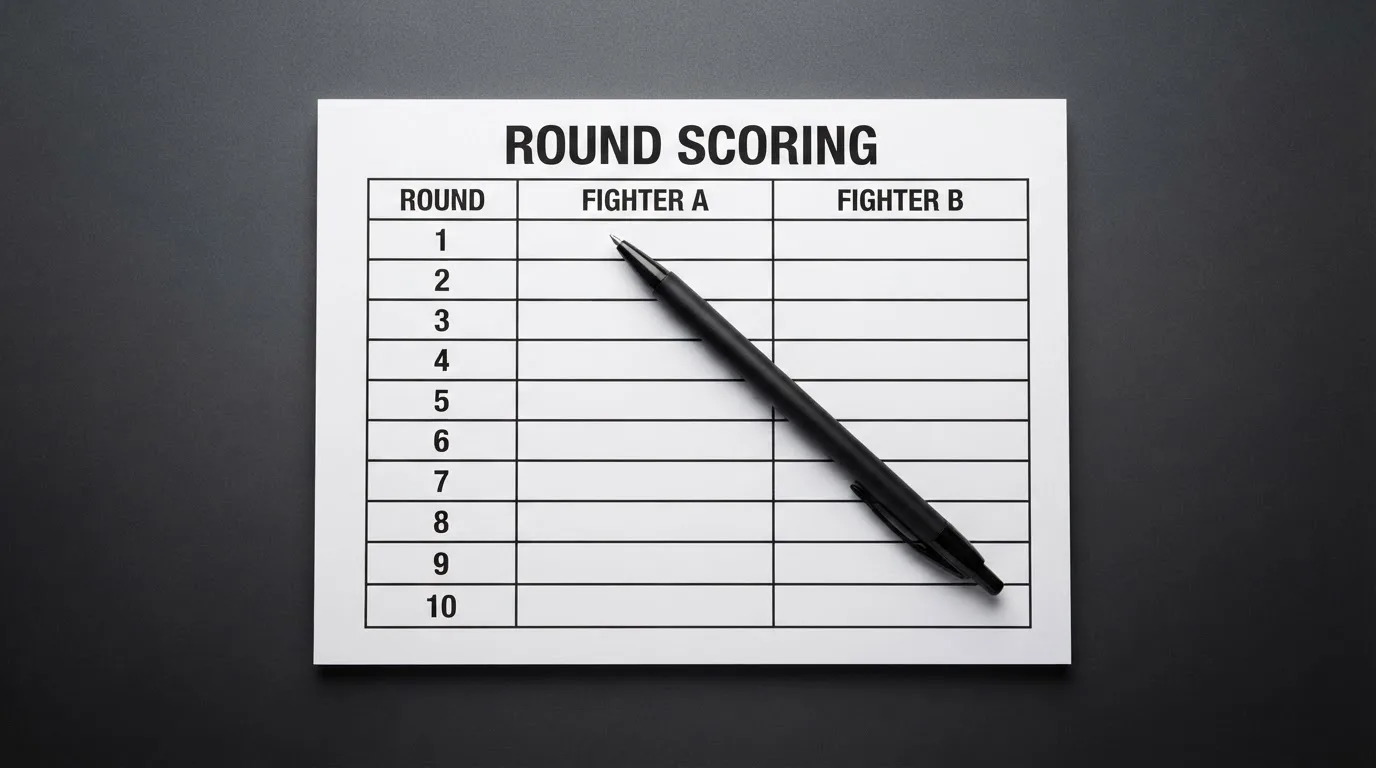
The 10-point must system scores each round: the round winner gets 10 points, the loser 9 or fewer, and an even round is scored 10–10. A decision is unanimous (all three judges agree), majority (two agree, one calls it a draw), or split (two disagree on the winner). A draw can be unanimous (all three call it even), majority (two call it a draw, one picks a winner), or split (two pick different winners, one calls it a draw). Under the unified rules a bout ends in disqualification if an intentional foul incapacitates a fighter; an unintentional foul that incapacitates a fighter ends the bout in a no contest. A bet on a fighter to win settles on the official result; a bet on a method of victory settles on the official method, with a disqualification treated as a KO/TKO on the side of the fouling fighter and a no contest voiding the market outright.
Regional promotions carry their own rule sets and their own timing. A ONE Championship card runs a different round structure to a UFC card; a PFL playoff uses a season format with a tournament at the end. The punter’s job is to know the rule set the bookmaker is pricing, because a method-of-victory market on a promotion whose rules allow soccer kicks is not the same as one whose rules do not. The reviewed bookmakers carry the major promotions as standard; the regional tail varies.
The MMA Bookmakers, Compared
The table below sets the reviewed bookmakers side by side on two matters: the Gambling Commission remote licence under which they operate in Great Britain, and what the operator’s own terms state on the MMA book. The licence number is the public-register entry; the operator’s terms are the punter’s own first read before any bet.
| Brand | Gambling Commission remote licence holder and number | What the operator’s terms state on MMA |
|---|---|---|
| Octobet | Octopus Game Limited, account 62545 | Sportsbook covers UFC and major MMA cards with moneyline, method of victory and round groupings |
| Tote | TDCO Limited, account 54779 | Pool-based product on horse racing as the headline; sportsbook extends to MMA markets |
| BetUK | LeoVegas Gaming PLC, account 39198 | Sportsbook covers UFC and Bellator with pre-match and in-play markets |
| LiveScore Bet | LiveScore Betting and Gaming (Gibraltar) Limited, account 56859 | Bet Builder accepts up to 10 selections across MMA fights and other sports |
| Sporting Index | Sporting Index Limited, account 27343 | Spread betting and fixed-odds betting on the same platform, with in-play markets on MMA |
| Spreadex | Spreadex Limited, account 8835 | Fixed-odds and spread betting in one app, with Bet Builder across fixed odds and spreads, plus cash out and partial cash out |
| bet365 | Hillside (UK Sports) ENC, account 55148 | Bet Builder+, Super Boosts, Winnings Boosts on Bet Builders, daily Bet Boosts, in-play betting and live streaming |
| Dabble | Dabble Sports UK Ltd, account 65677 | Standard MMA moneyline and method-of-victory markets on UFC and Bellator cards |
| Fafabet | Taichi Tech Limited, account 57385 | Sportsbook covers UFC and major MMA cards with moneyline and round markets |
| Kwiff | Eaton Gate Gaming Limited, account 44448 | Sportsbook covers MMA with moneyline and method-of-victory markets, branded under the kwiff trademark |
A punter who wants the deepest MMA menu with the most in-play tools is looking at bet365 first; the Bet Builder+, Super Boosts, and live streaming make it the natural home of the MMA card on a fight night. A punter who wants spread and fixed-odds side by side is looking at Spreadex or Sporting Index; the spread side carries a different risk profile (losses can exceed the deposit) and a separate FCA-regulated framework for the financial side, so the punter’s choice is a trade-off rather than an upgrade. A punter who wants a lean MMA menu with a familiar sportsbook wrapper is looking at BetUK, Fafabet or Octobet; the MMA product is there, with the major cards priced, and the bonus structure sits around it. The Commission’s public register is the punter’s first check on any brand named in this table, because the licence number is the test of who is licensed, and no reviewed brand sits outside the register.
Octobet
Octobets’ sports welcome offer, as listed on the GB App Store, is 50% back as a free bet up to £50, plus a £10 casino bonus for new customers. The sportsbook carries the major MMA cards with moneyline, method of victory and round groupings. Operated by Octopus Game Limited under Gambling Commission account 62545 (remote general betting standard, real events), the brand is on the public register against that licence. The promotion rules in force since 19 January 2026 cap wagering requirements at 10x the bonus amount, and any wagering condition on the free bet side has to clear under that cap.
For a punter who wants a familiar sportsbook with a concrete welcome package and a mainstream MMA menu, Octobet is the right shape. The MMA product is not the deepest in the comparison, and a punter who wants a Bet Builder on a UFC card or in-play streaming on a fight will not find it here. The terms are the standard read for any bonus claim, and the cap on wagering makes the offer more honest than the bonus pages of a year ago.
Tote
Tote is the pool-betting brand that grew into a sportsbook, and the licence under it sits with TDCO Limited at Gambling Commission account 54779. The pool product on horse racing is the headline; the sportsbook extends to MMA markets with the major cards priced. The MMA menu is functional rather than deep.
A punter whose interest in Tote sits in the pool product on racing and who wanders into the sportsbook for a UFC card will find the markets they need. A punter looking for a sportsbook-led MMA experience will not find it here.
BetUK
BetUK’s sports welcome offer, as listed on the GB App Store, is four £10 free bets for new customers who deposit £10 or more and place a sports bet within seven days of registering: two football accumulators of four or more selections and two multiples of two or more, valid for seven days, with opt-in required. The sportsbook carries UFC and Bellator with pre-match and in-play markets. Operated by LeoVegas Gaming PLC under Gambling Commission account 39198.
For a punter whose betting menu is football-heavy with MMA as a side interest, the welcome package fits. The free bets are football-shaped, and a punter whose MMA interest is the headline will find the welcome package less aligned than the MMA product.
LiveScore Bet
LiveScore Bet’s Bet Builder allows up to 10 selections across match result, both teams to score, corners, total goals, player scoring and card markets; the Bet Builder’s MMA application is in the fight menu rather than the football menu, but the engine is the same. Operated by LiveScore Betting and Gaming (Gibraltar) Limited under Gambling Commission account 56859.
For a punter who builds accumulators across multiple selections, the 10-leg cap is a meaningful number. A punter whose MMA bets are singles on the moneyline will not lean on the Bet Builder as the headline tool.
Sporting Index
Sporting Index lets a customer switch between fixed odds and spread betting, with in-play betting, Bet Builder for football, auto cash-out and Multi-Markets. The MMA product is in-play capable on the fixed-odds side; the spread side carries a different risk profile (losses can exceed the deposit) and a separate framework under the FCA for the financial side. Operated by Sporting Index Limited under Gambling Commission account 27343.
For a punter who wants spread and fixed-odds side by side, Sporting Index is one of two places to find it in the reviewed set. The MMA menu is functional rather than deep on the spread side; the fixed-odds side carries the standard markets.
Spreadex
Spreadex combines fixed-odds and spread betting in one app, with one-click, auto and partial cash out, Bet Builder across fixed odds or spreads, and live streaming of UK and Irish horse racing, greyhounds, tennis, NFL and selected football. Spreadex is regulated by the FCA for spread betting and by the Gambling Commission for fixed-odds betting; the spread side carries the FCA’s risk profile where losses can exceed the deposit. Operated by Spreadex Limited under Gambling Commission account 8835.
For a punter who wants both formats in one app, Spreadex is the second of two places to find it. The Bet Builder across fixed odds and spreads is the headline tool; the in-play menu and the cash-out flexibility are the supporting structure. A punter whose MMA bets are confined to the fixed-odds side will use the spread side less often than the marketing suggests, but the dual format means the punter is not switching apps to change product.
bet365
bet365 is the official global betting partner of the UEFA Champions League, and the GB App Store describes its sports betting app as the most downloaded sports betting app in the UK. The MMA product sits on top of that footprint: Bet Builder+ combining markets from one event into a single bet pre-match and in-play, Super Boosts, Winnings Boosts on Bet Builders and selected singles, daily Bet Boosts, in-play betting, live streaming of events worldwide, Bet Track, Match Live and a Live Golf Tracker. Operated by Hillside (UK Sports) ENC under Gambling Commission account 55148.
For a punter who wants the deepest MMA menu with the most in-play tools, bet365 is the natural home of the comparison. The Bet Builder+ engine on a UFC card is the sharpest tool in the reviewed set; the Super Boosts and Winnings Boosts sit on top of it. The trade is that bet365’s welcome package, like most of the major UK bookmakers, is conservative against the smaller brands; the brand’s value is the product, not the offer.
Dabble
Dabble’s welcome offer, as listed on the GB App Store, is a £10 free bet on a first £10 deposit, with minimum odds applying, a seven-day free bet expiry, and the stake not returned. The sportsbook carries standard MMA moneyline and method-of-victory markets on UFC and Bellator cards. Operated by Dabble Sports UK Ltd under Gambling Commission account 65677.
For a punter who wants a clean welcome package and a familiar MMA menu, Dabble is the right shape. The free bet’s stake-not-returned condition is standard for the format, and the seven-day window is the same window most reviewed bookmakers run.
Fafabet
Fafabet pays Best Odds Guaranteed on UK and Irish horse racing win and each-way bets from 9am on race days: if the starting price is bigger than the original price, the bigger odds are paid. The sportsbook carries UFC and major MMA cards with moneyline and round markets. Operated by Taichi Tech Limited under Gambling Commission account 57385.
For a punter whose betting menu is racing-heavy with MMA as a side interest, Fafabet is the right shape. BOG is a horse-racing product, and a punter whose MMA interest is the headline will not lean on it.
Kwiff
Kwiff is licensed by the UK Gambling Commission and is described as a trademark operated by Spryme Ltd; the app carries a 17+ App Store age rating. The sportsbook carries MMA moneyline and method-of-victory markets on the major cards. Operated by Eaton Gate Gaming Limited under Gambling Commission account 44448.
For a punter who wants a lean MMA menu with a straightforward sportsbook wrapper, Kwiff fits. The 17+ age rating sits above the legal minimum of 18 and is an App Store classification, not a regulatory one; the Gambling Commission’s minimum age is 18 and the verification before the first deposit enforces it.
Overview: How MMA Betting Fits the GB Market
Mixed martial arts betting in Great Britain sits inside the same regulatory frame as every other sport. A bookmaker serving customers in Great Britain needs a Gambling Commission licence under the Gambling Act 2005, since the Gambling (Licensing and Advertising) Act 2014 extended the regime to operators based anywhere; a Curaçao, Maltese or Gibraltar licence is not a substitute, and a brand licensed in one of those jurisdictions but serving GB customers without a Commission licence is breaking section 33 of the 2005 Act. The Commission’s public register, searchable by business name, trading name, domain or account number, is the whole test of who is licensed. No statutory list of permitted sports or markets exists; an operator holds a licence for a category and offers markets under its own rules and the Licence Conditions and Codes of Practice.
For an MMA punter, three things follow. First, every reviewed bookmaker in this guide is on the Commission’s public register against a remote general betting standard (real events) licence; the table above carries the licence number and holder for each brand. Second, no single brand is “the only” licensed one; the register lists far more brands than any article features, and the licence test is binary, not a ranking. Third, the same verification, the same safer-gambling tools, the same GAMSTOP coverage and the same £150 financial vulnerability check that apply to a football punter apply to an MMA punter; the promotion rules in force since 19 January 2026 cap bonus wagering at 10x and ban mixed-product promotions, regardless of sport.
The return on an MMA bet is the same arithmetic as on any other sport. A winning bet at decimal odds of 4.00 with a £10 stake returns £40 (the £10 stake plus £30 profit). A winning free bet at 4.00 returns £30 (the stake is not paid back). A winning accumulator’s odds are the product of the legs’ odds; a three-leg acca at 2.00, 3.00 and 4.00 carries odds of 24.00, and a £10 stake returns £240. The punter’s edge on each bet is the difference between the punter’s read on the fight and the bookmaker’s price; the punter’s edge over a season is the sum of those edges, minus the margin the bookmaker took on every bet.
Understanding how a bookmaker’s margin works is the key to identifying the real cost of a bet.
The Math of an MMA Market
The arithmetic the page has been circling is small and worth doing once. Take an illustrative two-way market — a method-of-victory line where one fighter is priced at 1.90 and the other at 1.90. The payout share on that market is 1 ÷ (1/1.90 + 1/1.90) = 1 ÷ (0.5263 + 0.5263) = 1 ÷ 1.0526 ≈ 0.9501, or roughly 95.0 % of every unit staked. The margin is 1 − 0.9501 ≈ 0.0499, or roughly 5.0 %. That is the cost, on average, of placing a bet on that market at those prices.
The same shape on a one-sided favourite at 1.40 and an underdog at 2.75: payout share is 1 ÷ (1/1.40 + 1/2.75) = 1 ÷ (0.7143 + 0.3636) = 1 ÷ 1.0779 ≈ 0.9278, or roughly 92.8 %. The margin is about 7.2 %. The favourite-heavy market is more expensive to bet on than the balanced market; the public money has pushed the favourite’s price down and the underdog’s up, and the bookmaker has widened the margin to capture the action on both sides.
State the result as a band, because the inputs research names are illustrative and the market’s true margin varies event to event. For a balanced two-way market at 1.90/1.90, the margin sits around 5 %. For a one-sided market at 1.40/2.75, it sits around 7 %. For a heavily one-sided market at 1.20/4.50, it sits closer to 9 %. The punter’s takeaway is that the price’s margin moves with the favourite’s price, and the favourite’s price moves with the public money.
The punter’s job is to find prices whose margin is lower than the rest of the market on a fight where the punter’s read is sharper than the bookmaker’s. The price is not the fight’s probability; the price is the bookmaker’s probability with a margin on top. Reading that gap is the page’s job.
Legality, Regulation and What Protects the Punter
The framework the punter sits inside has more corners than the price. The Gambling Commission licenses the whole commercial market under the Gambling Act 2005; the framework covers Great Britain (England, Scotland and Wales), and Northern Ireland sits outside the Act under its own older law. The licence categories a punter meets on a sportsbook are remote general betting standard (real events) for the bulk of the menu, remote general betting standard (virtual events) for virtual sports, remote pool betting for pool products, and remote betting intermediary for exchanges. Spread betting that is not a financial product sits inside General Betting Duty; financial spread betting is regulated by the FCA, not the Commission, and losses can exceed the deposit.
The safer-gambling corner has been described in the section above; the recap here is one sentence — GAMSTOP, GamCare, the £150 vulnerability check, the no-credit-card rule, and the verification before the first deposit. The payments corner: no British named-account rule, no state list of permitted payment methods, no established rule for or against cryptocurrency deposits at licensed operators. The identity-verification rule is the only consistent constraint; the rest is the operator’s own terms.
The advertising corner is the CAP Code (non-broadcast) and BCAP Code (broadcast), enforced by the ASA, alongside the LCCP marketing conditions. CAP Code section 16: marketing must be socially responsible, must not be of strong appeal to under-18s, and no one who is or seems to be under 25 may appear gambling or play a significant role, with an exception for marketing placed where a bet can be made directly. The rule is about who may appear in an advertisement, not who may place a bet. Under rules effective since 19 January 2026, bonus wagering is capped at 10x and mixed-product promotions are prohibited; these requirements apply to every operator licensed by the Commission.
The tax corner: the player pays no tax on betting winnings in Great Britain. General Betting Duty is the operator’s tax on gross profits, currently 15 %; from 1 April 2027 a new remote betting rate of 25 % applies within it, while remote bets on UK horse racing, bets on self-service betting terminals in licensed premises, pool betting and in-person betting stay at 15 %. Until 1 April 2027 the remote rate stays at 15 %. The Commission’s statutory levy is a separate charge, not a tax, and never reaches the punter’s return.
The offshore corner is the one the punter most needs to read. A GB licence is compulsory at the point of consumption. Providing gambling facilities in Great Britain without the licence the Act requires is an offence under section 33 of the Gambling Act 2005. There is no offence aimed at a customer who merely bets on an unlicensed site; the cost of betting on an unlicensed site is the loss of the protections a licence brings. No GAMSTOP coverage, no Commission complaints route, no approved dispute-resolution body, no British consumer redress if funds are withheld, not bound by the 10x bonus cap or the £150 vulnerability check. Enforcement is disruption, not blocking; cease-and-desist notices, search-engine referrals, work with registrars, hosts and payment providers, and the Commission has been given, or is about to receive, court-order DNS blocking powers. Honest framing: licensed means checks, limits, GAMSTOP, the bonus cap — and identity verification before the first bet; unlicensed means none of those protections and the possible loss of funds. Neither is “the safe choice” by default; the choice is which trade-off a punter wants to make.
Frequently Asked Questions
How does MMA betting work?
A bookmaker offers prices on a fight — usually a moneyline on each fighter, with method of victory, total rounds and round groupings underneath. A punter stakes an amount, the bet settles on the official result under the promotion’s rules, and a winning bet pays the price times the stake. The stake is paid back with a win; on a free bet, the stake is usually not.
Where to bet on MMA fights with high odds?
“High odds” means a long price on an underdog. Every reviewed bookmaker offers the major MMA cards with moneyline, method of victory and round groupings, and the price on the underdog side varies from one bookmaker to the next. The punter’s job is to find the highest price on the side the punter wants, not the highest headline price on a card.
What is the best MMA bet for this weekend?
No page can name a winner, and no punter should act on a “sure bet” from any source. The punter’s edge is the difference between the punter’s read on the fight and the bookmaker’s price, and that edge has to be found by the punter on the price board, not on a tipster page.
How can it be checked that a bookmaker holds a Gambling Commission licence?
The Commission’s public register is searchable by business name, trading name, domain or account number, and the licence status, category and holder are listed against each entry. The table on this page carries the licence number and holder for every reviewed bookmaker. A brand not on the register against a remote general betting standard (real events) licence is not licensed to serve customers in Great Britain.
How is the return on a bet worked out from the stake and the odds?
Return = stake × decimal odds; net profit = stake × (decimal odds − 1). A £10 stake at 4.00 returns £40 (£10 stake plus £30 profit). A three-leg accumulator at 2.00, 3.00 and 4.00 carries odds of 24.00; a £10 stake returns £240. A free bet’s stake is usually not returned, so the return is stake × (odds − 1).
What is the bookmaker’s margin and how can it be seen in the odds?
The margin is the slice of every unit staked that the bookmaker keeps, on average, across a market. For a two-way market the payout share is 1 ÷ (1/odds₁ + 1/odds₂), and the margin is 1 minus that share. A balanced market at 1.90/1.90 carries a margin of about 5 %; a one-sided market at 1.40/2.75 carries about 7 %. The price is not the fight’s probability; the price is the bookmaker’s probability with a margin on top.
Combat & motorsport – Bookies Trust
Content created by the «Bookies Trust» team
