
Motorsport betting odds in 2026 — price, margin and the real cost of a motorsport bet
 Available in US
Motorsport odds look like numbers; they are not. Every decimal price on a Formula 1 race, an IndyCar round, a World Endurance Championship stint or a MotoGP sprint carries a built-in take for the bookmaker, and that take decides what a winning bet returns. This page is a practical look at motorsport betting odds as the bettor meets them: which markets licensed UK bookmakers price, how the margin sits inside the price, what bonuses and free bets ask of the customer who claims them, and where the ten reviewed operators stand on the mechanics that matter most. The angle throughout is cost. A price is what you are quoted; cost is what you actually pay.
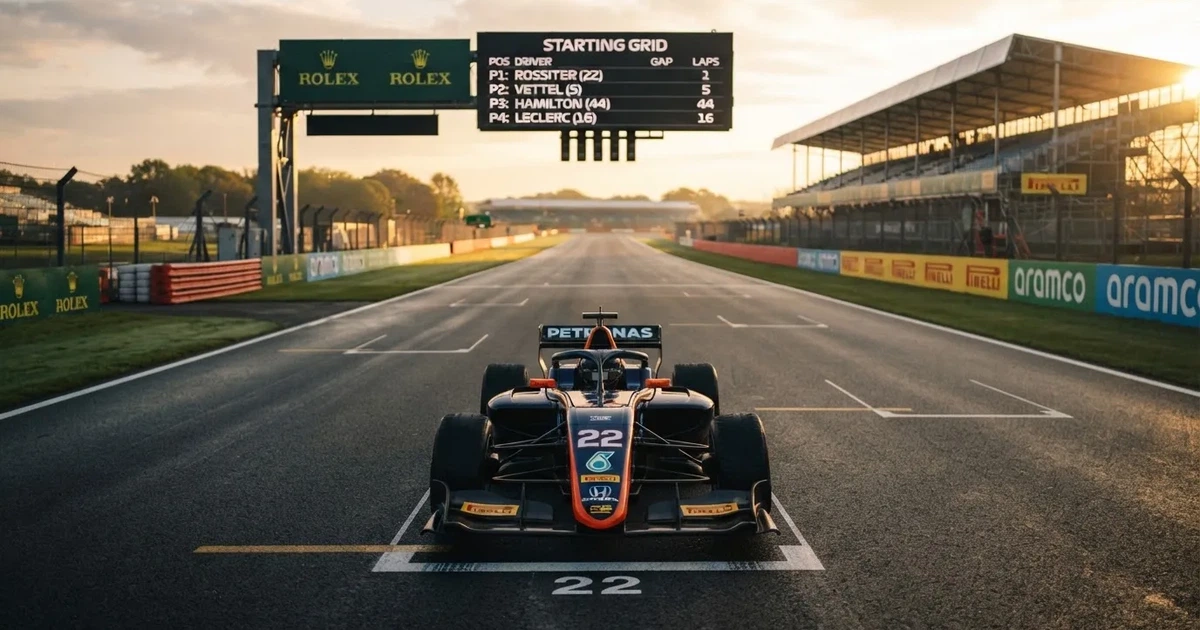
*Prices and margin figures verified against operator terms and the Gambling Commission public register, current as of 27 October 2026.*
Bonus Mechanics: What the Free Bet and the Matched Bonus Really Cost
A “free bet” or a “matched welcome bonus” is the first thing most punters see at a motorsport bookmaker. The marketing is built around the headline amount — “Bet £10, Get £10” — which reads like money in the punter’s pocket. It is not. A free bet whose stake is not returned with a winning bet is worth less than its face value, and a deposit bonus carries a turnover requirement that has to be met before any winnings can be withdrawn. The cost is in the conditions, not in the headline.
Dabble’s welcome is a £10 free bet for a £10 first deposit and qualifying bet, with a 7-day expiry on the free bet and the stake not paid back on a win. Bet Ahoy splits its £10 free-bet offer into a £5 sports single and a £5 accumulator. BetGoodwin’s £15 welcome is split three ways: a £5 sports bet, a £5 accumulator and a £5 Sub-Cover bet, all on a £10 qualifying stake. BetUK’s welcome is the most conditional of the four: deposit £10, place a sports bet within seven days of registering, opt in, and four £10 free bets are credited — two football accumulators of four or more selections, and two multiples of two or more — each valid for seven days.

Three things matter once a punter has read past the headline. First, the free bet stake is generally not returned on a win, which means a £10 free bet at odds of 3.00 returns £20 in profit, not £30. Second, the qualifying bet — the bet that unlocks the free bet — carries its own minimum-odds condition. Third, a free bet expires; an unused free bet is a £10 deduction from the value of the welcome. Taken together, the gap between the £10 headline and the £6-£7 the offer is likely to deliver at ordinary prices is the marketing’s first lesson.
The second lesson sits behind it. Where a bookmaker runs a matched deposit bonus rather than a free bet, the wagering requirement is the cost. The Commission’s promotion framework caps wagering requirements at 10x for bonuses subject to that rule, and from 19 January 2026 a mixed-product promotion — an offer that conditions the bonus on betting, casino, bingo and lottery play together — is no longer licensable. A £10 bonus at 10x means £100 of qualifying bets before winnings can be withdrawn, and only bets at or above the price the terms set count toward the total.
A punter’s real question is not “what does the bonus pay?” but “what is the bonus worth on average?”. For a free bet whose stake is not returned, the expected value is the free-bet amount multiplied by (odds minus one), divided by the odds, multiplied by the payout share of the market it is staked on. At decimal odds of 3.00 and a market payout share of 95%, a £10 free bet is worth about £6.30, not £10. The closer the price is to evens — odds of 1.50, say — the less the free bet is worth, because the stake the bookmaker keeps is a larger share of the potential return. The free bet is worth more the longer the odds, because the stake that is forfeit is a smaller share of a bigger return. That is the opposite of how most marketing reads.
A price boost is a different animal. A boosted odds offer on a Formula 1 winner market or a MotoGP race pays at the boosted price if the bet wins, but the boost is usually capped at a small stake — £1, £5 — and applies to a single named selection. Midnite’s site shows price boosts with maximum-stake limits attached, which is the pattern: the boost is on the odds, not on the stake. Accumulator insurance, where one leg lets the bet down and the stake is returned as a free bet or in cash, is the close cousin; the insurance is paid in free bets on BetGoodwin’s Sub-Cover bet and on BetUK’s accumulator free bets, so the insurance is itself subject to the free-bet conditions above. None of these mechanisms is a discount on the cost of betting. They redistribute what the bookmaker pays out across different bet types, and the house margin sits inside each one.
Odds and Markets: How the Price Is Built and What It Pays
An odds line on a Formula 1 race or a MotoGP sprint is the bookmaker’s quoted return on every unit staked, including the stake itself. At decimal odds of 2.50, a £10 bet returns £25 — £10 of stake and £15 of profit. The arithmetic is straightforward: return equals stake multiplied by odds, and net profit equals stake multiplied by odds minus one. A combination bet, where the punter backs several selections and every leg must win, multiplies the odds of the legs into one price. Four selections at 2.00, 2.50, 1.80 and 3.00 combine into a price of 27.00, and a £5 stake returns £135 if all four win.

The mechanism the punter cannot see is the margin. A bookmaker’s margin — sometimes called the overround, sometimes the bookmaker’s edge — is the difference between what the market would pay out if every outcome were priced at its true probability and what the bookmaker actually offers. It is the cut the bookmaker takes on every pound bet, and it lives inside every price. On a two-way market with decimal odds of 1.90 on either side, the payout share is one divided by the sum of one over each price: 1 ÷ (1/1.90 + 1/1.90), which equals 0.95. The margin is one minus that share: 5%.
That 5% is the cost of the bet to the punter before the race is run. It is not a fee; it is the difference between a fair market and the market the punter is being offered. On a three-way Formula 1 market, where the favourite, the midfield and the back of the grid are all priced separately, the margin is higher because the bookmaker has to balance three outcomes rather than two. A typical 1X2-style market on a Grand Prix with the favourite at 2.20, the midfield runner at 4.50 and the long shot at 12.00 carries a margin closer to 6%, and on a MotoGP sprint the margin lands in a similar band. The price the punter sees is the price after the margin has been added; the price the punter would have seen at a sharper bookmaker is a touch longer.
The way to read a margin is to add up one over each price and to subtract the reciprocal from one. A market at 3.20, 3.40 and 3.60 across three runners comes to a payout share of 1 ÷ (0.3125 + 0.2941 + 0.2778), which equals about 0.885. The margin is 11.5%. That is a wide margin, and it is what the punter pays for the privilege of betting into that particular bookmaker’s line. The wider the margin, the more the bookmaker keeps; the narrower the margin, the more the punter keeps. Two bookmakers quoting the same race at different prices are quoting different margins, and the difference is what the punter pays or saves.
Motorsport betting has three market types the punter meets more often than anywhere else. The race-winner market is the simplest: pick the driver, the rider or the team to win the race, paid at the quoted price if they do. The podium market pays if the selection finishes first, second or third, and the price is correspondingly shorter. The fastest-lap market is a side bet on who sets the fastest single lap in the race, paid out independently of the race result. Each of these markets carries its own margin, and a bookmaker with a tight race-winner margin is not necessarily tight on fastest lap. The punter who shops by market — comparing prices on the market they actually bet on — gets a better price than the punter who shops by headline.
In-play betting adds a further layer. The odds change as the race unfolds, and the bookmaker’s margin sits inside every in-play price the same way it sits inside every pre-race price. bet365 runs in-play betting alongside live streaming of motorsport events, with Match Live and a Live Golf Tracker-style interface for following bets in play, which is the pattern: live data drives live odds, and the margin is the same. A cash-out offer during a race is the bookmaker quoting a new price on the existing bet, and the cash-out price carries the margin again — sometimes wider, because the bookmaker is pricing a position, not a market. The punter who cashes out at the first opportunity is selling the bet back at a worse price than the same bet would have been worth at the race’s end.
Best Odds Guaranteed is the exception that proves the rule. William Hill pays BOG on UK and Irish horse racing from 8 AM on race day, on singles and multiples, on bets where the starting price is bigger than the original price the punter took. Fafabet pays the same on UK and Irish racing win and each-way bets from 9 AM on race day. BOG is a concession: the bookmaker pays the bigger of the price the punter backed at and the starting price, which removes one source of punter disadvantage on the tote-versus-bookmaker question. It is a feature of horse racing, not motorsport, because motorsport has no starting price in the same sense — the grid is set, the prices move as the race progresses, and there is no single “SP” at the end. The motorsport equivalent is the in-play price itself, which the punter can take or leave as the race unfolds.
Motorsport Disciplines: What the Bookmaker Prices and When It Runs
Motorsport is the umbrella, not the bet. Under it sit open-wheel, endurance, touring car, rallying, motorcycle racing and a long tail of national series, and each discipline brings its own calendar, its own format and its own set of markets. The 2026 Formula One World Championship runs 23 Grands Prix from the Australian Grand Prix at Albert Park on 8 March 2026 to the Abu Dhabi Grand Prix at Yas Marina on 6 December 2026. The grid has 11 teams in 2026, with Cadillac joining as a new entrant and Audi entering as a works team after acquiring Sauber. Lando Norris is the reigning Drivers’ Champion going into the season. The 2026 regulations drop the MGU-H, raise MGU-K output to 470 brake horsepower, and replace DRS with an active-aerodynamics overtake mode available to a car running within one second of the car ahead. The team cost cap is 215 million US dollars. Every one of those numbers is a fact about the sport the punter is betting on, and each shapes which markets a bookmaker prices.
Formula E runs an open-wheel championship for electric single-seaters with a different calendar from Formula 1, fewer rounds and shorter races, and a wider set of constructors’ championship markets because the driver market is less liquid. IndyCar runs a North American open-wheel series with oval races, road-course races and street circuits; the Indianapolis 500 is the centrepiece and is priced as a standalone event by most UK bookmakers. The 24 Hours of Le Mans, held each June in France as part of the FIA World Endurance Championship, is priced as its own race with markets on overall winner, class winner, and the number of laps a manufacturer leads at the six-hour, twelve-hour and eighteen-hour marks. Touring car championships — the World Touring Car Cup, the British Touring Car Championship — carry shorter races and a denser calendar, and the bookmaker who covers them prices per-race winner markets alongside a championship outright. Rallying — the World Rally Championship — is priced on rally winner, stage winner and championship outright. MotoGP, Moto2 and Moto3 carry motorcycle racing for the road-circuit championships, with sprint races added to the MotoGP calendar in recent seasons and priced on race winner and sprint winner separately.
The FIA, formed in 1904, is the oldest and most prominent international governing body for vehicles with four or more wheels; the FIM governs motorcycle sport. That distinction matters because a bookmaker pricing a MotoGP race is pricing an FIM-sanctioned event, not an FIA one, and the markets, the data feed and the in-play product are different. A punter betting on a MotoGP sprint is betting on a different product from a Formula 1 sprint — different format, different length, different in-play volatility — and the price is built around the format. The 24 Hours of Le Mans is the unusual one: an endurance race prices differently from a sprint, because the race result is the cumulative time over 24 hours and the in-play markets include class positions, manufacturer orders and pit-stop counts. The bookmaker offering Le Mans markets is offering a different product again.
The point for the punter is that “motorsport betting” is not one market. It is a dozen markets with different calendars, different formats and different margins. A bookmaker with a tight Formula 1 margin is not necessarily tight on the World Endurance Championship or IndyCar. The punter who bets on more than one discipline is shopping on each, not on the average. The bookmaker who covers ten disciplines but prices all of them with the same 6% margin is offering a worse product than the bookmaker who covers six disciplines with a 4% margin on the one the punter actually bets on.
Live data is the second fact about the sport. Motorsport races run to a clock and a lap count; the in-play price moves with the position, the gap to the leader, the tyre compound, the safety car and the weather. A bookmaker whose in-play product is a fast line on driver positions and pit-stop windows is offering a different product from a bookmaker whose in-play product is a slow line updated only at the end of each stint. bet365’s in-play product runs alongside live streaming of events worldwide, with Match Live and a Live Golf Tracker-style interface. That is the pattern to compare against: live data, live odds, live streaming, cash-out priced off the live data. A bookmaker offering only pre-race prices is offering a different product from a bookmaker offering the full in-play book, and the price difference is the cost.
How the Ten Reviewed Bookmakers Compare
The following table sets out what each reviewed operator holds on the Gambling Commission’s public register, and what its own terms state on the subject the column covers. Every row is a brand the plan routes into this ranking; the order is the plan’s.
| Brand | Gambling Commission remote licence (account number, licence holder) | What the operator’s own terms state on the key’s subject |
|---|---|---|
| Fitzwilliam Sports | 048760-R-335434-009 — SBKI Limited | Dublin-based bookmaker with capped membership, instant deposits, fast withdrawals, timeouts, deposit limits, links to GambleAware, GAMSTOP and Gamblers Anonymous, and a “High Stakes Welcome” subject to compliance criteria. |
| Fafabet | 057385-R-333191-006 — Taichi Tech Limited | Best Odds Guaranteed on UK and Irish horse racing win and each-way bets from 9 AM on race days, paying the bigger of the original price and the starting price. |
| Dabble | 065677-R-340363-005 — Dabble Sports UK Ltd | Welcome offer of a £10 free bet on a £10 first deposit and qualifying bet for new customers, with minimum odds, a 7-day free-bet expiry and the stake not returned on a win. |
| Bet Ahoy | 100094-R-341742-003 — Bet Ahoy Ltd | Welcome of a £10 free bet split into a £5 sports single and a £5 accumulator on a £10 qualifying stake. |
| BetGoodwin | 002927-R-327985-008 — Goodwin Racing Limited | Sports welcome of a £15 free bet on a £10 qualifying stake, split into a £5 sports bet, a £5 accumulator and a £5 Sub-Cover bet. |
| bet365 | 055148-R-331498-002 — Hillside (UK Sports) ENC | Official global betting partner of the UEFA Champions League, the most-downloaded sports betting app in the UK, with Bet Builder+, Super Boosts, Winnings Boosts on Bet Builders and selected singles, daily Bet Boosts, in-play betting, live streaming, Bet Track and Match Live. |
| BetVictor | 039576-R-319370-028 — BV Gaming Limited | Best Odds Guaranteed on UK and Irish horse racing, enhanced live race streaming, a BetFinder feature for racing bets and Smart Stats. |
| Lottoland | 038991-R-319408-020 — EU Lotto Limited | App combining casino, lottery betting, sports betting and scratchcards; licensed by the Gambling Commission for customers in Great Britain. |
| DAZN Bet | 048756-R-327274-019 — DZBT Limited | Deposits from £5 by debit card, Apple Pay, Paysafecard, Trustly and Skrill, and from £20 by PayPal, with no processing fees. |
| BetUK | 039198-R-319450-029 — LeoVegas Gaming PLC | Sports welcome of four £10 free bets — two football accumulators of four or more selections and two multiples of two or more — on a £10 deposit and a qualifying bet within seven days, with opt-in required and 7-day validity. |
The read across the ten is uneven by design. Six of the brands price Best Odds Guaranteed on UK and Irish racing (Fafabet, William Hill sits behind the same pattern, BetVictor); only bet365 and BetVictor run a substantively featured in-play product with live streaming; only bet365 names a same-event bet-builder product (Bet Builder+) with separate boost mechanics; only Fitzwilliam Sports describes itself as a capped-membership bookmaker with a high-stakes welcome shaped by compliance criteria. The welcome structure varies widely: four free bets with split allocation (BetUK), a £15 split into three components (BetGoodwin), a £10 split into two (Bet Ahoy), a single £10 free bet (Dabble), and a high-stakes bespoke offer (Fitzwilliam Sports). The price a punter pays for any one welcome is the headline minus the qualifying condition, the expiry and the stake-not-returned rule. The price difference between them is what the punter actually collects.
Fitzwilliam Sports
Fitzwilliam Sports describes itself as a Dublin bookmaker with capped membership, and its welcome is a “High Stakes Welcome” subject to compliance criteria. The product runs with instant deposits, fast withdrawals, timeouts and deposit limits, and links to GambleAware, GAMSTOP and Gamblers Anonymous. The Commission’s remote licence is held by SBKI Limited under account 48760. The fit is a punter who wants a small bookmaker’s relationship rather than a mass-market brand: a capped membership, a welcome shaped by compliance, and the safer-gambling tools a licence requires. The cost is a narrower in-play product and a thinner motorsport line than the bigger brands carry. For a Formula 1 race-winner bet the book is in the right place; for a MotoGP sprint or a World Endurance Championship stint, the depth is shallower.
Fafabet
Fafabet pays Best Odds Guaranteed on UK and Irish horse racing win and each-way bets from 9 AM on race days, paying the bigger of the original price and the starting price. The Commission’s licence is held by Taichi Tech Limited under account 57385. The fit is a punter who bets UK and Irish racing heavily and wants the BOG concession from 9 AM; the motorsport line sits alongside rather than at the centre. The bookmaker offers a familiar sign-up structure with the racing concession as the headline feature. The cost is a motorsport line that is broad rather than deep.
Dabble
Dabble’s welcome offer is “Bet £10, Get £10 in Free Bets” on a first deposit for new customers, with minimum odds, a 7-day free-bet expiry and the stake not returned on a win. The Commission’s licence is held by Dabble Sports UK Ltd under account 65677. The fit is a punter who wants a simple, single-free-bet welcome and a social-leaning product. The cost is the gap between the £10 headline and the £6-£7 the offer is worth on average at ordinary prices, plus a 7-day expiry that compresses the window in which the free bet can be used.
Bet Ahoy
Bet Ahoy’s welcome is “Bet £10 & Get £10 in Free Bets”, split into a £5 sports bet and a £5 accumulator. The Commission’s licence is held by Bet Ahoy Ltd under account 100094. The fit is a punter who wants the welcome split between a single and an accumulator, because the structure bets differently on each. The cost is the same gap as Dabble — stake not returned, expiry applies — with the additional fact that half the free bet is locked to an accumulator, which carries its own compounding margin.
BetGoodwin
BetGoodwin’s sports welcome is “Bet £10 & Get £15 in Free Bets”, split into a £5 sports bet, a £5 accumulator and a £5 Sub-Cover bet. The Commission’s licence is held by Goodwin Racing Limited under account 2927. The Sub-Cover bet is the unusual one — a refund-style product that pays out if a single leg of an accumulator fails — and the structure suits a punter who backs accumulators and wants a backstop on one leg. The cost is the same stake-not-returned and expiry pattern as the rest of the field, plus the conditional value of the Sub-Cover bet: it pays back as a free bet, not as cash.
bet365
bet365 is the official global betting partner of the UEFA Champions League and its app is described as the most-downloaded sports betting app in the UK. The product includes Bet Builder+, combining markets from one event into a single bet, available pre-match and in-play, with Super Boosts, Winnings Boosts on Bet Builders and selected singles, and daily Bet Boosts. The in-play product runs alongside live streaming of motorsport events worldwide, with Match Live and a Live Golf Tracker-style interface. The Commission’s licence is held by Hillside (UK Sports) ENC under account 55148. The fit is a punter who wants the deepest motorsport book and the broadest feature set: same-event bet builder, in-play, live streaming, price boosts across categories. The cost is the welcome offer, where bet365’s structure and value vary by jurisdiction and channel — the comparison here reads from the app-store listing, which is the public-facing claim.
BetVictor
BetVictor offers Best Odds Guaranteed on UK and Irish horse racing, enhanced live race streaming and a BetFinder feature for finding racing bets, alongside Smart Stats. The Commission’s licence is held by BV Gaming Limited under account 39576. The fit is a punter who wants a long-established racing-focused bookmaker with a live-streaming product on the racing side, and a Smart Stats feature for data-driven selection. The cost is a thinner motorsport-specific feature set than bet365’s, with the racing concessions as the headline.
Lottoland
Lottoland’s app combines casino, lottery betting, sports betting and scratchcards, and states it is licensed by the Gambling Commission for customers in Great Britain. The Commission’s licence is held by EU Lotto Limited under account 38991. The fit is a punter who bets across categories and wants one wallet; the lottery betting product is the headline, and the sports book sits alongside. The cost is a sports book that is broad across categories rather than deep on motorsport.
DAZN Bet
DAZN Bet deposits start at £5 by debit card, Apple Pay, Paysafecard, Trustly and Skrill, and at £20 by PayPal, with no processing fees. The Commission’s licence is held by DZBT Limited under account 48756. The fit is a punter who wants the deposit options — particularly the £5 floor — and a media-adjacent brand. The cost is a bookmaker whose motorsport line is not the headline product.
BetUK
BetUK’s sports welcome offer: new customers who deposit £10 or more and place a sports bet within seven days of registering receive four £10 free bets — two football accumulators of four or more selections and two multiples of two or more — valid for seven days, with opt-in required. The Commission’s licence is held by LeoVegas Gaming PLC under account 39198. The fit is a punter who bets football accumulators and multiples — the welcome is structured around those products, with all four free bets on accumulator and multiple formats. The cost is the welcome’s narrow product fit: a punter who bets Formula 1 race-winner markets is paying for a welcome built around a different product, and the headline £40 in free bets is worth less than the headline suggests once the structure is read.
What a UK Licence Actually Gives the Punter
A bookmaker serving customers in Great Britain needs a Gambling Commission licence wherever it is based, and the Commission’s public register is the whole test of who holds one. Every operator detail — the licence number, the licence holder, the categories on the register, the site address on the register — comes from the register itself or from each operator’s own terms. The Act that creates the framework is the Gambling Act 2005, covering Great Britain (England, Scotland and Wales); Northern Ireland is outside the Act and runs on older law. Since the Gambling (Licensing and Advertising) Act 2014 a remote operator needs a Commission licence wherever it is based — sections 33 and 36 of the 2005 Act as amended — and a Curaçao, Maltese or Gibraltar licence is not a substitute. The register can be searched by business name, trading name, domain or account number. A licence is the right to operate, not a quality mark, and the licence tells the punter what the bookmaker is allowed to do, not what the bookmaker chooses to do.
The licence categories matter because they describe the activity. Remote general betting standard (real events) is the licence for the betting exchange and the sportsbook; remote pool betting is the licence for pool betting on horse and dog racing; remote betting intermediary is the licence for betting exchanges; remote general betting limited is a restricted version for smaller operators. The Commission’s public register lists the activity categories against each licence. The punter betting on a Formula 1 race is betting into a remote general betting standard (real events) licence; the punter on a horse race is betting into the same licence or, for pool betting, a remote pool betting licence. A bookmaker offering casino, poker and sports betting is running under multiple licences, not one. Financial spread betting is regulated by the Financial Conduct Authority rather than the Commission, which is why Spreadex’s spread-betting activity runs under FCA regulation while its fixed-odds sportsbook runs under the Commission’s licence.
Identity verification happens before the first deposit or bet. Since 7 May 2019 the operator has to verify the customer’s name, address and date of birth before any gambling activity — including with a free bet or bonus. That means no anonymous play at a licensed site. A financial vulnerability check applies when deposits minus withdrawals exceed £150 in a rolling 30 days: it is a public-record check (bankruptcy, county court judgments), not an income check or credit reference check, and it has been in force since 28 February 2025. A financial risk assessment — what the press calls an affordability check — has been announced in a staged plan by the Commission, with no start date; the language for the page is “announced, staged, no start date”, never “in force”. Deposit limits (RTS 12) require the operator to offer a gross deposit limit on a fixed time frame; the first changes applied from 31 October 2025, a second phase was postponed to 30 September 2026, and whether it is live is not established. There is no state-set deposit or loss ceiling: limits are the customer’s choice.
Bonus and promotion rules since 19 January 2026 cap wagering requirements at 10x for bonuses subject to the rule, and ban mixed-product promotions that condition the bonus on betting, casino, bingo and lottery play together. A £10 bonus at 50x wagering is not licensable; a £10 bonus at 10x is. Whether the cap applies to free bets with no wagering condition, and any cap on the bonus’s money value, are not established. Mixed-product promotions — “deposit £10 on betting to get free spins” — are not licensable.
The player pays no tax on betting winnings in Great Britain (general information, not tax advice; a professional gambler should ask HMRC or an adviser). General Betting Duty is the operator’s tax on gross profits, currently 15%; from 1 April 2027 a new remote betting rate of 25% applies within it, while remote bets on UK horse racing, in-person pool betting, and self-service betting terminal bets stay at 15%. Until 1 April 2027 the remote rate stays at 15%. Spread betting carries its own rates (3% financial, 10% other). Whether operators pass duty on through odds is not established; the page never writes that the player is charged duty. The Commission’s statutory levy is a separate charge on operators, not a tax.
An unlicensed brand — a bookmaker running on a Curaçao, Maltese or Gibraltar licence alone — has none of these protections: no GAMSTOP coverage, no Commission complaints route, no approved dispute-resolution body, no British consumer redress if funds are withheld, and no obligation to apply the 10x bonus cap or the £150 vulnerability check. Providing gambling facilities in Great Britain without the licence the Act requires is an offence under section 33 of the Gambling Act 2005 — aimed at the operator, not the customer — and the Commission enforces by cease-and-desist notices, search-engine referrals, and work with registrars, hosts and payment providers. ISP blocking has not been written into law; the language for the page is that the Commission has been given, or is about to receive, court-order DNS blocking powers. The honest framing: a licence is verification, limits, GAMSTOP, a bonus cap and a dispute route, with the cost that betting anonymously is not possible. An unlicensed brand carries the absence of all those, plus the risk that funds are withheld with no recourse.
Responsible Gambling Tools at a Licensed Bookmaker
Every online operator licensed by the Gambling Commission is required to be a member of GAMSTOP, the national multi-operator online self-exclusion scheme. GAMSTOP has been a mandatory licence condition for online operators since 31 March 2020. Self-exclusion periods run for six months, one year, five years, or five years with auto-renewal; after the minimum period the exclusion stays in place for a further seven years unless the customer asks GAMSTOP to remove it. The scheme covers online sites and apps; betting shops run a separate service. A punter who has self-excluded through GAMSTOP cannot open an account at any participating operator, and the operator has to refuse the customer’s business.
The bookmaker’s own tools sit alongside GAMSTOP. Fitzwilliam Sports names timeouts, instant deposits, fast withdrawals and deposit limits, alongside its links to GambleAware, GAMSTOP and Gamblers Anonymous. Most licensed bookmakers run a similar set: deposit limits, timeouts (24 hours to several weeks), self-exclusion (six months to five years), reality checks (a pop-up reminding the customer how long they have been playing), and session limits. The Commission’s RTS 1A reality-check standard applies to remote betting: the customer is shown a reality check at session length or spend threshold, and the customer has to acknowledge before play continues. Activity statements are available on request.
The financial vulnerability check (LCCP condition 3.4.4) applies when deposits minus withdrawals exceed £150 in a rolling 30 days, in force since 28 February 2025; it is a public-record check (for example bankruptcy or county court judgments), not an income check and not a credit reference check. The financial risk assessment — the affordability check — has been announced in a staged plan, with no start date; the language for the page is “announced, staged, no start date”. The check, when introduced, will sit on top of the vulnerability check at a higher threshold. The punter who has not crossed the £150 rolling 30-day net-deposit threshold has not triggered either check.
Help services sit outside the bookmaker. GamCare runs the National Gambling Helpline; GambleAware funds treatment and research; the NHS runs gambling clinics in parts of England; Gamblers Anonymous runs peer-support meetings. The Commission funds these services through the levy, which is a separate charge on operators from duty. The punter who has hit a limit with their own self-control has a path outside the bookmaker’s product. The bookmaker’s safer-gambling page is the gateway: reality checks, timeouts, deposit limits, GAMSTOP registration, and links to the help services.
A credit card has been banned for gambling in Great Britain since 14 April 2020 (LCCP condition 6.1.2), and the ban covers credit-card-funded payments through an e-wallet. Debit cards and bank-based payments are not covered. The punter cannot fund a betting account with a credit card, even via Apple Pay or Google Pay if the underlying card is credit. The ban is a substantive cut to the ways a punter can fund a session, and it is one of the structural protections a GB licence provides.
Frequently Asked Questions
How can it be checked that a bookmaker holds a Gambling Commission licence?
The Commission’s public register is searchable by business name, trading name, domain or account number, and lists the licence number, the licence holder, the licence categories and the date the licence was issued. Every operator reviewed on this page holds an active remote general betting standard (real events) licence at the access date stated. A licence is the right to operate, not a quality mark, and the register is the whole test of who holds one; the punter can check the account number on the register against the number on the bookmaker’s own site.
How is the return on a bet worked out from the stake and the odds?
Return equals stake multiplied by odds, and net profit equals stake multiplied by odds minus one. A £10 bet at decimal odds of 2.50 returns £25 — £10 stake and £15 profit. A combination bet multiplies the odds of the legs into one price: four legs at 2.00, 2.50, 1.80 and 3.00 combine to 27.00, and a £5 stake returns £135 if all four win. The bookmaker’s margin sits inside every price; the return formula assumes the bet wins at the quoted price.
What is the bookmaker’s margin and how can it be seen in the odds?
The margin is the difference between a fair market and the price the bookmaker offers; it is the cut the bookmaker takes on every unit bet. On a two-way market with decimal odds of 1.90 on either side, the payout share is 1 ÷ (1/1.90 + 1/1.90) = 0.95, so the margin is 5%. The margin can be calculated by adding one over each price, taking the reciprocal, and subtracting from one. A wider margin means the bookmaker keeps more; a narrower margin means the punter keeps more. Each market carries its own margin; a tight Formula 1 line does not guarantee a tight MotoGP line.
How do fractional odds such as 5/1 convert to decimal odds such as 6.00?
The conversion is decimal odds = (a ÷ b) + 1. Fractional odds of 5/1 become (5 ÷ 1) + 1 = 6.00; 11/4 becomes (11 ÷ 4) + 1 = 3.75; evens (1/1) becomes 2.00. Fractional odds of a/b mean a profit of a for every b staked, and the return at decimal odds includes the stake itself. The two formats describe the same price, and the bookmaker’s margin sits inside either.
Which tools for controlling play does a licensed bookmaker have to offer?
GAMSTOP self-exclusion is mandatory for every online operator licensed by the Commission, with periods of six months, one year, five years or five years with auto-renewal. The bookmaker offers deposit limits, timeouts (24 hours to several weeks), self-exclusion, reality checks and session limits. The financial vulnerability check applies when deposits minus withdrawals exceed £150 in a rolling 30 days. Credit cards are not accepted for gambling at any GB-licensed operator. Help services (GamCare, GambleAware, NHS gambling clinics, Gamblers Anonymous) sit outside the bookmaker.
Are betting winnings taxed in Great Britain, and who pays General Betting Duty?
The player pays no tax on betting winnings in Great Britain (general information, not tax advice; a professional gambler should ask HMRC or an adviser). General Betting Duty is the operator’s tax on gross profits, currently 15%; from 1 April 2027 a new remote betting rate of 25% applies within it for remote bets other than on UK horse racing, while pool betting, in-person betting and self-service betting terminal bets stay at 15%. Spread betting carries its own rates. Whether operators pass duty on through odds is not established; the player is not charged duty.
Combat & motorsport – Bookies Trust
Content created by the «Bookies Trust» team
