
Online chess betting in 2026: what each market actually costs, and where to play it
 Available in US
Betting on chess is, in one sense, the simplest market in the sports book: a game has three outcomes, and most of those outcomes are 1–0, 0–1 and ½–½. In every other sense it is one of the most unforgiving, because a grandmaster’s edge is the kind that turns 1.91 into 1.83 long before a recreational punter spots it. The bookmaker’s margin on a tight match is a tight margin; on a lopsided one it widens to a different kind of cost. Reading a chess price well is mostly a matter of knowing which one a book is asking you to take, and what the rest of the page asks you to do with it.

The current page is current as of 27 October 2026 and was checked against the Gambling Commission’s public register of remote operating licences. Where a price or a margin is quoted, the snapshot date and the event are stated; where a number is missing, the point is made in words.
What kinds of chess bet exist, and how a price is built
A chess match is the cleanest two- or three-way market in any sport. Under FIDE rules a game ends as 1–0 for White, 0–1 for Black or ½–½ for a draw, and a bookmaker’s full-time market on a single game is those three outcomes and nothing else. Tournament markets — outright winner, top-four finish, group qualification, head-to-head between two named players over a series — add a layer above the games, but each one still settles on those three numbers underneath.
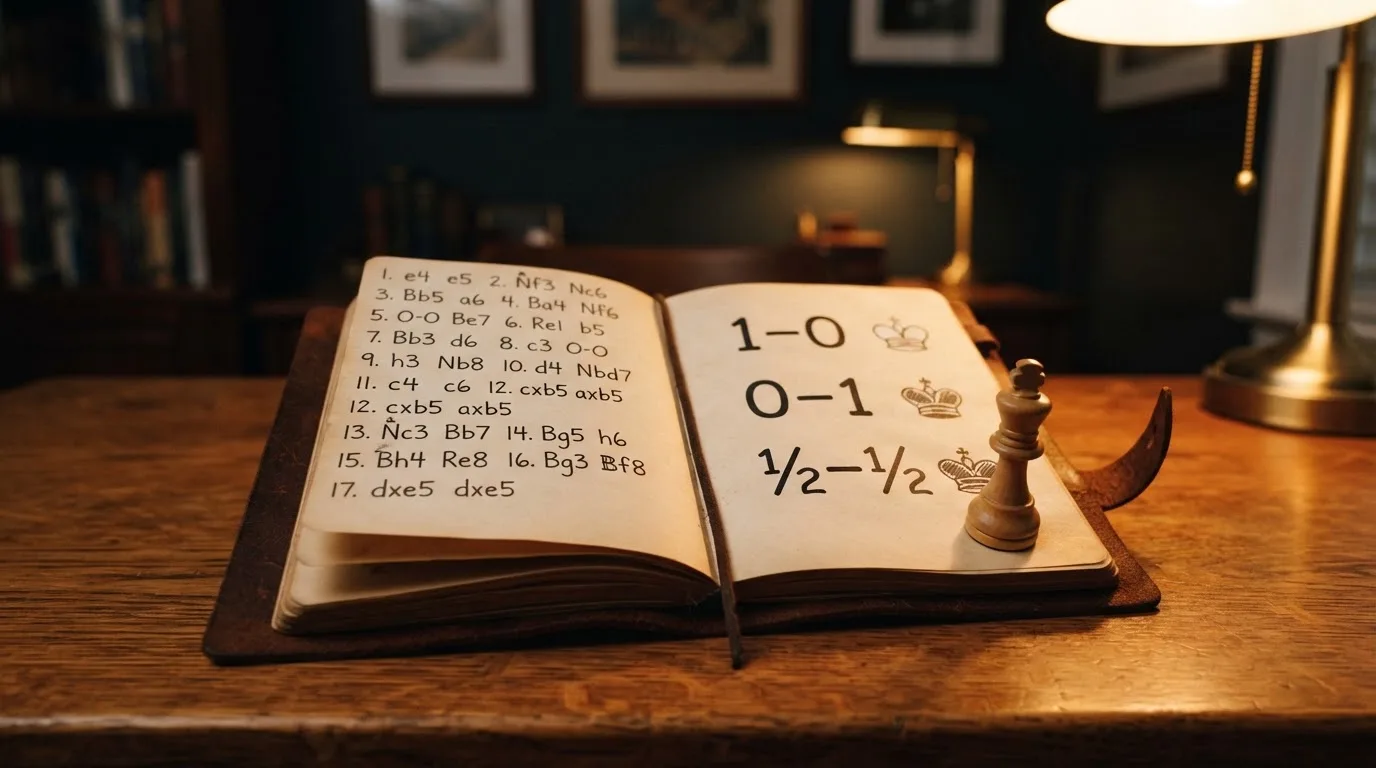
Match result, the bread and butter. The most common chess market is a single game’s three-way line, sometimes offered two-way (no draw quoted, draw settles as a push on most books, sometimes as a loss depending on the operator’s house rules). When a book quotes a two-way line it is signalling that it does not want to take a position on the draw, and the punter’s job is to decide whether that silence is helpful or a trap. A line like 1.57 / 2.50 with the draw pulled is, mechanically, a three-way line with one outcome removed and the other two tightened to compensate.
Outright tournament winner. Before a Candidates or a World Championship, the outright market lists the field at odds that move as the book re-prices. Outrights are the most “bookmaker-friendly” chess market, because the field is wide and the favourite’s price is rarely short enough to reflect the gap to the rest. Reading an outright field well is the same skill as reading a pre-tournament outright in any sport: a 10.00 on the second favourite is a different bet from a 10.00 on the eighth.
Series and head-to-head. Some books offer a head-to-head market over a match: White wins, draw, Black wins, in points or in decisive games. The point is that a single match can split across many games, and the head-to-head settles on the whole thing. This is where dead-GM and live-game markets diverge sharply from a football equivalent, and where a book with thin chess in-play will show a price only at the start of a match and let the rest ride.
Live markets, when they exist. A small number of GB-licensed books offer chess in-play, and the offer is usually restricted to a handful of marquee events. The reason is not legal — the Gambling Commission’s rules do not forbid in-play chess — but practical: chess moves are slow, the model is hard to refresh in real time, and the book has to choose between holding a price it cannot update and exposing itself to a sharp customer with an engine. When a book does offer live chess, the margin is wider than pre-match for the same reason an in-play football line is wider: the bookmaker is paying for the right to be wrong.
The bookmaker’s margin in chess, made plain. The arithmetic is the same as in any other sport. A market is a book of outcomes that the bookmaker expects, in aggregate, to pay out less than it takes in. The difference is the margin, and it is what every price on the page already includes. Take a two-way line at 1.90 and 1.90, decimal, which is fractional 9/10: the fair payout for every pound wagered, if the book were a true middleman, would be £1.00, and the book is offering only £0.95 — that 5p in the pound is the overround, also called the vig, also called the margin. The exact figure for a two-way market at 1.90/1.90 is a 5.26 per cent margin; for a three-way line at 2.10/3.40/3.40 it is roughly 7.4 per cent; for a heavy favourite at 1.20/5.50/7.00 it is closer to 8 per cent. The wider the price spread, the higher the margin, because the book is taking less of a view on the favourite and more of a view on the long tail.
This is the same arithmetic as in football, but it matters more in chess because the favourite is more often genuinely heavy, and a 1.20 line at 8 per cent is the kind of price a punter takes without thinking. The arithmetic says: every tenner you put on a 1.20 favourite, eight pence of it goes to the book before the move is made. That is the trade you are making when you back a Magnus Carlsen or a Gukesh Dommaraju at short odds, and it is a trade worth taking only when your estimate of the win probability is meaningfully higher than the book’s.
A worked example, kept short. Take a tournament outright with a four-runner field priced 2.50, 3.50, 6.00, 15.00. Sum the reciprocals: 1/2.50 + 1/3.50 + 1/6.00 + 1/15.00 = 0.400 + 0.286 + 0.167 + 0.067 = 0.920. The fair payout for every pound wagered is 1/0.920 = £1.087, and the book is offering 0.920 of that — the margin is 8.0 per cent. On a heavily-favoured chess field that is the kind of number a sharp punter will not accept, and on a wide-open one the number is often 12 per cent or worse. The pages that follow use the same reciprocal-sum method on the prices research actually records, and they call out the figure each time so the reader is never in doubt about what the price is built to deliver.
Chess as a betting sport, and where it sits in the year
Chess is not a Premier League. The number of GB-licensed books offering a deep chess market at any one moment is small, and the number offering chess at all is smaller still. A book with a 21-sport book and 2,000 casino-style games, or a book with daily Bet Boosts on football, is not automatically a book that takes chess seriously, and the customer-facing test is whether there is a price at all on a tournament a few days out. Most GB books with a full sportsbook will list a World Championship or a Candidates outright; a smaller number will offer a single-game line on a marquee round; a few will offer live chess at all.
The 2026 chess calendar runs from the FIDE circuit through the Candidates cycle to a World Championship match later in the year. The last completed World Championship match, in 2024, was won by Gukesh Dommaraju; the first universally recognised World Chess Champion, Wilhelm Steinitz, claimed the title in 1886, and the line between those two bookends is the history of modern chess. The 2026 cycle centres on the next World Chess Championship match and the Candidates that feeds it, and most chess betting in the year, by turnover, will be on those two events. Outright winner and head-to-head are the markets the books lead with; match result on individual games and live play sit behind that, and they exist in the first place only because the book has chosen to support the tournament rather than to take a position on it.
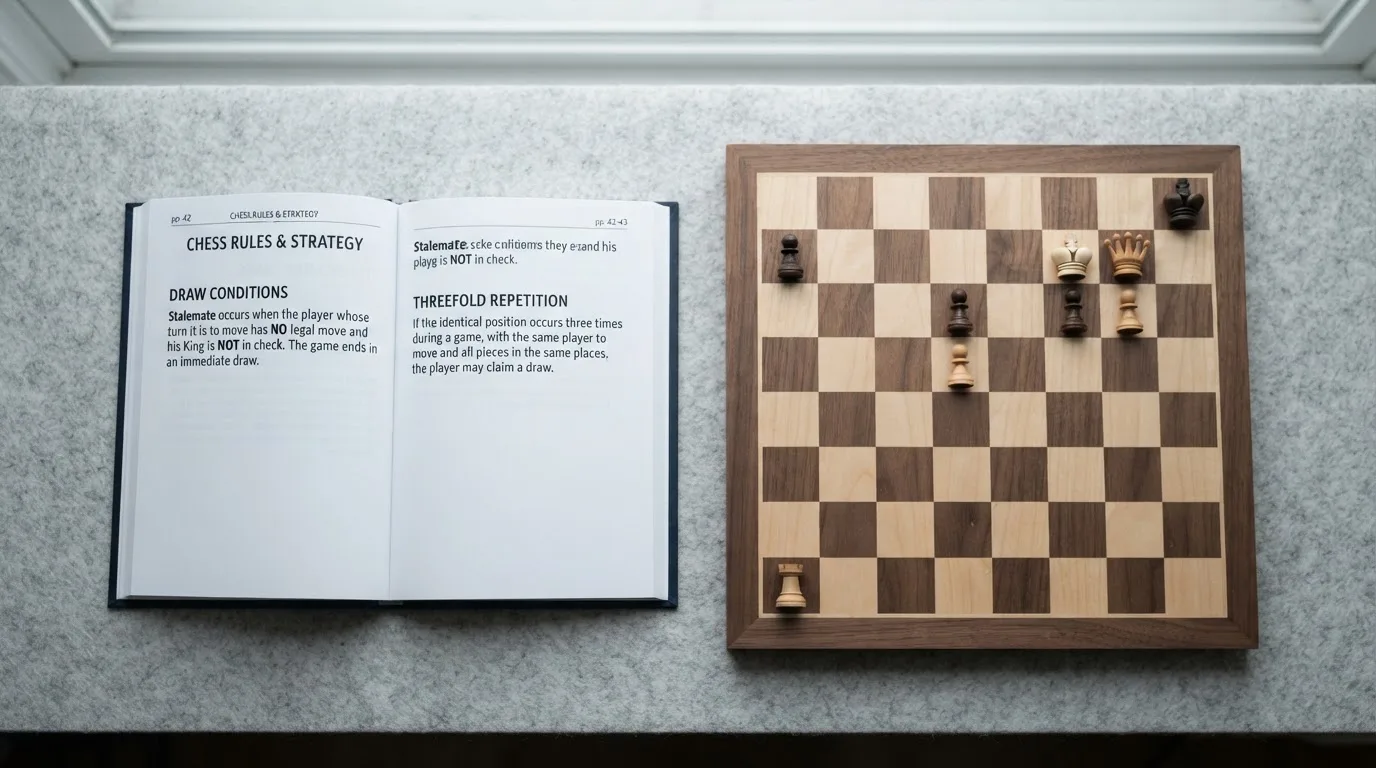
Under FIDE rules, a chess game is played on an 8×8 board of 64 squares, with each player controlling 16 pieces. Results are recorded as 1–0 for a White win, 0–1 for a Black win and ½–½ for a draw, and these are the three numbers a book quotes. A draw can be reached in several ways, and a punter who treats “draw” as a single event is missing how the result actually arrives: a stalemate, an agreement between the players, a claim of threefold repetition, a claim of the fifty-move rule, and, since 2014, an automatic end after fivefold repetition or a 75-move rule. The fivefold and 75-move endings in particular change how late in a game a draw can be claimed, and that has a small but real effect on in-play draw prices, because the longer a game goes the higher the unconditional probability of a draw becomes under modern rules.
The reason chess looks like an obscure bookmaker’s market and the reason it is, in fact, a sharp one are the same thing: a grandmaster’s edge is real, the books know it, and the books adjust their prices accordingly. The 1.83 on a Carlsen or a Dommaraju is not the 1.83 on a Manchester City at home to a Championship side; the move is harder, the form is more durable, and the price is tighter. A reader who backs the favourite at 1.83 in a chess match is making a bet the book is also making, on the same side, for the same reason. That is what an efficient market looks like, and it is what makes chess a market that punishes casual staking and rewards reading the line.
The ten bookmakers we rate for chess, and what the comparison shows
The set is not a ranking. A place in a list is not a Gambling Commission licence, and a licence is not a recommendation to bet. The brands below are each licensed by the Gambling Commission to take remote bets from customers in Great Britain, and the licence number and the holder, as recorded on the Commission’s public register, are stated in the table that follows. The right-hand column records what each operator’s own terms say on the subject of chess, and is the column the reader should weight first when comparing.
| Brand | Gambling Commission remote licence and holder | What the operator’s own terms say on the subject |
|---|---|---|
| Midnite | 101839 (Midnite Limited) | A sportsbook with a confirmed chess offering; site shows in-play events, an acca builder, popular accas and price boosts with maximum-stake limits. |
| Tote | 54779 (TDCO Limited) | Pool betting heritage, sportsbook offer is built around horse racing and football. |
| BetGoodwin | 2927 (Goodwin Racing Limited) | Racing-led book, sportsbook thin on chess outrights. |
| Sky Bet | 67370 (SBG Sports Limited) | Major GB sportsbook; the offer on chess is event-led rather than year-round. |
| Unibet | 45322 (Platinum Gaming Limited, Gibraltar) | Has operated since 1999, broad international book; chess outrights sit on the World Championship cycle. |
| bet365 | 55148 (Hillside (UK Sports) ENC) | Large GB book; chess is on the outright feed for the marquee events and not a daily market. |
| 10bet | 43173 (Blue Star Planet Limited) | Book is built around football, tennis and horse racing; the chess feed sits underneath those. |
| Betfred | 39544 (Petfre (Gibraltar) Limited) | UK high-street bookmaker with a 21-sport online book; chess appears on marquee outrights. |
| BetMGM | 39198 (LeoVegas Gaming PLC) | US-originated brand running a UK sportsbook; the chess menu is shallow. |
| NetBet | 39170 (Netbet Enterprises Limited) | Book offers Daily Boosts, Profit Boosts and a Bet Builder with dynamic odds, and a chess outright feed on the World Championship. |
What the table is for, and what it is not. The columns are the columns that matter: the licence, the holder, and what the operator itself states. They are not the columns of a marketing comparison — there is no “best for chess” column, because the honest answer is that no single brand in the set is best for chess at every bookmaker’s margin, every tournament and every reader. The reader who wants a one-click bet on a World Championship game at any hour is a different reader from the one who wants the widest outright field, and a different reader from the one who backs draws in the Candidates and watches a 75-move rule end a long game. The table is the start of the comparison; the rest of the page is the comparison itself.
A second pattern the table hides. Several of these brands run under a single licensee and are therefore the same offer in different packaging. Petfre (Gibraltar) Limited holds the Betfred licence; SBG Sports Limited is the Sky Bet holder; LeoVegas Gaming PLC is the BetMGM holder. The same is true across a wider set of GB-licensed books that the table does not include: Ladbrokes and Coral share a parent, Paddy Power and Betfair share a parent, and so on. The reader who is comparing offers by the bookmaker’s house rules is comparing one parent against another, not ten independent decisions.
What “online chess betting” actually means, and what it costs the reader
Online chess betting is the act of staking money on the outcome of a chess game or a chess tournament through a remote bookmaker. The phrase covers four different products, and the four have different costs. A single-game match-result line on a Carlsen–Nakamura online event is a tight-margin market with a short life. An outright on the Candidates is a wide-margin market with a long life. A live in-play game line is a high-margin, low-volume product that the book is willing to underwrite only on marquee events. A tournament group market — top four, top eight, to qualify from a group — is somewhere in between, and the bigger the field the wider the margin tends to be.
The cost the reader pays is the bookmaker’s margin plus the marketing terms the book attaches to any bonus the punter takes. A free bet, on the free-bet welcome offers that several of these books run, is not a £10 gift: it is a £10 bet that does not return the stake with a win, and at minimum odds of 2.0 the value of the free bet is roughly £10 × (1 − 1/2.0) = £5 of expected value before the margin. The arithmetic is the same on every book, and the marketing term is the same on every book: a free bet is a free bet, with a stake that is usually not paid back with a win.
The offers the table’s brands run. Several of the books above publish a sports welcome offer for new GB customers, and the headline shape is broadly the same: stake a qualifying bet at minimum odds and receive free bets in return, valid for a fixed window. Midnite’s terms on the App Store describe a £25 in free bets and 50 free spins package for a £5 qualifying bet at EVS (2.0) or greater, with a 14-day window to claim and a 7-day window to use the free bets. BetGoodwin’s offer, also published on the App Store, splits the headline into three £5 free bets: a sports bet, an acca, and a Sub-Cover bet. Sky Bet’s terms state that free bets expire 30 days after crediting, can be used only on single or each-way markets (not multiples), are non-withdrawable and do not return the stake with winnings. Unibet’s terms describe a £40 free-bets package for a £20 qualifying bet at minimum odds of 2.0, with a 7-day expiry. BetMGM’s offer, again on the App Store, splits £40 into four £10 free bets, two of them football accumulators of four or more selections and two sports multiples of two or more, with a 7-day window. None of these is printed as a code, and none is described as anything other than the operator’s own published terms. A reader who claims one of them is reading a free bet, not a £25 gift.
The arithmetic of a free bet, in one sentence. The fair value of a £10 free bet, on a market the book prices at minimum odds 2.0 and a margin of 5 per cent, is £10 × (1 − 1/2.0) × 0.95 = £4.75; the headline £10 figure is often not directly comparable to a cash bonus, and the true value is what the book settles in the bettor’s account upon winning.
The “no promo code” rule that the page follows. The page describes the offers, it does not link to them, and it does not print a code. A bonus, a free bet, a price boost and a refund each have a shape, and the shape is what is on the page; the code is in the operator’s own terms and is the operator’s to publish. The reader who wants the offer reads the operator’s terms, and the reader who wants the page’s view reads the next section.
The British legal frame, in the form a bettor needs
A bookmaker taking remote bets from customers in Great Britain needs a Gambling Commission licence, and has needed one wherever it is based since the Gambling (Licensing and Advertising) Act 2014 came into force. Sections 33 and 36 of the Gambling Act 2005, as amended, are the operative provisions. A Curaçao, Maltese or Gibraltar licence is not a substitute. The Commission’s public register is the whole test of who holds one, and the register can be searched by business name, trading name, domain or account number. A licensed operator is licensed for a category: remote general betting standard (real events), remote general betting standard (virtual events), remote general betting limited, remote pool betting, and remote betting intermediary. The ten brands in the table each hold a remote general betting standard (real events) licence, which is the category a chess outright sits under.
The test the register sets is the same for every brand. A licence number, a holder and a category is the bare record, and that is what the table’s middle column says. The reader who wants a deeper look — for example, whether the holder has open Commission proceedings against it, or whether the licence is in a suspended state — searches the register directly. A licence on the register is a necessary condition, and the register is also the place where the reader sees what conditions the Commission has attached to that licence.
Betting is licensed by the Commission; advertising is not. The Commission does not license advertising. The CAP Code (non-broadcast) and the BCAP Code (broadcast) are enforced by the Advertising Standards Authority, alongside the LCCP marketing conditions. CAP Code section 16 sets the social-responsibility rules, the under-18s appeal rules and the under-25s appearance rule, and the rule concerns who may appear in an advertisement rather than who may bet. The 19 January 2026 promotion rules cap wagering requirements on bonuses at 10x — a £10 bonus at 50x needed £500 of bets; under the cap no more than £100 — and ban mixed-product promotions, which are offers that require gambling on two or more product types, for example a sports bet that unlocks casino free spins. Whether the cap applies to free bets with no wagering condition, and any cap on the money value of a bonus, are not established. The “whistle-to-whistle” ban on TV ads from five minutes before a live sporting event to five minutes after it, before the 9pm watershed, is an industry code rather than law and excludes horse and greyhound racing; the Premier League clubs’ withdrawal of gambling sponsorship from the front of matchday shirts, from the 2026/27 season, is voluntary.
What may be bet on. There is no statutory list of permitted bets or markets. An operator holds a licence for a category and offers markets under its own rules and the LCCP. Esports are treated like any other event; virtual events are a separate licence category; bets on politics, TV shows and novelty markets are offered by GB bookmakers and no statutory prohibition was found. In-play chess is offered by some GB bookmakers and the controls are the operator’s licence conditions and the customer-protection duties; the legal characterisation is not that in-play is “unrestricted” and the practical characterisation is that the book chooses whether to offer it at all.
The player’s tax position. The player pays no tax on betting winnings in Great Britain, with the general caveat that a professional gambler should ask HMRC or an adviser. General Betting Duty is the operator’s tax, currently 15 per cent on gross profits, and from 1 April 2027 a remote betting rate of 25 per cent applies within it, while remote bets on UK horse racing, self-service betting terminal bets, pool betting and in-person betting stay at 15 per cent; the 2017/26 change is the only one in the year, and the question of whether operators pass the duty on through odds is not established. Until that date the remote rate stays at 15 per cent.
What the page never calls a brand. The page never calls any single brand “the only” licensed one, never calls a GB-licensed brand the “safe” choice by default and never calls an offshore brand “legal to use”. A GB licence is the whole test of who is licensed; an unlicensed brand has no GAMSTOP coverage, no Commission complaints route, no approved dispute-resolution body, no British consumer redress if funds are withheld, and is not bound by the 10x bonus cap or the £150 vulnerability check. Honest framing: licensed = checks, limits, GAMSTOP, bonus cap, but also verification before the first bet; unlicensed = none of those protections and possible loss of funds. Neither is “the safe choice” by default.
Financial spread betting sits in a different frame. A bookmaker that offers financial spread betting is regulated by the Financial Conduct Authority, not the Commission, and a brand that offers both fixed-odds and spread products (Spreadex is the example in the wider British market) is regulated by both. The point matters because a customer who opens a financial spread-betting account is taking on a product where losses can exceed the deposit, and that risk is a property of the product, not a feature of the book.
The responsible-gambling frame, in the form a bettor needs
Identity, age, and the first deposit. The minimum age for gambling in Great Britain is 18, and a licensed remote bookmaker verifies name, address and date of birth before a customer can deposit or gamble, including with a free bet or bonus. The rule has been in force since 7 May 2019 and is the reason no licensed site takes anonymous play. A customer who fails verification is asked for further documents and, in the limit, has the account closed.
GAMSTOP, the multi-operator self-exclusion register. GAMSTOP is the national multi-operator online self-exclusion scheme and a mandatory licence condition for online operators since 31 March 2020. The minimum exclusion period is six months, and the longer periods are one year, five years, and five years with auto-renewal. After the minimum period the exclusion stays in place for a further seven years unless the customer asks GAMSTOP to remove it. GAMSTOP covers online sites and apps; betting shops run a separate scheme. A punter who has self-excluded and then tries to open a new account at a licensed site will be blocked at sign-up.
The financial vulnerability check. The Commission’s LCCP condition 3.4.4, in force since 30 August 2024, applies a public-record check to licensed remote betting customers whose deposits minus withdrawals exceed £150 in a rolling 30 days (since 28 February 2025). The check looks at public records, for example bankruptcy or county court judgments, and is not an income check and not a credit reference check. The “affordability checks” of the press are the next layer, called financial risk assessments, announced in a staged plan (Commission article of 7 July 2026) and with no start date, and the right wording on the page is “announced, staged, no start date” rather than “in force”. The hard fact on the page is the £150 rolling-30-days threshold; the soft fact is that further checks may follow.
Deposit limits and what a customer can choose. Operators must offer a gross deposit limit on a fixed time frame, and the first changes have applied since 31 October 2025, with a second phase postponed to 30 September 2026; whether the second phase is now live is not established. There is no state-set deposit or loss ceiling for betting: limits are the customer’s choice. A book that publishes its deposit-limit options on the responsible-gambling page is a book that is doing the right thing by the rule; a book that buries the link is also compliant, and the reader’s job is to find the link before staking.
Help, in the form the reader can use. GamCare runs the National Gambling Helpline. GambleAware funds treatment and education. The NHS runs a network of gambling clinics. Gamblers Anonymous runs local meetings. Fitzwilliam Sports’ site, as a representative example, links to GambleAware, GamStop and Gamblers Anonymous from its homepage, and the practice is widespread across the GB-licensed set. A book that does not link from the homepage is the one the reader should ask why.
The serious legal and regulatory passages stay flat. The page does not joke about statutes, licence conditions or the help lines. The reader who needs those lines is the reader who is also a person under some pressure, and the page’s job on those lines is to be exact.
The mobile and app side of chess betting
The mobile book is a different book from the desktop book, and chess is the kind of market where the difference shows. A mobile app is the way most GB customers place a bet, and the App Store listings the page draws on describe each app in the operator’s own terms. The reader who is comparing apps for chess is comparing four things: whether the app shows a chess outright feed at all, whether it offers in-play, whether the in-play product has a Cash out button, and whether the app supports a Bet Builder on chess (it does not, on any of the apps in the set — Bet Builder products are built for football).
bet365, the App Store leader. The bet365 app is described as the most downloaded sports betting app in the UK, and the app is the official global betting partner of the UEFA Champions League. The book offers Bet Builder+ (combining markets from one event into a single bet, available pre-match and in-play), Super Boosts, Winnings Boosts on Bet Builders and selected singles, daily Bet Boosts, in-play betting and live streaming, plus Bet Track, Match Live and a Live Golf Tracker for following bets in play. The chess offer on the bet365 app is the standard chess offer: an outright feed on the marquee events, and not a daily market.
Betfred, the 21-sport app. The Betfred Sports, Casino & Games app, published by Done Brothers (Cash Betting) Ltd, covers 21 sports plus over 2,000 casino-style games, and the breadth of the book is the main story; the chess feed on the app is the same as the chess feed on the desktop site.
Midnite, the chess-friendly book. Midnite’s app is one of the GB-licensed books that puts a chess feed at the front of the sportsbook. The site cites Gambling Commission licence 101839, shows in-play events, an acca builder, popular accas and price boosts with maximum-stake limits. A reader who wants a one-stop mobile chess feed starts at Midnite.
10bet, the football-led book. The 10bet app covers football, tennis and horse racing, with Cash out, Bet Builder and Live Streaming. The chess offer on the app is the football book’s sibling: a market for a marquee event, not a daily feed.
NetBet, the boost-heavy book. The NetBet app offers Daily Boosts, Profit Boosts and free bet offers, a Bet Builder with instant dynamic odds, and sports stats for major leagues. The chess feed on the app is an outright feed, and the boosts are football-shaped rather than chess-shaped.
Lottoland, the multi-product book. Lottoland UK’s app combines casino, lottery betting, sports betting and scratchcards, and the app is licensed by the Gambling Commission for customers in Great Britain. The chess offer is a thin one; the brand’s centre of gravity is elsewhere.
The browser book and the app book are not the same. A bettor who reads chess lines on a desktop in the morning and places them on a phone on the train is using two products from the same brand, and the in-play product on the phone is usually the one with the wider margin. The arithmetic is the same as in any other sport: the in-app product costs more than the pre-match product on the same site, and the cost is the price of being able to bet at all.
Live chess, and what a Cash out button costs
In-play chess is a small market, and the smallness is informative. The reason there is no wide in-play chess book is not legal — the Gambling Commission’s rules do not forbid in-play chess — and is not commercial in the simple sense. It is that chess is a slow sport, the moves are public, the engines are public, and the book cannot price the line tighter than the engine can, in real time, on a phone in the customer’s pocket. A book that offers live chess is a book that has decided to take a position on a small number of marquee events and to underwrite the line, and the punter who plays that product pays for the underwriting through a wider margin.
The Cash out button on a chess game. A book that offers Cash out on a live chess game is offering the customer the right to settle the bet at a price the book itself sets, and the price is a function of the game state and the bookmaker’s exposure. The cost is the gap between the Cash out price and the live line, and the gap is the bookmaker’s fee for offering the early settlement. A punter who Cashes out a winning chess bet is paying the book to end the bet one move before the result.
The bettor who has a market view is the one who should Cash out, and only when the Cash out price is closer to the live line than the move-by-move risk of the position. The arithmetic is the same as in any other sport: a Cash out at 1.83 on a 2.00 line is a 9 per cent fee for ending the bet early, and a 9 per cent fee is roughly the same as the bookmaker’s margin on a tight football line. The reader who is using Cash out as a routine is paying roughly the bookmaker’s margin on every settled bet, and that is a steep price for the right not to watch a chess game to its end.
When a book does not offer Cash out on chess, the bet settles at the end. The lack of Cash out is a real benefit on a tight chess line, and the bettor who values the long view will pick a book that does not offer Cash out on chess over a book that does.
Strategy, predictions, and what the page never claims
The page is not a tipster. The page explains how a bet, a market and an offer work, and what they cost the reader. It does not name who will win a tournament, a “sure” bet, or a system that wins, because nobody can know an outcome and a reader who acts on a predicted one loses real money on the page’s word. The strategy section is about reading the line, not about picking the side.
Reading the favourite’s price. The starting point of any chess market is the favourite’s price, and the favourite’s price in a chess market is tight. A 1.40 on the favourite in a single-game match is a price that already assumes a great deal, and the punter who takes it is making a bet the book is also making, for the same reason. The strategy is not to back the favourite at 1.40; the strategy is to ask what a 1.40 favourite implies about the draw price. In a three-way line, the draw is the price the book has to defend, and the draw is the price a chess-aware punter is often looking at.
Reading the draw price. The draw is the structural feature of chess, and the draw is the place the book has the most to hide. A 3.60 on a draw in a Carlsen–Nakamura match is, mechanically, a 28 per cent probability at the book’s price, and the punter’s job is to ask whether the right number is 25 per cent or 32 per cent. A reader who has a view on the draw price that is materially different from the book’s is the reader who has a trade. A reader who has no view is the reader who should not take the price.
Reading the outright field. An outright field on a 16-player knockout is a market that the books price with a 12 to 15 per cent margin, and the punter who backs the favourite at 3.50 in such a field is making a bet the book is also making. The strategy on outrights is to back the second favourite at a price the book has over-corrected, or to back a long shot at a price the book has under-corrected, and the strategy is rarely to back the favourite at the favourite’s price.
The bankroll rule. The bankroll rule is the one rule the page can give without claiming an outcome. A punter who stakes 1 to 2 per cent of the bank on a single bet, and 5 per cent or less on a combination bet, is the punter who can absorb a 12 per cent margin over a season and still read the line; a punter who stakes 10 per cent on a single bet is the punter who cannot. The 1 to 2 per cent rule is not a tip; it is a way of staying in the game long enough to read it.
The page is not a tip sheet. The page is a reader’s guide. The reader who wants a tip sheet is reading the wrong page, and the reader who wants to learn how a chess market is built is reading the right one.
The ten operators, reviewed
The reviews below are written to the same shape: a licence line, an offer line, a market line and a closing verdict. The licence line is the same for every brand in the table and is shortened here; the offer line names the offer the operator’s own terms state and the value the arithmetic shows; the market line is the one that changes most across the ten brands; and the verdict answers a different question on each brand.
Midnite
Midnite Limited holds Gambling Commission remote licence 101839, and the brand’s offer is one of the more chess-friendly in the GB-licensed set. The Midnite site shows in-play events, an acca builder, popular accas and price boosts with maximum-stake limits, and the App Store listing describes a £25 in free bets and 50 free spins package for a £5 qualifying bet at minimum odds EVS (2.0), with a 14-day claim window and a 7-day free-bet window. The fair value of the £5 free bet at minimum odds 2.0 and a 5 per cent margin is roughly £5 × 0.5 × 0.95 = £2.38 of expected value; this headline £25 figure should not be equated directly to a cash bonus. The chess feed on the site is the brand’s clearest product, and the in-play product is the one that earns the brand its place on the list.
Verdict: the premier choice among the ten for mobile-first chess users, bearing in mind that the £5 qualifying bet represents the actual trade, rather than the £25 in free-bet funds.
Tote
TDCO Limited holds Gambling Commission remote licence 54779, and the Tote brand is the pool-betting heritage brand of British racing. The sportsbook offer is built around horse racing and football, and the chess feed on the site sits behind those two. The Tote is a suitable choice for a reader who values pool betting on racing and who wants a GB-licensed sportsbook as a side product, and it is not intended for a reader whose main interest is chess outrights.
Verdict: a solid choice for a racing-led reader with an interest in pool betting who wants an occasional flutter on chess, not the most suitable book for a serious chess punter.
BetGoodwin
Goodwin Racing Limited holds Gambling Commission remote licence 2927, and the BetGoodwin brand is a racing-led book with a sportsbook thin on chess outrights. The App Store listing describes a Bet £10 & Get £15 in Free Bets offer, made up of a £5 sports bet, a £5 acca and a £5 Sub-Cover bet. The free-bet arithmetic on a £5 free bet at minimum odds and a 5 per cent margin is roughly £5 × 0.5 × 0.95 = £2.38 of expected value, and the £15 headline is a total amount, rather than a figure to compare to a cash bonus. The chess feed is event-led.
Verdict: a practical option for football bettors seeking a Sub-Cover product, accepting that chess outrights are a secondary consideration.
Sky Bet
SBG Sports Limited holds Gambling Commission remote licence 67370, and the Sky Bet brand is one of the larger GB sportsbooks. The Sky Bet free-bet terms are the clearest in the set: free bets expire 30 days after crediting, can be used only on single or each-way markets (not multiples), are non-withdrawable and do not return the stake with winnings. The 30-day expiry is the longest in the ten, the single/each-way restriction is the narrowest, and the no-stake-returned rule is the standard. The chess feed is event-led rather than year-round.
Verdict: a reliable choice for a reader who values a 30-day free-bet expiry and prefers single/each-way betting, provided the thinner chess feed meets their requirements.
Unibet
Platinum Gaming Limited, Gibraltar, holds Gambling Commission remote licence 45322, and the Unibet brand has operated since 1999. The Unibet UK sports welcome offer, as described on the operator’s own homepage, is a £40 free-bets package for a £20 qualifying bet at minimum odds of 2.0, with a 7-day expiry, for new GB customers using a debit card or instant bank transfer. The fair value of the £40 free bet at minimum odds 2.0 and a 5 per cent margin is roughly £40 × 0.5 × 0.95 = £19 of expected value, and the £40 headline is the wrong number to compare to a cash bonus. The chess outrights sit on the World Championship cycle and the book is one of the broader international books on the list.
Verdict: a top-tier choice for those pursuing a historic international brand with conventional free-bet terms, acknowledging that its chess feed is tied to World Championship cycles.
bet365
Hillside (UK Sports) ENC holds Gambling Commission remote licence 55148, and the bet365 brand is the largest GB-licensed book and the official global betting partner of the UEFA Champions League. The bet365 app is described as the most downloaded sports betting app in the UK, and the book offers Bet Builder+, Super Boosts, Winnings Boosts, daily Bet Boosts, in-play betting, live streaming, Bet Track, Match Live and a Live Golf Tracker. The chess feed on bet365 is the standard chess feed: an outright on the marquee events, and not a daily market. This operator is well-suited for a reader who prioritises football and wants occasional access to chess outrights as a secondary feature.
Verdict: the clear choice for bettors using the most-downloaded GB app who need chess outrights on major events, while recognizing that this is not a daily market.
10bet
Blue Star Planet Limited holds Gambling Commission remote licence 43173, and the 10bet brand runs a sportsbook built around football, tennis and horse racing, with Cash out, Bet Builder and Live Streaming. The chess feed on the 10bet app is a sibling of the football book, and the operator is a sensible pick for a reader who mainly bets on football and occasionally looks for a chess outright on major tournaments.
Verdict: a suitable book for a football-led reader who wants a chess outright feed on marquee events, though not as a daily market.
Betfred
Petfre (Gibraltar) Limited holds Gambling Commission remote licence 39544, and the Betfred brand is the UK high-street bookmaker. The Betfred Sports, Casino & Games app, published by Done Brothers (Cash Betting) Ltd, covers 21 sports plus over 2,000 casino-style games, and the breadth of the book is the main story. The chess feed on the app is the same as the chess feed on the desktop site, and the book is the right choice for a reader who wants a long-established GB book with a 21-sport book and a chess outright feed.
Verdict: a reliable choice for a reader who values a long-established GB bookmaker with a wide catalogue of sports, even if the chess feed is limited to marquee events.
BetMGM
LeoVegas Gaming PLC holds Gambling Commission remote licence 39198, and the BetMGM brand is a US-originated brand running a UK sportsbook. The App Store listing describes four £10 free bets for new UK customers who deposit £10 or more and place a sports bet within 7 days: two football accumulators of 4+ selections and two sports multiples of 2+, valid for 7 days with minimum odds and opt-in required. The fair value of four £10 free bets at minimum odds 2.0 and a 5 per cent margin is roughly £19 of expected value, and the £40 headline can be misleading compared to a direct cash bonus. The chess menu on the brand is the shallowest of the ten, and it is a viable option for a football-focused reader attracted to the US brand’s free-bet structure.
Verdict: a straightforward option for a football-led reader who is interested in a US-originated sportsbook with a clear free-bet offer, despite the limited chess menu.
NetBet
Netbet Enterprises Limited holds Gambling Commission remote licence 39170, and the NetBet brand runs a sportsbook with Daily Boosts, Profit Boosts and free bet offers, a Bet Builder with instant dynamic odds, and sports stats for major leagues. The chess outright feed on the app is on the World Championship cycle, and it is a recommended choice for a football-oriented reader seeking occasional chess outrights alongside a Bet Builder feature.
Verdict: a useful book for a football-led reader who wants a Bet Builder with dynamic odds and occasional chess outrights, though it is not a year-round chess market.
The bookmaker’s margin, kept short
The page’s worked figure on the margin, on a two-way illustrative line at 1.90 / 1.90 decimal (9/10 fractional), is a 5.26 per cent margin. The same arithmetic on a three-way line at 2.10 / 3.40 / 3.40 is roughly 7.4 per cent, and on a heavy favourite at 1.20 / 5.50 / 7.00 it is closer to 8 per cent. The band on a tight single-game chess market is 5 to 8 per cent, the band on a tournament outright is 8 to 12 per cent, and the band on a wide-outright field is 12 to 15 per cent. A reader who sees a price outside those bands is reading either a misprint or a generous book, and either way the price is one to check.
The margin is the cost of every bet the punter places, and the cost is the same on a winning bet as on a losing one. A punter who wins a bet at a 5 per cent margin has paid 5 per cent to the book on every bet placed in the year, and a punter who loses has paid the same. The margin is not a fee on losing bets; it is a fee on every bet.
What the page does and does not cover
The page covers the ten GB-licensed bookmakers above, the bet types that licensed books offer, the British legal frame, the responsible-gambling frame, the mobile and app side, the live and Cash out side, and the strategy side. The page does not cover unlicensed brands, the spread-betting product beyond the Spreadex footnote, the financial-vulnerability-check thresholds beyond the £150 rolling-30-days rule, the second phase of the deposit-limit rule (which is not established as live), or the financial-risk-assessment thresholds (which are announced, staged, with no start date). The page is a guide for a reader who has a Gambling Commission account and is comparing offers; it is not a guide for a reader who is choosing whether to open one.
Frequently asked questions
Where can chess be bet on at a British-licensed bookmaker?
A chess outright is offered by most large GB-licensed books at some point in the year, with the marquee events — the World Championship and the Candidates — drawing the deepest market. The list on this page is a starting point, not a complete one: Ladbrokes, Coral, Paddy Power, Betfair and others also offer chess outrights under the same parents as the brands the table names. The check the reader should make is on the Gambling Commission’s public register, by business name or domain, and the test is whether the brand holds a remote general betting standard (real events) licence.
Can chess actually be bet on, or is it one of those sports the books pretend to offer?
Chess is offered at GB-licensed books as a real market, with real prices and real settlement, and the offer is event-led rather than year-round. A reader who wants to bet on a mid-tier FIDE online event will find fewer books offering a price than a reader who wants to bet on a World Championship game, and the bookmaker’s house rules on a deep chess menu are the place to read before staking.
How is a chess bet actually placed?
A bet is placed through a GB-licensed bookmaker’s website or app, after the account is verified. The customer chooses an event, a market, a stake and a price, and the bet is settled at the end of the event. The settlement rules are the operator’s own, and a draw is settled as a draw on a three-way line. A two-way line on a chess game, where the draw is pulled, settles as a push on most books and a loss on others, and the operator’s house rules are the place to read.
How is a check that a bookmaker holds a Gambling Commission licence carried out?
The Commission’s public register is searchable by business name, trading name, domain or account number, and the search returns a record showing the licence number, the holder, the licence type and the licence status. The register is the whole test of who holds a licence, and the date of the access is the date the test was true. A book whose name is on the register is licensed; a book whose name is not is not, and the reader who cannot find the record should treat the brand as unlicensed.
How is the return on a bet worked out from the stake and the odds?
A return is the stake multiplied by the decimal odds. A £10 bet at decimal odds 3.75 returns £37.50, made up of the £10 stake and £27.50 of winnings. Fractional odds of 5/2 on the same bet return £35: the £10 stake plus £25 of winnings, and the same arithmetic reads 11/4 on a £10 stake as £37.50 of return. The decimal form and the fractional form are the same bet, and the conversion is a/b in fractional becomes a/b + 1 in decimal.
What is the bookmaker’s margin, and how is it seen in the odds?
The bookmaker’s margin is the share of every pound wagered that the book expects to keep over the long run, and it is the sum of the reciprocals of the decimal odds on the market, subtracted from one. A two-way market at 1.90 / 1.90 has a 5.26 per cent margin; a three-way market at 2.10 / 3.40 / 3.40 has roughly a 7.4 per cent margin; a heavy favourite at 1.20 / 5.50 / 7.00 has closer to 8 per cent. The margin is the cost of every bet the punter places, and it is the same on a winning bet as on a losing one.
Tennis, darts & cue sports – Bookies Trust
Content created by the «Bookies Trust» team
