
Online esports betting in GB: licences, markets, offers, and what the odds really cost
 Available in US
Licensed at: 27 October 2026 · verified against the Gambling Commission’s public register and each operator’s own terms

The shape of online esports betting in Great Britain is set by two layers. The first is what an esports market actually is — a professional video-game match between named players or teams, settled on the result the operator records. The second is the licence and the rules around it: a remote general betting standard licence, a GAMSTOP check before the first deposit, the bonus cap that came in on 19 January 2026, and the duty rates that change in April 2027. This page walks through both, in the order a bettor meets them.
The esports landscape, and why it is not a separate gambling market under the Act
Esports is a form of organised, competitive video gaming. Players — individually or in teams — compete in titles such as League of Legends, Dota 2, Counter-Strike, Valorant, Overwatch, Call of Duty, Fortnite, Rocket League and StarCraft. The fixtures are real, scheduled events with named participants and recorded results. That matters for the legal framing, because in Great Britain there is no statutory list of permitted sports or markets. A bookmaker holding a remote general betting standard licence for real events can offer esports alongside football, tennis or any other event, and the Gambling Commission treats it as a market like any other.
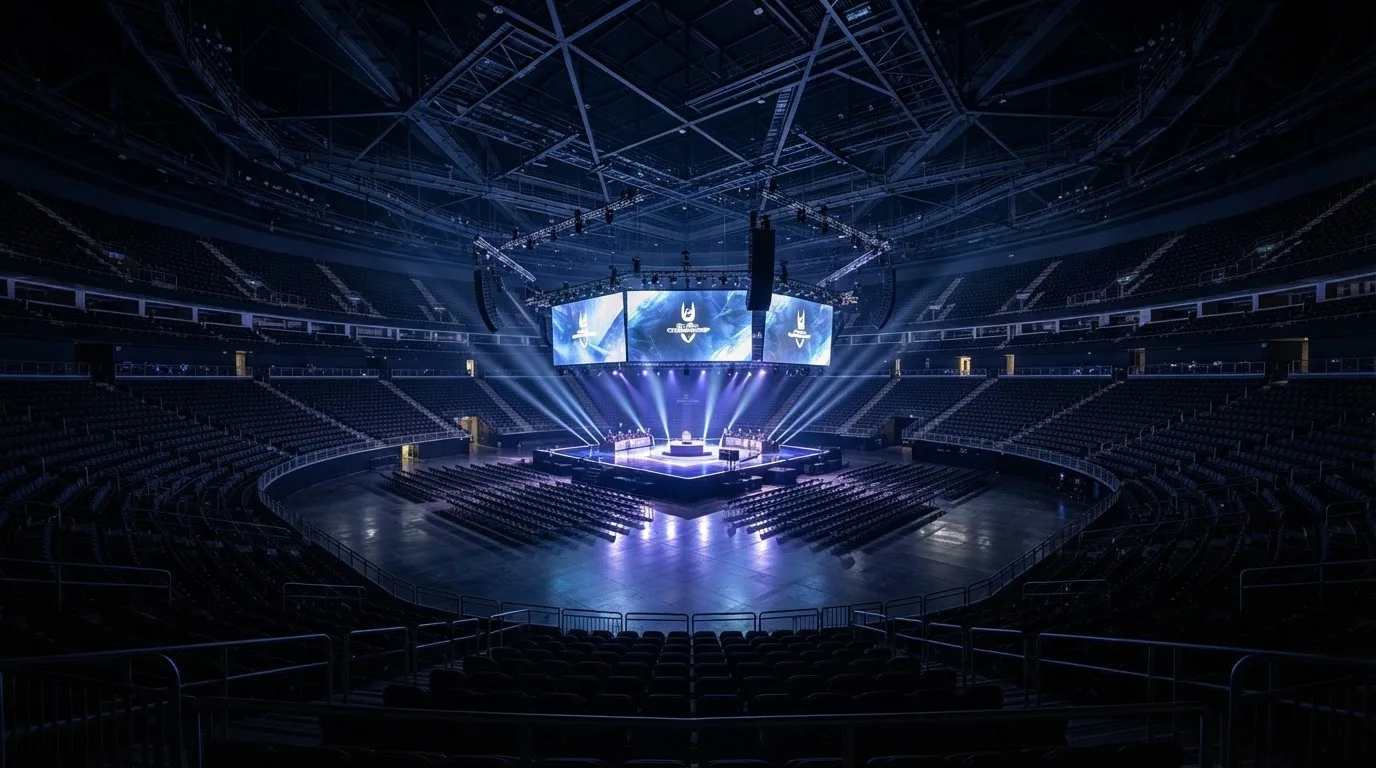
The biggest events anchor the calendar. The League of Legends World Championship, Dota 2’s The International, the Evolution Championship Series (EVO) for fighting games and Intel Extreme Masters are the ones a GB bookmaker’s pre-match list will lead with. Dota 2’s The International 2021 crossed US$40 million in prize money, the largest single esports pool at that time, and the Esports World Cup 2026 in Paris (6 July to 23 August 2026) carries a US$75 million prize pool across 24 games, up from US$71.5 million the year before. Team Falcons held the Esports World Cup Club Championship in both 2024 and 2025.
The consequence for a GB bettor is that an esports market is settled on the same legal footing as a Premier League match. The operator’s licence category, the customer’s identity check, the time a withdrawal takes, the bonus cap that applies to the welcome offer — none of these change because the underlying event is a video game rather than a football match. The factors that change are on the esports side: fewer fixtures in lower-tier leagues, less live data and a smaller set of outright markets on regional qualifiers.
The licence that makes a GB esports bet legal
Every operator named in this guide holds a Gambling Commission remote licence. That licence is the only thing that lets an operator take bets from customers in Great Britain, regardless of where the operator is based. Since the Gambling (Licensing and Advertising) Act 2014, an operator whose remote facilities are used in Great Britain needs a Commission licence wherever it is incorporated. A Curaçao, Maltese or Gibraltar licence is not a substitute; a brand carrying one of those is not licensed to take a bet from someone in London, Manchester or Cardiff.

The Commission’s public register is the whole test. It can be searched by business name, trading name, domain or account number, and it shows the licence categories the operator is permitted to run. The relevant ones for esports are remote general betting standard (real events) — the standard sports-betting licence — and, for exchanges, remote betting intermediary. Several brands can run under one licensee; Ladbrokes and Coral sit under LC International Limited, Paddy Power and Betfair under Flutter, and a licence on the register covers all of them. A licence is not a ranking, and a place in a list like this is not a licence either.
Verifying a brand is a one-minute check. Search the register for the brand name, the trading name or the domain. The record shows the account number, the licence categories and the trading names the licence covers. If the domain proves nothing — licensed operators use .com as well as .co.uk — the register does, because it lists the trading name and the licensee. Where this guide names a brand, the licence number is the one to look up.
| Brand | Gambling Commission remote licence number and licence holder | What the operator’s own terms state on esports |
|---|---|---|
| Tote | 054779-R-331321-008 · TDCO Limited | Pool-betting brand; esports coverage varies by event and is not its lead product |
| Spreadex | 008835-R-104580-022 · Spreadex Limited | Fixed-odds and spread betting in one app; esports is on the fixed-odds side, with spread markets on selected fixtures |
| Coral | 054743-R-330863-014 · LC International Limited | Lists esports fixtures alongside football and tennis, with pre-match and in-play markets on the bigger tournaments |
| Fafabet | 057385-R-333191-006 · Taichi Tech Limited | Smaller bookmaker; pre-match and in-play markets on marquee esports events |
| Sporting Index | 027343-R-308898-011 · Sporting Index Limited | Fixed-odds and spread betting; in-play, Bet Builder for football, auto cash-out and Multi-Markets |
| BetUK | 039198-R-319450-029 · LeoVegas Gaming PLC | Lists esports with pre-match and in-play markets on the larger tournaments |
| BetTom | 064959-R-339314-003 · Bet Tom Limited | Smaller bookmaker; esports markets on major tournaments |
| Sky Bet | 067370-R-341330-005 · SBG Sports Limited | Lists esports pre-match and in-play on the bigger tournaments |
| Smarkets | 039173-R-319366-011 · Smarkets (Malta) Limited | Betting exchange; esports markets priced by back and lay, not fixed-odds |
| Dabble | 065677-R-340363-005 · Dabble Sports UK Ltd | Lists esports with pre-match and in-play markets on the larger tournaments |
The point of the table is what is uniform, not what differs. Every one of these ten names is on the public register against a real licensee. Every one runs GAMSTOP. Every one verifies a customer’s name, address and date of birth before the first deposit. The differences — fixed odds versus exchange, pool betting versus spread, the depth of the in-play list — sit inside the licence, not outside it.
The safeguards that wrap every licensed bet, esports included
Identity check, then gambling. Since 7 May 2019, a licensed remote operator has to verify a customer’s name, address and date of birth before any deposit or bet, including a free bet or a bonus. There is no anonymous play at a licensed site, and the customer’s details stay on the operator’s record. The check is real, and the consequence of failing it is no account.
GAMSTOP is the second layer. It is the national multi-operator self-exclusion scheme, and a licence condition for online operators since 31 March 2020. A customer self-excludes for six months, one year, five years, or five years with auto-renewal. After the minimum period the exclusion stays in place for a further seven years unless the customer asks GAMSTOP to remove it. GAMSTOP covers online sites and apps; betting shops use a separate service. Excluding through GAMSTOP blocks new accounts at every GB-licensed online operator in one go.
The financial vulnerability check applies on top of both. Since 28 February 2025, once a customer’s deposits minus withdrawals cross £150 in a rolling 30 days, the operator runs a public-record check (bankruptcy, county court judgments) — not an income check, not a credit reference check. The financial risk assessments that the press has called “affordability checks” are a separate step, announced on 7 July 2026 in a staged plan with no start date. Neither check is a deposit cap, and there is no state-set deposit or loss ceiling. Operators must offer a gross deposit limit on a fixed time frame — the first changes have applied since 31 October 2025, a second phase was postponed to 30 September 2026, and whether the second phase is live today is not established.
Help is in plain reach: GamCare runs the National Gambling Helpline, GambleAware funds treatment and education, the NHS runs gambling clinics, and Gamblers Anonymous runs meetings. Most licensed operators carry direct links from their safer-gambling pages to one or more of these.
The consequence is that a GB esports bet sits inside the same scaffolding as any other licensed bet. The market is esports; the rules are not.
Crypto, anonymity and the GB-licensed esports market
Three things do not fit together, and the licensed GB market is one of them. A licensed operator verifies the customer’s name, address and date of birth before the first deposit — a credit card, an e-wallet and a bank transfer are the routes in, and a name sits on each. Cryptocurrency, as commonly used, is pseudonymous rather than named, and the verification that licensed operators run is exactly the kind that pseudonymous funding bypasses. A British named-account rule is not established in the statute, and no state list of permitted payment methods exists. But the operator’s own licence conditions, the anti-money-laundering rules and the verification step make a GB-licensed esports site, in practice, a place where a bet is placed by a verified British customer, not a place for anonymous crypto play.
Two of the three words in the search phrases around this corner — bitcoin esports betting, crypto esports betting, esports crypto betting, dota2 esports crypto betting — sit on a different shelf: offshore and unregulated, no GAMSTOP, no Commission complaints route, no British consumer redress, no 10x bonus cap, no £150 vulnerability check, and no protection if funds are withheld. The page describes what GB-licensed esports betting looks like; the offshore alternative is described only so a reader can see the trade they are making if they take it.
The offers, and what the 10x bonus cap does to them
The marketing word on this corner of the market is “free”. Free bet, bonus bet, bet credit, sign-up offer, welcome offer. The arithmetic, once the offer is on the table, is what the offer is worth — and from 19 January 2026 a wagering requirement on a bonus is capped at 10x. A £10 bonus at 50x needed £500 of qualifying bets; under the cap, no more than £100. Mixed-product promotions — an offer that requires gambling on two or more product types, betting plus casino for example — are banned. Whether the cap applies to free bets with no wagering condition, and any cap on the money value of a bonus, are not established.
A few of the welcome offers on the licensed side, in their own shape:
- Coral’s sports welcome offer is “Get £40 in Free Bets when you bet £20” — a deposit and sports bet of £20 or more at minimum odds of 2.0 (1/1), with £40 in free bets issued within 7 days and expiring 7 days after issue, for new GB customers who opt in.
- BetUK’s sports welcome offer gives four £10 free bets (two football accumulators of 4+ selections and two multiples of 2+) to a new customer who deposits £10 or more and places a sports bet within 7 days of registering, with a 7-day free bet expiry and opt-in required.
- BetTom’s sports welcome offer is 50% back as a free bet of up to £50, with a matching 50% back up to £50 as free slot funds for casino play. The two halves split: the sports side has its own terms, the casino side has its own.
- Dabble’s welcome offer is “Bet £10, Get £10 in Free Bets” on a first deposit, with minimum odds, a 7-day expiry and the stake not returned.
The terms that decide what an offer is worth sit on the same page. Sky Bet free bets expire 30 days after crediting, are usable only on single or each-way markets (not multiples), excluding virtuals, are non-withdrawable and do not return the stake with winnings. A free bet is the most common shape on this market, and the rule on a free bet is consistent: the stake is not paid back with the win, the free bet is the bet, and the value of a winning free bet is the free-bet amount × (odds − 1) at the price the bet was struck. There is no code, and no code is printed here.
The consequence: the offer is the visible cost, and the turnover, the minimum price, the deadline and the market margin are the invisible ones. The welcome offer is what the marketing puts first; the bonus cap and the 19 January 2026 rules are what sits on top of it.
Paying in and getting paid out
Three things drive the choice of a payment method on a GB-licensed esports bookmaker: speed of deposit, speed of withdrawal, and whether the method is allowed at all. Credit cards are banned for gambling in Great Britain (since 14 April 2020), including credit-card-funded payments through an e-wallet; debit cards and bank-based payments are not covered by that ban. Beyond that, the rules are the operator’s own.
A representative sample of what the licensed operators’ terms say about payments:
- Smarkets UK: open-bank-transfer deposits are instant from £10 up to £10,000, withdrawals are processed within 6 hours from £10 up to £100,000; UK debit-card deposits are instant from £10 up to £15,000.
These are the figures the operator states, on its own terms page. The pattern across licensed operators is broadly the same: a debit-card deposit is instant and capped (often around £10,000 for a single transaction), an e-wallet is instant and capped per transaction, a bank transfer is the route for larger sums and is slower. Skrill, Neteller, PayPal and paysafecard are all offered by licensed GB operators; what is and is not offered is a per-brand decision, and the live list is the operator’s own cashier.
The consequence is that withdrawal speed is a published figure, not a felt one. A 6-hour withdrawal is not the same as a 24-hour withdrawal for someone who has just won an in-play bet and is sizing up the next one, and the difference matters more on esports than on football, because esports in-play windows are short and the next fixture is close.
The mobile and app side
A licensed GB bookmaker runs three things: a desktop site, a mobile browser site and an app. The app is where the volume is. bet365’s app is the most downloaded sports betting app in the UK by its own store description, and the rest of the licensed market carries comparable download numbers.
What an esports bettor actually uses the app for is different from the marketing pitch. The flow is: open the app, tap the esports tab, pick a tournament, pick a market, place the bet, watch the in-play tracker. A cash-out button sits on the open bet. A bet builder sits inside a single match, joining markets from one event into one bet. Midnite, for example, lists an acca builder, popular accas and price boosts with maximum-stake limits on its home page. The bet builder is the feature that has moved the most weight in the last few years, and it is on every modern licensed app: pre-match and in-play, sometimes with a Winnings Boost applied to the combined bet.
The consequence: an app is a delivery mechanism for what a brand has decided to offer, and the esports depth on that app is the brand’s call, not the app’s. The same app can carry a thin esports list or a deep one depending on which licence holder runs it.
Live esports betting and cash out
Live, or in-play, betting on esports is offered by every GB-licensed bookmaker on this page. The markets are the same as pre-match — match winner, map winner, handicap, totals — and the prices move with the state of the game. A team two maps up in a best-of-five is not the same price as a team that has just lost the first map.
Cash out is the in-play feature that sits beside the bet. A full cash out closes the bet at the price the operator offers at the moment the customer presses the button; a partial cash out takes a fraction of the bet and lets the rest run. Spreadex’s app offers one-click, auto and partial cash out. Sporting Index’s app offers auto cash-out alongside its fixed-odds and spread book. Every licensed operator on this page has some form of cash out, and the differences are in the size of the live markets, the speed of the in-play price update and whether auto cash-out is offered.
The consequence is that the live product is not one product. It is a set of decisions about how deep the in-play list goes, how often prices update, what cash-out variants the brand offers and how the brand settles a market when the stream falls behind. The in-play product on a brand whose live list is wide is not the same as the in-play product on a brand whose live list is narrow, and a bettor who wants to trade a live esports bet needs to read the in-play screen of the brand they are using, not the marketing claim.
Predictions, tipsters and the arithmetic nobody can do for you
A search for “esports betting tips”, “esports betting predictions”, “esports bet tips” or “most profitable esports bets today” is a search for a forecast of an outcome nobody can verify in advance. League of Legends match outcome, Counter-Strike map winner, Dota 2 first blood — the outcome is recorded after the match, not before it, and the only edge a bettor has is the price, the margin and the stake.
A “strategy” on esports betting is, in the end, a way of handling the price. Some bettors back favourites at short prices and accept the lower returns; some back outsiders on a small-stake basis; some restrict themselves to a single tournament and learn the teams; some run an exchange-based book and lay the result they do not want. The gambling firms sell tipster services; the tipster services sell predictions; the predictions are forecasts, and a forecast is a guess about the future, not a price in the present.
The consequence: the strategy is a discipline on stake size, price and tournament choice, and the prediction is a bet at a price. Nobody knows who wins, and the page that names a winner is writing about the future in the present tense, which is the one thing a betting guide must not do.
The bet types and what the odds mean
A bet on esports is a bet on a market. The market names the event and the question, and the price on the market is the bettor’s return for a unit stake.
The shapes are the standard GB sportsbook shapes. A single is one selection. A double is two selections, both of which must win, at multiplied odds. A treble is three; an accumulator — an “acca” — is four or more. A Trixie covers 3 selections in 4 bets; a Patent in 7; a Yankee in 11; a Lucky 15 in 15; a Super Yankee (or Canadian) in 26; a Heinz in 57; a Goliath in 247. The total stake on a multiple bet is the unit stake times the number of bets in the structure. A bet builder combines markets from one event into a single bet; bet365’s Bet Builder+ does this pre-match and in-play, with Super Boosts and a Winnings Boost on selected singles and Bet Builders. Midnite’s app carries an acca builder and acca boosts.
A each-way bet is two bets of equal stake, doubling the stake, with the place part settled at the place terms the race or tournament sets. BTTS — both teams to score — is a market name, not a bet structure. Spread betting (Spreadex, Sporting Index) is a stake-per-point market on a numeric range, where the return is the stake times the number of points the outcome is from the spread; on financial instruments the FCA regulates it, on sports the Gambling Commission does.
The arithmetic behind the odds. A price in decimal form is the return per unit stake. A 2.00 price returns 2.00 × stake, of which 1.00 × stake is the stake returned and 1.00 × stake is the profit. A 1.90 price returns 1.90 × stake; the profit is 0.90 × stake. A 5/1 fractional price is 5 ÷ 1 + 1 = 6.00 decimal. A 9/10 fractional price is 9 ÷ 10 + 1 = 1.90 decimal. The bookmaker’s margin is what the odds do not return.
Take an illustrative two-way market priced at 1.90 / 1.90. The implied probabilities are 1 ÷ 1.90 = 0.5263… on each side. The two implied probabilities add to 1.0526, or 105.26%. The payout share — what a unit staked, split evenly across both outcomes, returns — is the inverse of that sum: 1 ÷ 1.0526 = 0.9500, or 95.00%. The margin is 1 minus the payout share, so 5.00% on this example. The number is a band, not a figure: a balanced book at 1.91 / 1.91 would carry a margin near 4.7%, a market priced at 1.85 / 1.85 would carry a margin near 8.1%. Real esports markets rarely sit at a perfectly balanced book — the favourite is at a shorter price than the underdog — and the margin on the favourite side alone, or the underdog side alone, is not the margin of the market. The 5% band is the floor on what a balanced esports market looks like on a normal book, and the average esports market on a normal licensed book runs a few points higher.
The consequence: a price is a number, and a market is a set of prices. The arithmetic is the same on football, on tennis or on League of Legends; the difference is the depth of the in-play list, the width of the outright market and the speed of the in-play price update. The bettor’s edge is the price they take against the price that was available, and the bookmaker’s edge is the margin that sits inside every market.
Tournaments, fixtures and the calendar
The fixtures an esports bettor sees on a licensed app are the events an operator has priced, and the events an operator has priced are the ones with enough liquidity and enough data to make a market. The big four — the League of Legends World Championship, The International, EVO and Intel Extreme Masters — are on every licensed bookmaker’s list. The next tier — regional leagues in League of Legends and Dota 2, the ESL and BLAST Counter-Strike circuits, the Valorant Champions Tour — is on most, with the depth depending on the brand. Below that, the bookmaker’s call narrows fast.
Two consequences sit on top of that. The first is the time zone: the biggest esports events run in European, North American and Asian time zones, and a GB bettor’s evening is often the early hours of the next morning on the event’s clock. The second is the calendar: an esports season is a series of splits, with a majors circuit in between, and the volume of fixtures spikes during a major and drops in the off-season. The Esports World Cup 2026 in Paris (6 July to 23 August 2026) is the largest single concentration of fixtures in the year, and a bettor planning around it can find more markets in those seven weeks than in the rest of the summer combined.
The ranking and the comparison
Ten operators are on this page, every one of them on the Gambling Commission’s public register against a real licensee. The order is the order of research, not a ranking. A licence is not a ranking. A welcome offer is not a ranking. A live in-play list is not a ranking. What the list does is set the operators the page describes in the order the spec gives.
The differences between the ten sit on three axes. The first is the licence category: Tote is a pool-betting brand, Smarkets is a betting exchange, Spreadex and Sporting Index straddle fixed-odds and spread betting, and the rest are fixed-odds sportsbooks. The second is the welcome offer: a £40 free-bet bundle at Coral, four £10 free bets at BetUK, 50% back up to £50 in free bets plus a casino half at BetTom, a £10 free bet at Dabble, and the rest of the licensed bookmakers carry comparable welcome offers whose terms — minimum deposit, minimum odds, expiry, stake-not-returned — decide what they are worth. The third is the in-play product: bet builder, cash out, acca insurance, price boosts — the features the operator lists on its app and the depth of the live market behind them.
The comparison is a tool for choosing. The choice is not a single brand. It is the brand whose offer, whose market depth and whose payment times match the kind of bet the punter wants to place, and the bettor’s own discipline on stake size and self-exclusion is the part no operator can supply.
Tote — pool betting, with a GB-licensed frame
Tote runs under TDCO Limited, licensed by the Gambling Commission (account 54779) for remote general betting (real events). The brand is a pool-betting one by history, and the welcome offer is a pool-betting welcome: a stake into the pool, a dividend on the result, the operator’s take out of the pool. Esports markets on Tote depend on which events the pool is open on, and the depth of the list is not the same as a fixed-odds bookmaker’s.
For a punter, the Tote product is a price set by the pool rather than a price set by a trader. The dividend is the return, after the operator’s take, on the pool at the moment the result is recorded. The welcome offer is worth what the dividend is worth on the events it covers, and the rest of the offer — the bonus cap, the wagering cap, the stake not returned with a free bet — applies as on any other GB-licensed site. The verdict: a pool-betting brand for a punter who wants a pool dividend, not a fixed-odds book for a punter who wants a trader’s price.
Spreadex — fixed-odds and spread in one app
Spreadex is licensed by the Gambling Commission (account 8835) for remote general betting (real events). The same company is regulated by the FCA for financial spread betting, and the two licences sit side by side. The app combines fixed-odds and spread betting, with one-click, auto and partial cash out, Bet Builder across fixed odds or spreads, and live streaming of UK and Irish horse racing, greyhounds, tennis, NFL and selected football. Esports coverage is on the fixed-odds side, with spread markets on the bigger fixtures. This is a hybrid platform for users comfortable navigating both standard fixed-odds and spread betting instruments.
Coral — the bigger-tournament fixed-odds bookmaker
Coral runs under LC International Limited, on Gambling Commission account 54743, with both a remote general betting standard (real events) licence and a remote betting intermediary licence. The site lists esports fixtures alongside football and tennis, with pre-match and in-play markets on the bigger tournaments. The welcome offer is “Get £40 in Free Bets when you bet £20” — a deposit and sports bet of £20 or more at minimum odds of 2.0 (1/1), with £40 in free bets issued within 7 days and expiring 7 days after issue, for new GB customers who opt in.
The £40 free-bet bundle is a fixed-odds welcome offer on a fixed-odds book, and the value is the size of the free bet times the price the free bet is struck at, less the bookmaker’s margin on that market. A £20 free bet at 2.00 on a market with a 5% margin has an expected value near £9.50, before the expiry and the stake-not-returned terms. For a punter who bets on the bigger esports tournaments, the Coral product is a wide pre-match list and a live in-play tracker. The verdict: a brand for a fixed-odds punter on the bigger tournaments, with the standard free-bet welcome and the standard 7-day free-bet expiry.
Fafabet — Best Odds Guaranteed on horse racing, esports on the side
Fafabet is licensed by the Gambling Commission (account 57385) for remote general betting (real events). The brand’s lead product is horse racing, where it pays Best Odds Guaranteed on UK and Irish win and each-way bets from 9am on race days: if the starting price is bigger than the original price, the bigger odds are paid. Esports markets on Fafabet are pre-match and in-play on the marquee events, and the depth of the list is shorter than the bigger bookmakers’. Fafabet is a specialist racing operator with a peripheral interest in esports.
Sporting Index — fixed-odds and spread, with auto cash-out and Multi-Markets
Sporting Index is licensed by the Gambling Commission (account 27343) for remote general betting (real events). The app lets customers switch between fixed odds and spread betting, with in-play betting, Bet Builder for football, auto cash-out and Multi-Markets. The brand is the larger of the two fixed-odds-and-spread operators on this list, and the licensed sports spread book is the differentiator. This operator prioritizes the sports-spread specialist over the dedicated esports bettor.
BetUK — four £10 free bets on registration
BetUK is licensed by the Gambling Commission (account 39198) for remote general betting (real events). The site lists esports with pre-match and in-play markets on the larger tournaments. The welcome offer is four £10 free bets (two football accumulators of 4+ selections and two multiples of 2+) to a new customer who deposits £10 or more and places a sports bet within 7 days of registering, with a 7-day free bet expiry and opt-in required. This offer is geared towards accumulator bettors.
BetTom — 50% back as a free bet, with a casino half
BetTom is licensed by the Gambling Commission (account 64959) for remote general betting (real events). The welcome offer is 50% back as a free bet of up to £50, with a matching 50% back up to £50 as free slot funds for casino play. The two halves are separate: the sports free bet has its own terms, the casino free slot funds have theirs. The offer complexity requires users to track wagering requirements for two distinct product types.
Sky Bet — long-expiry free bets on singles and each-ways
Sky Bet is licensed by the Gambling Commission (account 67370) for remote general betting (real events). The site lists esports pre-match and in-play on the bigger tournaments. Free bets expire 30 days after crediting, are usable only on single or each-way markets (not multiples), excluding virtuals, are non-withdrawable and do not return the stake with winnings. The 30-day window provides added flexibility compared to standard 7-day offers.
Smarkets — the betting exchange on the list
Smarkets is licensed by the Gambling Commission (account 39173) as a betting intermediary. The Malta incorporation is not the licensing test: a GB-licensed betting intermediary can be incorporated outside Great Britain, and Smarkets is on the public register. UK deposits by open bank transfer are instant from £10 up to £10,000, and withdrawals are processed within 6 hours from £10 up to £100,000; UK debit card deposits are instant from £10 up to £15,000.
The product is a betting exchange, not a fixed-odds book. A bettor backs a result at one price and lays the same result at another, and the exchange takes a commission on net winnings. The price is the market’s price, not a trader’s, and the exchange’s edge is the commission rather than the margin. The 6-hour withdrawal is one of the faster on the GB-licensed side, and the £100,000 ceiling is the kind of ceiling a high-stake bettor reads. A robust exchange option for users prioritizing fast withdrawals over traditional bookmaker fixed-odds.
Dabble — the £10 free bet on a £10 deposit
Dabble runs under Dabble Sports UK Ltd, licensed by the Gambling Commission (account 65677) for remote general betting (real events). The site lists esports with pre-match and in-play markets on the larger tournaments. The welcome offer is “Bet £10, Get £10 in Free Bets” on a first deposit, with minimum odds, a 7-day free bet expiry and the stake not returned.
The £10-in, £10-back shape is the standard small-stake welcome offer, and the value is the size of the free bet times the price the free bet is struck at, less the bookmaker’s margin. The 7-day expiry is the standard 7-day expiry, and the minimum-odds rule is the kind of rule a punter checks before placing the qualifying bet. The verdict: a brand for the small-stake punter who wants a small-stake welcome, with the standard 7-day expiry shaping the use of the free bet.
The trade-offs a punter actually makes
Three choices sit on top of the operator choice. The first is the market depth. The bigger bookmakers carry deeper esports lists and wider outright markets; the smaller bookmakers carry the marquee events and a thinner rest. The second is the welcome offer. A £40 free-bet bundle at Coral, a four-free-bet bundle at BetUK, a 50%-back split at BetTom, a long-expiry single at Sky Bet and a £10-in-£10-back at Dabble are the standard licensed shapes, and the bonus cap on wagering requirements is the same on all of them. The third is the in-play product. A bet builder, a cash-out variant, a price boost and an in-play tracker are the features that decide the live product, and the depth of the live market behind them is the brand’s call.
The bettor’s discipline is the part no operator can supply. A stake the punter can afford to lose, a market the punter has priced for themselves, a self-exclusion on GAMSTOP if the punter wants to step away, and a read of the terms the offer is wrapped in. The licensed market is the market with the checks, the limits and the bonus cap. The unlicensed market is the market with none of those and no British consumer redress if funds are withheld. The choice is the bettor’s, and the consequence is theirs.
Frequently asked questions
How is a bet placed on esports?
A licensed GB bookmaker’s app or site carries an esports tab, with a list of live and upcoming fixtures, the markets on each (match winner, map handicap, totals), and the price on each. A bet is the stake times the price in decimal form, settled on the result the operator records.
What is esports betting?
Esports betting is betting on the outcome of a competitive video-game event, between named professional players or teams, on titles such as League of Legends, Dota 2, Counter-Strike, Valorant, Overwatch, Call of Duty, Fortnite, Rocket League and StarCraft. The market is settled on the result the operator records.
Where can a bet on esports be placed?
A bet on esports can be placed at a GB-licensed remote operator — a brand on the Gambling Commission’s public register against a real licensee. An offshore brand is not licensed to take a bet from a customer in Great Britain, and the protection that comes with the licence (GAMSTOP, the bonus cap, the Commission’s complaints route) is not available on the offshore side.
How is a Gambling Commission licence checked?
The Commission’s public register is searched by business name, trading name, domain or account number. The record shows the licence categories the operator is permitted to run, the licensee and the trading names the licence covers. The register is the test; the domain is not, because licensed operators use .com as well as .co.uk.
How is the return on a bet worked out?
A return is the stake times the price. A 1.90 price returns 1.90 × stake, of which 0.90 × stake is the profit. A 2.00 price returns 2.00 × stake, of which 1.00 × stake is the profit. A 5/1 fractional price is 5 ÷ 1 + 1 = 6.00 decimal; a 9/10 fractional price is 9 ÷ 10 + 1 = 1.90 decimal. A combination bet multiplies the prices, and the return is the stake times the combined price.
What is the bookmaker’s margin?
The margin is the share of every unit bet that the bookmaker keeps on a market. On a balanced two-way market at 1.90 / 1.90, the implied probabilities add to 1.0526, the payout share is 95.00%, and the margin is 5.00%. A tighter price (1.91 / 1.91) carries a smaller margin; a wider price (1.85 / 1.85) carries a larger one. The margin sits inside every market on the book, and a market with a smaller margin is a market that returns more, on average, to the punter.
US & other team sports – Bookies Trust
Content created by the «Bookies Trust» team
