
Online handball betting in Great Britain — what the odds hide, what the bonus costs
 Available in US
Handball is a small corner of a British sportsbook. The fixture list rarely tops a dozen matches on a quiet weekday, the tournament calendar runs in odd-numbered years and the live streams are mostly the same Champions League nights European readers already know. None of that stops it drawing a steady crowd, because the matches are short, the goal counts are high enough that a late comeback is on the table until the last minute, and the odds on anything other than the favourites tend to be generous in a way football has not been for a decade.

This page is for readers in Great Britain who want to bet on handball through a licensed bookmaker rather than an offshore exchange that does not answer to the Gambling Commission. It walks through what welcome offers and free bets really demand of a customer, how live handball betting and cash out actually work, where the sport’s markets sit and what they settle on, how the bookmaker’s margin is built into the prices a reader sees, and which of the ten brands on the Commission’s register are worth opening an account with and which are not.
Data current as of 27 October 2026, checked against the Gambling Commission’s public register.
How a handball “bookmate” welcome offer and your stake really add up
A welcome offer on a handball bookmaker is rarely what the landing page makes it look like. The headline number — “£30 free bet”, “£20 in bet credits”, “up to £100” — is the maximum value a customer can squeeze out of the deal, not the value of the deal itself, and the gap between the two is what the wagering requirement, the minimum odds, the expiry window and the stake return tell. Read them in that order, because each one is a condition the marketing copy rarely volunteers.
Free bets rarely include the stake in the total return. When Betway’s Free Bet Club credits £5 in free bets, the stake is excluded from the winnings payout; only the profit lands in the cash balance. That is the standard mechanic across British sportsbooks and it is the reason a £30 free bet is worth £30 multiplied by the edge the bettor finds on top of the price, not £30.
Wagering requirement is the multiplier that turns a bonus into betting volume. Under the Commission’s promotion rules in force since 19 January 2026, no welcome offer at a GB-licensed operator may carry a wagering requirement above 10x — a £10 bonus at 50x used to require £500 of qualifying bets; the same bonus under the cap needs no more than £100. The cap applies to the cash bonus part of a deal; a free bet with no wagering condition sits outside the rule on the wording as written, and whether the cap catches it is not established. Read the offer’s small print for a phrase like “wagering requirement: 10x the bonus” and treat anything above that as a sign the offer is older than the cap.
Minimum odds are the line a qualifying bet must clear to count towards the rollover. A £10 free bet triggered by a first wager of £10 at any odds is a different deal from one that requires the first wager to be at odds of 1/1 or greater. Paddy Power’s standard sports welcome, like most of the ten brands on this page, requires the qualifying bet to settle at minimum fractional odds of 1/2 (decimal 1.50); Hollywoodbets’ first-bet offer is more demanding on the face of it, asking for a losing accumulator of three or more legs at combined odds of 4/1 or greater. Read the odds line as carefully as the rollover: a high minimum price on the qualifier knocks a large chunk of the casual betting calendar out of the offer.
Expiry window is the countdown a free bet starts the moment it lands. The BetMGM welcome gives new customers four £10 free bets, each valid for seven days, with the trigger being a sports bet of £10 or more placed within seven days of deposit. Vbet’s £10 free bet is triggered by a first bet that loses, not by deposit, so the expiry clock is shorter. Where the offer demands a settled qualifying bet rather than a placed one, factor in that the seven-day window starts when the bet settles, not when it is struck.
Stake return is what makes a free bet worth what it is. A £10 free bet at decimal odds of 2.50 returns £25 — but the £10 stake is retained by the bookmaker, so the cash balance grows by £15, not £25. The formula is in plain sight on the betting slip: net profit = stake × (odds − 1). Multiply that profit by the payout share of the market the bet is placed on (the share of every pound staked the bookmaker pays back as winnings on average, with the rest being margin) and the average value of the free bet to the bettor is in the page. A £10 free bet on an evenly-priced two-way market at 1.90 / 1.90 carries a payout share of about 1 ÷ (1/1.90 + 1/1.90), or about 95%, so the average value is roughly £10 × (1.90 − 1) × 0.95 ÷ 1.90, or about £4.50. That is what a free bet is worth, not what it wins.
Cash bonus is a different deal and a more demanding one. Where a brand credits £10 in cash that must be wagered 10x at minimum odds of 1/2 before withdrawal, the bettor must place £100 of qualifying bets, with the £10 staying locked until the rollover clears. The required turnover is the bonus base times the wagering factor — £10 × 10 = £100. Bets at or above the minimum odds count; anything shorter does not. The bets needed depends on the stake per bet — £5 stakes at the relevant means 20 qualifying bets, £10 means 10.
Mixed-product promotions are banned. Under the same January 2026 rules, an offer that requires a customer to gamble on two or more product types — a free bet tied to casino play, a sports bonus that triggers only after lottery entries, a deposit that unlocks bingo spins — is no longer allowed at a GB-licensed operator. Any landing page still running one of those mechanics is either older than the rule or running through a non-licensed front, both of which are reasons to close the tab.
What this means for a bettor with a small budget is that the welcome offer matters less than the welcome line. A free bet with a seven-day expiry, a stake that is not paid back and a minimum odds of 1/2 is an entry into the sportsbook, not a windfall. Treat it as a chance to learn the platform’s handball markets on a stake the bettor can afford to lose, and treat any bonus that demands more than ten times rollover, more than seven days to clear or any product outside the bettor’s plan as something to leave alone.
How live handball betting and cash out actually run
Handball is a sport built for in-play. Two 30-minute halves of end-to-end running, scores that move from 10–10 to 20–20 in a five-minute burst, and a referee who sends players to the sin-bin in two-minute stretches give the bookmaker more reason than most to suspend the market after every goal. The tight discipline is the reason live handball odds sit on the betting slip, refresh every few seconds and are usually deeper in the bookmaker’s market catalogue than football’s.

In-play markets are settled on the same conditions as pre-match markets. The 1X2 (home win / draw / away win) is the standard line, with totals (over/under a goal line, typically set at 27.5, 28.5, 29.5 or 30.5 depending on the teams) and handicaps (a goal-line advantage given to one side before kick-off). Some brands extend to next-goal markets, race-to-X markets (which side reaches 5, 10, 15, 20 goals first) and half-time / full-time doubles. Each market has its own margin and its own settlement rule, and a margin that looks tight on the 1X2 may be wider on the next-goal line.
Cash out is the lever a bookmaker pulls when the live price moves. Once the bet is on the slip, the cash-out button offers a settlement now at a price the bookmaker quotes — usually lower than a full pre-match price because the bookmaker wants the liability off its books. Spreadex’s app combines fixed-odds and spread betting in one place, with one-click, auto and partial cash out; partial lets a bettor lock in some of the stake and leave the rest running. Bet365’s in-play product is paired with live streaming of events worldwide, plus Match Live and Bet Track for following positions on the page.
A live streaming tie-in matters on a sport with thin coverage. British bookmakers typically stream the Champions League matches that drive the handball calendar — bet365, Ladbrokes and a handful of others carry the European handball nights — and a reader who wants to bet in-play without the price suspended for every goal wants the stream and the broadcast in the same window. Live data from the IHF, the European Handball Federation and league feeds flows into the bookmaker’s trader screens, and the gap between a goal going in and the price refreshing is usually under five seconds on the major brands.
Suspension rules are the quietest clause in the live market. A bookmaker may suspend a market at any point — for a goal, for a timeout, for a video review — and any bet placed in that window is void. The match-settled rule is that the result is whatever the on-court official records when the final whistle blows, with any further review happening at the bookmaker’s discretion. Where the match goes to overtime (two five-minute halves after a draw in a knockout match), the 1X2 is settled on the result at the end of overtime or the shootout, not on the result at 60 minutes.
In summary, a top-tier live handball sportsbook requires three elements: comprehensive in-play markets, a synchronised data stream, and fair cash-out pricing. Lacking these, a bookmaker is less competitive for live handball betting.
Why a handball betting prediction is not what the marketing page sells
A prediction is a forecast, and a forecast is a guess about an outcome nobody can know in advance. The marketing pages that sell “handball predictions” are selling tips dressed as forecasts, and the difference between the two is the difference between a read of the form and a confidence the form will hold. Both are valuable in different hands.
Statistical forecasting is what a serious reader does with a fixture list. Handball teams play a 30-match league season across the major European leagues, plus the Champions League group stage, plus the IHF World Championship in odd-numbered years and the European Championship in even-numbered years. There is enough of a sample to look at goals scored and conceded per game, at home and away splits, at recent form and at head-to-heads, and the bookmakers’ prices move on the same numbers. Where the price the bookmaker offers is wider than the reader’s own read of the form, the bet is on.
Form reading is the craft underneath. Handball is a high-scoring sport — most professional teams score 20 to 35 goals each per match — and a six-goal lead is not the cushion a six-goal lead in football is. The pace is high, the substitutions are deep and the seven-metre throws are reliable enough to keep a side within a few goals until the last ten minutes. A reader who has watched a team concede a run of three goals in two minutes knows the price on the next-goal market can move hard, and a reader who has not watched the team has only the form column.
Bankroll management is the discipline the marketing pages never teach. Staking more than 2–5% of the bank on any one bet is the standard amateur mistake; staking a fixed unit rather than a variable percentage keeps the bank flat through a losing run. The bookmaker’s margin is paid on every bet, and a bettor who plays too many markets pays more margin than a bettor who plays one well-priced market per day.
Banker bets do not exist. Anyone selling a “sure” handball bet is selling a guess dressed as certainty, and the page that says it has locked winners for tomorrow is the page that loses the reader money the day after. The honest framing is that a bettor with a 53% read on a two-way market at decimal odds of 1.90 has a small edge over the bookmaker’s margin (the payout share on a 1.90 / 1.90 market is about 95%, so a 53% win rate is above the break-even 52.6% on the price), and that edge compounds over hundreds of bets only if the staking is disciplined.
Ultimately, any sportsbook advice should be viewed as a starting point. Since the bettor’s margin is slim and the bookmaker’s edge is embedded in the pricing, disciplined form analysis is more effective than relying on predefined tips.
How handball betting odds are built and what they settle on
Handball markets are thinner than football markets, which means the odds move more on a goal and the limits are tighter on the major lines. The price a reader sees is the bookmaker’s read of the probability of each outcome, with a margin built in to cover the operator’s overhead and to pay for the risk the bookmaker runs on the bets that do not cancel out on the other side.
Decimal odds are the standard at British-licensed online operators. A price of 2.50 means a £10 stake returns £25, with £10 stake not paid back and £15 profit. Fractional odds appear in the older British format — 3/2 means £3 profit for every £2 staked, decimal 2.50. The conversion is the simpler rule: a/b → a ÷ b + 1. A 6/4 shot is 2.50 in decimal; evens (1/1) is 2.00.
Settlement on the 1X2 (home win / draw / away win) is settled on the score at full time — the end of the second 30-minute half. Where the match goes to overtime, the result is settled on the score at the end of overtime, not at the end of regulation. Knockout matches that end level after overtime go to a penalty shootout, and the match result is settled on the winner of the shootout.
Handicap markets are settled on the score after the handicap is applied to the full-time result. A handicap of −3.5 on the favourite means the favourite must win by four or more for the bet to land; a handicap of +3.5 on the outsider means the bet lands if the outsider loses by three or fewer or wins. Asian-style half-goal handicaps remove the push: −2.5 means a four-goal winning margin wins, a three-goal winning margin loses.
Totals markets are settled on the combined goals scored by both teams at full time. An over 27.5 line on a match settled 16–14 lands (30 combined goals); an over 28.5 line on the same match loses. The bookmaker’s line moves with the team news and the recent form, and the margin on totals is usually wider than the margin on the 1X2.
Each-way betting is a horse racing convention that does not apply to handball in the same form. Handball matches do not have place terms, and each-way stakes are not offered on the 1X2 or the totals.
Ante-post is not offered on handball in the same way as it is on horse racing. A bet on a Champions League outright winner placed before the tournament starts is settled on the team that lifts the trophy; a bet on a league winner is settled on the team that finishes top of the league table at the end of the season.
In short, the price presented is the final settled price, incorporating the bookmaker’s margin. A bettor with strong form analysis seeks out value beyond the trader’s consensus to overcome this built-in edge.
The bookmaker’s margin and how it lives inside the price
The margin is the share of every pound staked that the bookmaker keeps on average across all outcomes of a market. On a two-way market priced 1.90 / 1.90, the payout share is 1 ÷ (1/1.90 + 1/1.90), or roughly 0.95 — the bookmaker pays back 95p of every pound staked across the two outcomes on average, keeping 5p as margin. The same 5p margin on a market priced 1.80 / 2.00 is calculated identically, 1 ÷ (1/1.80 + 1/2.00), or about 0.947 — a similar margin, a slightly higher payout share on the favourite.
Where the price is wider than the market, the reader has an edge. A two-way market priced 2.10 / 1.75 has a payout share of 1 ÷ (1/2.10 + 1/1.75), or about 0.958 — the bookmaker keeps about 4.2% as margin. A 2.10 / 1.75 line that the reader reads as a fair 2.00 / 1.80 carries an edge for the reader on the 2.10, because the actual payout share at the true fair odds (2.00 / 1.80, where the implied probabilities sum to exactly 100%) is 1.00 — the reader is being paid the full true probability on the back of a margin that is too tight for the bookmaker.
The margin on the prices is one number; the margin on the betting volume is what a given market pays the bookmaker over a season. A brand that runs a 5% margin on a £1m market keeps £50,000; a brand that runs a 7% margin on the same market keeps £70,000. The wider margin is more profitable for the brand and worse for the reader, which is why serious readers compare margins across brands and across markets rather than looking at one price in isolation.
Where the same match is offered at different prices on different brands, the reader bets on the brand with the tighter margin. Where the same match is offered at the same margin on two brands, the reader bets on the brand with the better cash-out mechanic, the deeper in-play offering or the higher limit. Price is the first filter, not the only one.
A worked example: a handball 1X2 priced 1.90 / 1.90 carries a margin of 5.0% (the implied probabilities 1/1.90 + 1/1.90 sum to 1.0526, so the overround is 5.26%, and the margin is (1.0526 – 1) / 1.0526). A reader who bets £10 on each side of the market (a £20 total stake) expects to receive about £19 in return on average — the £20 stake minus the £1 kept by the bookmaker as margin. The exact figure depends on the actual outcome distribution, which the reader does not control; the average, across many such bets, is the figure the page is built on.
To conclude, the margin functions as the cost of the bet, embedded within the price. Achieving consistent results requires finding prices that exceed the bookmaker’s assessment, which is challenging due to the mathematical margin.
Handball tournaments and where the betting calendar fixtures sit
The handball calendar runs in a different rhythm from the football calendar, and the British bookmaker’s handball page reflects that. The major tournaments sit in odd-numbered years for the men’s IHF World Championship and in even-numbered years for the European Championship and the Olympic men’s tournament. The men’s event has been held every two years since 1995; the women’s calendar runs on the same alternating cycle.
The IHF World Championship is the largest national-team event. The men’s event has been held since 1938, with Denmark the reigning men’s world champion and France the reigning women’s world champion. The tournament runs in January, with the group stage spread across the host cities and the knockout rounds concentrated in the final week. British bookmakers price every match on the men’s and women’s tournaments from the group stage through to the final, and the Champions League finals sit alongside the world championships as the two events the calendar turns on.
The Olympic handball tournament runs every four years. Men’s handball debuted at the 1936 Berlin Olympics (outdoors) and returned indoors at the 1972 Munich Games; women’s handball was added in 1976. The Olympic tournament is short — twelve teams in the men’s draw, twelve in the women’s — and the knockout rounds are concentrated in the second week of the Games. British bookmakers price the Olympic tournament as a discrete event rather than as part of the club season, and the prices move quickly on team news in the run-up.
The Champions League is the club competition that drives the European handball calendar. The group stage runs from September through to the spring, with the knockout rounds and the final four (the Final4) in late spring. The Final4 is the marquee event of the European club season — a single weekend, four teams, two semi-finals and a final, all under one roof. British bookmakers price every match on the Champions League from the group stage through to the Final4, with bet365 holding the official global betting partnership for the competition.
The European national leagues run alongside the European club competitions. The German Bundesliga, the French Starligue, the Spanish Liga ASOBAL, the Hungarian K&H liga and the Danish Herre Håndbold Ligaen are the leagues the British sportsbook’s handball page draws on for fixtures outside the major tournaments. British bookmakers do not always price every league match — the Bundesliga and the Starligue are well covered, the smaller leagues only intermittently — and a reader who wants a fixture on a smaller league should check the betting slip before staking.
The women’s handball calendar runs in parallel. The IHF Women’s World Championship, the Women’s Champions League (the EHF Champions League Women), the European Women’s Handball Championship and the Olympic women’s tournament are the marquee events, and the major national leagues (the German Frauen-Bundesliga, the French LFH, the Hungarian K&H női kézilabda liga) are priced on the same pattern as the men’s.
What this means for a reader is that the handball calendar has two peaks — the major tournaments (the World Championship in odd-numbered years, the European Championship in even-numbered years, the Olympic tournament every four years) and the Champions League Final4. The betting volume follows the same peaks, the limits are higher on the marquee matches and the in-play offering is deeper. Outside those peaks, the British sportsbook’s handball offering is thinner and the prices may not move on every fixture.
How the ten UK-licensed handball bookmakers compare
The brands below all hold a remote operating licence from the Gambling Commission for Great Britain, which is the test the Commission’s public register applies. Several of them are run by the same parent company — Ladbrokes and Paddy Power both sit under Entain’s UK licence structure, for example — and a reader who holds an account with one may already hold one with the other. Each brand is presented on its own terms, with the licence number carried as the proof and the offer carried in the operator’s own words.
The order is the order research names, not a ranking by quality. None of these brands is “the only” licensed one — the Commission’s register lists many more — and the order is the comparison’s order, not an endorsement. A reader who wants the cheapest welcome offer, the deepest in-play offering, the strongest cash-out mechanic or the widest handball market will read the ten reviews below for the brand that fits, rather than the top brand on the list.
Betway — the steady mid-market sportsbook with a weekly free bet club
Betway is the British arm of a Canadian-owned sportsbook that has been on the UK market since the early 2010s. The remote licence sits with Betway Limited under Commission account 39372, which the register lists for the categories remote general betting standard (real events) and remote betting intermediary (the latter under the Betway parent structure). The site covers the major European handball leagues and the Champions League at depth.
The Free Bet Club is the offer the brand is best known for. Spend £25 or more on sports in a week, opt in, and the customer receives 2 × £5 free bets the following week, with a cap of up to £10 per week. The free bet stake is not paid back with a win; the rollover is zero; the minimum odds on the qualifying bets are standard. The offer is weekly rather than one-off, which is the structural difference versus a single welcome.
What this means for the reader: Betway is a steady mid-market sportsbook with a weekly free bet club rather than a one-shot welcome. The brand suits a bettor who plays every week and wants a recurring free bet stake, more than it suits a bettor who opens an account for a single event and walks away. The Commission’s register is where the brand sits, and the standard GB customer-protection duties apply.
Paddy Power — the high-profile bookmaker with the broadest sportsbook
Paddy Power is the British and Irish arm of a brand that combines a high-street presence in Ireland with a UK online sportsbook under PPB Counterparty Services Limited, Commission account 39439. The brand publishes its sports app under Paddy Power PLC and covers football, horse racing, boxing, rugby, tennis, golf, darts, snooker and Formula 1 alongside the smaller sports. Handball is on the list, with the major tournaments and the Champions League covered.
The Paddy Power welcome is a sportsbook offer that varies by promotion period — the brand runs a number of sign-up offers, from a £/€5 free bet to a risk-free first bet, each with its own qualifying bet, minimum odds and expiry. The standard terms carry a minimum odds requirement on the qualifying bet and a 7-day expiry on the free bet, with the stake not paid back.
What this means for the reader: Paddy Power is the broadest sportsbook in this comparison and the one most readers in Great Britain already know. The brand suits a bettor who wants the marketing muscle of a major sportsbook and a deep catalogue across multiple sports, more than it suits a bettor who wants the tightest margin on a single handball market. The licence is on the Commission’s public list and the standard GB protections apply.
BetMGM — the American-backed sportsbook with a four-free-bet welcome
BetMGM is the UK arm of the joint venture between MGM Resorts and Entain, operating under LeoVegas Gaming PLC, Commission account 39198. The UK sportsbook is a relatively recent entrant to the British market and the welcome offer is the brand’s signature line.
The sports welcome offer gives new UK customers four £10 free bets when they deposit £10 or more and place a sports bet within seven days. Two of the free bets are football accumulators of four or more selections; two are sports multiples of two or more. The free bets are valid for seven days, with minimum odds and opt-in required; the free bet stake is not paid back with a win. The split between football accumulators and sports multiples is the structural feature of the offer — a reader who does not bet on football accas loses half of the four free bets.
What this means for the reader: BetMGM is a strong welcome offer for a bettor who plays football accumulators; a weaker one for a reader who does not. The brand’s sportsbook is a recent entry to the UK market and the catalogue is still being built out, with the major handball tournaments covered but the smaller leagues less reliably priced.
VBet — the Eastern European sportsbook with a small welcome and a deep catalogue
VBet is the British arm of a brand that started in Eastern Europe and has built a UK-licensed sportsbook under SCGO Limited, Commission account 44662. The brand’s handball catalogue is broader than most of the other nine on this page — the Champions League, the European leagues and the international tournaments are all priced — and the welcome offer is a single free bet on a losing first wager.
The sports welcome offer is a £10 free bet when a new, verified customer stakes £10 or more on a first-ever bet that loses. The stake is excluded from free-bet winnings, the free bet is valid for seven days, and the qualifying bet is on the customer’s first bet (no minimum odds on the trigger, but a stake of £10 minimum). The trigger-by-loss mechanic is the structural feature of the offer — a winning first bet does not trigger the free bet, which is a smaller upside than a deposit-triggered free bet but a tighter risk for the brand.
What this means for the reader: VBet provides a deep handball catalogue, but with a welcome offer that requires a losing first bet. It is a solid choice for a bettor focused on market depth rather than the headline bonus.
bet365 — the official Champions League partner with the deepest in-play offering
bet365 is the British arm of a family-owned Stoke-based sportsbook that has held a UK remote licence since the early days of online betting in Great Britain. The licence sits with Hillside (UK Sports) ENC under Commission account 55148; the brand is the official global betting partner of the UEFA Champions League and the most-downloaded sports betting app in the UK App Store.
The sports welcome offer varies by promotion period; the standard structure is a bet-credit offer triggered by a qualifying bet of £10 or more, with the credits valid for a defined window and a minimum odds requirement on the qualifying bet. The brand’s catalogue is the deepest in this comparison, with the Champions League handball, the major European leagues, the IHF World Championship and the Olympic tournament all priced from the group stage through to the final.
Bet365’s in-play offering is paired with live streaming of events worldwide, plus Bet Track, Match Live and a Live Golf Tracker for following bets in play. The Bet Builder+ product lets a customer combine markets from one event into a single bet, available pre-match and in-play; the brand also runs Super Boosts and Winnings Boosts on Bet Builders and selected singles.
What this means for the reader: bet365 delivers a comprehensive in-play experience and Champions League coverage. It remains the top pick for a bettor who prioritises live streaming and an extensive handball offering over a standard welcome bonus.
Kwiff — the trademarked sportsbook with a smaller catalogue and a quick-onboarding app
Kwiff is a UK-licensed sportsbook under Eaton Gate Gaming Limited, Commission account 44448, and is described on its App Store listing as a trademark operated by Spryme Ltd. The app is rated 17+ in the UK App Store, with a smaller catalogue than the major sportsbooks but a quick onboarding flow.
The sports welcome offer is a bet-credit offer triggered by a qualifying bet, with the credits valid for a defined window and a minimum odds requirement. The brand’s handball catalogue covers the major tournaments and the Champions League, with the smaller leagues priced intermittently. The brand’s signature is a “kwiff” mechanic — a randomised boost on selected odds — which is the feature the brand markets rather than a structural welcome offer.
What this means for the reader: Kwiff offers a distinct odds-boost mechanism rather than a traditional welcome. It is an alternative option for a bettor seeking a different product experience.
Matchbook — the betting exchange with the deepest back-and-lay liquidity
Matchbook is the UK-licensed betting exchange under Triplebet Limited, Commission account 39504. The exchange is licensed in the categories remote general betting standard (real events) and remote betting intermediary; the latter is the licence for betting exchanges under the Commission’s regime. Customers bet against other users, with back and lay bets priced against the exchange’s liquidity rather than the bookmaker’s margin.
The sports welcome offer is an exchange-style offer — typically a commission-free period or a matched-bet refund — with the terms varying by period. Bet Builder, multiples and in-play betting are part of the exchange’s product; the brand also runs live streaming of horse racing and greyhounds.
What this means for the reader: Matchbook functions as an exchange, providing a different pricing dynamic based on liquidity. It is the preferred choice for a bettor who values competitive pricing and lay betting capabilities.
Hollywoodbets — the South African sportsbook with a UK-facing app
Hollywoodbets is the UK arm of a South African sportsbook under Hollywoodbets International UK Limited, Commission account 53028. The brand publishes its UK app as Hollywoodbets UK and runs a sports welcome offer for new UK customers.
The sports welcome offer is a free bet of up to £30 on a first qualifying losing accumulator: new players who deposit £10 or more by card receive a free bet of up to £30 on their first losing accumulator of three or more legs at combined odds of 4/1 or greater, settled within seven days. One free bet per customer; free-bet winnings exclude the initial stake.
What this means for the reader: Hollywoodbets features a single-trigger accumulator-focused bonus. This structure is most relevant for a bettor who prefers accumulator plays over single wagers.
Ladbrokes — the high-street-rooted sportsbook with the broadest catalogue
Ladbrokes is the British arm of a brand that sits under Entain Operations Limited and holds a UK remote licence under LC International Limited, Commission account 54743. The sports betting app is published by Entain Operations Limited and is rated 4.66 from 101,255 ratings in the GB App Store, the highest user rating in this comparison. The licence categories are remote general betting standard (real events) and remote betting intermediary, the latter under the Coral side of the Entain structure.
The sports welcome offer varies by promotion period; the standard structure is a free bet offer triggered by a qualifying bet, with the terms varying by period. The brand’s catalogue is the broadest in this comparison alongside Paddy Power, with the major handball tournaments, the Champions League and the major European leagues all priced.
What this means for the reader: Ladbrokes is the broadest catalogue in this comparison and the highest user rating in the App Store. The brand suits a reader who wants the catalogue and the high-street-rooted sportsbook experience, more than it suits a reader who is shopping the welcome offers across the ten. The licence is on the Commission’s register and the standard GB protections apply.
Spreadex — the spread-betting and fixed-odds sportsbook with one-click cash out
Spreadex is the UK-licensed sportsbook under Spreadex Limited, Commission account 8835. The brand combines fixed-odds and spread betting in one app, regulated by the FCA for the spread betting side and by the Gambling Commission for the fixed-odds side. Spread betting losses can exceed deposits, which is the FCA’s standard warning on the spread-betting product; the fixed-odds side is on the standard bookmaker model.
The sports welcome offer is a fixed-odds offer — typically a free bet triggered by a qualifying bet — with the terms varying by period. The brand’s catalogue covers the major handball tournaments and the Champions League, with the in-play offering built around the cash-out product: one-click, auto and partial cash out, Bet Builder across fixed odds or spreads, and live streaming of UK and Irish horse racing, greyhounds, tennis, NFL and selected football.
What this means for the reader: Spreadex is a fixed-odds and spread-betting combined product, and the spread-betting side carries a separate FCA-regulated risk profile where losses can exceed deposits. The brand suits a reader who wants the spread-betting product alongside the fixed-odds offering, more than it suits a reader who only wants the fixed-odds sportsbook. The licence is on the Commission’s register and the standard GB protections apply on the fixed-odds side.
How UK handball betting sits inside the law
The legal frame for online betting in Great Britain is the Gambling Act 2005, administered by the Gambling Commission — a non-departmental public body sponsored by the Department for Culture, Media and Sport. The Commission’s remit covers England, Scotland and Wales; Northern Ireland is outside the Act and has its own older regime, so a “GB licence” regulates England, Scotland and Wales but not Northern Ireland. The 2014 Gambling (Licensing and Advertising) Act amended the 2005 Act so an operator whose remote facilities are used in Great Britain needs a Commission licence wherever it is based — sections 33 and 36 of the 2005 Act as amended. A Curaçao, Maltese or Gibraltar licence is not a substitute, and an operator without a Commission licence serving the GB market is operating illegally at the point of consumption.
Betting licence types sit in five categories at the Commission: remote general betting standard (real events), remote general betting standard (virtual events), remote general betting limited, remote pool betting and remote betting intermediary (the licence for betting exchanges). The brands in this comparison all hold a remote general betting standard (real events) licence, with Matchbook, Ladbrokes and Paddy Power additionally holding the betting intermediary category under the parent company structure. The Commission’s public register can be searched by business name, trading name, domain or account number, and a licence number from the register is the proof of licence. There is no state monopoly and no cap on the number of licences; the Commission’s register lists far more brands than any article can feature, and no brand is “the only” licensed one.
There is no statutory list of permitted bets or markets. An operator holds a licence for a category and offers markets under its own rules and the Licence Conditions and Codes of Practice (LCCP). In-play betting is offered under the operator’s licence conditions and customer-protection duties; no statutory prohibition was found. Esports are treated like any other event; virtual events are a separate licence category; bets on politics, TV shows and novelty markets are offered by GB bookmakers and no statutory prohibition was found. There is no statutory cap on stakes in sports betting — operators set their own maximum stakes and may restrict customers. Spread betting that is not a financial product is inside General Betting Duty; financial spread betting is regulated by the Financial Conduct Authority under a separate regime.
Identity verification is mandatory at GB-licensed online operators. Name, address and date of birth are verified before a customer can deposit or gamble, including with a free bet or bonus. The rule has been in force since 7 May 2019. There is no anonymous play at a licensed site; the customer-protection regime starts at the front door.
Advertising is not licensed by the Commission; it runs through the CAP Code (non-broadcast) and BCAP Code (broadcast), enforced by the ASA, alongside the LCCP marketing conditions. CAP Code section 16: marketing must be socially responsible, must not be of strong appeal to under-18s, and no one who is or seems to be under 25 may be featured gambling or play a significant role (with an exception for marketing placed where a bet can be made directly); that rule concerns who may appear in the advertisement, not who may bet. Promotion rules in force since 19 January 2026 cap wagering requirements on bonuses at 10x and ban mixed-product promotions. “Whistle-to-whistle” is an industry code, not law: since 1 August 2019 betting advertisements are not shown on TV from five minutes before a live sporting event to five minutes after it, before the 9pm watershed (horse and greyhound racing excluded). The Premier League clubs’ voluntary withdrawal of gambling sponsorship from the front of matchday shirts (from 2026/27; sleeves and hoardings remain) is voluntary, not law. Operators are responsible for marketing by their affiliates. Never print a promo code; the page describes what an offer is worth, not how it is claimed.
Tax: the player pays no tax on betting winnings in Great Britain (general information, not tax advice; a professional gambler should ask HMRC or an adviser). General Betting Duty is the operator’s tax on gross profits, currently 15%; from 1 April 2027 a new remote betting rate of 25% applies within it, while remote bets on UK horse racing, bets on self-service betting terminals in licensed premises, pool betting and in-person betting stay at 15% (HM Government policy paper of 26 November 2025); spread betting has its own rates (3% financial, 10% other). Until 1 April 2027 the remote rate stays at 15%; whether operators pass duty on through odds is not established, and a customer is not charged duty. The Commission’s statutory levy is a separate charge, not a tax.
Enforcement at offshore operators: providing gambling facilities in Great Britain without the licence the Act requires is an offence under section 33 of the Gambling Act 2005 (on summary conviction up to 51 weeks’ imprisonment, a fine up to level 5, or both; six months in Scotland) — aimed at the operator. No offence aimed at a customer who merely bets on an unlicensed site was found, but state the loss of protection — no GAMSTOP, no Commission complaints route, no approved dispute-resolution body, no British consumer redress if funds are withheld, not bound by the 10x bonus cap or the £150 vulnerability check — and never “legal to use”. Enforcement is disruption, not blocking: cease-and-desist notices, search-engine referrals, work with registrars, hosts and payment providers; the Commission has been given, or is about to receive, court-order DNS blocking powers — never write that ISP blocking is in operation.
What this means for a reader in Great Britain is that the licensing question is settled before the betting question. A GB-licensed bookmaker carries the customer-protection regime (verification at the front door, GAMSTOP, the 10x bonus cap, the £150 vulnerability check, the Commission complaints route) at the cost of anonymity. An unlicensed bookmaker carries none of those protections and the additional risk of funds being withheld, on top of the loss of GAMSTOP coverage and the Commission’s complaints route. The choice is between checks, limits and a complaints route, and no checks, no limits and no complaints route.
Responsible gambling at a UK-licensed handball bookmaker
Player protection sits in five layers at a GB-licensed online operator: age verification (18+, since 2005), identity verification at the front door (since 7 May 2019), GAMSTOP multi-operator self-exclusion (mandatory since 31 March 2020), the financial vulnerability check (in force since 30 August 2024), and the financial risk assessment framework (announced in a staged plan, no start date).
GAMSTOP is the national multi-operator online self-exclusion scheme. It is a mandatory licence condition for online operators. Exclusion periods are six months, one year, five years, or five years with auto-renewal; after the minimum period the exclusion stays in place for a further seven years unless the customer asks GAMSTOP to remove it. GAMSTOP covers online sites and apps; betting shops use a separate service. Every GB-licensed online operator takes part, so a single exclusion blocks access to all of them.
The financial vulnerability check (LCCP condition 3.4.4, in force since 30 August 2024) applies to licensed remote betting when a customer’s deposits minus withdrawals exceed £150 in a rolling 30 days (since 28 February 2025). The check is a public-record check (for example bankruptcy or county court judgments), not an income check and not a credit reference check. A vulnerability check is a softer-touch version of the financial risk assessment, and a brand that runs one is meeting the Commission’s condition without going further.
Financial risk assessments (the “affordability checks” of the press) are announced in a staged plan (Commission article of 7 July 2026), with no start date. The framework would extend the check to a fuller look at income and outgoings at higher spend, but the regime is announced, staged and without a start date. Never write that it is in force.
Deposit limits (RTS 12): operators must offer a gross deposit limit on a fixed time frame; the first changes have applied since 31 October 2025, a second phase was postponed to 30 September 2026, and whether it is live is not established. There is no state-set deposit or loss ceiling for betting: limits are the customer’s choice, and the operator must offer the limit, not impose one. A £10-a-day limit is a customer’s choice, not the regulator’s.
Credit cards are banned for gambling in Great Britain since 14 April 2020 (LCCP condition 6.1.2), including credit-card-funded payments through an e-wallet. Debit cards and bank-based payments are not covered by that ban, so the deposit routes that are open are the ones the customer would normally use.
Help: GamCare (the National Gambling Helpline), GambleAware, NHS gambling clinics and Gamblers Anonymous. The Commission’s public register is the test of a brand’s licence status, and the help lines are the test of where a customer in trouble gets support.
What this means for a reader is that the responsible-gambling regime is mandatory at every GB-licensed operator and the customer-protection layers stack. A customer who sets a £10-a-day deposit limit at one operator will find the limit reset at the start of the next day, and a customer who joins GAMSTOP will be excluded at every GB-licensed online operator for the period chosen. The regime is the cost of the licence and the reason the licence matters.
Crypto and anonymity at a UK-licensed handball bookmaker
The honest answer at a GB-licensed operator is that cryptocurrency does not match the product. A British named-account rule, a state list of permitted payment methods and any rule for or against cryptocurrency deposits at licensed operators are not established. The standard model at a GB-licensed operator is debit card, bank transfer and a regulated e-wallet — not bitcoin, not ethereum, not a token deposit.
Identity verification is mandatory at every GB-licensed online operator, including with a free bet or bonus, since 7 May 2019. There is no anonymous play at a licensed site; the customer’s name, address and date of birth are verified before the first deposit. A crypto deposit does not change the verification requirement, and a crypto withdrawal does not change the settlement rule. The licensed-operator product is verified at both ends, on every payment method.
A crypto-only bookmaker serving customers in Great Britain without a Commission licence is an unlicensed bookmaker by the test in the section above, with all the loss-of-protection consequences: no GAMSTOP coverage, no Commission complaints route, no approved dispute-resolution body, no British consumer redress if funds are withheld, not bound by the 10x bonus cap or the £150 vulnerability check. The crypto angle is a marketing line rather than a legal frame, and the legal frame is the section above.
What this means for a reader is that the question “where can I bet on handball with bitcoin?” is settled before it is asked. The answer at a GB-licensed operator is no, and the answer at an unlicensed operator is yes, with the loss of protection that comes with it. The choice is between verified play at a licensed operator and unverified play at an unlicensed operator, and the choice is the customer’s, not the marketing page’s.
How UK-licensed bookmakers price handball across the comparison
| Brand | Gambling Commission remote licence | Licence holder | What the operator’s own terms state on handball |
|---|---|---|---|
| Betway | 039372-R-319367-029 (account 39372) | Betway Limited | Free Bet Club: up to £10 in free bets every week after opt-in; £25+ sports spend earns 2 × £5 free bets |
| Paddy Power | 039439-R-319330-013 (account 39439) | PPB Counterparty Services Limited | Sports betting app covers football, horse racing, boxing, rugby, tennis, golf, darts, snooker and F1; major handball tournaments priced |
| BetMGM | 039198-R-319450-029 (account 39198) | LeoVegas Gaming PLC | Sports welcome: four £10 free bets (two football accas of 4+ selections, two sports multiples of 2+) on a £10+ first deposit and sports bet within 7 days; free bets valid 7 days, min odds and opt-in required |
| VBet | 044662-R-324273-022 (account 44662) | SCGO Limited | Sports welcome: £10 free bet if a new, verified customer stakes £10+ on a first-ever bet that loses; broad handball catalogue |
| bet365 | 055148-R-331498-002 (account 55148) | Hillside (UK Sports) ENC | Official global betting partner of the UEFA Champions League; Bet Builder+, Super Boosts, Winnings Boosts, in-play and live streaming worldwide |
| Kwiff | 044448-R-323408-017 (account 44448) | Eaton Gate Gaming Limited | Trademark operated by Spryme Ltd; 17+ App Store age rating; “kwiff” randomised boost on selected odds |
| Matchbook | 039504-R-319407-024 (account 39504) | Triplebet Limited | Betting exchange (back and lay against other customers); Bet Builder, multiples, in-play and live streaming of horse racing and greyhounds |
| Hollywoodbets | 053028-R-330019-013 (account 53028) | Hollywoodbets International UK Limited | Sports welcome: free bet of up to £30 on a first qualifying losing accumulator (stake £10+, 3+ legs, combined odds 4/1+, settled within 7 days); one free bet per customer |
| Ladbrokes | 054743-R-330863-014 (account 54743) | LC International Limited | Sports betting app published by Entain Operations Limited; 4.66 from 101,255 GB App Store ratings; remote general betting and betting intermediary categories |
| Spreadex | 008835-R-104580-022 (account 8835) | Spreadex Limited | Combines fixed-odds and spread betting; one-click, auto and partial cash out; Bet Builder across fixed odds or spreads; live streaming of UK and Irish horse racing, greyhounds, tennis, NFL and selected football |
The licence numbers above are taken from the Commission’s public register. Every brand listed is licensed for the category remote general betting standard (real events); Matchbook, Ladbrokes and Paddy Power additionally hold the betting intermediary category under the parent company structure, which is why Matchbook runs an exchange model and Ladbrokes / Paddy Power run exchange models alongside their fixed-odds products. None of the licence holders above is “the only” licensed operator — the register lists many more — and the comparison is a comparison of the ten brands above, not a ranking of the licensed market.
Working out the return on a handball bet
The return on a winning bet is stake multiplied by the odds. A £10 stake at decimal odds of 2.50 returns £25, of which £10 is the stake paid back and £15 is the net profit. A £10 stake at fractional odds of 3/2 returns £25 (decimal 2.50 = 3/2 + 1), of which £10 is stake and £15 is profit. The formula is the same in both forms: return = stake × odds; net profit = stake × (odds − 1).
A combination bet multiplies the odds of the legs into one price. A double at 2.00 / 2.00 has combined odds of 4.00, so a £10 stake returns £40 on a winning double (net profit £30). A treble at 2.00 / 2.00 / 2.00 has combined odds of 8.00, so a £10 stake returns £80 on a winning treble (net profit £70). The combined price is the product of the legs; the stake is paid back once, on top of the net profit. An accumulator (“acca”) of four legs at 2.00 / 2.00 / 2.00 / 2.00 has combined odds of 16.00, so a £10 stake returns £160 on a winning acca (net profit £150).
A free bet is different. A £10 free bet at decimal odds of 2.50 returns £25 in total, but the £10 stake is withheld — only the £15 profit lands in the cash balance. The formula is the same: return = stake × odds; net profit = stake × (odds − 1); but only the net profit is credited. A £30 free bet on an evenly-priced two-way market at 1.90 / 1.90 carries an average value of about £30 × (1.90 − 1) × 0.95 ÷ 1.90, or about £13.50 in expected value. That is the average across many such bets, not the result of any single bet.
A bonus with a wagering requirement is a different calculation. A £10 cash bonus at 10x rollover needs £100 of qualifying bets before the £10 is unlocked; the bets needed depend on the stake per bet (20 bets at £5 each, 10 bets at £10 each). The expected cost of clearing the rollover is the turnover multiplied by the margin of the market the bets are placed on — for a 1.90 / 1.90 market with a 5% margin, the expected cost of £100 of qualifying bets is about £5. That is the cost the customer pays in the price of every bet, not the size of the bonus. A £10 bonus that costs £5 to clear is a £5 net offer on average; a £30 bonus at 10x with a 5% margin is a £15 net offer on average.
The worked example below is the same as in the section on margin, applied to a return. A £10 stake at decimal odds of 2.50 returns £25 (net profit £15); a £10 stake at 1.90 returns £19 (net profit £9); a £10 stake at 3.50 returns £35 (net profit £25). The rule is the same: return = stake × odds. Where the market is a combination, multiply the leg prices together first.
Frequently asked questions about online handball betting in Great Britain
Is handball a foul in betting?
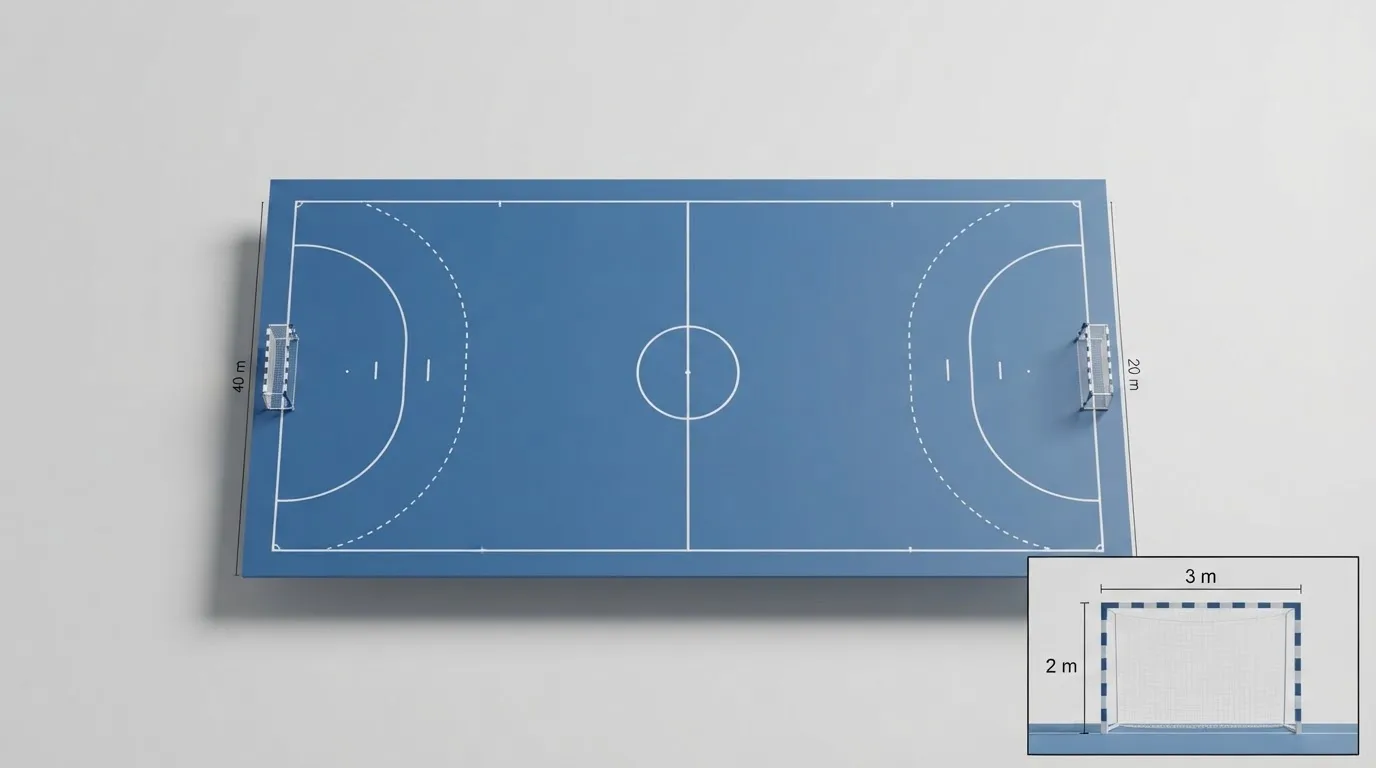
Handball is the name of the sport, not a betting term. In betting, “handball” does not refer to the infringement in football (where a player handles the ball), and the markets on a handball match are settled on the result of the handball match — the team sport played on a 40 by 20 metre court with two 30-minute halves, six outfield players and a goalkeeper per side. A reader who sees the word “handball” on a betting slip is looking at a handball match market, not a foul market.
Does a handball count as a foul in betting?
A handball in football is a foul called by the referee when a player handles the ball; it is settled as part of the match result rather than as a separate market. British sportsbooks do not price “handball foul” markets as standard — the foul is recorded in the match statistics, settled by the official’s decision, and priced as part of the in-play markets (next-goal, next-card, totals) rather than as a standalone line. A reader who wants a handball market wants a handball match market.
Does handball count as a foul in betting?
The word “handball” in a sportsbook refers to the sport, not the foul. The match markets (1X2, totals, handicaps, half-time / full-time) are settled on the result of the handball match, which is played on a 40 by 20 metre court with goals 2 metres high and 3 metres wide. A foul in handball is called by the referee and recorded in the match statistics; it does not have its own betting market at GB-licensed sportsbooks. The markets priced on a handball match are the match-result markets and the in-play markets.
How can it be checked that a bookmaker holds a Gambling Commission licence?
The Commission’s public register can be searched by business name, trading name, domain or account number. The register lists the licence number, the categories the licence covers (remote general betting standard (real events) being the standard sportsbook category), the licence holder’s legal name and the trading name. A brand that does not appear on the register does not hold a GB licence; a brand that does appear carries the standard customer-protection duties (verification at the front door, GAMSTOP, the 10x bonus cap, the £150 vulnerability check, the Commission complaints route). The register is the whole test of who holds a GB licence.
How is the return on a bet worked out from the stake and the odds?
The return is stake multiplied by the odds. A £10 stake at decimal odds of 2.50 returns £25, of which £10 is the stake paid back and £15 is the net profit. Fractional odds convert to decimal by a/b → a ÷ b + 1, so 3/2 in fractional form is 2.50 in decimal. A combination bet multiplies the leg prices into one combined price; a double at 2.00 / 2.00 has combined odds of 4.00, so a £10 stake returns £40 on a winning double. A free bet stake is not paid back with a win, so the cash balance grows by the net profit only.
What is the bookmaker’s margin and how can it be seen in the odds?
The margin is the share of every pound staked the bookmaker keeps on average across all outcomes of a market. On a two-way market priced 1.90 / 1.90, the payout share is 1 ÷ (1/1.90 + 1/1.90), or about 0.95, so the bookmaker keeps about 5p of every pound as margin. The same calculation on a market priced 2.10 / 1.75 gives a payout share of about 0.958, so the bookmaker keeps about 4.2p of every pound. The margin is the gap between the implied probabilities of the outcomes and 100%, and it is the tax on every bet paid in the price.
US & other team sports – Bookies Trust
Content created by the «Bookies Trust» team
