
Online rugby union betting in Great Britain
 Available in US
Current as of 27 October 2026 · checked against the Gambling Commission’s public register

Rugby union is a small market inside a big one. The bookmakers that take bets on Saturday afternoon football also take bets on the Six Nations, the Premiership, the Rugby World Cup and the United Rugby Championship — sometimes with depth, more often with a handful of lines propped up by trading outsourced to a third party. That does not make rugby union a sideshow. It means the punter who arrives from the football listings needs to understand what a rugby union betting slip actually offers, and what it costs in margin. The pages below set that out: how a bet on rugby union is built, who is licensed to take one in Great Britain, what an offer really returns, and which of the ten brands on the comparison deserve a closer look.
How a rugby union bet is priced: selections, markets and settling
The first thing a price on a rugby union match tells you is the bookmaker’s view of the contest. The second is the cut the bookmaker keeps. Both deserve attention, because the difference between a 4% margin and an 8% margin on a season of bets is the difference between paying for the privilege of punting and giving the bookmaker a dividend.
The shape of a rugby union match
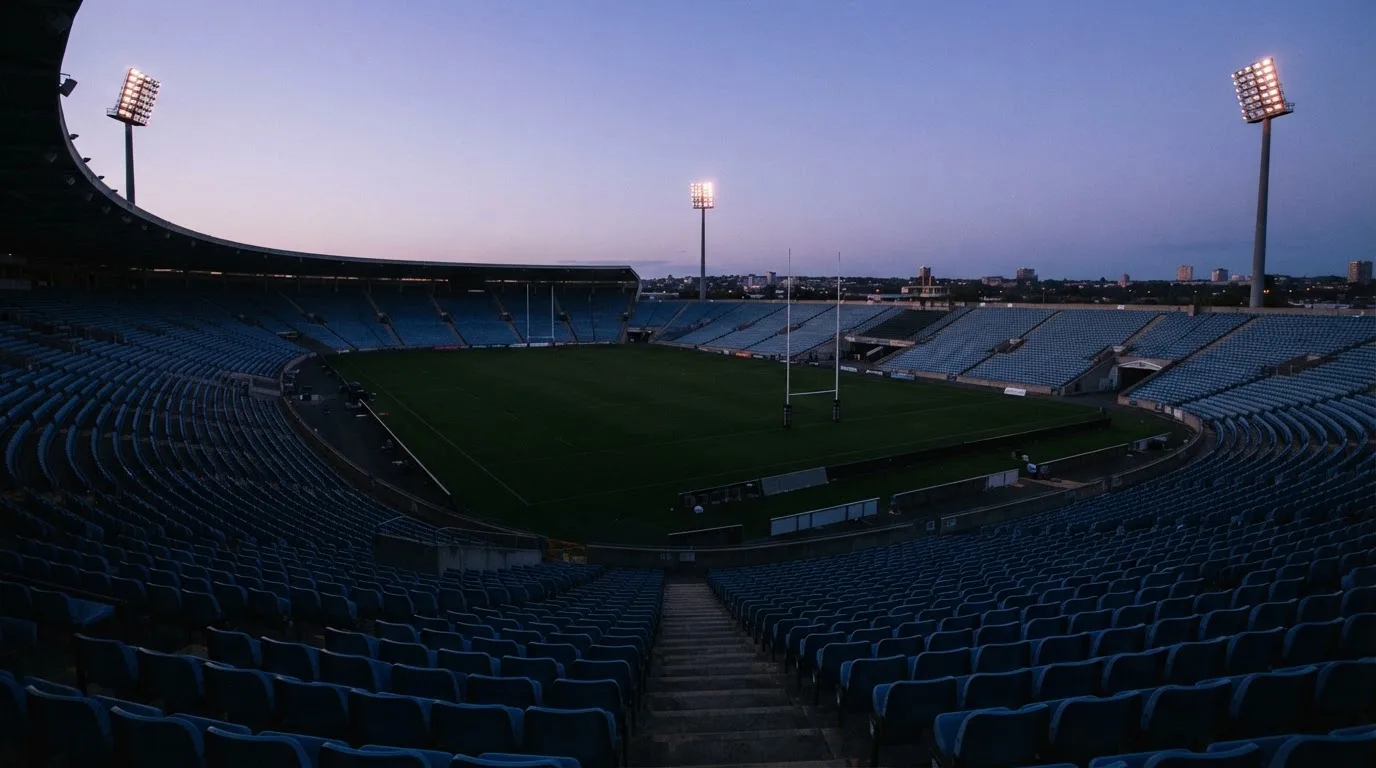
A rugby union team fields fifteen players, not thirteen. The match is two forty-minute halves, and the clock does not stop for stoppages, so a game labelled “80 minutes” routinely runs past ninety. Bets on the match result are settled on the score at the end of normal time; extra time in a knockout fixture is a separate market. A try scores five points, a conversion adds two, a penalty three, and a drop goal three — the last of those is the one that has decided more than one Rugby World Cup final. World Rugby has run the international game since 1886, and the World Cup itself has been held since 1987, when New Zealand won the first tournament in Australia and New Zealand. The 2027 edition is in Australia from 1 October to 13 November 2027, with twenty-four teams in six pools of four.
That background matters less than it looks. What it does is pin down how a bookmaker settles your bet. A price on “winner” of a knockout match is paid on the result at full time; a price on “to lift the trophy” is paid on the final, including extra time. A handicap of −6.5 means your side starts the match six and a half points in arrears on the betting slip. A total of 47.5 means the bookmaker expects both sides to add up to somewhere near that figure, and you take the over or the under.

What the odds actually say
Decimal odds of 1.90 on each side of a two-way market — say, New Zealand at 1.90 and South Africa at 1.90 — imply that one pound staked returns ninety pence on a win. The implied probabilities, calculated as one divided by the price, are 52.6% on each side, which sums to 105.3%. That excess over 100% is the bookmaker’s margin, sometimes called overround. Worked out the long way, the payout share on this market is one divided by the sum of the inverted prices — 1 ÷ (1/1.90 + 1/1.90), which gives roughly 95% — and the margin is 1 minus that, around 5%.
A margin sits inside every price the bookmaker quotes, and the size of it is the single most important number a punter can read. A 5% margin means the bookmaker keeps five pence of every pound wagered on that market in the long run. An 8% margin means eight pence. Across a season of small bets, the difference adds up to real money: a hundred pounds staked at 5% costs five pounds in expectation, the same hundred pounds at 8% costs eight. The smaller the margin, the fairer the price, and the easier it becomes to beat a closing line if you have an edge. Whether anyone has an edge on rugby union is a different question, and one the closing section addresses.
A bookmaker’s margin varies market by market and event by event. Match result on a televised Six Nations match tends to be tight — heavy liquidity draws prices in. Handicap lines and total points lines are typically a touch wider, because fewer pounds chase them. Outright markets on a tournament winner, settled months before the final, carry the widest margin of all, because the bookmaker is pricing a long-tailed field with limited information. The same applies to a price on the league winner of the English Premiership or the United Rugby Championship, where one or two dominant teams compress the head of the market and the rest is guesswork.
Fractional, decimal and the SP
British bookmakers show two forms of price. Fractional odds of 5/1 mean a one-pound stake returns five pounds profit plus the stake back; decimal odds of 6.00 mean the same. The conversion is decimal = a ÷ b + 1, so 5/1 becomes 6.00, 11/4 becomes 3.75, and evens (1/1) becomes 2.00. Fractional prices below evens — 4/6, for instance — are “odds-on” and translate to a decimal below 2.00. A SP, or starting price, is the industry term for the price settled on a horse or greyhound race when the betting closes at the start, and on rugby union it has no application; rugby union is fixed-odds only, and the price you take is the price you keep unless the bookmaker’s own rules adjust it.
Best odds guaranteed, the BOG concession some bookmakers offer on horse racing, has no rugby union equivalent. Fafabet pays BOG on UK and Irish horse racing win and each-way bets from 9am on race days, and rugby union is not in that scheme. The reason is straightforward: a horse race has a starting price that can drift between the morning and the off, and BOG pays the bigger of the two. A rugby match has a price that moves continuously in play, and the bookmaker’s own in-play trading is the only thing the punter is comparing it with.
What “margin” looks like on a coupon
A worked example: an illustrative two-way market at decimal odds 1.90 and 1.90. The payout share is 1 ÷ (1/1.90 + 1/1.90), which is roughly 95%, and the margin is therefore around 5%. If the same match were priced at 1.85 and 1.85 instead, the payout share would fall to about 93.8% and the margin would rise to 6.2%. That difference — a percentage point and a half of margin — is roughly what a punter pays for taking a price on a thinner market, a less popular fixture, or a less efficient bookmaker. The same arithmetic on a three-way market (home win, draw, away win) divides one by the sum of three inverted prices; a 1.45 / 25.00 / 3.40 line on a match expected to be a heavy home win sums to about 107.5%, and the margin is 7.5%.
A single worked example is not a recommendation to take any particular price. It is a demonstration that the margin on a market is knowable from the prices on it, that the margin moves as the prices move, and that the punter who wants to compare two bookmakers can do so with a calculator and a five-line sum. The five minutes it takes is the cheapest hour a punter will ever spend.
Rugby union competitions and the calendar
The fixture list drives everything else. A bookmaker that prices the Six Nations carefully will trade the match winner, the handicap, the total points, the half-time result, the first scoring play, the first try-scorer and a handful of player props. The same bookmaker the following Saturday, faced with a Pro D2 match in the second tier of French rugby, may offer a winner market and little else. Coverage, not price, is the gap.
The international calendar
The Six Nations runs from early February to mid-March each year, with England, France, Ireland, Italy, Scotland and Wales playing each other home and away. The Rugby Championship runs from August to October, with Argentina, Australia, New Zealand and South Africa. International windows in November and July add test matches that attract sharper pricing because the bookmakers have more time to prepare. The Rugby World Cup is the headline event: first held in 1987, won that year by New Zealand in Australia and New Zealand, and contested every four years since. South Africa are the defending champions after beating New Zealand in the 2023 final; the 2027 tournament is in Australia, and the qualifying picture is still being resolved. A punter who follows the international calendar has a fixture every fortnight from February to November; a punter who only follows it during a World Cup year has six weeks of concentrated action.
The club game
Club rugby union sits underneath the internationals. In England, the Premiership runs from September to June with thirteen teams. In France, the Top 14 is the top flight, and underneath it Pro D2. The United Rugby Championship covers clubs from Ireland, Italy, Scotland, South Africa and Wales. The Super Rugby competition in the southern hemisphere runs from February to June. Each league has a different shape: a round-robin with a finals series, a conference system, promotion and relegation, a closed shop with a draft. The market depth on each differs sharply. The Premiership and the Top 14 are routinely priced to a depth that includes handicaps, totals, half-time markets and player props; Pro D2 and the URC are typically priced to match winner and handicap only; Super Rugby, depending on the round, falls somewhere between.
That unevenness is the practical reason a punter sometimes finds a price has disappeared from a coupon. A bookmaker will trade a match on the Saturday morning and withdraw the in-play market the moment a key player pulls out in the warm-up. Some bookmakers will trade an entire Premiership round; some will only price the televised match. The punter who wants a price on Glasgow versus Connacht on a Friday night in April may need to shop three or four bookmakers before one offers anything more than a winner market.
Ten bookmakers compared
The ten brands below all hold a Gambling Commission remote licence for general betting on real events. A licence is the floor, not the ceiling: it confirms the brand has passed the Commission’s checks and is bound by the LCCP, the Remote Technical Standards, and the duty of consumer protection the framework imposes. What it does not confirm is how each bookmaker prices rugby union, what its in-play product looks like, or what its welcome offer is actually worth. The notes beside each name are the start of that answer; the rest is in the operator write-ups further down.
| Brand | Gambling Commission licence | Terms on the markets, in-play and offer |
|---|---|---|
| Fitzdares | 000400-R-103839-030 (Fitzdares Limited) | Cash out, accumulators, Lucky 15s, specials, ante-post and in-play on horse racing, football, tennis, rugby, cricket, golf and American football |
| Bet Ahoy | 100094-R-341742-003 (Bet Ahoy Ltd) | Welcome offer framed as two £5 free bets — one sports, one acca — after a qualifying £10 bet |
| Betway | 039372-R-319367-029 (Betway Limited) | Free Bet Club: up to £10 in weekly free bets for spending £25+ on sports, after opt-in |
| Fafabet | 057385-R-333191-006 (Taichi Tech Limited) | Best Odds Guaranteed on UK and Irish horse racing from 9am; no rugby-specific BOG scheme |
| Betfair | 039439-R-319330-013 (PPB Counterparty Services Limited) | In-play, Bet Builder, free live streaming, and a 90 Minute Payout market |
| NetBet | 039170-R-319343-032 (Netbet Enterprises Limited) | Daily Boosts, Profit Boosts, Bet Builder with dynamic odds, sports stats for major leagues |
| Kwiff | 044448-R-323408-017 (Eaton Gate Gaming Limited) | Operated by Spryme Ltd under licence; a 17+ App Store rating; “supercharged” odds on selected markets |
| Star Sports | 009177-R-104555-019 (Star Racing Limited) | A telephone account-opening and betting line on 08000 521 321, alongside email and app support |
| Dabble | 065677-R-340363-005 (Dabble Sports UK Ltd) | Welcome offer of two £10 free bets, seven-day expiry, stake not returned on free bet wins |
| Midnite | 101839-R-342850-001 (Midnite Limited) | £25 in free bets and 50 free spins after a £5+ qualifying bet at evens or greater within 14 days; seven-day free-bet expiry |
A licence number is a reference, not a marketing claim. The Commission publishes each number against a named licensee and a stated set of licence categories; a check by brand name, trading name or account number on the public register is the way to confirm a brand holds what its site says it holds. Every brand in the table is registered as a remote general betting standard (real events) licensee; the table is the floor of what each one is licensed to do, not the full list of activities it offers.
The legal frame in Great Britain
A punter in Great Britain who places a bet on rugby union with any of the ten brands above is using a service the Gambling Commission licenses under the Gambling Act 2005. The Act covers England, Scotland and Wales; Northern Ireland is outside the Act and runs under older legislation, so a “GB licence” regulates operators serving customers in Great Britain, not the whole of the United Kingdom. Since the Gambling (Licensing and Advertising) Act 2014 an operator whose remote facilities are used in Great Britain needs a Commission licence wherever the company is based — a Curaçao, Maltese or Gibraltar licence alone is not enough, and an offshore-only brand is offering its services in Great Britain without the licence the law requires.
What the licence requires of the operator
A Commission remote licence binds the operator to the Licence Conditions and Codes of Practice, to the Remote Technical Standards, and to the social responsibility code. Identity verification happens before the first deposit: name, address and date of birth are checked, and a customer cannot deposit, gamble or claim a free bet without passing. The credit-card ban that has applied since 14 April 2020 covers any payment funded by a credit card, including through an e-wallet; debit cards and bank transfers are not covered. Every GB-licensed online operator is a member of GAMSTOP, and GAMSTOP periods run for six months, one year, five years, or five years with auto-renewal, with a further seven-year tail after the chosen period unless the customer asks for it to be removed. A financial vulnerability check applies once a customer’s net deposits exceed £150 over a rolling 30 days, and it is a public-record check, not a credit-reference check; the wider financial risk assessments, sometimes called affordability checks, have been announced in a staged plan with no confirmed start date.
The Commission is the regulator, and the Commission’s public register is the whole test of who holds a licence. The register is searchable by business name, trading name, domain or account number, and it is the only place a brand’s status can be verified. A licensed brand uses .co.uk or .com; the domain proves nothing on its own. Several brands can run under one licensee — PPB Counterparty Services Limited runs Betfair and Paddy Power, for example — and a parent-company name on the register is not a licence held by the trading brand unless the trading brand is itself on the register.
What may be bet on
There is no statutory list of permitted sports or markets in Great Britain. The Commission licenses categories of activity, and the operator offers markets under its own rules. Rugby union is not a prohibited sport; in-play betting is offered by GB bookmakers and the controls are the operator’s licence conditions. Esports are treated like any other event, virtual events are a separate licence category, and novelty markets are offered by GB bookmakers without a statutory bar. Spread betting on financial instruments is regulated by the Financial Conduct Authority, not the Commission; spread betting on sport that is not a financial contract sits inside General Betting Duty.
Tax, winnings and the operator’s levy
The punter pays no tax on betting winnings in Great Britain. General Betting Duty is the operator’s tax on gross profits and is currently 15% on most activity, with a new remote rate of 25% taking effect from 1 April 2027; remote bets on UK horse racing, self-service betting terminal bets, pool betting and in-person betting stay at 15% under the same policy paper. Whether operators pass the higher rate on through tighter odds is not established, and the punter should not be told a duty is being charged at the till. The Commission’s statutory levy on licensed operators is a separate charge and is not a tax on the punter.
What the licence does not do
A licence does not guarantee a price. It does not guarantee a market will be offered, a free bet will be paid, or a withdrawal will arrive in good time. What it does is bind the operator to a complaints route, an approved dispute-resolution body, and a set of consumer-protection duties. A punter on an unlicensed site has none of those. No customer-facing offence for betting on an unlicensed site was identified, but the loss of protection is real: no GAMSTOP coverage, no Commission route, no British dispute resolution, and the funds held with the operator are at the operator’s discretion. The honest framing is that licensed means checks, limits, GAMSTOP and the bonus cap, alongside verification before the first bet; unlicensed means none of those protections and a real risk of the operator simply not paying out.
Safer gambling, self-exclusion and where to get help
The safer-gambling architecture in Great Britain is built around three pieces. The first is the operator’s duty: every GB-licensed online operator must offer a deposit limit, must participate in GAMSTOP, must run financial vulnerability checks above the £150 net-deposit threshold, and must surface safer-gambling messaging and time-out tools. The second is GAMSTOP, the national multi-operator self-exclusion scheme: a punter who registers with GAMSTOP is blocked from opening new accounts or depositing with GB-licensed online operators for the chosen period. The third is the help network: GamCare runs the National Gambling Helpline, GambleAware funds treatment and research, the NHS runs gambling clinics in several regions, and Gamblers Anonymous runs peer-support meetings. A punter who wants to set a deposit limit, take a time-out, or self-exclude can do so from the responsible-gambling page of any licensed bookmaker; a punter who needs to talk can call the helpline or visit the GamCare site.
The architecture is not the same as a guarantee. A deposit limit set by the punter is a ceiling, not a floor; it stops the punter from depositing over it, but the punter can still lose what they deposit on a bad run of bets. A financial vulnerability check is a check against public records, not a check against the punter’s actual finances. A self-exclusion period is binding for its term, but the punter who finds a way around it — using a partner’s card, an account they opened before registering, an unlicensed site — is unprotected. The licensed route is the safer one, not the safe one, and the help network is there for the cases where the architecture is not enough.
Bonuses, free bets and the arithmetic behind them
A welcome offer is the first thing a new account sees. It is also the most expensive part of the bookmaker’s marketing budget, and that cost is recovered in the prices the punter pays afterwards. A free bet is not a gift; it is a discount on the first week’s betting, paid for in margin on the bets that follow.
The shape of a typical welcome offer
Bet Ahoy’s welcome offer is two £5 free bets — one a single, one an acca — after a qualifying £10 bet. Midnite’s is £25 in free bets and 50 free spins after a £5+ qualifying bet at evens (2.0) or greater within 14 days. Dabble’s is two £10 free bets on a first deposit, with a seven-day free-bet expiry and the stake not returned on the free bet. Each of these is structured to require the punter to deposit, place a qualifying bet at a price the bookmaker sets, and use the free bet within a deadline. The headline number — £25 in free bets, £10 back as a free bet — is the gross value before the arithmetic of the offer is applied.
The first thing to read on any welcome offer is the qualifying bet. A £5+ qualifying bet at evens or greater means the punter must stake at least £5 on a price of 2.00 or more, and a losing qualifying bet still triggers the free bet; a winning one does too, because the qualifying bet is settled on its own terms and the free bet is a separate credit. A minimum price is there to stop the punter backing a heavy favourite at 1.05 and converting the free bet into near-cash. The bookmaker’s concern is that a small qualifying bet at a long price with a small free bet in return is a cheap way to bet with house money; the minimum price is the answer.
The second thing to read is the deadline. Midnite’s free bets expire after seven days, and the punter who does not use them in that window loses them. A seven-day window is short. A punter who places a qualifying bet on a Saturday and intends to use the free bet on the following Saturday’s matches has a window that runs across one round of fixtures and one set of midweek games, and any match postponed inside that window puts the punter back to square one. The deadline is not arbitrary; it is the book’s way of making sure the free bet is used on the next round of fixtures rather than banked for a future one.
The third thing to read is the stake-not-returned clause. A free bet on Dabble returns winnings only, not the stake. A £10 free bet at odds of 3.00 returns £20 in profit, not £30. The same free bet on a price of 6.00 returns £50 in profit. The arithmetic is the difference between a free bet as a discount and a free bet as cash, and the difference is the stake. A free bet whose stake is returned is closer to cash; a free bet whose stake is not returned is a discount, and the discount is larger the longer the price.
Recurring offers: the Free Bet Club and the daily boost
Betway’s Free Bet Club gives up to £10 in free bets every week after opt-in, paid as two £5 free bets, after the punter has spent £25 or more on sports in the week. It is a recurring offer, not a welcome one, and the same structure applies: a wagering threshold in real money, a free bet in return, and a deadline inside the week. The punter who runs the Free Bet Club at the minimum spend places £25 in bets during the week and receives £10 in free bets; the arithmetic on the free bet depends on the price the punter takes, but a rough rule is that a free bet whose stake is not returned is worth about 70-80% of its face value at typical prices.
NetBet’s Daily Boosts and Profit Boosts work on a different principle. A daily boost is a price the bookmaker has raised for a specific fixture — a Six Nations match at 3.50 instead of 3.20, for example, or a handicap line at 1.95 instead of 1.85. A profit boost is a percentage added to the punter’s winnings on an accumulator — a 10% boost on a winning four-fold, say, paid as a free bet or as cash. Both are designed to look like a free upgrade; the bookmaker is paying for the upgrade in margin, and the punter who takes the boosted price is taking a price that was constructed to look generous rather than to be efficient. The bookmaker’s marketing sells the boost as a perk; the arithmetic sells it as a price the bookmaker chose to put up.
Fafabet’s Best Odds Guaranteed on horse racing is the cleanest of the recurring concessions: a starting-price rule that pays the bigger of the price taken and the SP on UK and Irish racing. Rugby union has no equivalent, and the punter who wants a similar effect on a rugby bet has to take the price early in the week and hope it holds, or take the price on the day and accept what the bookmaker offers. The difference between a market with BOG and a market without it is the difference between a guaranteed floor and a take-it-or-leave-it offer.
The cap on wagering and the mixed-product ban
Promotion rules in force since 19 January 2026 cap wagering requirements on bonuses at 10x — a £10 bonus at 50x would have needed £500 of qualifying bets; under the cap, no more than £100. The same rules ban mixed-product promotions, an offer that requires gambling on two or more product types (betting plus casino, betting plus bingo, betting plus lottery), such as “bet on football to get free spins”. What the cap does not cover is established: whether the cap applies to a free bet with no wagering condition at all, and any cap on the money value of a bonus, are not clear from the rule itself. The punter who sees a “100% bonus” headline should ask the question: 100% of what, on what wagering requirement, on which market, by when? The headline is the start of the conversation, not the end.
The arithmetic on a bonus, when the offer has a wagering requirement, is straightforward. A £10 bonus with a 5x wagering requirement at minimum odds of 1.50 (3/2) means the punter must place £50 in qualifying bets, each at 1.50 or higher. A £10 bonus with a 10x requirement at minimum odds of 2.00 (evens) means £100 in qualifying bets. The cost of clearing the bonus is the margin of the market the punter wagers on, applied to the turnover. On a market with a 5% margin, the expected cost of clearing a £10 bonus at 5x is £2.50; on a market with an 8% margin it is £4.00; the punter who clears the bonus on slots or virtual events pays a different margin again, and is reading a different calculation. A free bet with no wagering condition is cheaper to clear, because the punter only needs to place the free bet itself; the cost of the free bet is the margin on the market it is placed on, applied to the free-bet amount.
Live betting, cash out and the in-play offer
A rugby union match changes shape in the second half. A side ten points up at half-time can be a side losing by three with ten minutes to go, and a bookmaker’s in-play product is the way to react. In-play, sometimes called live betting, is offered by every bookmaker in the comparison above, and the depth of the in-play product is the single most useful differentiator between them on rugby union.
What an in-play product looks like
An in-play product on rugby union typically offers the match result, the next score, the handicap and the total points, with prices updating throughout the match. Some bookmakers add half-time markets, team-specific totals and player props; some drop the player props once the team-sheet is announced; some run a full in-play product on every Premiership match, and a thin one on every other match. Betfair’s in-play product sits alongside the betting exchange, which is a different product: an exchange lets the punter back and lay, and a Sportsbook product lets the punter back only. Bet Builder on Betfair combines markets from one event into a single bet, pre-match and in-play, and the Bet Builder is the closest the Sportsbook product comes to the exchange’s flexibility. Bet Builder+, the bet365 product, is the same idea with a different name and a slightly different set of markets.
The in-play price is constructed by a trader, an algorithm, or a combination of the two. On a televised match, the trader is watching the game; on a non-televised match, the price is moving on data the bookmaker has paid for, and the punter who has watched the match in person has more information than the price does. The bookmaker’s edge in-play is the margin, plus the time the trader has to adjust the price, plus the suspension of the market when a key event happens — a try, a sin-binning, a red card. The punter’s edge in-play is the willingness to wait for a better price, and the discipline to take it when it appears.
Cash out and the cost of closing a bet early
Cash out is the bookmaker’s offer to settle a bet before the match is over, at a price the bookmaker sets. It is offered by Fitzdares, bet365, Betfair and others; it is the convenience charge for closing a position early, and the convenience is paid for in the margin the bookmaker keeps on the cash-out price. A bet that was 1.90 at kick-off may be offered at 1.70 in-play after the punter’s side has scored, and the difference is the cash-out haircut. The haircut is the bookmaker’s compensation for taking the other side of the bet at a price the punter would otherwise have to wait to settle, and the size of the haircut is the measure of how generous the cash-out product really is. A punter who uses cash out routinely is paying a recurring charge for the privilege; a punter who uses it occasionally, to close a position that has turned into a bad one, is paying a one-off charge and moving on.
Streaming, stats and the in-play toolkit
Free live streaming of sporting events is offered by some bookmakers, and rugby union is on the list. Betfair’s app streams UK and Irish horse racing and football within the app, with the stream available to funded account holders; rugby union streams are less common, but a funded account with one of the major brands typically unlocks access to a stream on a televised match. Sports stats — possession, territory, tackles, lineouts won — are offered by NetBet for major leagues, and the same data is offered by other brands in different shapes. A punter who bets in-play on a market that depends on a stat — total points, for instance, which depends on the rate of scoring in the second half — has a real use for an in-play stat feed, and the bookmaker that offers it has a real product advantage on that market. The advantage is not free; the bookmaker is selling the data feed in the price, and the punter who does not use it is paying for a feature they are not consuming.
Strategy, tips and the limits of prediction
The search query “rugby union betting tips” returns a long list of tipsters, free and paid, and the searcher is almost always looking for someone to tell them which side to back. The honest answer is that nobody can. A tipster’s edge, where one exists, is small; a tipster’s marketing, where it does not, is loud. The pages that follow set out what a punter can and cannot do with a tip, and what the difference looks like in practice.
What a tip actually is
A tip is a recommended bet. It can be a free tip on a website, a paid tip in a Telegram group, a model output from a quantitative service, or a tipster’s own selection published in a newspaper column. The recommended bet is always a price on a market, and the price the tipster quotes is rarely the price the punter can take — by the time the tip reaches the punter, the market has moved, and the price the punter gets is the price the bookmaker offers at the moment the punter places the bet. A tip that quoted 2.20 twenty minutes ago is a tip at 2.05 now, and the difference is whether the bet still represents value at the new price.
A tip is not a prediction. A tip is a price. The difference matters because the punter’s job is not to know who will win; it is to know whether the price on offer is bigger than the true probability of the outcome. A punter who takes a tip at face value is asking the tipster to do the price work as well as the prediction work, and most tipsters do not do the price work at all. The tipster says “back France at 1.80”; the punter who takes the bet at 1.80 is taking a price that may or may not be value, and the only way to know is to do the work the tipster did not do.
The maths of value
A bet has value when the price is bigger than the inverse of the true probability. A 50% chance at 2.20 is value; a 50% chance at 1.80 is not. The true probability is the thing nobody knows, and the punter who has a method of estimating it — a model, a sense of the form, a feel for the match — has an edge over the punter who does not. The edge is small. On a tight rugby union match priced at 1.90 / 1.90, a 5% edge on one side implies a true probability of around 55% / 45%, and a 5% edge is a big edge for a punter who does this for a living. A casual punter who thinks they have a 5% edge on every match they watch is mistaken; the casual punter has a 5% edge on a small fraction of the matches they watch, and a 5% negative edge on the rest.
The arithmetic on a season of value bets is a slow build. A punter who places 200 bets a year at an average edge of 3% and an average price of 2.00 will, in expectation, clear the bookmaker’s margin on each bet and end the year ahead. The same punter who places 200 bets at an average edge of 0% — meaning no edge at all, just a series of prices taken at the margin — will, in expectation, lose the bookmaker’s margin on each bet and end the year behind. The difference between the two is not luck; it is the edge the punter had, applied to the bets they placed. A punter who has no edge is paying the bookmaker to bet, and the bookmaker is grateful for the custom.
Bankroll, staking and the discipline of a small edge
Bankroll management is the discipline of staking a small fraction of the bank on each bet, so that a losing run does not wipe out the bank before the edge can play out. A punter staking 5% of the bank on each bet will, in expectation, lose half the bank on a run of seven losers in a row, and a run of seven losers in a row is what a 1.90 shot produces about once every two seasons at the price. A punter staking 1% of the bank on each bet will lose 7% of the bank on the same run, and the bank survives long enough for the edge to come back. The discipline is not exciting, and it does not look like a tip; it looks like a spreadsheet.
A staking plan is not a prediction system. A punter who has an edge and a sensible staking plan will, over a long enough run, end up ahead. A punter who has no edge and a sensible staking plan will, over the same run, end up behind. The plan is the multiplier on the edge; without an edge, the plan is a way of losing slowly rather than quickly. The first question for any punter is whether they have an edge. The second is how much of the bank to stake on it. The third is how to measure the edge honestly over time, and the only honest measurement is the closing line — the price the bookmaker takes just before the match starts, which is the best estimate of the true probability the market has produced. A punter whose average taken price beats the average closing price has, on a long enough run, an edge. A punter whose average taken price is worse than the average closing price does not, and the closing line is the answer.
What a tipster cannot do
A tipster cannot know the outcome of a rugby union match in advance. A tipster who claims a hit rate of 70% on 1.80 shots is claiming a sustainable edge of 26 percentage points, and a sustainable edge of that size is not produced by reading form, watching the match, or talking to a contact in the camp. A tipster of that calibre would be running a betting operation, not selling tips. The tipster’s record, where one exists, is the only honest measure of the tipster’s edge, and the record needs to be long enough — at least a season, ideally two — to be meaningful. A record of fifty bets at 60% on 1.80 shots is consistent with anything from a 12% edge to a 5% negative edge, depending on the variance. A record of five hundred bets at 56% on 1.80 shots is consistent with a smaller edge, but a more reliable one. The difference is statistical, and the punter who reads a tipster’s record without checking the sample size is reading marketing.
The bookmakers in detail
The write-ups below go further than the comparison table. Each one is built around the same questions: what does the brand actually do on rugby union, what does the welcome offer cost the punter, and who is the brand a good fit for. The verdicts are based on the brand’s own terms, the licence on the Commission’s register, and the figure the page has already worked through on markets, margin and offer arithmetic.
Fitzdares
Fitzdares holds Commission account 400, and the licence is one of the longer-standing remote general betting licences on the register. The brand’s app offers cash out, accumulators, Lucky 15s, specials and ante-post markets on horse racing, football, tennis, rugby, cricket, golf and American football, and the in-play product is built into the same interface. The positioning is premium: the brand runs as a high-end bookmaker with a smaller customer base than the major firms, and the pricing on the headline sports is competitive. The rugby union product is a subset of the broader offering, and the depth of the in-play product on a non-televised match is a step below the depth on a televised Six Nations fixture. The welcome offer is not the headline; the brand’s pitch is the product and the service, and Those preferring a smaller, historic bookmaker will find this brand more suitable than those driven solely by sign-up offers.
Bet Ahoy
Bet Ahoy’s welcome offer is two £5 free bets after a qualifying £10 bet, one a sports single and one an acca, and the arithmetic on the offer is straightforward: the punter lays down a tenner, gets two fivers back as free bets, and uses them on prices the bookmaker accepts. The brand is on the Commission’s register under account 100094, held by Bet Ahoy Ltd, and operates under a remote general betting licence for real events. The proposition is a simple one — a sign-up offer, a sportsbook, a thin but present in-play product — and the punter who wants a quick way to convert a welcome offer into a small float will find the brand fit for purpose. The punter who wants a deeper in-play product, a Bet Builder, or a long list of player props will need to look elsewhere.
Betway
Betway’s Free Bet Club is the recurring offer the brand is built around: up to £10 in weekly free bets for spending £25 or more on sports, paid as two £5 free bets, after opt-in. The offer is a weekly discount on the punter’s betting, and the punter who places £25 in qualifying bets every week at typical margins clears about £2.50 of the book’s edge in expectation and recovers most of it in the free bet. The brand’s Commission account is 39372, held by Betway Limited, and is licensed for remote general betting on real events. The sportsbook is broad — football, horse racing, tennis, rugby, cricket, golf, American sports — and the in-play product is built into the same interface. The punter who bets on rugby union as part of a wider sports portfolio, and who will use a weekly free bet, will find the brand a clean fit. The punter who only bets on rugby union, and who does not place the £25 in qualifying bets each week, will get less out of the offer.
Fafabet
Fafabet’s headline concession is Best Odds Guaranteed on UK and Irish horse racing from 9am, and the brand is built around horse racing in a way that the rugby union product reflects. The sportsbook is broader than racing alone — football, rugby, cricket, tennis and others are priced — but the depth on rugby union is a step below the depth on a horse racing card. The Commission’s account is 57385, held by Taichi Tech Limited, licensed for remote general betting on real events. Those following horse racing as their primary interest will find this brand more suitable than rugby enthusiasts looking for a dedicated specialist. The BOG concession remains the centre of the proposition, and rugby union is an option for the punter who follows racing and wants a wider selection of events.
Betfair
Betfair is a betting exchange as well as a sportsbook, and the two products are different things. The sportsbook offers in-play betting, Bet Builder, free live streaming of UK and Irish horse racing and football within the app, and a 90 Minute Payout market that settles a football bet at 90 minutes regardless of the result in extra time. The exchange offers back and lay on a deeper range of markets, with the punter’s counterparty being another punter rather than the bookmaker, and the price on the exchange is the closest thing the market has to a “true” price on a popular fixture. The Commission account is 39439, held by PPB Counterparty Services Limited, which also runs Paddy Power, and the licence covers remote general betting on real events alongside the betting intermediary licence the exchange runs under. A punter who wants depth, the best price on a popular match, and the option to lay a selection will find the brand fit for purpose. A punter who only wants a sportsbook and is not interested in the exchange’s mechanics will find a respectable but conventional product.
NetBet
NetBet’s sportsbook offers Daily Boosts, Profit Boosts and free bet offers, a Bet Builder with instant dynamic odds, and sports stats for major leagues. The Daily Boosts are the headline concession, and they are structured as price enhancements on specific fixtures the bookmaker has chosen to feature. The Commission’s account is 39170, held by Netbet Enterprises Limited, licensed for remote general betting on real events. This operator’s proposition is a broad sportsbook with a recurring boost mechanism, and those betting on featured fixtures daily will find more value here than those focusing on non-boosted events. Rugby union coverage complements the wider portfolio, offering a noticeable quality difference between televised and standard fixtures.
Kwiff
Kwiff is operated by Spryme Ltd and licensed by the Commission under account 44448, held by Eaton Gate Gaming Limited, and is licensed for remote general betting on real events. This operator’s pitch is “supercharged” odds — a price the bookmaker randomly enhances on selected markets — and the App Store rating is 17+, which signals the operator’s own positioning as a brand for adult punters. The proposition is the random enhancement, and the punter who likes a small surprise on the price they have taken will find the brand a fit. The punter who wants a stable, predictable price and a deep in-play product will find the brand less so. The rugby union product is an accessible option within the wider portfolio, with market depth competitive against similarly positioned operators.
Star Sports
Star Sports offers a telephone account-opening and betting line on 08000 521 321, alongside email support at [email protected] and the app. The phone line is a differentiator — most online bookmakers have moved customers to digital-only support, and a phone line is unusual. The Commission’s account is 9177, held by Star Racing Limited, and is licensed for remote general betting on real events. The brand’s proposition is the service, the phone line, and the personal account management; the price on the headline markets is competitive but not the cheapest. Those seeking to speak with a trader before betting will prefer this brand over those favouring purely self-service apps. The rugby union product rounds out the offering, with an in-play experience that mirrors the brand’s overall focus on personal service.
Dabble
Dabble’s welcome offer is two £10 free bets on a first deposit, with a seven-day free-bet expiry, the stake not returned on free bet wins, and a minimum price on the qualifying bet. The offer is on the generous side of the comparison, and the punter who reads the terms — qualifying bet, minimum price, expiry, stake not returned — gets a cleaner picture of the offer than the punter who reads the headline. The Commission’s account is 65677, held by Dabble Sports UK Ltd, and the licence covers remote general betting on real events. The brand’s proposition is a simple sportsbook with a peer-to-peer social feature, where punters can copy each other’s bets; the social feature is unusual in the comparison, and Those interested in following the selections of other punters will prefer this brand over a conventional bookmaker.
Midnite
Midnite’s sports welcome offer is £25 in free bets and 50 free spins after a £5+ qualifying bet at evens (2.0) or greater within 14 days of sign-up, with a seven-day free-bet expiry. The offer is the largest in the comparison by headline number, and the qualifying bet — £5 at evens — is the lightest in the comparison. The Commission’s account is 101839, held by Midnite Limited, and the licence covers remote general betting on real events. The brand’s app shows in-play events, an acca builder, popular accas and price boosts with maximum-stake limits, and the product is built around a younger, app-first customer. The punter who bets on a smartphone, takes the price boost, and uses the acca builder will get more out of the brand than the punter who bets on a desktop and reads the form before placing a bet. The free spins are a casino product, and the mixed-product structure of the offer is something the punter should read before claiming — the wagering cap of 10x and the mixed-product ban that has applied since 19 January 2026 are the rules to check against, and the offer’s compliance with those rules is the brand’s responsibility, not the punter’s.
Picking a bookmaker for rugby union
The ten brands above are not a ranking, and the order they appear in is not a leaderboard. A bookmaker that is a good fit for a punter who bets £5 a week on the Six Nations is a poor fit for a punter who places £500 on a Rugby World Cup final, and the comparison above is the start of a decision, not the end of one. The questions below are the ones the page leaves the punter with.
The questions to ask before opening an account
The first question is whether the brand holds a Gambling Commission licence. The Commission’s public register is the whole test; a brand not on the register is offering its services in Great Britain without the licence the law requires, and the punter who opens an account with that brand has none of the protections the licensed route offers. The register is searchable by business name, trading name, domain or account number, and a check takes a minute.
The second question is what the welcome offer actually returns. A £25 in free bets headline is a different number from a £25 in free bets with a 7-day expiry, a stake-not-returned clause, and a 10x wagering requirement. The punter who reads the terms gets a cleaner picture of the offer than the punter who reads the headline, and the difference is the cost of the welcome offer converted to its expected value. The arithmetic in the bonuses section above is the way to do the conversion.
The third question is what the in-play product looks like. A bookmaker that offers a thin in-play product on rugby union is a poor fit for a punter who wants to bet in-play, and a bookmaker that offers a deep in-play product on the Six Nations and a thin one on the Pro D2 is a poor fit for the punter whose interest is the second tier of French rugby. The comparison above is a guide, not a measurement; the punter who wants a precise answer needs to check the bookmaker’s own in-play product on a fixture of interest.
The fourth question is what the brand’s strengths and weaknesses are on the markets the punter cares about. A bookmaker that prices the match result, the handicap and the total points on a Premiership match is a different bookmaker from one that prices only the match result. A bookmaker that offers player props on the Six Nations is a different bookmaker from one that offers them on the Premiership only. The depth of the bookmaker’s product is the depth of the punter’s options, and a punter who wants a specific market needs a bookmaker that prices it.
What the page cannot do
The page cannot tell the punter which side to back on Saturday. It cannot tell the punter whether the price on France is value at 1.80 or not. It cannot tell the punter which tipster has an edge and which does not. Those are decisions the punter has to make, and the page’s job is to make sure the punter has the framework, the licence check, the offer arithmetic, the in-play toolkit, and the comparison of the licensed bookmakers in front of them when they make the decision. The page’s verdict is the comparison above, and the punter’s verdict is the bet.
Frequently asked questions
How does rugby union betting work in Great Britain?
Rugby union betting in Great Britain works the way any other fixed-odds sports betting works: the punter picks a market on a match, takes a price the bookmaker quotes, and the bet is settled on the result at the end of normal time. A bookmaker serving customers in Great Britain needs a Gambling Commission remote licence, and the Commission’s public register is the place to check. Bets are placed with licensed bookmakers, settled in pounds, and the punter pays no tax on winnings.
How do you place a bet on rugby union?
Place a bet on rugby union by opening an account with a licensed bookmaker, verifying your identity, depositing, and choosing a market on a fixture. The bookmaker’s site or app lists the matches, the markets and the prices, and the punter adds a selection to the bet slip, enters a stake, and confirms. The bet is settled when the match ends; in-play bets are settled as the match unfolds, and the cash-out button is the bookmaker’s offer to settle early.
How is a bookmaker’s Gambling Commission licence checked?
A bookmaker’s Gambling Commission licence is checked by searching the Commission’s public register by business name, trading name, domain or account number. The register shows the licence number, the licence categories, the licensee and the trading names covered by the licence. A brand not on the register is not licensed, and the punter who opens an account with that brand has none of the protections a licensed route offers.
How is the return on a bet worked out from the stake and the odds?
The return on a winning bet is the stake multiplied by the decimal odds. A £10 stake at 3.50 returns £35, of which £10 is the stake returned and £25 is the profit. A £10 stake at 1.50 returns £15, of which £10 is the stake and £5 is the profit. A combination bet multiplies the odds of the legs together, so two legs at 2.00 and 3.00 combine to a price of 6.00; the same £10 stake returns £60, of which £10 is the stake and £50 is the profit.
What is the bookmaker’s margin and how is it seen in the odds?
The bookmaker’s margin is the cut the bookmaker keeps of every pound wagered on a market. It is seen in the odds by summing the implied probabilities of all outcomes, dividing one by the sum, and subtracting from one. Two prices of 1.90 and 1.90 imply probabilities of 52.6% and 52.6%, summing to 105.3%, giving a margin of around 5%. A market with a margin of 5% returns 95p of every pound wagered in the long run, and a market with a margin of 8% returns 92p.
How do fractional odds such as 5/1 convert to decimal odds such as 6.00?
Fractional odds of 5/1 convert to decimal odds of 6.00 by dividing the first number by the second and adding one: 5 ÷ 1 + 1 = 6.00. Fractional odds of 11/4 convert to 3.75: 11 ÷ 4 + 1 = 3.75. Fractional odds of evens (1/1) convert to 2.00. Fractional odds below evens are odds-on and convert to a decimal below 2.00, so 4/6 becomes 1.67.
Rugby, cricket & Gaelic – Bookies Trust
Content created by the «Bookies Trust» team
