
Online snooker betting in Britain: who offers it, what it costs, and what the odds are really telling you
 Available in US
In the “How the British market for snooker actually works” section, the market dynamics and legal requirements are explored.
Current as of 27 October 2026 · verified against the Gambling Commission’s public register.
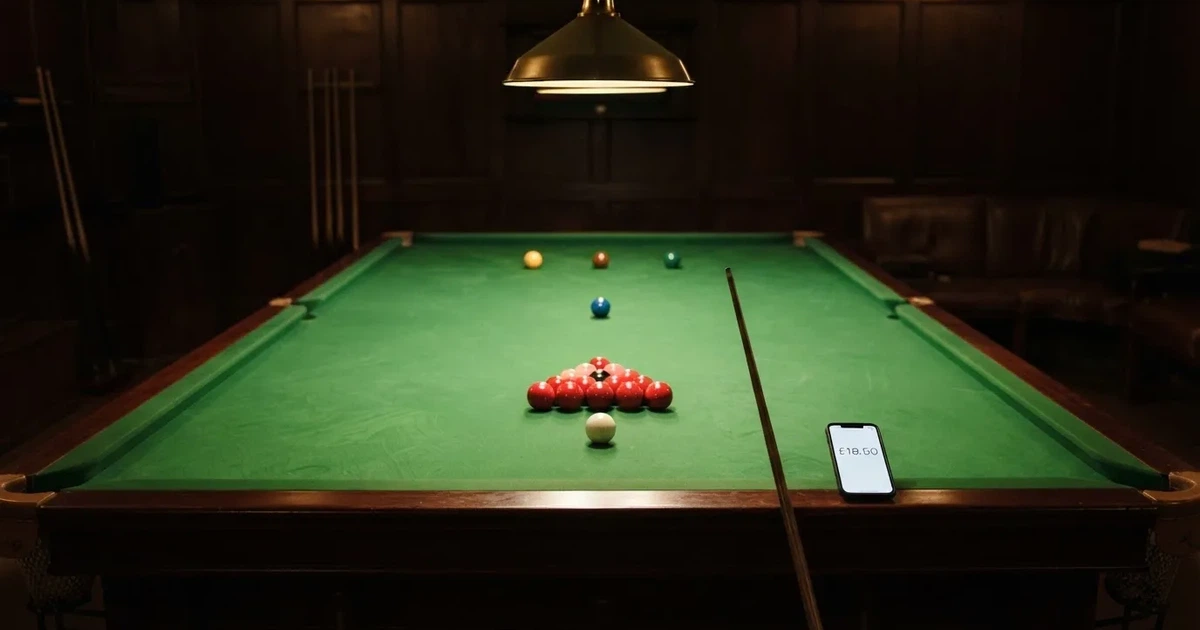
This page is the editor’s read of the British market for snooker betting in 2026: which operators under Gambling Commission licences actually carry the sport, what their markets look like, what the offers and free bets really cost the punter, and what the numbers on the screen — the decimal prices, the Best Odds Guaranteed tag, the in-play market that vanished two frames ago — are quietly telling you about the margin the bookmaker keeps. There is no tipster verdict at the end: nobody can name a winner. There is a calculation, and a verdict on every brand the comparison covers.
Bonuses and free bets in snooker: what the marketing actually says
Every welcome offer in the British market is sold as a “free” thing. None of them is free, and the price is the same kind of price on every brand: a wagering requirement, a minimum odds floor, a deadline, and often a cap on what a winning bonus or free bet can pay out. Snooker, for all its quirks, is treated as an ordinary sport by the wagering rules — most welcome offers will let you clear them on snooker singles, and a smaller number count snooker legs inside a multi-leg accumulator.
A typical welcome bundle lands as one of three shapes. A deposit-matched bonus credits your account with bonus money equal to a percentage of your first deposit, with a wagering requirement that says how many times the bonus (or the bonus plus the deposit) must be staked before any of it can be withdrawn. A free bet credits a fixed amount — £5, £10, £30 — that you stake as a bet; if it wins, the stake is usually not paid back with the winnings, only the profit. A “risk-free” first bet, in nearly every case, refunds a losing first bet as a free bet credit rather than as cash, and that refund credit carries its own rules. All three are governed by the same Promotion rules in force since 19 January 2026, which cap wagering requirements on bonuses at 10x and ban mixed-product promotions that ask the punter to bet on two or more product types to claim an offer. A £10 bonus with a 50x requirement, the kind of number that used to be routine, is now outside the rules; under the cap, no more than £100 of wagering is required to release a £10 bonus.
The terms that matter for a snooker punter are these. The minimum odds floor: a wagering requirement only counts bets at or above a stated price, often 1.50 (3/2) or 1.83 (5/6) in decimal, and snooker match outrights at decimal prices of 1.20 or 1.30 do not. The qualifying market: most welcome offers limit the qualifying bet to singles, sometimes at minimum stake £5 or £10, on any sport; some limit it to a market the bookmaker chooses. The deadline: wagering requirements carry a window, often seven or thirty days from the credit, and any uncleared bonus expires with the window. The cap on free-bet winnings: a free bet that returns £200 from a £10 stake is a marketing department’s idea of a joke; the small print caps the winnings at, say, £200 or removes stake-not-returned logic. The each-way rule: a free bet is usually a single, not an each-way; a punter who wants the place side of an each-way has to fund it themselves.
The arithmetic of a free bet, when the stake is not returned, is a small calculation a punter can run on a napkin. Take a £10 free bet at decimal odds of 4.00 (3/1 fractional). If the bet wins, the bookmaker credits £30 in profit — £10 × (4.00 − 1) — not £40, because the £10 stake is forfeit. The “value” of the free bet to the punter is the free-bet amount multiplied by the price minus one and divided by the price, which gives the expected credit before any margin in the market is taken into account. A £10 free bet used at decimal 4.00, in a market with a 5% margin, is worth about £6.70 on average, not £30; the rest is the bookmaker’s take and the chance that the bet loses. The marketing of “£30 in free bets” sounds larger than it is, and a punter who treats the offer as £30 of usable credit has already given some of it back.
Two honest framings on offers. The first: a free bet is worth less than its face value, often by a factor of two or more on short-priced outrights and accumulators with high margins. The second: the welcome offer is the cheapest part of the relationship with a bookmaker; the running price of being a customer is the margin on every bet placed, and a punter who chases offers without checking the margin on the sport they actually bet on has picked up the wrong end of the trade.
In-play snooker and cash out: where the margin lives
Snooker is, mechanically, a near-perfect in-play sport. Frames are short. The score is on the table at all times. There is no clock to manage and no injury time; a frame ends when it ends, and a session can run from 20 minutes to two hours. A bookmaker’s in-play product for snooker, in principle, should be deep: frame winner, next frame, total frames, player to win the next century break, race to three frames, handicap, and the outright match at prices that update after every pot. In practice, most British bookmakers carry a thin in-play snooker product, and the depth varies sharply with the round.

The reason is operational. A football match has a single data feed from a single provider; snooker has the WPBSA’s official scoring, which some operators license and some reconstruct from broadcast pictures, and the cost of running a deep in-play product for a sport that is one panel on a busy app is rarely paid back. The result is visible in the markets. Match outrights update quickly through a session. Next-frame markets appear and disappear, sometimes frame by frame. Player props — total centuries, highest break — tend to be settled at the end of the match, not live, because live settlement requires a frame-by-frame data feed the bookmaker may not have. A punter who wants in-play snooker at depth, in the same way football and tennis have it, will find a short list of brands, and the rest of the market is “match winner” plus a “retire” rule.
Cash out, the button that lets a punter close a bet before the match is over, is the second piece of the in-play product. For a snooker outright at decimal 1.83 going into a final session, a cash-out offer in the region of 1.70 is a 7% haircut on the live price; the haircut is the bookmaker’s way of saying “we will take this off your hands at a price that protects our margin”. The exact haircut varies by bookmaker, by market, and by how far the event has moved; a 10-frame lead 5-4 in a best-of-19 invites a different cash-out price to a 4-5 deficit late in the match, because the bookmaker’s exposure changes. The hair cut is the price of certainty; it is not a free lunch, and a punter who cashes out regularly is paying a small tax on every bet that is closer to 5% than the 2% a static margin would suggest.
In-play and cash out are also where the financial vulnerability check and the deposit-limit regime meet the customer. A punter whose deposits minus withdrawals exceed £150 in a rolling 30 days is checked against public records under a Commission condition in force since 28 February 2025. A punter who turns over more than that on snooker in-play will see the check. It is a public-record check, not an income check and not a credit check, and the operator’s response — a softer limit, a source-of-funds request, a temporary suspension — is the operator’s call.
Snooker predictions and strategy: what a tipster page cannot do
Snooker is, structurally, a high-variance sport. A top-16 player can lose to a qualifier ranked in the 60s. The long frames, the psychology of session play, and the small margins between players at the elite level mean that form is harder to read than in tennis, and the sample size at any single event is small. The 2026 World Championship final ran to a 18-17 decider between Wu Yize and Shaun Murphy; the same tournament has produced 18-9 routs. A model that predicts match outcomes needs either very strong player ratings or very long historical data, and the public market for either is thin.
What a punter can do, without a model, is follow a few rules. First, the form book matters more in early rounds than late; by the semi-finals, every remaining player is in form. Second, the head-to-head record is noisier in snooker than in most sports; players’ games change as they age, and a 5-2 head-to-head ten years ago tells you less than the same record in tennis. Third, the schedule matters: a player who has played a long match the day before is, in a best-of-19 first round, at a meaningful disadvantage, and a bookmaker’s outright market may not fully price that. Fourth, the venue matters: the Crucible is a one-off, and the conditions — the table, the crowd, the travel — shape results in ways the betting market does not always capture.
None of this is a tip. The punter who treats it as a system that wins is the punter who loses on a Tuesday. What it is, is a set of reasons to look at the price with more care than the headline number. A 1.83 favourite in a best-of-19 first round is a different bet from a 1.83 favourite in a best-of-35 final; the same price carries different risk, and the bookmaker’s margin is the same on both. The punter’s job is to read the price, not to out-think it.
A note on tipsters. The British market has tipsters in the press, on YouTube, and on social media. The tipsters who publish picks and a profit-and-loss record over a season are rarer than the tipsters who publish a winning week. A punter who follows a tipster should ask for the record, the staking plan, and the bookmaker the bets were placed with; the absence of any of those is the signal. The Commission does not regulate tipsters, and a tipster’s claim of expertise is not a regulated claim.
Snooker bet types and how the odds are built
Snooker markets on a British sportsbook, in order of how commonly they appear, run like this.
Match outright. The winner of the match. The simplest market, and the one the bookmaker’s screen leans on. For a best-of-19 match between two players of roughly equal rating, the prices sit in the 1.80-1.90 range on each side, sometimes tighter, sometimes wider. A 1.90 / 1.90 pair, the kind of symmetric price a marketing team loves to photograph, hides a 5.26% margin in the market; the bookmaker pays out about 94.74p for every pound staked if the prices hold.
Frame handicap. One player is given a frame start (+2.5, -2.5) and the bet settles on the handicap result. A 5-3 lead for the favourite in a best-of-19, with the favourite priced at -3.5 frames, is a market that lets a punter back the favourite at a shorter price than the match outright without taking the outright risk.
Total frames. Over or under a stated number of frames in the match. A best-of-19 match has 9 to 19 frames; the over/under is set near the middle, often 16.5 or 17.5, and the price is close to evens on each side.
Race to N frames. The first player to win N frames in the match. A “race to 3” market in a best-of-7 frame shoot-out is a fast-moving in-play market with prices that change frame by frame.
Century breaks and highest break. Will there be a century in the match? Will the highest break be over 100? These props tend to settle at the end of the match, and the prices reflect the long-run rate of centuries at the level of the match in question: a best-of-35 final between two elite players will have a century line near 100%, a best-of-7 qualifier will not.
Outright tournament winner. The winner of the whole event, settled at the end. Prices before the event reflect the field, the draw, and the form of the top eight; prices during the event update as players are eliminated, and a punter who takes a price early is taking a different bet from a punter who takes a price on the morning of the final.
The odds on every one of these markets carry the bookmaker’s margin. The margin is the percentage of every pound staked that the bookmaker keeps on average, before considering the operator’s running costs. It is the same number as the “overround” — the excess of the implied probabilities of all outcomes above 100%. A two-way market at 1.90 / 1.90 implies probabilities of 52.63% and 52.63%, adding to 105.26%; the 5.26% over the 100% is the margin. A three-way market (the winner plus the two finalists in a tournament) has a higher headline overround. A 12-way market (the field in a 16-player invitational) has a higher one still.
The margin is the bookmaker’s edge, and the punter’s edge comes from somewhere else: from prices that are mispriced against the true probability, which is a hard edge to find at scale, and from the timing of a bet, which is a softer one. The best odds on a snooker match are rarely the prices shown twenty minutes before the first frame; the bookmaker’s first price on a long-tail event is often wider than the price two hours later, as the market settles. The Best Odds Guaranteed tag — paid by Ladbrokes, William Hill, QuinnBet, Copybet, Bet600, Swifty Sports and others on UK and Irish horse racing — is a specific promise that if the starting price is bigger than the price you took, you are paid at the bigger one. The same guarantee is not standard on snooker outrights, and a punter who treats BOG as a snooker feature will be disappointed. The snooker equivalent, where offered, is a “best price” promise on the outright at settlement.
The snooker calendar and where the betting sits
The professional snooker calendar is built around a small number of large events and a long tail of smaller ones. The World Snooker Championship, held at the Crucible Theatre in Sheffield since 1977, runs for seventeen days from mid-April to early May, with the prize fund of £2,395,000 in 2026 and the winner’s cheque of £500,000. The format runs from best of 19 in the first round to best of 35 in the final; the 2026 final went to a deciding frame, 18-17. The UK Championship, the Masters, the Champion of Champions and the World Grand Prix sit alongside it; the tour runs through the season from late spring to the following May, with ranking events most weekends and invitationals in between.
The betting market follows the calendar. The World Championship is the deep market: outright winner, each-way terms, match outrights on every round, frame handicaps, total frames, century breaks, highest break, session winner. The UK Championship and the Masters are the next layer down. The smaller ranking events are the next layer again, and the qualifying rounds of the major events, played in front of sparse crowds in Sheffield and Barnsley, are where the markets thin out and a punter finds the bookmaker has a one-line outright and little else.
The reason this matters for the punter is the depth of the market on the day. The morning of a World Championship semi-final, the bookmaker’s screen carries the outright, the match market, the frame handicap, the total frames, the race to N, the century breaks, the highest break, and a session market. The morning of a ranking event second round in Barnsley, the same screen may carry only the outright and the match market, and the prices on both are wider. A wider price is not always a better price; it is a price with more uncertainty baked in, and a punter who reads 1.83 on a deep market and 2.10 on a thin one should not assume the 2.10 is the bargain.
The records, for the punter who likes the long view, are these. Stephen Hendry and Ronnie O’Sullivan hold seven World Championships each in the modern era; Joe Davis won 15 in a row from 1927 to 1946, an early-era record that stands for reasons the modern game has not caught up to. The 147, the maximum break, made by potting all 15 reds with blacks and then the six colours, is the sport’s perfect-tournament mark, and the players who have made one at a ranking event are the small inner circle the bookmaker’s century-break markets price against. The 2026 World Snooker Championship ran from 18 April to 4 May at the Crucible; Wu Yize beat Shaun Murphy 18-17 in the final.
The ten featured bookmakers, and what each one is worth to a snooker punter
The ten bookmakers below are the ones the page’s comparison covers. Every one of them holds a Gambling Commission remote licence for real-event betting, every one is on the Commission’s public register, and every one is a GAMSTOP member. The set is not a ranking, and it is not a recommendation: a bookmaker with deep snooker markets and tight margins is a better fit for a snooker punter than a bookmaker with a thin snooker panel and a generous welcome offer, and the two things are not the same product. The verdicts at the end of each write-up are the editor’s, on the brand as a snooker bookmaker, not on the brand as a casino or a horse-racing bookmaker.
DAZN Bet
DAZN Bet runs on a Gambling Commission remote licence held by DZBT Limited under account 48756, the register entry that covers real-event general betting. The deposit side is one of the wider ones on the British market: £5 by debit card, Apple Pay, Paysafecard, Trustly and Skrill, £20 by PayPal, with no processing fees. The snooker product is not the brand’s main line — DAZN’s centre of gravity is in-Play sports and the live-streaming product the parent brand is known for — but the in-play product for the World Championship and the UK Championship carries match outrights, frame handicaps and total frames, and the prices update through the session. The brand sits in the middle of the pack on margin, and the welcome offer is standard. For a snooker punter who already has a DAZN streaming subscription and wants the convenience of one wallet for the live product, the fit is clear. For a snooker punter who does not, the average market depth is a neutral factor, As mentioned in the section on snooker margins, snooker markets carry margins that vary based on the event’s depth and round.
Swifty Sports
Swifty Sports, under the Gambling Commission licence held by Swifty Global (UK) Ltd (account 58957), is one of the newer British sportsbooks. The product carries Best Odds Guaranteed on horse racing, Cash Out on horse racing and football, daily price boosts, live streaming and in-play betting, and a Bet Builder feature is listed as coming soon. The snooker panel is shallow compared with the football and racing products, and a punter looking for frame-by-frame in-play markets will not find them. The brand’s strength is the live-streaming and racing product, and the snooker coverage is a secondary thought. For a punter who bets mostly on racing and football and wants a snooker bet on the side, the brand is a reasonable fit. For a snooker-first punter, the product remains a secondary feature.
Ladbrokes
Ladbrokes runs under the licence held by LC International Limited (Commission account 54743), one of the Entain group licences that also covers Coral. The Ladbrokes app is rated 4.66 from more than 100,000 ratings in the British App Store, and the snooker product is one of the deeper ones on the British market: outright winner on the World Championship from the draw stage, match outrights through every round, frame handicaps, total frames, century breaks, session markets, and a Cash Out button on the outright and the match market. The welcome offer sits in the middle of the pack, and the wagering requirement is on the ordinary end of the British norm. The snooker margin is competitive at the major events and a touch wider at the smaller ones. For a snooker punter who wants depth on the World Championship and the UK Championship, the brand is a default; ranking event enthusiasts will appreciate the diversity.
QuinnBet
QuinnBet, under the licence held by QuinnBet (Gibraltar) Limited (Commission account 61011), is a Gibraltar-based brand with a British licence and a horse-racing-centred product. The Best Odds Guaranteed offer applies to UK and Irish horse racing from 10:00am on the day of the race, on singles, multiples and system bets, with a maximum benefit of £150 per customer per race. The snooker panel is present but not the brand’s centre of gravity, and the in-play product for snooker is shallow. The welcome offer is on the modest end of the range, and the wagering requirement is ordinary. For a snooker-first punter, the brand is thin; for those prioritizing a racing-focused interface, it is a frequent recommendation.
DragonBet
DragonBet, under the licence held by DragonBet Ltd (Commission account 64908), is a Welsh-licensed brand with a Welsh football and rugby focus, and a wider product on racing, American football, in-play and bet builder. The snooker panel is small, and the brand’s marketing leans hard on the Welsh angle. The welcome offer is on the modest end of the range, and the wagering requirement is ordinary. For a Welsh-licensed bookmaker with a snooker bet on the side, it fits the bill; for snooker-first punters, the depth is comparatively limited.
Copybet
Copybet, under the licence held by Copybet UK Limited (Commission account 53774), is a betting exchange alongside a fixed-odds book, and the offer is Best Odds Guaranteed all day every day on UK and Irish racing, with first-past-the-post payments on horse racing even when the winner is later disqualified. The snooker panel on the fixed-odds side is present, and the exchange side carries a snooker market in the bigger events. For those who want to lay the field as well as back it, the brand is a fit; recreational bettors focusing solely on back markets will find this a capable alternative.
Bet600
Bet600, under the licence held by Tyche Tech Limited (Commission account 44731), is a smaller brand with a strong horse-racing product. The Best Odds Guaranteed tag applies to horse racing: if the starting price is bigger than the price taken, the bet is paid at the SP. The snooker panel is shallow, and the in-play product for snooker is not the brand’s main line.
Sporting Index
Sporting Index, under the licence held by Sporting Index Limited (Commission account 27343), is the spread-betting arm of the Sporting Index group, with a fixed-odds bookmaker alongside it. The product lets a customer switch between fixed odds and spread betting, with in-play betting, a Bet Builder for football, auto cash-out and Multi-Markets. The snooker panel on the fixed-odds side is small, and the spread side carries snooker markets in the bigger events at stakes the punter has to size against the spread, not the outright. The welcome offer is on the modest end of the range. For a punter who already uses spread betting and wants a snooker market on the same platform, the brand is a fit; for a fixed-odds-only punter, the brand is a secondary option.
William Hill
William Hill, under the licence held by WHG (International) Limited (Commission account 39225), is one of the largest British bookmakers, and the snooker product is one of the deepest on the list. The Best Odds Guaranteed offer applies to UK and Irish horse racing from 8:00am on the day of the race, on single and multiple bets, and does not apply to ante-post, tote or pari-mutuel bets. The snooker panel carries outright winner, match outrights, frame handicaps, total frames, century breaks and session markets, with a Cash Out button on the outright and the match market. For a snooker punter, the brand is one of the two default choices; regarding smaller ranking events, William Hill delivers consistent value.
LiveScore Bet
LiveScore Bet, under the licence held by LiveScore Betting and Gaming (Gibraltar) Limited (Commission account 56859), is part of the LiveScore group, and the product is built around the live scores the parent brand carries. The Bet Builder feature allows up to 10 selections and covers match result, both teams to score, corners, total goals, player scoring and card markets — the football shape of the product, with snooker as a separate panel. The snooker product carries match outrights, frame handicaps, total frames and a session market in the bigger events. For a snooker punter who already uses the LiveScore app for live scores, the brand is a fit; for a snooker-first punter, the brand sits just below the top-tier operators for depth.
| Operator | Gambling Commission remote licence | What the operator’s own terms state on snooker |
|---|---|---|
| DAZN Bet | 048756-R-327274-019, account 48756, DZBT Limited | Match outrights, frame handicaps and total frames at the major events, with in-play through the session |
| Swifty Sports | 058957-R-334734-006, account 58957, Swifty Global (UK) Ltd | Shallow snooker panel, no Bet Builder yet, live streaming and Cash Out on the headline sports |
| Ladbrokes | 054743-R-330863-014, account 54743, LC International Limited | Deep snooker product at the World Championship and UK Championship, Cash Out on outright and match market |
| QuinnBet | 061011-R-335683-004, account 61011, QuinnBet (Gibraltar) Limited | Shallow snooker panel, Best Odds Guaranteed on UK and Irish racing from 10:00am |
| DragonBet | 064908-R-339041-003, account 64908, DragonBet Ltd | Small snooker panel, marketing-led on Welsh sport |
| Copybet | 053774-R-330743-010, account 53774, Copybet UK Limited | Snooker market on the fixed-odds book and the exchange in the bigger events |
| Bet600 | 044731-R-323941-016, account 44731, Tyche Tech Limited | Shallow snooker panel, Best Odds Guaranteed on horse racing via SP |
| Sporting Index | 027343-R-308898-011, account 27343, Sporting Index Limited | Snooker on the fixed-odds side and the spread side in the bigger events |
| William Hill | 039225-R-319373-015, account 39225, WHG (International) Limited | Deep snooker product at the major events, Cash Out on outright and match market |
| LiveScore Bet | 056859-R-332720-005, account 56859, LiveScore Betting and Gaming (Gibraltar) Limited | Match outrights, frame handicaps, total frames and session markets in the bigger events |
How the British market for snooker actually works
The British market for online sports betting runs on a single licence, the Gambling Commission’s remote general betting standard (real events) licence, and the test of who holds one is the Commission’s public register, searchable by business name, trading name, domain or account number. A bookmaker whose domain is on the register against a licensee is licensed; one whose domain is not is not, no matter what its footer says. The domain itself proves nothing: a licensed bookmaker may use .com or .co.uk, and an unlicensed one may use either. The check is the register entry, not the URL bar. The register also lists the licence categories — real events, virtual events, pool betting, betting intermediary — and a snooker punter wants a brand licensed for real events, which is the largest category and the one the ten brands on this page hold.
The age and identity checks are not optional. A licensed bookmaker verifies the customer’s name, address and date of birth before the first deposit, and has done so since 7 May 2019; the check applies even when the first stake is a free bet or a bonus credit. The credit-card ban for gambling in Great Britain, in force since 14 April 2020, covers credit-card-funded payments through an e-wallet, and a punter who funds a betting account with a credit card is breaking the operator’s terms, not a separate customer-facing rule. Debit cards, bank transfers and the licensed e-wallets are not covered by the ban.
The general shape of the offer side of the market is the one the comparison covers. A welcome offer is a marketing cost the bookmaker is willing to pay to acquire a customer; the cost of being a customer is the margin on every bet. The margin sits inside the price, and the punter’s job is to read the price.
Legality and the offshore question
The legal frame for online snooker betting in Great Britain is the Gambling Act 2005 and the Gambling (Licensing and Advertising) Act 2014. The 2014 Act closed the point-of-supply loophole: an operator whose remote facilities are used in Great Britain needs a Gambling Commission licence wherever it is based. A Curaçao, Maltese or Gibraltar licence, on its own, is not a substitute. Northern Ireland sits outside the 2005 Act and is governed by older law; a “GB licence” regulates betting in England, Scotland and Wales, not in Northern Ireland, and a brand licensed for Great Britain is not, on the face of the licence, licensed for Northern Ireland.
The minimum age is 18. There is no state monopoly and no statutory cap on the number of licences. There is no statutory list of permitted sports or markets, and snooker is a permitted sport at every licensed bookmaker. In-play betting is offered by GB bookmakers; the controls are the operator’s licence conditions and customer-protection duties, and the legal conclusion is not that in-play is “unrestricted” but that the controls are operator-level.
The player pays no tax on betting winnings in Great Britain. General Betting Duty is the operator’s tax on gross profits, currently 15%, and from 1 April 2027 a new remote betting rate of 25% applies within it, while remote bets on UK horse racing, bets on self-service betting terminals in licensed premises, pool betting and in-person betting stay at 15%. Spread betting has its own rates. The duty is the operator’s, and the question of whether the operator passes it on through the odds is not established; a punter should not assume the duty is invisible in the price.
The offshore side of the market is the part the Commission does not license, and the loss of protection is the headline. A punter on an unlicensed site has no GAMSTOP coverage, no Commission complaints route, no approved dispute-resolution body, and no British consumer redress if funds are withheld; the punter is not bound by the 10x bonus cap or the £150 vulnerability check, which is a loss of protection in both directions. The offence the Act creates is the operator’s, not the customer’s: providing gambling facilities in Great Britain without the licence the Act requires carries up to 51 weeks’ imprisonment, a fine up to level 5, or both (six months in Scotland). No offence aimed at a customer who merely bets on an unlicensed site was found. Enforcement is disruption, not blocking: cease-and-desist notices, search-engine referrals, work with registrars, hosts and payment providers; the Commission has been given, or is about to receive, court-order DNS blocking powers, and ISP blocking is not in operation. The honest framing is that licensed means checks, limits, GAMSTOP and a bonus cap, and unlicensed means none of those protections and the risk of losing funds. Neither is “the safe choice” by default; a punter’s choice is which set of trade-offs to take.
Safer gambling in the British market
The safer-gambling architecture in Great Britain is a stack of operator-level duties, a national self-exclusion scheme, and a public-facing support network, and every licensed remote bookmaker in the comparison is bound by it. The headline piece is GAMSTOP, the national multi-operator online self-exclusion scheme and a mandatory licence condition for online operators since 31 March 2020. Self-exclusion runs for six months, one year, five years, or five years with auto-renewal, and after the minimum period the exclusion stays in place for a further seven years unless the customer asks GAMSTOP to remove it. GAMSTOP covers online sites and apps; betting shops use a separate service, and a punter who self-excludes online can still walk into a Ladbrokes shop and place a bet, which is a gap the architecture does not close.
The financial vulnerability check is the second layer. Since 28 February 2025, the check has applied to licensed remote betting when a customer’s deposits minus withdrawals exceed £150 in a rolling 30 days; it is a public-record check, not an income check and not a credit reference check, and the operator’s response — a softer limit, a source-of-funds request, a temporary suspension — is the operator’s call. The financial risk assessment, the “affordability check” the press writes about, is announced in a staged plan with no start date, and the correct framing is “announced, staged, no start date”, not “in force”.
The deposit-limit regime is the third layer. Operators must offer a gross deposit limit on a fixed time frame; the first changes have applied since 31 October 2025, a second phase was postponed to 30 September 2026, and whether it is live is not established. There is no state-set deposit or loss ceiling for betting: limits are the customer’s choice, and the operator’s duty is to offer the tool, not to set a number. A punter who wants a hard ceiling sets it in the operator’s safer-gambling menu, and the limit applies across that operator’s products.
The support network behind the architecture is free and confidential. GamCare runs the National Gambling Helpline; GambleAware funds treatment and research; the NHS runs gambling clinics in several regions; Gamblers Anonymous runs peer-support meetings. A punter who feels the bet sizing drifting, the chasing creeping in, or the snooker outright becoming a way to fill the evening, has a single number to call and a single website to visit, and the call is free. The architecture is the floor; the punter’s job is to use it before the architecture has to.
Crypto, anonymity and the British-licensed bookmaker
The British market for online betting does not have a British-licensed crypto bookmaker. A bookmaker licensed by the Gambling Commission is bound by the identity-verification condition that has applied since 7 May 2019: name, address and date of birth are checked before the first deposit, and the check applies even when the first stake is a free bet or a bonus. A punter who funds the account with bitcoin, ethereum or any other cryptocurrency is funding a payment the operator’s payment processor must accept, and the operator’s payment processor at a licensed brand does not accept crypto on the deposit side. The brand’s own terms settle the matter: the deposit methods are debit cards, bank transfers and a small list of regulated e-wallets, and crypto is not on the list.
The crypto bookmakers that take British customers are licensed elsewhere — Curaçao, Anjouan, the small set of jurisdictions that license remote betting without the same identity regime — and the British position is the one the legality section above sets out. A GB licence is compulsory at the point of consumption, and a bookmaker licensed only in Curaçao is not licensed in Great Britain. The punter who uses one has the loss-of-protection list: no GAMSTOP, no Commission complaints route, no approved dispute-resolution body, no British consumer redress if funds are withheld, and the operator is outside the 10x bonus cap and the £150 vulnerability check. The crypto side of the trade — the speed, the lower fees on the deposit, the pseudonymity of the wallet — is real, and the loss of protection is the cost of it.
The marketing of “crypto snooker betting” is, in the British context, a marketing of an offshore product, and the snooker markets on those products are not deeper than the British ones. The same World Championship, the same UK Championship, the same match outrights, the same frame handicaps — the data feed on snooker is not proprietary, and an offshore bookmaker’s snooker panel is, in nearly every case, a thinner version of a British one’s. A British punter who wants snooker at depth, with a British identity-verified account, with a British complaints route, and with a £150 vulnerability check that protects the account from its own drift, has a short list of brands and the list is the one the comparison covers.
The margin in a two-way snooker market, worked through
The bookmaker’s margin is the percentage of every pound staked that the bookmaker keeps on average across all outcomes of a market, before the operator’s running costs. For a two-way market — the match winner, the over/under, the yes/no on a century break — the calculation is the same in shape, and the example below uses the kind of symmetric price a marketing team photographs.
Take a match outright at decimal odds of 1.90 on player A and 1.90 on player B, the kind of even-money-ish line a bookmaker posts on a balanced match. The implied probability of 1.90 is 1 ÷ 1.90, or 52.63%. The two probabilities add to 105.26%, and the 5.26% above 100% is the overround. The bookmaker’s payout share — the proportion of every pound staked that the bookmaker returns to winning punters across the long run — is 1 minus the margin, or 95.0%. For every £100 staked on this market across all customers, the bookmaker keeps about £5.0 and pays out about £95.0.
A band, not a single number, is the honest framing. A 1.90 / 1.90 pair is the cleaner end of the band — an overround of 5.26% and a payout share of 95.0%. A 1.85 / 1.95 pair is wider — implied probabilities of 54.05% and 51.28%, adding to 105.33%, an overround of about 5.33%. A 1.80 / 2.00 pair is wider still — 55.56% and 50.00%, adding to 105.56%, an overround of about 5.56%. A three-way market carries a higher headline overround because three implied probabilities add to more than two; a 12-way outright market carries a higher one still. The 5% band the example sits in is the lower end of the band, and the punter who sees a 1.90 / 1.90 pair and assumes it is the cheapest the bookmaker offers is usually right; the punter who sees a 1.80 / 2.00 pair and assumes the favourite is the value is usually wrong, because the wider price is wider for a reason, and the reason is the overround.
The practical reading of the calculation has three pieces. First, the bookmaker’s margin is a fact about the market, not a fact about the operator; a snooker market with five bookmakers on it has five different margins, and the punter’s edge comes from picking the lowest. Second, the margin widens as the market thins; a World Championship final has tighter margins than a ranking-event second round in Barnsley, and the punter who reads the price on the small event and assumes the same edge is reading the wrong number. Third, the margin is the bookmaker’s edge across the long run, and the punter’s edge across the long run is zero unless the prices are mispriced against the true probability; a punter who treats the margin as a fee they will overcome on a single bet is treating the wrong end of the trade as a transaction cost.
The currency of the page: a register of numbers
The page has carried a small set of numbers, and the reader who wants them in one place has them here. The 22 balls of snooker: a white cue ball, 15 reds and six colours worth yellow 2, green 3, brown 4, blue 5, pink 6 and black 7. The maximum break of 147, made by potting all 15 reds with blacks and then the six colours. The full-size table at 12 ft by 6 ft with six pockets, and the most common professional formats of best of 7, best of 9 and best of 11. The Crucible Theatre in Sheffield, home of the World Snooker Championship since 1977, and the format range from best of 19 in the first round to best of 35 in the final. The 2026 World Championship, 18 April to 4 May, with the final going to a 18-17 decider between Wu Yize and Shaun Murphy and a winner’s cheque of £500,000 from a £2,395,000 prize fund. The 7 world championships each held by Stephen Hendry and Ronnie O’Sullivan in the modern era, against Joe Davis’s 15 in a row from 1927 to 1946.
The bookmaker-side numbers: the £150 rolling 30-day threshold that triggers a financial vulnerability check; the 10x wagering cap on bonuses in force since 19 January 2026; the 15% General Betting Duty on the operator’s gross profits, with the 25% remote rate from 1 April 2027; the 5.26% margin on a 1.90 / 1.90 two-way market and the 94.74% payout share that goes with it. The bet-construction numbers: the 6.00 decimal odds that correspond to 5/1 fractional; the 3.75 that corresponds to 11/4; the 1.83 (5/6) and 1.50 (1/2) floors that recur in wagering requirements. The 247-bet Goliath and the 57-bet Heinz at the top of the system-bet stack. The numbers, in other words, the punter needs to read the screen.
What the comparison actually leaves the punter with
A snooker punter in Great Britain has, on the page, a short list of choices and a long list of trade-offs. The list of bookmakers is the ten the comparison covers, all of them licensed, all of them GAMSTOP members, all of them with a snooker panel of some depth. The depth varies: Ladbrokes and William Hill are the deep-market defaults; LiveScore Bet is a step below on snooker and a step ahead on live scores; Copybet is the only one of the ten that runs a betting exchange; Sporting Index is the only one that runs spread betting alongside fixed odds. The welcome offer is not the differentiator, and the punter who chases the largest offer has usually lost the thread.
The trade-offs are these. The depth of the in-play snooker market at the bigger events is the price of admission; a punter who wants frame-by-frame prices, race-to-N markets and live century-break lines picks Ladbrokes or William Hill. The each-way terms and the BOG tag are the horse-racing features a snooker punter does not get, and the snooker equivalent, where offered, is a settlement-time best-price promise rather than a starting-price one. The cash-out haircut is a 5%-ish tax on certainty, and the punter who cashes out regularly pays the tax on every bet. The wagering requirement on a bonus is the same kind of price the bookmaker always charges, and the punter who treats a £30 free-bet bundle as £30 of usable credit has given some of it back.
The deeper trade-off is the one the legality section makes plain. A licensed bookmaker costs the punter a verified identity, a £150 vulnerability check on the way, and a 10x cap on the bonus’s wagering requirement. An unlicensed bookmaker costs the punter the loss of protection across the same list and the risk of losing funds. The honest framing is that neither is “the safe choice” by default; the punter’s choice is which set of trade-offs to take, and the comparison above is the input to that choice, not the answer to it.
Frequently asked questions about snooker betting in Britain
How does a bet on snooker actually work?
A snooker bet is a contract with a bookmaker: you stake a sum on the outcome of a market — match winner, frame handicap, total frames, race to N frames, century breaks — and the bookmaker pays you the decimal odds if the bet wins. The stake is the money you put down; the return is the stake plus the winnings, where the winnings are the stake multiplied by the decimal odds minus one. A £10 single at decimal odds 2.50 returns £35 if it wins — your £10 stake plus £25 in profit — and loses the £10 if it does not.
Can a British punter bet on snooker at all?
Yes, at every bookmaker licensed by the Gambling Commission for real-event general betting, and the snooker panel is on the bookmaker’s screen at the major events. The bookmaker’s terms list snooker outrights, match outrights and the in-play markets, and the price on the screen is the contract. A punter who wants to bet on the World Championship, the UK Championship, the Masters or any ranking event on the WPBSA tour has a licensed option at every one of the ten bookmakers the comparison covers.
How does a punter check that a bookmaker holds a Gambling Commission licence?
The Commission’s public register, on the Commission’s website, is searchable by business name, trading name, domain or account number, and the entry lists the licence categories, the licence holder and the licensed domains. A licensed bookmaker is on the register against a remote general betting standard (real events) licence, with a Commission account number and a list of licensed domains; the test is the register entry, not the footer on the bookmaker’s own site, because the footer is the bookmaker’s own claim and the register is the regulator’s. The bookmaker’s own account number, in the small print or the safer-gambling page, is the second check.
How is the return on a bet worked out from the stake and the odds?
The return is the stake multiplied by the decimal odds, and the profit is the stake multiplied by the decimal odds minus one. A £10 stake at decimal odds 3.75 returns £37.50 — your £10 stake plus £27.50 in profit — if the bet wins, and loses the £10 if it does not. For a combination bet — an accumulator with three legs at decimal odds 1.80, 2.10 and 2.50 — the odds of the legs multiply into one price of 9.45, and the return is the stake multiplied by 9.45, with the profit the stake multiplied by 8.45.
What is the bookmaker’s margin and how can a punter see it in the odds?
The bookmaker’s margin is the percentage of every pound staked that the bookmaker keeps on average across all outcomes of a market, before the operator’s running costs. For a two-way market, the implied probability of each outcome is 1 divided by its decimal odds, and the margin is the sum of those implied probabilities minus 100%. A 1.90 / 1.90 pair, the kind of even-money-ish line a bookmaker posts on a balanced match, implies 52.63% on each side and an overround of 5.26%, with a payout share of 95.0%. A wider pair, 1.80 / 2.00, implies 55.56% and 50.00% and an overround of 5.56%, and the wider pair is the bookmaker’s wider take. The margin is the bookmaker’s edge across the long run, and the punter’s edge is zero across the long run unless the prices are mispriced against the true probability.
How do fractional odds like 5/1 convert to decimal odds like 6.00?
The conversion is fractional odds divided by fractional odds plus one. A 5/1 fractional becomes 5 ÷ 1 + 1, or 6.00 in decimal; an 11/4 becomes 11 ÷ 4 + 1, or 3.75; an evens (1/1) becomes 2.00; a 5/6 (a typical minimum-odds floor on a wagering requirement) becomes 5 ÷ 6 + 1, or 1.83. The decimal form is the one the bookmaker’s screen and the calculation on the page both use, and the conversion is a one-step division.
Tennis, darts & cue sports – Bookies Trust
Content created by the «Bookies Trust» team
